

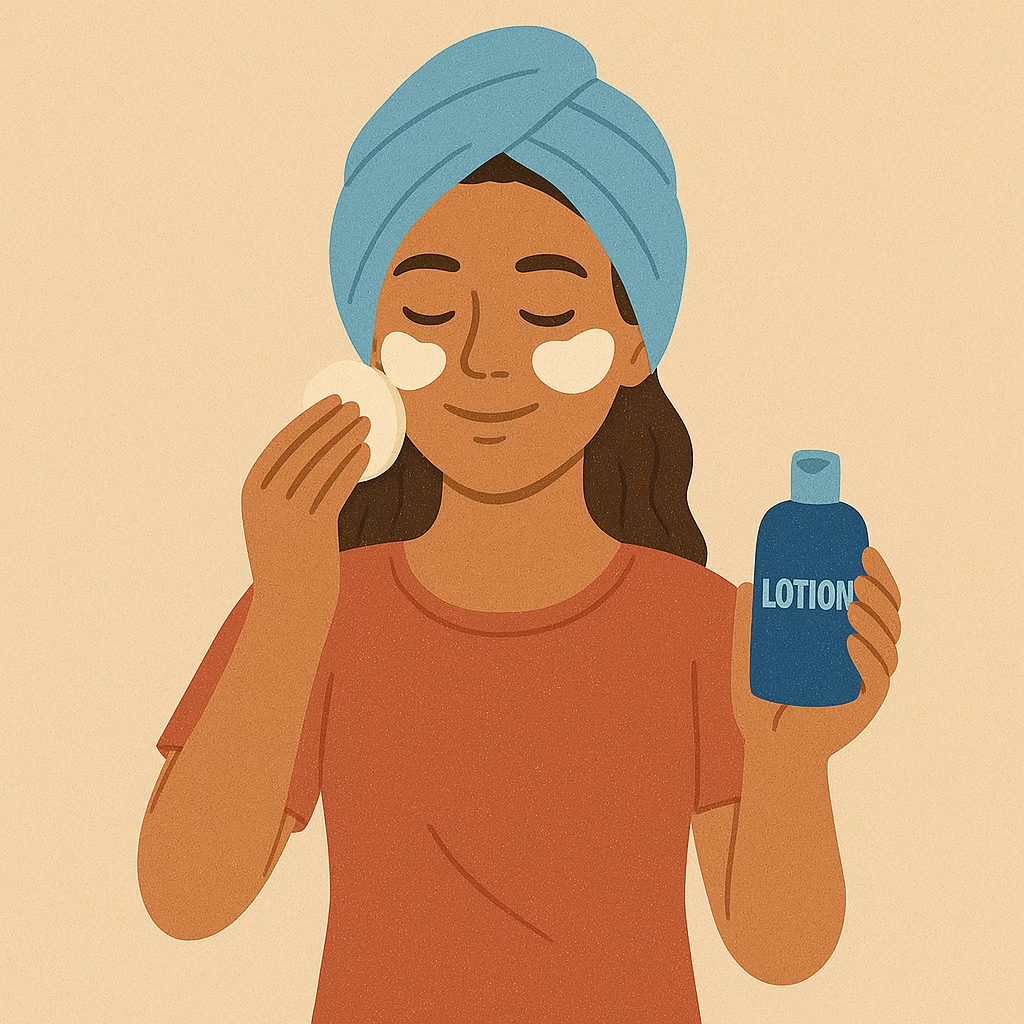
If you search “self-care” online, you’ll find spa days, scented candles, and long baths with a glass of wine. That version of self-care is everywhere — and it’s not entirely wrong. Rest and pleasure matter. But it is so incomplete that it has become a kind of cultural noise that drowns out something more important.
Real self-care for mental health is not a reward you give yourself after a hard week. It is the ongoing, often unsexy work of keeping yourself regulated, resourced, and functional — so that you can actually show up for your life. This post is about what that actually looks like, why it matters, and why it is harder for some people than others.
Real Self-Care vs. Self-Indulgence: What’s the Difference?
✓ Regular movement that fits your life
✓ Setting limits with people who drain you
✓ Attending therapy proactively
✓ Honest conversations about your needs
✓ Proactive, not just reactive
✓ An intense gym phase followed by months off
✓ Avoiding everyone when overwhelmed
✓ Only seeking help during crisis
✓ “Treating yourself” as a coping strategy
✓ Venting without accountability
Feel free to share or embed this infographic with credit to darinkingcounselingllc.com
What Self-Care Actually Is
The Substance Abuse and Mental Health Services Administration (SAMHSA) defines self-care as taking the time to do things that help you live well and improve both your physical and mental health. That definition is deliberately broad — because self-care looks different for every person. But a few things are consistent across almost all credible frameworks.
Self-care is proactive, not reactive. It is what you do regularly — not just when you are already falling apart. And it is not selfish. Taking care of yourself is what makes it possible to take care of anything or anyone else. Our broader post on balancing physical, mental, and emotional health explores how these dimensions work together day to day.
Why Self-Care Matters for Mental Health
Mental health is not just about the absence of diagnosis. It is about how regulated your nervous system is day to day — how quickly you recover from stress, how clearly you can think, how connected you feel to the people in your life. Self-care practices directly influence all of that.
Sleep
Sleep is foundational. During deep sleep, the brain processes emotional experiences, consolidates memory, and clears metabolic waste products associated with depression and anxiety. Chronic sleep deprivation does not just make you tired — it dysregulates your stress response, increases emotional reactivity, and impairs your ability to use the coping skills you already have.
Movement
Exercise is one of the most evidence-backed interventions for depression and anxiety. You do not need to run marathons. Even 20–30 minutes of moderate movement most days of the week has been shown to reduce symptoms of depression comparably to antidepressant medication in some studies. Movement also helps discharge stored tension in the body — which is especially important for people carrying trauma in their nervous system. If you are unsure whether past experiences are affecting you, our posts on what trauma is and how it shows up in daily life and whether trauma can show up years later may be worth reading.
Nervous System Regulation
Many people live in a chronic state of low-grade activation — always a little on edge, always braced for something. Practices like breathwork, cold water, grounding, and mindfulness are not just trends. They work by activating the parasympathetic nervous system — the branch responsible for rest, digestion, and recovery. Learning to come back down from activation is a learnable skill, and it is a cornerstone of nervous system reset. There is also real research connecting sustained stress to cortisol dysregulation and trauma responses — making regulation not optional, but essential. If you regularly feel overwhelmed or overstimulated by everyday environments, our post on overstimulated meaning and symptoms explains what is happening in the nervous system and what actually helps.
Genuine Connection
Isolation is a significant risk factor for depression and anxiety. Human beings are wired for connection — not just contact, but real intimacy and belonging. Self-care includes investing in relationships where you can be honest, vulnerable, and supported. It also means recognizing when a relationship is chronically draining you, and doing something about that — which often involves working through abandonment-related patterns in relationships that make it hard to trust or ask for what you need. Our posts on signs of abandonment trauma in adults and how to heal abandonment trauma go deeper on this.
Setting Limits
Saying no is self-care. So is being honest about your capacity, leaving situations that consistently harm you, and refusing to perform wellness while suffering privately. Limits are not walls — they are the structure that makes genuine relationships possible. Without them, resentment accumulates and connection erodes. If saying no feels almost impossible, or if other people’s comfort consistently overrides your own needs, our posts on people-pleasing, signs of a people pleaser, and how to stop being a people pleaser are directly relevant.
Seeking Therapy
Therapy is one of the most direct forms of self-care available. It is not a sign that something is wrong with you — it is a sign that you are taking your interior life seriously. If you are wondering what therapy actually helps with, the short answer is: more than most people realize, and often in ways that make everything else easier. Our posts on how to know when it’s time to start therapy and feeling nervous about starting therapy address the most common hesitations.
The research is clear: People who practice consistent self-care — sleep, movement, regulation, connection, limits — show measurably lower rates of anxiety and depression, faster recovery from stressful events, and greater life satisfaction over time. These are not luxuries. They are maintenance.
| Self-Care Practice | What It Supports | Why It’s Hard to Skip |
|---|---|---|
| Consistent sleep | Emotional regulation, memory, stress response | Deprivation compounds quickly and impairs coping |
| Regular movement | Mood, anxiety reduction, somatic release | Effects are cumulative — consistency matters more than intensity |
| Nervous system regulation | Recovery from stress, parasympathetic activation | Chronic activation causes long-term dysregulation |
| Genuine connection | Belonging, emotional processing, resilience | Isolation is a direct risk factor for depression |
| Setting limits | Sustainable relationships, reduced resentment | Without limits, depletion and bitterness accumulate |
| Therapy | Root-cause change, skill building, pattern awareness | Surface-level coping doesn’t address underlying drivers |
Why Self-Care Is Hard for Some People
If self-care were simply a matter of knowing what to do, everyone would do it. The gap between knowing and doing is usually not informational — it is psychological. There are real reasons why some people find self-care genuinely difficult, and those reasons deserve to be taken seriously rather than dismissed as laziness or lack of discipline.
People-Pleasing
People who have learned to prioritize others’ needs over their own — often from early experiences where that was necessary for safety or belonging — frequently struggle to identify their own needs at all, let alone act on them. People-pleasing can make self-care feel threatening, as though taking up space for yourself will cost you something important. If you recognize this pattern, it is also worth asking why you are such a people pleaser — the answer almost always points to something earlier than the present moment.
Shame and Chronic Guilt
Shame and guilt operate differently, but both can interfere with self-care. Shame says I am bad — and people who carry deep shame often feel they do not deserve care. Guilt says I did something bad — and people stuck in chronic guilt often feel they must earn rest through suffering first. If you feel persistently guilty without a clear cause, our posts on guilt complex, signs of a guilt complex, and why you feel guilty all the time may speak directly to what you are experiencing.
Trauma
Trauma leaves lasting marks on the nervous system. It can make stillness feel dangerous, rest feel irresponsible, and pleasure feel undeserved. Understanding how trauma affects the nervous system is often the first step in making sense of why the things that should feel good — sleep, relaxation, downtime — sometimes feel activating instead. If you have wondered whether your history qualifies as trauma, our posts on do I have childhood trauma and did I grow up in a dysfunctional family system may help you make sense of it.
Abandonment Patterns
For people with abandonment trauma, self-care can become entangled with deep fears about worth and belonging. If some part of you believes that you are only valuable when you are useful to others, then resting — choosing yourself — can trigger profound anxiety. This is not a mindset issue you can think your way out of. It usually requires deeper relational work, and our post on how to heal abandonment trauma explores what that looks like.
Note: If self-care feels selfish, that feeling is data. It is worth getting curious about where that belief came from — and whether it is actually true, or whether it is something you learned in order to survive a particular environment that you no longer live in.
Building a Sustainable Self-Care Practice
Sustainable self-care is not a checklist. It is not a morning routine you found in a productivity book. It is a set of personal commitments — small, consistent, and honest — that reflect what you actually need to function well.
Start with non-negotiables
Pick two or three things that, when you skip them consistently, you reliably feel worse. For many people that is sleep, movement, and some form of quiet or solitude. Those are your anchors. Build around them, not around aspirational habits you think you should have.
Small and consistent beats intense and sporadic
A ten-minute walk every day does more for your mental health than an occasional five-mile run. A consistent bedtime does more than a perfect sleep hygiene protocol you follow for two weeks. Regularity sends the nervous system a signal of safety. Intermittent intensity does not.
Address the barriers through therapy
If you consistently cannot follow through on self-care despite genuinely wanting to — that is worth exploring in therapy. Not because there is something wrong with you, but because the barriers are usually meaningful. They are pointing to something that has not yet been addressed. Therapy for anxiety and trauma-informed approaches including EMDR therapy are particularly effective for the patterns that most commonly block self-care.
Practice self-compassion alongside self-care
You will skip your practices. You will have weeks where everything falls apart and you survive on caffeine and willpower. Self-care includes how you talk to yourself when that happens. Criticism and shame do not motivate sustainable change — they reinforce the belief that you are fundamentally failing. Treat the return to your practices as ordinary, not as penance.
Related reading: Nervous system reset · Overstimulated meaning and symptoms · People-pleasing · Guilt complex · Abandonment trauma in relationships · Shame vs. guilt · How trauma affects the nervous system
Frequently Asked Questions
What is self-care for mental health?
Self-care for mental health refers to the consistent, proactive practices that help regulate your nervous system, manage stress, and maintain emotional wellbeing. This includes sleep, movement, setting healthy limits, genuine social connection, and seeking professional support when needed — not just occasional treats or rewards.
Is self-care selfish?
No. Self-care is not selfish — it is necessary. When you consistently neglect your own physical and emotional needs, your capacity to function, connect, and contribute to others diminishes. Taking care of yourself is what makes sustainable caregiving, work, and relationships possible. If the feeling of selfishness is persistent, it may be worth exploring through the lens of people-pleasing or chronic guilt.
Why do I feel guilty when I practice self-care?
Guilt around self-care is extremely common and usually has roots in early experiences — family systems where your needs were deprioritized, cultural messages equating rest with laziness, or trauma that taught you to earn your place through usefulness. Our posts on guilt complex and why you feel guilty all the time explore this in depth.
How is self-care different from self-indulgence?
Self-care is proactive and consistent — it sustains your functioning over time. Self-indulgence is often reactive — a response to depletion or stress that provides temporary relief without addressing underlying needs. Both have a place, but self-indulgence is not a substitute for genuine self-care.
Can therapy count as self-care?
Absolutely. Therapy is one of the most direct and effective forms of self-care available. It provides a space to process emotions, understand patterns, develop coping skills, and address the deeper barriers that often make other self-care practices difficult to maintain. Learn more about what therapy helps with and explore anxiety counseling in Pennsylvania if anxiety is the primary barrier.
What are some self-care practices for anxiety?
Evidence-based self-care practices for anxiety include consistent sleep (7–9 hours), regular aerobic movement, diaphragmatic breathing and other parasympathetic activation techniques, limiting caffeine and alcohol, maintaining social connection, and working with a therapist to address the root causes. See our full guide on how therapy helps with anxiety for more on what that looks like in practice.
Self-care is easier to sustain when you understand what’s getting in the way.
Darin King, LPC works with adults navigating anxiety, burnout, trauma, and the patterns that make it hard to prioritize themselves. Telehealth available statewide across Pennsylvania.
See more from Darin King Counseling on Google