

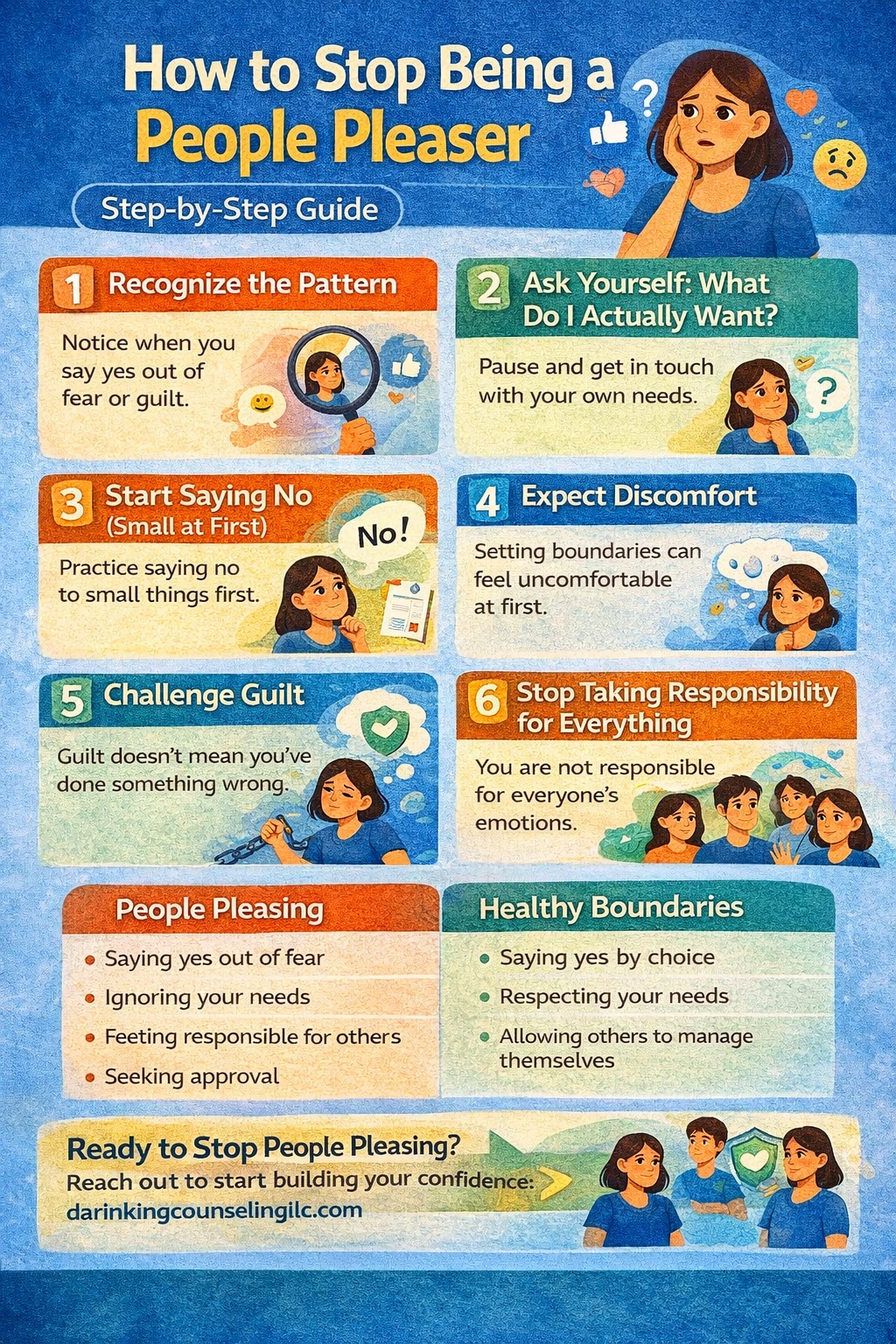
If you’ve spent most of your life saying yes when you mean no, shrinking yourself to keep others comfortable, and measuring your worth by how much you do for others — you already know how exhausting people pleasing is. What you may not know is that stopping it is not simply a matter of deciding to say no more often. People pleasing is a deeply rooted survival pattern, usually forged in childhood, and dismantling it requires more than willpower. It requires understanding where it came from and working with — not against — the nervous system that learned it.
This step-by-step guide explains how to stop being a people pleaser in a way that actually lasts.
How to Stop Being a People Pleaser: The Core Steps
✓ Learning to tolerate the discomfort of saying no
✓ Identifying your own needs and values
✓ Building a relationship with your own feelings
✓ Addressing the underlying trauma or attachment wounds
✓ Forcing yourself through guilt each time
✓ Swinging to the opposite extreme
✓ Suppressing the urge to please without addressing the root
✓ Waiting until you’re resentful to set limits
Feel free to share or embed this infographic with credit to darinkingcounselingllc.com
Why Willpower Alone Won’t Stop People Pleasing
People pleasing is not a habit you can simply decide to stop. For most people it is a nervous system pattern — a deeply encoded survival strategy that developed in response to early experiences where keeping others happy was necessary to maintain safety, connection, or love. The Substance Abuse and Mental Health Services Administration recognizes that trauma-informed care addresses these deeply rooted patterns at their root rather than simply targeting surface behaviors.
When you try to say no, the anxiety that arises — the guilt, the fear of rejection, the sense that something terrible will happen — is not irrational. It is your nervous system doing exactly what it learned to do: protecting you from a perceived threat. The threat is no longer real in most adult situations, but the nervous system doesn’t know that yet. Read more about what people pleasing is and where it comes from.
Key reframe: You are not a people pleaser because you are weak or codependent. You are a people pleaser because you learned — usually very early — that your safety, love, or belonging depended on prioritizing others. That was an intelligent adaptation. It is also one that no longer serves you. And it can change.
Step 1: Understand Where Your People Pleasing Came From
Before you can change a pattern, you need to understand it. People pleasing most commonly develops in environments where:
- A parent’s emotional state was unpredictable — and managing it became the child’s job
- Love or approval was conditional on performance, compliance, or emotional caretaking
- Conflict was dangerous — either explosive or completely avoided, with no safe middle ground
- The child’s own needs were dismissed, punished, or simply not seen
- Being “good” — agreeable, helpful, undemanding — was the only safe way to be
Understanding this history doesn’t excuse others’ behavior or require you to minimize what happened. It locates the origin of the pattern — which is essential information for changing it. Read more about dysfunctional family systems and signs of childhood trauma in adults.
Step 2: Learn to Recognize the People Pleasing Response in Real Time
Most people pleasers operate on autopilot — saying yes before they’ve had a chance to consult their own feelings and needs. The first practical skill is learning to notice the people pleasing response as it’s happening:
- Notice the familiar anxiety that arises when you sense someone might be disappointed
- Notice the automatic “yes” forming before you’ve checked whether you actually want to say it
- Notice the physical sensations — chest tightening, a slight holding of breath, a reaching-outward quality
- Notice the internal voice already pre-apologizing, pre-justifying, pre-accommodating
You don’t have to change the response yet — just see it. Awareness precedes change. Read more about signs of a people pleaser.
Step 3: Create a Pause Before Responding
The most practical early intervention is introducing a pause between the request and your response. Instead of the automatic yes, try:
- “Let me check my schedule and get back to you.”
- “I need to think about that — I’ll let you know tomorrow.”
- “Can I get back to you on that?”
This pause does several things: it disrupts the automatic response, it creates space to actually consult your own feelings and needs, and it begins to establish that your yes is something worth waiting for — not a given.
Step 4: Identify Your Own Needs and Values
One of the most significant effects of long-term people pleasing is losing touch with your own needs, preferences, and values — because they’ve been consistently subordinated to others’. Rebuilding this connection requires deliberate practice:
- Ask yourself regularly: what do I actually want here? Not what would make others happy — what do I want?
- Practice making small, low-stakes choices entirely based on your own preference — where to eat, what to watch, how to spend a free hour
- Notice what brings you genuine energy and what drains you — and begin to treat this information as important
- Identify your core values — what genuinely matters to you, beyond what you’ve been told should matter
Step 5: Practice Tolerating the Discomfort of Saying No
This is the step most people want to skip — but it is unavoidable. Every time you say no or set a limit, you will feel discomfort. Guilt, anxiety, the urge to immediately fix the other person’s disappointment. Learning to tolerate this discomfort without acting on it — without reversing your no, over-explaining, or excessive apologizing — is how people pleasing actually changes.
Some practical tools:
- Remind yourself that the discomfort is familiar, not dangerous — it is the nervous system doing what it learned to do
- Use grounding techniques to stay regulated when the anxiety spikes. See our guide on nervous system reset techniques
- Give yourself a time limit — “I will feel this discomfort for 10 minutes without reversing my no”
- Notice that most of the catastrophic outcomes you anticipated don’t actually happen
Read more about how to stop feeling guilty when you set limits.
Step 6: Start with Smaller No’s
Don’t start by saying no to the most loaded, highest-stakes situations in your life. Build the muscle with smaller, lower-stakes situations first:
- Declining a social invitation you don’t want to attend
- Expressing a genuine preference when asked where to eat
- Asking for something you need without excessive hedging or apology
- Letting someone be disappointed without immediately fixing it
Each successful experience of saying no — and surviving the discomfort — builds nervous system evidence that it is safe to have needs and limits. This evidence accumulates over time, gradually recalibrating the threat response associated with disappointing others.
Step 7: Address the Underlying Roots Through Therapy
For people whose people pleasing is rooted in trauma, attachment wounds, or significant childhood experiences, the steps above will have real but limited effect without also addressing those roots. The pattern lives in the nervous system — and changing it at that level requires more than behavioral practice.
EMDR Therapy
EMDR therapy processes the specific memories that taught the nervous system that its safety depended on pleasing others — reducing the emotional charge and allowing new learning to take hold.
IFS Therapy
IFS therapy works directly with the people-pleasing part — understanding what it is protecting against, what it fears will happen if it stops, and helping it find safety rather than needing to manage others to feel secure.
Trauma-Focused Therapy
Trauma counseling in Pennsylvania addresses the root experiences that installed the people-pleasing pattern — available via telehealth statewide.
Related reading: Our guides on why you’re a people pleaser, signs of a people pleaser, what people pleasing is, and abandonment trauma in relationships complete the picture of people pleasing and how to heal it.
Frequently Asked Questions
How do I stop being a people pleaser?
Stopping people pleasing requires more than willpower. The most effective approach involves understanding where the pattern came from, recognizing it in real time, creating a pause before responding, reconnecting with your own needs, practicing tolerating the discomfort of saying no, and addressing underlying roots through therapy. Read more about why you’re a people pleaser.
Why is it so hard to stop people pleasing?
Because it is a nervous system survival pattern — not simply a habit. It developed in environments where keeping others happy was necessary for safety or belonging. The anxiety that arises when you try to say no is your nervous system activating its threat response. Read more about how trauma affects the nervous system.
Is people pleasing a trauma response?
Yes — people pleasing is widely recognized as a fawn response — one of the four primary responses to threat alongside fight, flight, and freeze. Recognizing it as a trauma response rather than a character flaw is an important reframe. Read more about what people pleasing is.
Can therapy help me stop people pleasing?
Yes — EMDR therapy processes the memories that installed the pattern. IFS therapy works with the people-pleasing part directly. Many people see significant shifts within months of consistent therapeutic work. Telehealth therapy makes that support accessible from anywhere in Pennsylvania.
How do I say no without feeling guilty?
The goal is not to say no without feeling guilty — it is to say no and tolerate the guilt without reversing your decision. The guilt decreases over time as your nervous system accumulates evidence that disappointing others is survivable. Read more about how to stop feeling guilty.
You were never too much. You were just taught to make yourself small. That can change.
Darin King, LPC specializes in trauma, people pleasing, and identity healing in Pennsylvania. Telehealth available statewide.
See more from Darin King Counseling on Google