

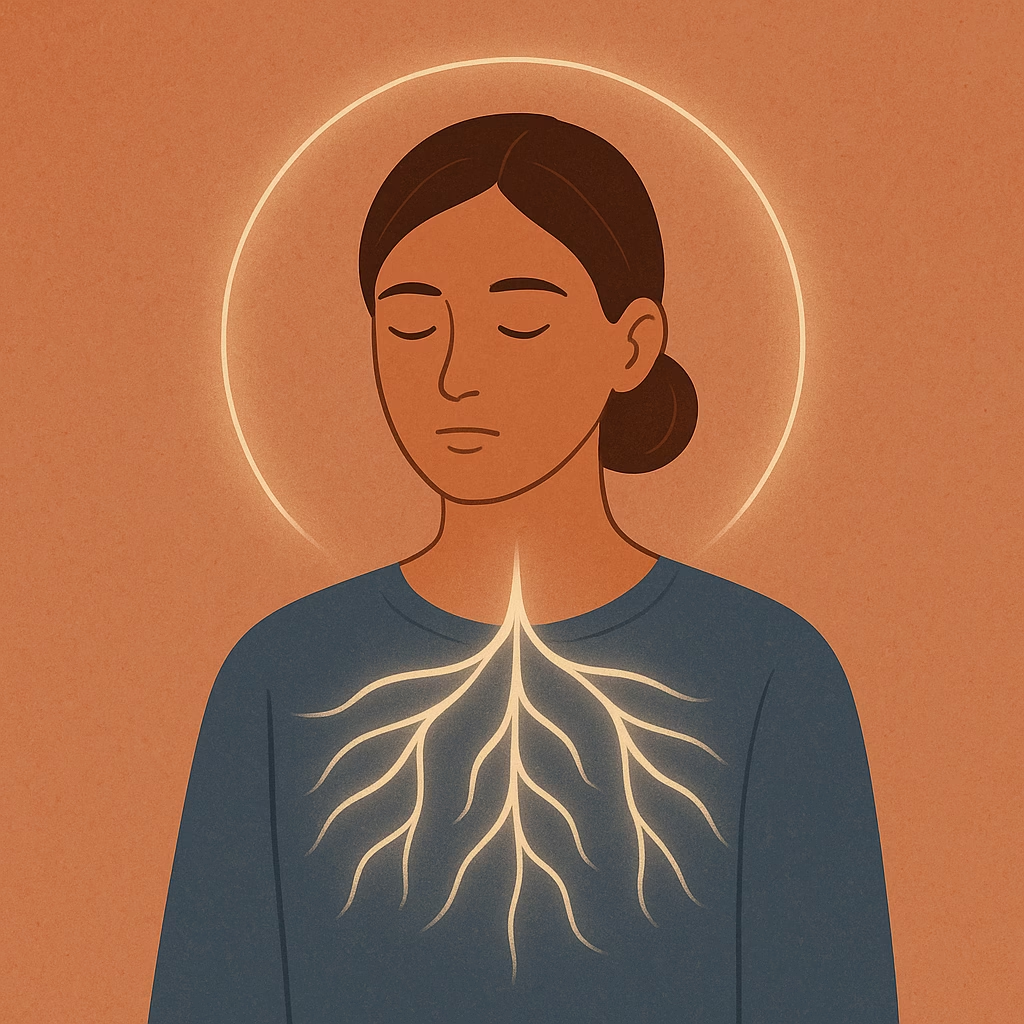
When people talk about trauma, the conversation often focuses on memories, emotions, and thoughts. But trauma isn’t just a psychological experience — it’s a physiological one. Trauma changes the way your nervous system is wired, affecting how you respond to stress, perceived threat, and even everyday sensations long after the original event has passed.
Understanding how trauma affects the nervous system is one of the most validating and empowering things a trauma survivor can do. It explains why you react the way you do — and it points directly toward what helps.
How Trauma Affects the Nervous System: The Three Survival States
✓ Racing heart, shallow breathing
✓ Easily startled, on edge
✓ Irritability or explosive anger
✓ Difficulty sleeping
✓ Fatigue and low energy
✓ Difficulty feeling emotions
✓ Feeling disconnected from body
✓ Depression, hopelessness
Feel free to share or embed this infographic with credit to darinkingcounselingllc.com
The Nervous System: A Quick Overview
The autonomic nervous system (ANS) regulates your body’s automatic functions — heart rate, breathing, digestion, and the stress response. It has two primary branches:
- The sympathetic nervous system — activates the fight-or-flight response. It speeds everything up: heart rate increases, breathing quickens, muscles tense, digestion pauses. The body is ready to fight or flee.
- The parasympathetic nervous system — activates rest and recovery. It slows things down: heart rate decreases, breathing deepens, digestion resumes. The body feels safe.
In a healthy, regulated nervous system, these two branches work together — activating when needed and returning to baseline when the threat has passed. Trauma disrupts this balance in lasting ways.
What Trauma Does to the Brain
According to the National Institute of Mental Health, PTSD and trauma-related conditions involve measurable changes in brain structure and function — particularly in three key areas:
| Brain Region | Normal Function | After Trauma |
|---|---|---|
| Amygdala | Detects threat and triggers the alarm response | Becomes hyperactivated — fires more easily, at lower threat levels |
| Prefrontal Cortex | Rational thinking, decision-making, regulating emotions | Activity decreases — harder to think clearly or calm yourself down |
| Hippocampus | Processes and stores memories, provides context | May shrink — traumatic memories stored without proper context or timeline |
This is why trauma survivors often describe feeling like they “can’t think straight” when triggered — the prefrontal cortex goes offline and the amygdala takes over. It’s not weakness or irrationality. It’s neurobiology.
The Window of Tolerance
One of the most useful concepts in trauma therapy is the window of tolerance — the zone of nervous system activation in which you can function, think, feel, and connect with others without being flooded or shut down.
- Inside the window: You feel present, regulated, able to respond thoughtfully. Emotions are accessible but not overwhelming.
- Above the window (hyperarousal): Anxiety, panic, rage, hypervigilance, feeling out of control.
- Below the window (hypoarousal): Numbness, shutdown, dissociation, depression, feeling empty or dead inside.
Trauma narrows the window of tolerance. Things that most people handle easily can push a trauma survivor above or below the window. A core goal of trauma therapy is to widen this window — so you can experience more of life without being dysregulated by it.
Key insight: Trauma survivors often flip between hyperarousal (anxiety, panic, rage) and hypoarousal (numbness, shutdown, dissociation) — sometimes within the same day or hour. This is not instability or character weakness. It’s a nervous system that has lost its ability to return to baseline on its own.
The Polyvagal Theory: Understanding Survival States
Polyvagal Theory, developed by neuroscientist Dr. Stephen Porges, offers a more nuanced map of the nervous system’s survival responses. It describes three states:
| State | Nervous System Branch | Feels Like | Purpose |
|---|---|---|---|
| Safe and Social | Ventral vagal (parasympathetic) | Calm, connected, present, engaged | Connection, learning, growth |
| Fight or Flight | Sympathetic | Anxious, activated, reactive, angry | Mobilize to fight or escape |
| Freeze / Shutdown | Dorsal vagal (parasympathetic) | Numb, collapsed, dissociated, hopeless | Last-resort survival — play dead |
After trauma, the nervous system spends too much time in fight-or-flight or freeze — and not enough time in the safe-and-social state where connection, healing, and growth happen. Nervous system regulation techniques can help shift the system back toward safety.
How Trauma Shows Up in the Body
Because trauma is stored in the nervous system and the body — not just the mind — it often shows up as physical symptoms that seem disconnected from any obvious emotional cause. The CDC’s landmark ACE Study found strong links between childhood trauma and a wide range of adult health conditions, including chronic pain, autoimmune disorders, cardiovascular disease, and more.
Common physical manifestations of trauma include:
- Chronic muscle tension, particularly in the shoulders, neck, jaw, and hips
- Digestive problems — irritable bowel, nausea, chronic stomach pain
- Fatigue that doesn’t respond to rest
- Headaches or migraines
- Sleep disturbances — difficulty falling asleep, staying asleep, or nightmares
- Chronic pain conditions
- A persistent sense of physical unease or “something is wrong”
The Freeze Response and Why It’s Misunderstood
The freeze response is perhaps the most misunderstood survival response. When fight and flight are not options — when the threat is too big, too close, or too inescapable — the nervous system activates a dorsal vagal shutdown. The body goes still, emotions go numb, and consciousness may partially disconnect from the body.
This is why people who have been abused, assaulted, or trapped in dangerous situations often describe “not being able to move” or “going somewhere else.” The freeze response is not a choice or a failure — it’s the oldest and deepest survival mechanism in the nervous system. Understanding this is often profoundly healing for survivors who have blamed themselves for not “doing something” during their trauma.
Note: If you experienced a freeze response during trauma and have felt shame or confusion about it since, this is one of the most important things a trauma therapist can help you understand and process. Trauma counseling in Pennsylvania is available via telehealth across the state.
How Trauma Therapy Regulates the Nervous System
Effective trauma treatment works at the level of the nervous system — not just the mind. The World Health Organization recommends trauma-focused psychological therapies as first-line treatment for PTSD and trauma-related conditions. Here’s how key approaches work:
EMDR Therapy
EMDR therapy uses bilateral stimulation (eye movements or tapping) to help the brain process traumatic memories that have been “stuck” — stored without context in the threat-detection system. As the memory is processed, the nervous system’s response to it decreases.
IFS Therapy
Internal Family Systems therapy works with the protective parts of the psyche that developed in response to trauma — helping them release the burden they’ve been carrying so the nervous system can relax its guard.
DBT Skills
DBT therapy provides concrete skills for managing the intense emotional and physiological states that trauma survivors experience — building distress tolerance and emotional regulation from the ground up.
Somatic Approaches
Body-based approaches work directly with the physical sensations stored in the nervous system — helping trauma move through the body rather than staying locked in it. This supports the work done in talk-based therapy.
Related reading: Our guides on trauma and panic attacks, what dissociation feels like, and nervous system reset techniques build on the concepts covered here.
Frequently Asked Questions
Can the nervous system heal after trauma?
Yes — the nervous system has significant capacity for healing, a quality called neuroplasticity. With the right therapeutic support, the brain can form new neural pathways, the window of tolerance can widen, and the stress response can become less reactive. Healing doesn’t erase what happened, but it changes the nervous system’s relationship to it.
Why do I feel numb after trauma?
Emotional numbness after trauma is a hypoarousal response — the nervous system has shut down to protect you from being overwhelmed. It’s the freeze branch of the stress response. Numbness is not the absence of feeling — it’s the nervous system’s way of managing feelings that once felt unsurvivable.
Why am I always on edge after trauma?
Chronic hypervigilance — always feeling on edge, easily startled, unable to relax — is a hyperarousal response driven by an amygdala sensitized by trauma. Your nervous system has learned to stay on high alert because it was once necessary for survival. Trauma therapy helps the nervous system learn that the threat has passed.
How long does it take for the nervous system to heal from trauma?
Healing varies depending on the type, duration, and severity of trauma, as well as the therapeutic approach used. Many people notice significant regulation improvements within months of consistent trauma therapy. Meaningful, life-changing progress happens at every stage of the process.
What is the best therapy for nervous system regulation after trauma?
EMDR therapy is one of the most well-researched approaches for directly processing trauma stored in the nervous system. IFS therapy, DBT skills, and somatic approaches also support nervous system regulation. A licensed trauma therapist can help you determine what’s right for you.
Your nervous system learned to survive. Therapy helps it learn to live.
Darin King, LPC specializes in trauma, PTSD, and nervous system regulation in Pennsylvania. Telehealth available statewide.
See more from Darin King Counseling on Google