

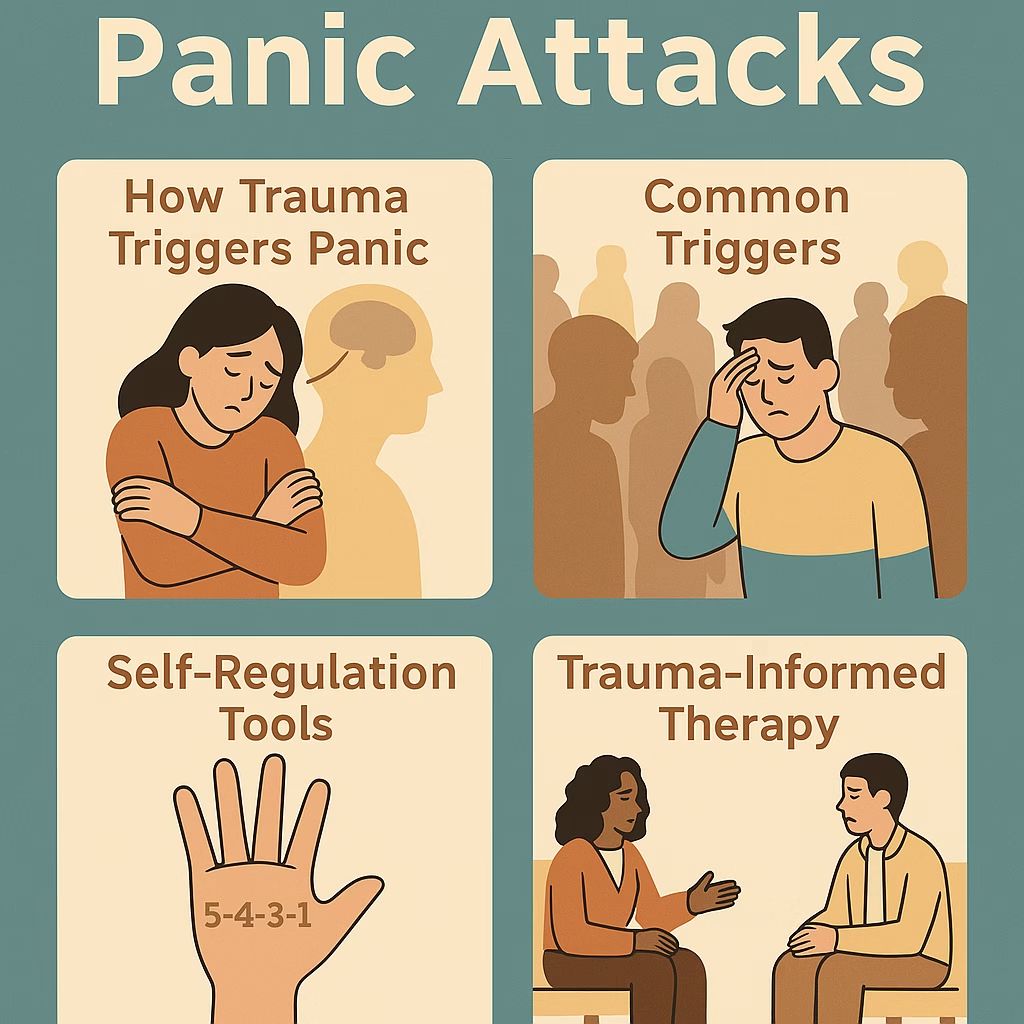
If you’ve experienced trauma and also struggle with panic attacks, you’re not alone — and the connection between the two is not a coincidence. Trauma fundamentally changes the way your nervous system responds to perceived threat, making panic attacks far more likely. Understanding why this happens is one of the most powerful steps toward breaking the cycle.
This guide explains the relationship between trauma and panic attacks, how to tell the difference between a trauma trigger response and a standard panic attack, and what treatment approaches actually work.
Trauma-Related Panic vs Standard Panic: Key Differences
✓ Intense fear of dying or losing control
✓ Racing heart, shortness of breath, dizziness
✓ Peaks within minutes, resolves within 20–30 min
✓ No dissociation or time loss
✓ May include flashbacks or dissociation
✓ Nervous system flooding — fight, flight, or freeze
✓ Can last longer and feel more intense
✓ Often accompanied by shame or confusion
Feel free to share or embed this infographic with credit to darinkingcounselingllc.com
The Connection Between Trauma and Panic Attacks
Trauma rewires the brain’s threat detection system. The amygdala — the brain’s alarm center — becomes sensitized after traumatic experiences, triggering fear responses at a lower threshold than before. According to the National Institute of Mental Health, hyperarousal is a core feature of PTSD, and panic attacks are one of the most distressing expressions of that hyperarousal.
When the brain perceives a threat — even one that is not objectively dangerous — it floods the body with adrenaline and cortisol, activating the fight-or-flight response. In people with trauma histories, this alarm goes off more easily, more intensely, and sometimes without any obvious external trigger.
Key connection: Trauma doesn’t just cause emotional pain — it physically changes the nervous system’s sensitivity to threat. Panic attacks in trauma survivors are not irrational or “all in your head.” They are the body responding to a threat signal that was wired in by real past experience.
How Trauma Causes Panic Attacks: The Neuroscience
Here’s what happens in the brain and body during a trauma-related panic attack:
| Stage | What Happens | What It Feels Like |
|---|---|---|
| Trigger | Something in the environment (sound, smell, tone, image) resembles a past threat | A sudden sense of dread, unease, or “something is wrong” |
| Amygdala activation | The brain’s alarm fires before the thinking brain can assess the actual danger | Instant fear response — no time to think |
| Stress hormone flood | Adrenaline and cortisol surge through the body | Racing heart, shallow breathing, sweating, trembling |
| Fight/flight/freeze | The body prepares to respond to the perceived threat | Urge to run, fight, or freeze completely |
| Possible dissociation | Nervous system overwhelm triggers dissociative response | Feeling detached, unreal, or like time has stopped |
| Aftermath | Body slowly comes down from the stress response | Exhaustion, shame, confusion, lingering anxiety |
Symptoms of Trauma-Related Panic Attacks
Panic attacks share a common set of physical and psychological symptoms. The American Psychiatric Association defines a panic attack as a sudden surge of intense fear or discomfort that peaks within minutes and includes at least four of the following:
Physical Symptoms
- Racing or pounding heart (palpitations)
- Shortness of breath or feeling smothered
- Chest pain or tightness
- Dizziness, lightheadedness, or faintness
- Sweating, trembling, or shaking
- Nausea or stomach distress
- Numbness or tingling sensations
- Chills or hot flushes
Psychological Symptoms
- Intense fear of dying
- Fear of losing control or “going crazy”
- Feeling detached from yourself (depersonalization)
- Feeling like the world is unreal (derealization)
- Overwhelming sense of doom
What Makes Trauma-Related Panic Different
- Often triggered by specific reminders of past trauma
- May be accompanied by flashback images or emotional flashbacks
- Can include dissociation or time loss
- Often followed by intense shame or self-criticism
- May last longer than a typical panic attack
Important: Panic attack symptoms — especially chest pain and difficulty breathing — can overlap with medical conditions. If you haven’t been evaluated by a doctor, ruling out cardiac or respiratory causes is always a good first step. Once medical causes are ruled out, therapy is the most effective long-term treatment.
Common Trauma Triggers for Panic Attacks
Trauma triggers are cues in the environment that the nervous system associates with past danger. They can be obvious or surprisingly subtle:
- Specific sounds — a raised voice, a certain song, a door slamming
- Smells — a cologne, a type of food, a particular environment
- Physical sensations — being touched a certain way, feeling confined
- Visual cues — seeing someone who resembles a person from the past
- Times of year or anniversaries of traumatic events
- Conflict or raised voices in relationships
- Feeling powerless or out of control
- Intimacy or vulnerability
Panic Attacks, Trauma, and the Freeze Response
While most people are familiar with the fight-or-flight response, trauma survivors often experience a third option: freeze. During a freeze response, the body essentially shuts down — leaving you unable to move, speak, or respond, even when you want to. This can look like:
- Sudden inability to speak or think clearly
- Feeling glued to the spot despite wanting to leave
- Complete emotional and physical numbness
- Dissociation — a sense of leaving your body
The freeze response is often misunderstood — by others and by the person experiencing it. Understanding it as a survival response, not a personal failing, is an important part of trauma recovery. Read more about how trauma affects the nervous system.
How to Manage Panic Attacks Linked to Trauma
In the Moment
- Breathe out longer than you breathe in — a 4-count inhale and 6-count exhale activates the parasympathetic nervous system
- Ground in your senses — name 5 things you can see, 4 you can touch, 3 you can hear
- Orient to the present — remind yourself of the date, your location, and that you are safe now
- Use cold water — splashing cold water on your face activates the dive reflex and slows the heart rate
- Move your body — if you can, shake out your hands or walk to help discharge the stress hormone buildup
Longer-Term Treatment
Managing panic attacks in the moment is important, but addressing the underlying trauma is what creates lasting change. Evidence-based options include:
- EMDR therapy — processes the traumatic memories driving the panic response. Learn about EMDR therapy in Pennsylvania.
- Trauma-focused therapy — helps the nervous system learn that past threats are in the past. Trauma counseling in Pennsylvania is available via telehealth.
- DBT skills — Dialectical Behavior Therapy provides powerful distress tolerance and emotional regulation tools. DBT therapy in Pittsburgh.
- Nervous system regulation — somatic approaches help build a more regulated baseline. See our guide on nervous system reset techniques.
The Substance Abuse and Mental Health Services Administration (SAMHSA) emphasizes that trauma-informed care — which understands the role trauma plays in mental health symptoms — is essential to effective treatment of panic and anxiety in trauma survivors.
Related reading: Explore our guides on anxiety counseling, PTSD counseling in Pennsylvania, and nervous system reset techniques to build a fuller picture of your treatment options.
Frequently Asked Questions
Can trauma cause panic attacks years later?
Yes — trauma can cause panic attacks years or even decades after the original event. The nervous system stores traumatic memory in ways that can remain reactive long after the conscious mind has moved on. A trigger in the present can activate a fear response wired in by a much older experience.
How do I know if my panic attacks are trauma-related?
Trauma-related panic attacks often have identifiable triggers connected to past experiences, may be accompanied by flashbacks or dissociation, and are frequently followed by shame or confusion. If your panic attacks seem connected to specific situations, relationships, or sensory cues that relate to your history, trauma may be a driving factor.
What is the best therapy for trauma-related panic attacks?
EMDR therapy is one of the most well-researched treatments for trauma-related panic attacks, as it directly processes the traumatic memories driving the response. Trauma-focused therapy, DBT, and somatic approaches are also effective. A licensed trauma therapist can help you determine the right fit.
Can panic attacks cause trauma?
In some cases, yes — particularly severe or repeated panic attacks can themselves become traumatic, especially when they involve intense fear of dying. Trauma-informed therapy addresses both the original trauma and any secondary trauma from the panic attacks themselves.
Will panic attacks go away with trauma treatment?
For many people, yes — when trauma treatment addresses the root nervous system dysregulation, panic attacks reduce significantly in frequency and intensity. Treating the underlying trauma, not just managing symptoms, leads to more lasting recovery.
Panic attacks rooted in trauma respond to trauma treatment — not just symptom management.
Darin King, LPC specializes in trauma, PTSD, and EMDR therapy in Pennsylvania. Telehealth available statewide.
See more from Darin King Counseling on Google