

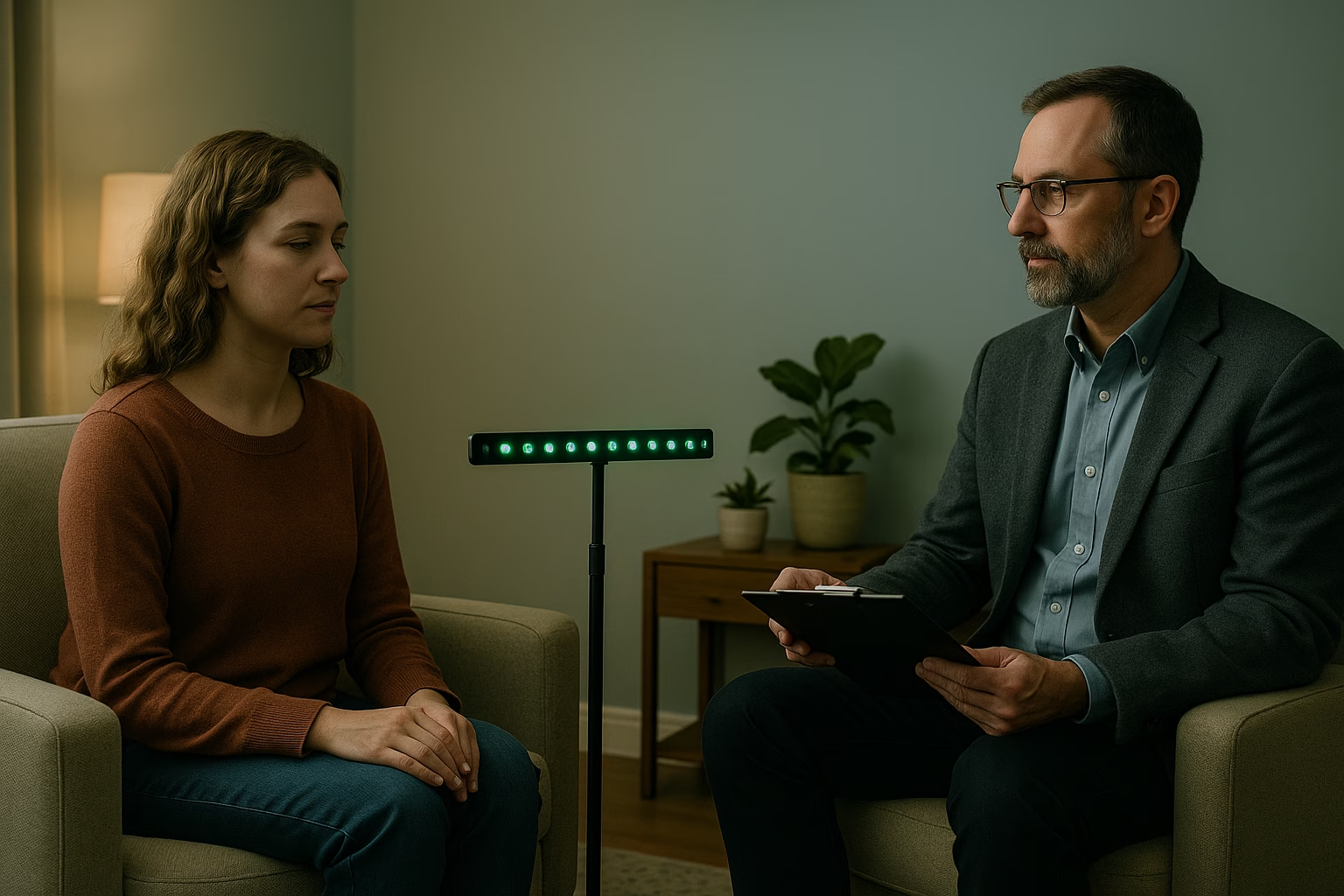
Childhood trauma is not just a memory — it is a nervous system that was shaped by what happened, a sense of self that formed around the wound, and a set of relationship patterns that have been running on autopilot ever since. Talking about it can help. But for many people who carry childhood trauma, talk therapy reaches a ceiling — because the trauma is not primarily stored in words and thoughts. It’s stored in the body, the nervous system, and in the deeply encoded beliefs that formed before language was even fully available.
This is where EMDR therapy is particularly powerful. More than perhaps any other therapeutic approach, EMDR is able to reach and reprocess the early, preverbal, and deeply embedded material that childhood trauma produces — creating genuine neurological change rather than just cognitive understanding.
EMDR for Childhood Trauma: What Makes It Different
✓ Body-based trauma stored as sensation
✓ Deeply encoded negative beliefs about self
✓ Attachment wounds and relational trauma
✓ Fragmented memories without clear narrative
✓ Body-held tension and somatic responses
✓ Beliefs that feel true despite cognitive challenge
✓ The emotional charge of early memories
✓ Nervous system patterns wired before age 5
Feel free to share or embed this infographic with credit to darinkingcounselingllc.com
Why Childhood Trauma Requires a Different Approach
Childhood trauma — particularly early childhood trauma — presents specific challenges that make it different from single-incident adult trauma:
- It shaped development — rather than disrupting an already-formed adult nervous system, childhood trauma shaped the developing brain, attachment system, and sense of self from the ground up
- It may be preverbal — trauma that occurred before language developed may have no clear narrative memory attached to it — just body sensations, emotions, and patterns
- It involves multiple targets — childhood trauma is rarely a single event. It is often a sustained environment — years of abuse, neglect, or emotional unavailability — that creates dozens or hundreds of connected traumatic memories
- It is relational — childhood trauma typically involves the people who were supposed to provide safety, creating a complex attachment wound alongside the trauma itself
- It shaped identity — the beliefs formed from childhood trauma (“I am not enough,” “I am not safe,” “I am to blame”) became part of the foundation of self rather than additions to an already-formed identity
Read more about how childhood abuse changes the brain and signs of childhood trauma in adults for important context.
Why EMDR for childhood trauma specifically: EMDR does not require clear narrative memory to work — it can process body sensations, emotions, and images even when explicit verbal memory is fragmented or absent. This makes it uniquely suited to the preverbal and procedural memory systems where childhood trauma is often stored.
How EMDR Is Adapted for Childhood Trauma
Standard EMDR protocol is adapted for complex and childhood trauma in several important ways:
Extended Preparation Phase
For childhood trauma — particularly Complex PTSD — the preparation phase is significantly extended compared to single-incident trauma. Before any processing begins, the therapist works to:
- Establish a strong, trust-based therapeutic relationship — itself a corrective relational experience for attachment wounds
- Build a robust set of stabilization and grounding resources. See our guide on nervous system reset techniques
- Develop internal resources — safe place, nurturing figure, calm state — that can be accessed during processing
- Assess and build the window of tolerance so that processing can occur without overwhelming the system
- Identify a comprehensive target memory network rather than a single target
The World Health Organization specifically recommends a phased approach to trauma treatment — stabilization before processing — which is exactly how EMDR for childhood trauma is structured.
Processing a Memory Network, Not Just Individual Memories
With childhood trauma, memories are not isolated — they form connected networks. Processing one memory often activates related memories from the same period or relationship. Your EMDR therapist will map this network with you and work through it systematically, recognizing that early memories often need to be processed before later ones can fully resolve.
Working with Preverbal and Body-Based Material
When childhood trauma occurred before language was developed, there may be no clear narrative memory to work with. EMDR can still process this material through body sensations, emotions, images, and the felt sense of the experience — using these as the entry point into the processing rather than requiring a coherent verbal account.
Addressing Attachment and Relational Wounds
Childhood trauma frequently involves the attachment system — the neural circuitry that governs how we connect with others. EMDR can target the specific relational memories that created attachment disruptions, with the therapeutic relationship itself serving as a corrective relational experience alongside the processing work. Read more about abandonment trauma and its connection to childhood experiences.
Addressing Core Negative Beliefs
Childhood trauma produces particularly deep and pervasive negative beliefs — about the self, about safety, about relationships. EMDR specifically targets these beliefs in the installation phase, replacing them with more adaptive ones. For childhood trauma, this often involves beliefs like:
| Common Negative Belief from Childhood Trauma | Adaptive Belief Developed Through EMDR |
|---|---|
| “I am not safe” | “I am safe now. I can handle this.” |
| “I am not enough” | “I am worthy and enough as I am.” |
| “It was my fault” | “It was not my fault. I was a child.” |
| “I am damaged or broken” | “I survived. I can heal.” |
| “I cannot trust anyone” | “I can choose who to trust.” |
| “I am powerless” | “I now have choices I didn’t have then.” |
What to Expect in EMDR for Childhood Trauma
EMDR for childhood trauma is typically longer than treatment for single-incident adult trauma — because of the extended preparation needed and the larger number of target memories. Here is what you can generally expect:
Early Sessions: Building the Foundation
The early sessions focus on history taking, building the therapeutic relationship, and establishing stabilization resources. This phase is not preliminary to the “real work” — it is part of the healing itself. For many people with childhood trauma, experiencing a consistent, boundaried, safe therapeutic relationship is itself profoundly corrective.
Middle Sessions: Processing Begins
Once sufficient stability is established, processing of target memories begins — typically starting with earlier memories and working forward chronologically, or starting with the memories that produce the most current distress. Processing is not linear — new material regularly emerges and becomes part of the work.
Later Sessions: Integration
As processing advances, clients typically notice significant changes in how they feel about themselves and their past, how they respond to triggers, and how they show up in relationships. The later phase of treatment focuses on integrating these changes and consolidating new, adaptive beliefs about self, safety, and relationships.
For information about what to expect during and after individual sessions, see our guide on EMDR side effects.
Note: The National Institute of Mental Health recognizes EMDR as an evidence-based treatment for PTSD, and the research base for its effectiveness with childhood and complex trauma is substantial and growing. The Substance Abuse and Mental Health Services Administration lists EMDR among its evidence-based trauma interventions — including for childhood trauma specifically.
EMDR for Childhood Trauma at Darin King Counseling
At Darin King Counseling, EMDR therapy for childhood trauma is available via telehealth across Pennsylvania. Sessions are conducted on a secure, HIPAA-compliant platform — accessible from anywhere in the state. Many clients find that being in their own safe home environment during EMDR sessions for childhood trauma is particularly supportive — especially given that safety and control are so central to the healing of early developmental trauma.
Related reading: Our guides on how EMDR therapy works, what happens in your brain during EMDR, signs of childhood trauma in adults, and Complex PTSD vs PTSD complete the picture of childhood trauma and EMDR treatment.
Frequently Asked Questions
Is EMDR effective for childhood trauma?
Yes — EMDR is one of the most effective treatments for childhood trauma, particularly because it can process material stored in the body and in images rather than requiring clear verbal narrative. The WHO, APA, and SAMHSA all recognize EMDR as an evidence-based trauma treatment. Learn more about how EMDR therapy works.
Can EMDR work if I don’t remember my childhood trauma clearly?
Yes — EMDR does not require clear narrative memory. It can work with body sensations, emotions, images, and the felt sense of experience — even when explicit verbal memory is absent or fragmented. Read more about signs of childhood trauma in adults including why memory gaps are common.
How long does EMDR take for childhood trauma?
EMDR for childhood trauma typically takes longer than treatment for single-incident adult trauma — because of extended preparation, more target memories, and deeper identity work. Many clients notice significant improvement within 3-6 months of consistent therapy. Your therapist will develop a plan based on your specific history.
Is EMDR safe for childhood trauma?
Yes — when delivered by a trained therapist following the phased protocol, EMDR is safe for childhood trauma. The extended preparation phase ensures sufficient stabilization before processing begins. For information on what to expect, see our guide on EMDR side effects.
Can EMDR for childhood trauma be done via telehealth?
Yes — fully and effectively. Many clients find their home environment particularly supportive for childhood trauma work. At Darin King Counseling, we offer EMDR therapy via telehealth across Pennsylvania.
What happened in childhood shaped you. EMDR helps you choose what shapes you next.
Darin King, LPC specializes in EMDR therapy for childhood trauma in Pennsylvania. Telehealth available statewide.
See more from Darin King Counseling on Google