

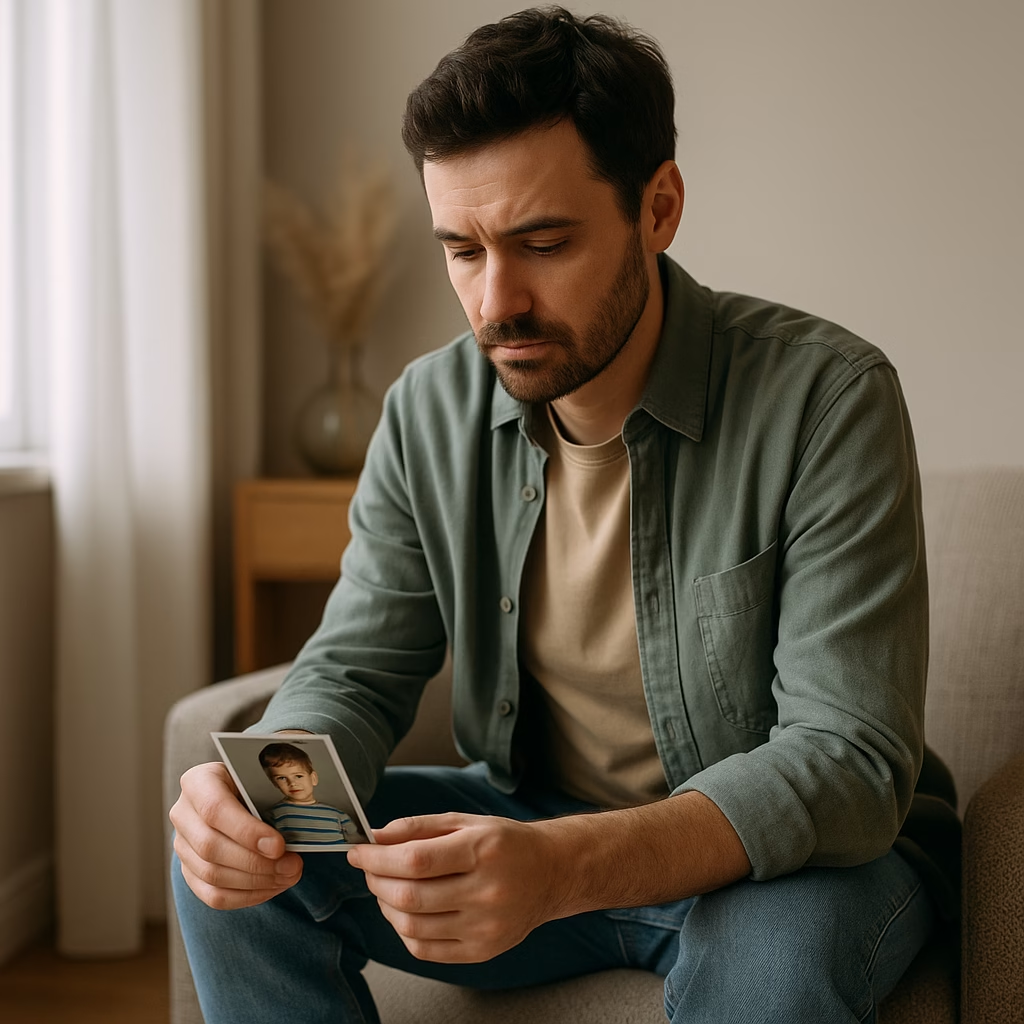
Many adults who carry childhood trauma don’t realize it. Not because their experiences weren’t real or significant — but because they normalized what happened, minimized it compared to “worse” things, or simply never had language for what they went through. If you’ve ever found yourself wondering “do I have childhood trauma?” — the fact that you’re asking is already meaningful.
This guide walks through the most common signs of unresolved childhood trauma in adults, explains why it so often goes unrecognized, and outlines what healing actually looks like.
Do I Have Childhood Trauma? Common Signs in Adults
✓ Anxiety or hypervigilance that never fully lifts
✓ Difficulty trusting yourself or others
✓ Emotional reactions that feel bigger than the moment
✓ A persistent sense that something is wrong with you
✓ People pleasing or difficulty with boundaries
✓ Avoiding conflict at all costs
✓ Difficulty being alone or difficulty being close
✓ Repeating family patterns you swore you’d break
Feel free to share or embed this infographic with credit to darinkingcounselingllc.com
What Counts as Childhood Trauma?
Childhood trauma is broader than most people realize. The Substance Abuse and Mental Health Services Administration defines trauma as an event, series of events, or set of circumstances experienced as physically or emotionally harmful — with lasting adverse effects on functioning and wellbeing. By that definition, childhood trauma includes:
- Physical, sexual, or emotional abuse
- Neglect — physical or emotional
- Witnessing domestic violence or parental conflict
- Growing up with a parent with untreated mental illness or addiction
- Loss of a parent or caregiver through death, divorce, or abandonment
- Bullying, social rejection, or peer victimization
- Medical trauma or chronic illness in childhood
- Poverty, housing instability, or food insecurity
- Growing up in a dysfunctional family system
- Experiencing or witnessing community violence
Important reminder: You don’t need to have experienced the “worst” kind of trauma for your experience to be real and worth healing. Emotional neglect, chronic invalidation, and growing up in an anxious or unpredictable home can all cause lasting trauma — even without a single dramatic event.
10 Signs You May Have Unresolved Childhood Trauma
1. You Struggle with Deep, Unexplained Shame
Toxic shame — the belief that you are fundamentally flawed, broken, or unworthy — is one of the most reliable markers of childhood trauma. Unlike guilt (which says “I did something bad”), shame says “I am something bad.” If this is a familiar feeling with no clear present-day source, childhood experiences are often at the root.
2. Your Emotional Reactions Feel Disproportionate
If small things trigger big reactions — a tone of voice, mild criticism, someone being unavailable — it’s often because the present moment has activated a much older wound. The intensity belongs to the past, not just the present.
3. You Have Persistent Anxiety or Hypervigilance
A nervous system shaped by childhood trauma stays on alert long after the danger has passed. Chronic anxiety, difficulty relaxing, always waiting for something bad to happen — these are signs of a nervous system that learned early that the world was not safe. Read more about how trauma affects the nervous system.
4. You Have Difficulty Trusting People
When the people who were supposed to protect you hurt you — or failed to — the nervous system learns that people are unreliable or dangerous. Difficulty trusting partners, friends, or authority figures in adulthood often traces directly to early relational wounds.
5. You Struggle with Boundaries or People Pleasing
Children who grew up in unpredictable or demanding environments often learn to manage their environment by anticipating others’ needs and suppressing their own. This becomes people pleasing in adulthood — a survival strategy that outlives its usefulness.
6. You Feel Disconnected from Your Body or Emotions
Dissociation — feeling numb, detached, or like you’re watching yourself from outside — is a common response to overwhelming childhood experiences. Learn more about what dissociation feels like.
7. You Repeat Painful Relationship Patterns
Childhood trauma shapes attachment — how we connect, what feels familiar, and what we unconsciously seek in relationships. If you find yourself in relationships that echo painful childhood dynamics, abandonment trauma or attachment wounds may be the common thread.
8. You Have a Harsh Inner Critic
Many trauma survivors internalized the voices of critical, neglectful, or abusive caregivers. This becomes a relentless inner critic that sounds exactly like the environment you grew up in.
9. You Struggle with Chronic Depression or Emptiness
The National Institute of Mental Health recognizes the strong link between adverse childhood experiences and adult depression. A persistent sense of emptiness or hopelessness that has always been there — not tied to any specific current circumstance — is often rooted in childhood wounds.
10. Your Childhood Feels Like a Gap or a Blur
Significant gaps in childhood memories, or memories that feel strangely distant, can be a sign that dissociation was at work during those years. The mind protects itself from what it can’t process — and sometimes that means certain periods of childhood don’t exist in clear memory.
| Sign | What It May Point To |
|---|---|
| Deep unexplained shame | Internalized messages from childhood environment |
| Disproportionate emotional reactions | Present triggers activating older wounds |
| Chronic anxiety or hypervigilance | Nervous system stuck in threat-response mode |
| Difficulty trusting others | Early relational betrayal or inconsistency |
| People pleasing / poor boundaries | Survival strategy from unpredictable environment |
| Emotional numbness or dissociation | Protective shutdown in response to overwhelm |
| Repeating painful relationship patterns | Attachment wounds seeking familiar dynamics |
| Harsh inner critic | Internalized critical or abusive voices |
| Chronic depression or emptiness | Unprocessed grief, loss, or neglect |
| Childhood memory gaps | Dissociation during overwhelming periods |
Why Childhood Trauma Often Goes Unrecognized
- “It wasn’t that bad” — comparing your experience to worse things minimizes real wounds
- “That’s just how my family was” — normalizing what was actually harmful
- “I don’t remember much” — gaps in memory are often the trauma itself
- “My parents did their best” — which may be true and also not mean what happened was okay
- “I turned out fine” — often said by people who are quietly struggling
The CDC’s Adverse Childhood Experiences (ACE) study — one of the largest investigations of childhood trauma ever conducted — found that ACEs are far more common than most people realize, with profound and dose-dependent effects on adult mental and physical health.
Note: Recognizing that you have childhood trauma is not about blaming your parents or rewriting your history. It’s about understanding the roots of patterns that may be limiting your life today — so you can do something about them.
What Healing Childhood Trauma Looks Like
EMDR Therapy
EMDR therapy is one of the most well-researched treatments for childhood trauma, helping the brain reprocess early memories so they lose their emotional charge.
Internal Family Systems (IFS)
IFS therapy works with the parts of the self that formed to survive childhood — the inner critic, the people pleaser, the one who hides — helping them find safety and rest.
CPTSD Therapy
For childhood trauma that has shaped identity and emotional regulation at a deep level, Complex PTSD therapy provides a framework specifically designed for layered, relational trauma.
Telehealth Trauma Therapy
Trauma counseling in Pennsylvania is available via telehealth across the state — making it possible to access specialized care wherever you are.
Related reading: Our guides on generational trauma, Complex PTSD vs PTSD, and abandonment trauma in relationships explore how childhood wounds show up across different areas of adult life.
Frequently Asked Questions
Can you have childhood trauma without remembering it?
Yes — childhood trauma can have lasting effects even without clear conscious memories. The nervous system and body store traumatic experiences even when explicit memory is absent or fragmented. A trauma therapist can help you work with what’s present — body sensations, patterns, emotional responses — even without detailed memories.
How do I know if my childhood was traumatic?
Rather than focusing on whether specific events meet a threshold of “bad enough,” look at the effects — chronic anxiety, shame, difficulty trusting people, disproportionate emotional reactions, or patterns that keep repeating. If your childhood experiences left lasting marks on how you feel about yourself and relate to others, that’s worth exploring with a licensed trauma therapist.
Can childhood trauma cause physical symptoms?
Yes — the CDC’s ACE study found strong links between childhood trauma and adult physical health outcomes including chronic pain, digestive issues, and cardiovascular disease. Trauma is a whole-body experience. Read more about how trauma affects the nervous system.
Is it too late to heal childhood trauma as an adult?
It is never too late. The brain retains neuroplasticity throughout life — meaning it continues to change in response to new experiences, including therapeutic ones. Adults of all ages make meaningful and lasting recoveries from childhood trauma with the right support.
What type of therapy is best for childhood trauma?
EMDR therapy and trauma-focused approaches are among the most well-researched treatments for childhood trauma. IFS therapy is particularly effective for working with the parts of the self that formed to survive childhood. A licensed trauma therapist can help you determine the right fit.
What happened to you as a child matters — and it can be healed.
Darin King, LPC specializes in childhood trauma, CPTSD, and EMDR therapy in Pennsylvania. Telehealth available statewide.
See more from Darin King Counseling on Google