

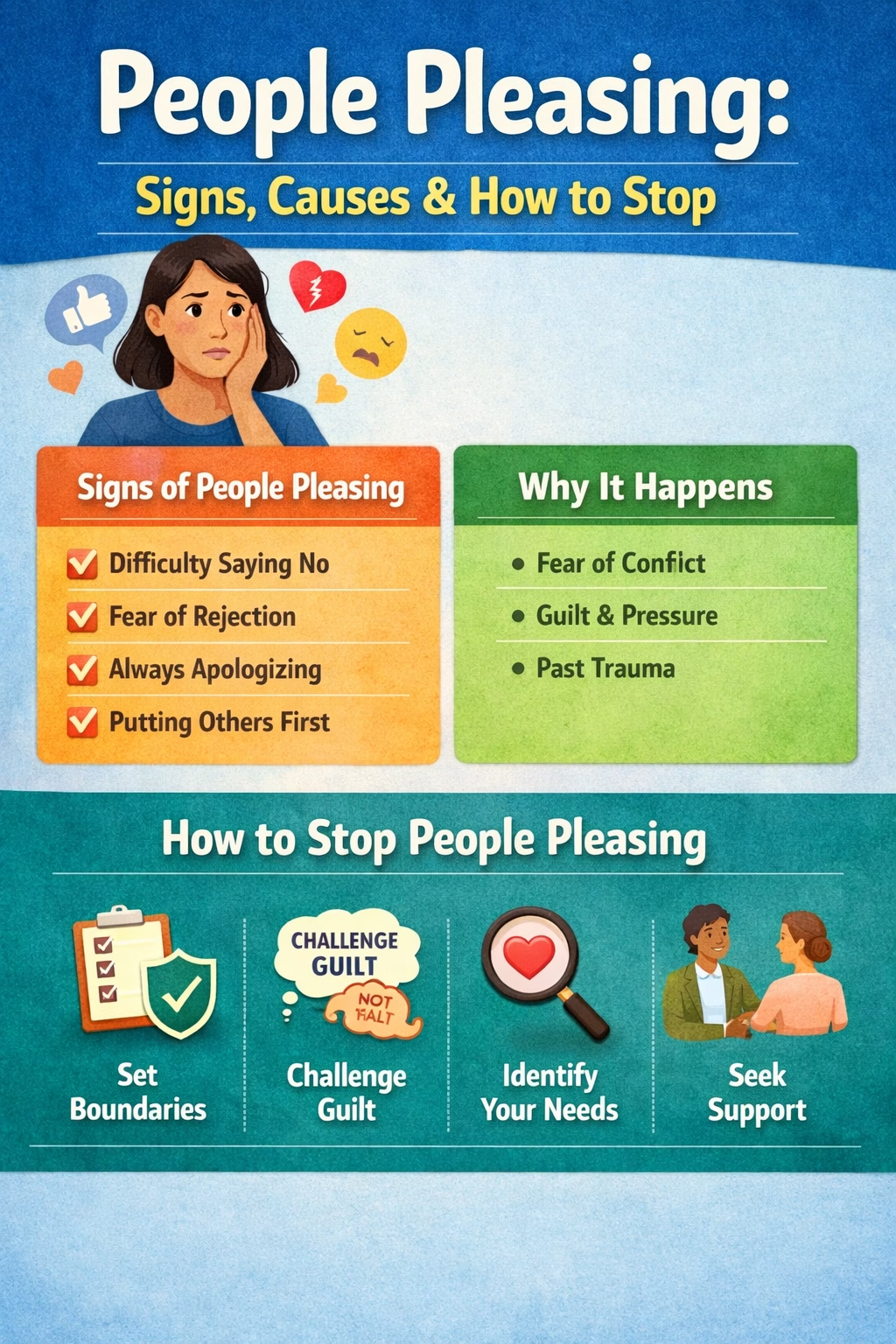
People pleasing gets talked about like it’s a quirk — a niceness that just goes a little too far. But for many people, people pleasing is not about being nice. It’s about survival. It developed in environments where making others happy was the safest thing to do, where saying no had consequences, and where your own needs were secondary — or dangerous to express. Understanding where people pleasing comes from is the first step toward being able to stop.
This guide explains the trauma roots of people pleasing, how to recognize it in your own life, and what it looks like to heal.
People Pleasing vs Genuine Kindness: What’s the Difference?
✓ You can say no without panic or guilt
✓ Your own needs are also considered
✓ Helping feels good — not obligatory
✓ You don’t resent people you help
✓ Saying no feels terrifying or impossible
✓ Your own needs are suppressed or ignored
✓ Helping feels obligatory — not optional
✓ Resentment, exhaustion, and emptiness build over time
Feel free to share or embed this infographic with credit to darinkingcounselingllc.com
What Is People Pleasing?
People pleasing is a pattern of prioritizing others’ approval, comfort, and needs above your own — consistently, compulsively, and often at significant cost to yourself. It goes beyond occasional generosity or consideration. People pleasing is driven by fear: fear of disapproval, fear of conflict, fear of rejection, fear of being seen as difficult, and ultimately, fear of being abandoned or hurt.
According to the National Institute of Mental Health, anxiety disorders — which are closely linked to people pleasing patterns — are among the most common mental health conditions in the United States, affecting nearly one in five American adults. For many of those people, people pleasing is anxiety in action.
Key reframe: People pleasing is not a personality flaw or a sign that you are weak. It is a learned survival strategy — one that made complete sense in the environment it developed in. The problem is that survival strategies have a way of outliving the conditions that created them.
The Trauma Roots of People Pleasing
People pleasing almost always has roots in early experiences. Children who grew up in environments where love was conditional, where conflict was dangerous, where a parent’s moods had to be carefully managed, or where expressing needs led to punishment or abandonment — these children learned to survive by becoming attuned to everyone around them and suppressing themselves.
Common origins of people pleasing include:
- Growing up in a dysfunctional family system where keeping the peace was essential
- Having a parent with untreated mental illness, addiction, or narcissistic traits whose moods were unpredictable
- Experiencing emotional or physical abuse where compliance reduced the risk of harm
- Being parentified — taking on adult emotional responsibilities as a child
- Abandonment trauma that taught that your worth depends on making others happy
- Chronic invalidation where your own feelings and needs were dismissed or punished
The CDC’s Adverse Childhood Experiences research consistently shows that children who experience unpredictable or threatening home environments develop hypervigilance to others’ emotional states — the neurological foundation of people pleasing.
Signs You Are a People Pleaser
| Area | Signs of People Pleasing |
|---|---|
| Saying no | Saying no feels terrifying, impossible, or requires elaborate justification |
| Conflict | Avoiding disagreement at all costs — agreeing even when you don’t, apologizing even when you’re not wrong |
| Needs | Difficulty identifying your own needs, let alone expressing them |
| Approval | Feeling anxious until you know others are happy with you |
| Resentment | Saying yes and feeling resentful — but continuing to say yes anyway |
| Identity | Difficulty knowing who you are outside of what you do for others |
| Boundaries | Boundaries feel selfish, dangerous, or simply impossible to hold |
| Feelings | Hiding or minimizing your true feelings to keep others comfortable |
The Hidden Costs of People Pleasing
People pleasing is often praised by the people who benefit from it. But the person doing it pays a significant price:
Physical and Emotional Exhaustion
Constantly monitoring others’ needs and suppressing your own is deeply depleting. People pleasers often experience chronic fatigue, burnout, and a vague but persistent sense of emptiness — because they are pouring from a cup that never gets refilled.
Resentment and Anger
When you consistently give more than you receive — and never feel able to ask for what you need — resentment builds. Often this anger has nowhere to go, so it turns inward as depression or erupts in ways that then trigger shame.
Loss of Identity
When your sense of self is built around what you do for others, you can lose touch with who you actually are — what you think, what you feel, what you want, what you believe. Many people pleasers describe feeling like they don’t know themselves.
Attracting Unhealthy Relationships
People pleasers are often drawn to — and draw — people who take more than they give. The dynamic can enable narcissistic, controlling, or abusive behavior in others. Read more about therapy for narcissistic abuse and reactive abuse.
Never Feeling Like Enough
Because people pleasing is driven by fear rather than genuine satisfaction, no amount of approval ever feels like enough. The anxiety returns quickly, and the cycle begins again.
Note: The Substance Abuse and Mental Health Services Administration recognizes that trauma survivors frequently develop fawn responses — a fourth survival response alongside fight, flight, and freeze — in which appeasing others becomes the primary strategy for managing threat. People pleasing is often this fawn response in daily life.
People Pleasing and the Fawn Response
In trauma-informed therapy, people pleasing is often understood as a fawn response — a survival strategy in which a person manages perceived threat by becoming agreeable, accommodating, and self-effacing. While fight, flight, and freeze are the better-known trauma responses, fawning is just as real and just as rooted in nervous system biology.
The fawn response says: If I make myself small, useful, and agreeable enough — they won’t hurt me. They won’t leave. I’ll be safe.
Understanding people pleasing as a fawn response — rather than a character trait — fundamentally changes the work of healing it. Read more about how trauma affects the nervous system.
How to Stop People Pleasing
Stopping people pleasing is not as simple as deciding to say no more. The pattern runs deep — into the nervous system, into early attachment, into core beliefs about your worth and safety. Lasting change requires working at that level.
Recognize the Pattern Without Shame
The first step is awareness — noticing when you are people pleasing, what the trigger was, and what fear is underneath it. This is not about self-criticism. It’s about curiosity.
Learn to Tolerate Discomfort
People pleasing avoids the discomfort of disappointing others. Part of healing is building the capacity to tolerate that discomfort — to let someone be unhappy without catastrophizing or immediately fixing it.
Practice Small No’s
Start with low-stakes situations. Notice what happens in your body when you say no. Notice that the feared consequences often don’t materialize. This is nervous system retraining through direct experience.
Work with a Therapist
Because people pleasing is rooted in early trauma and nervous system patterns, therapy is often the most effective path to lasting change. Approaches that work particularly well include:
- IFS therapy — works directly with the people-pleasing part, understanding what it’s protecting and helping it find safety. Internal Family Systems therapy is especially well-suited to this work.
- EMDR therapy — processes the early memories that created the need to please. EMDR therapy in Pennsylvania.
- Trauma-focused therapy — addresses the root trauma driving the fawn response. Trauma counseling in Pennsylvania.
- DBT skills — builds the interpersonal effectiveness and distress tolerance needed to hold boundaries. DBT therapy in Pittsburgh.
Related reading: Our guides on abandonment trauma in relationships, signs of childhood trauma, and shame vs guilt provide important context for understanding the roots of people pleasing.
Frequently Asked Questions
Is people pleasing a trauma response?
Yes — people pleasing is widely understood in trauma-informed therapy as a fawn response: a survival strategy developed in environments where appeasing others was the safest option. Like fight, flight, and freeze, the fawn response is a nervous system reaction to perceived threat. People pleasing is what that response looks like in daily life.
Why is it so hard to stop people pleasing?
People pleasing is hard to stop because it operates below conscious awareness, is reinforced by short-term relief, and is rooted in deep nervous system patterns and early beliefs about safety and worth. Willpower alone is rarely enough — lasting change requires working with the underlying trauma that drives the behavior, ideally with a trauma-informed therapist.
What is the difference between being kind and people pleasing?
Genuine kindness comes from choice — you help because you want to, and you could say no without significant fear or guilt. People pleasing comes from fear — you help because you feel you have to, and your own needs are consistently sacrificed. Kindness feels good. People pleasing often feels obligatory, exhausting, and hollow.
Can people pleasing cause anxiety and depression?
Yes — people pleasing is closely linked to both. The constant vigilance required to monitor others’ needs maintains chronic anxiety. The ongoing suppression of your own needs and identity contributes significantly to depression. Treating the underlying trauma often produces meaningful improvement in both. See our guides on anxiety counseling and depression counseling.
What type of therapy helps with people pleasing?
IFS therapy is particularly effective for people pleasing because it works directly with the pleasing part. EMDR therapy addresses the early trauma memories driving the pattern. DBT therapy builds the skills needed to hold boundaries and tolerate the discomfort of disappointing others.
You were never the problem. You were surviving. Now you can start living.
Darin King, LPC specializes in trauma, people pleasing, and boundary work in Pennsylvania. Telehealth available statewide.
See more from Darin King Counseling on Google