

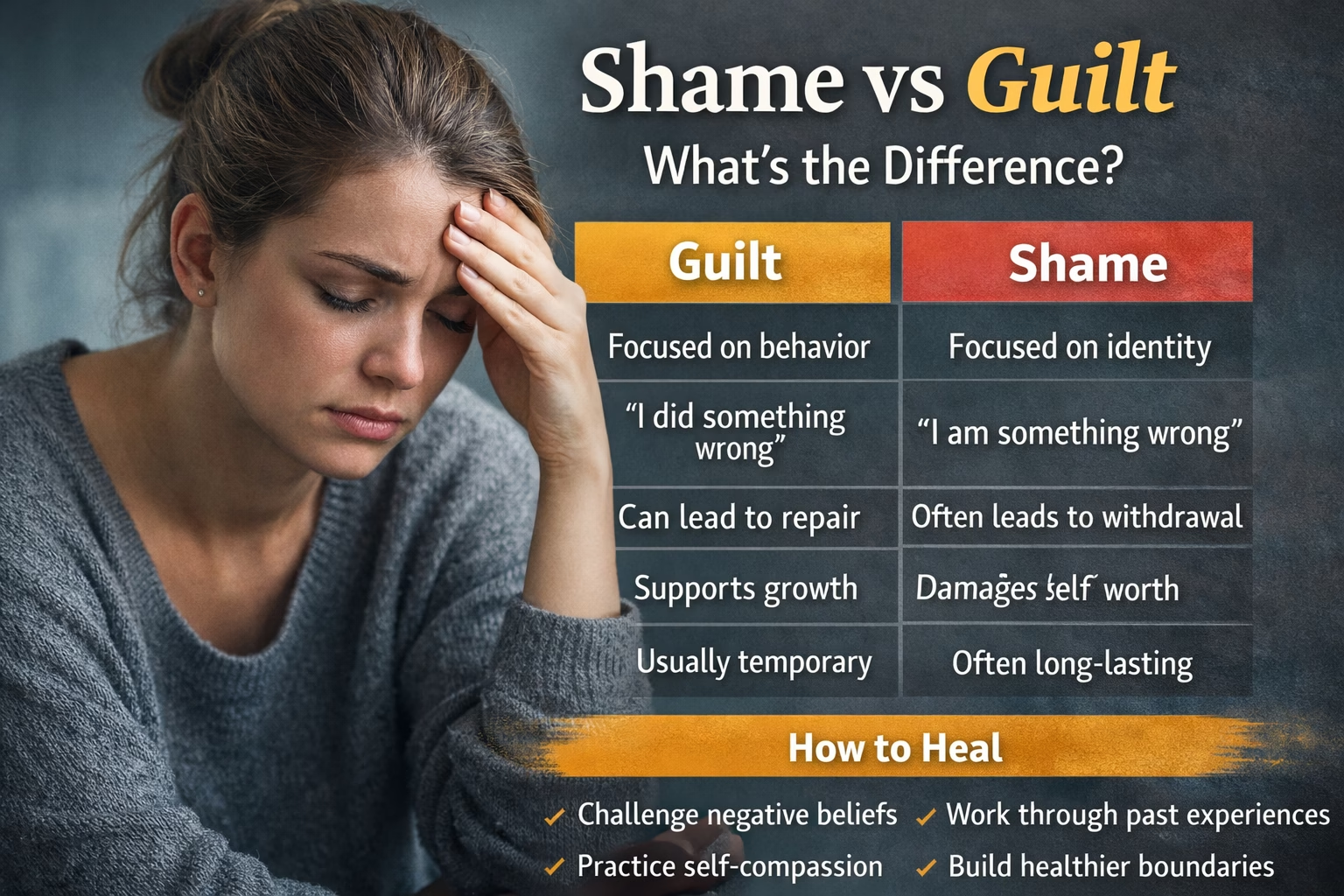
Shame and guilt are often used interchangeably, but they are profoundly different experiences — and that difference matters enormously for mental health, healing, and how you relate to yourself. Guilt can actually motivate positive change. Shame, especially the toxic kind rooted in trauma, does the opposite — it paralyzes, isolates, and quietly destroys.
Understanding the difference between shame and guilt is not just an academic exercise. For many trauma survivors, it is one of the most clarifying and liberating things they can learn about themselves.
Shame vs Guilt: The Core Difference
✓ Focused on a specific behavior or action
✓ Motivates repair, apology, and change
✓ Keeps you connected to your values
✓ Painful but functional — it passes
✓ Focused on the self — who you are
✓ Motivates hiding, withdrawal, and self-attack
✓ Disconnects you from yourself and others
✓ Chronic and corrosive — it doesn’t pass easily
Feel free to share or embed this infographic with credit to darinkingcounselingllc.com
Shame vs Guilt: The Core Difference
The simplest and most useful distinction between shame and guilt comes down to four words:
- Guilt says: “I did something bad.”
- Shame says: “I am something bad.”
Guilt is about behavior. Shame is about identity. That one shift — from what you did to who you are — changes everything about how the emotion functions, how long it lasts, and what it does to you.
According to the American Psychiatric Association, shame is a central feature of numerous mental health conditions including PTSD, Complex PTSD, depression, and eating disorders — making it one of the most clinically significant emotions in trauma treatment.
Key insight: Guilt, in its healthy form, is actually a sign of an intact moral compass. It says you care about your impact on others and want to do better. Shame, particularly toxic shame, is not a moral compass — it is a wound. It doesn’t make you better. It makes you smaller.
How Shame and Guilt Feel Differently
| Guilt | Shame | |
|---|---|---|
| Focus | A specific behavior or action | The self — who you fundamentally are |
| Internal message | “I did something I regret” | “I am defective, worthless, or unlovable” |
| Motivation | Repair, apology, change | Hiding, withdrawal, self-punishment |
| Social effect | Keeps you connected — moves you toward others | Isolates — moves you away from others |
| Duration | Resolves when the situation is addressed | Chronic — doesn’t resolve easily on its own |
| Physical experience | Tightness, heaviness, restlessness | Wanting to disappear, collapse, or hide |
| Self-talk | “I should have done better” | “I am fundamentally wrong or broken” |
| Effect on mental health | Manageable when proportionate | Strongly linked to depression, anxiety, and trauma |
What Is Toxic Shame?
Toxic shame is shame that has become a core part of a person’s identity — a deeply held belief that they are fundamentally flawed, unworthy, or unlovable. Unlike healthy shame (which is a brief social signal that you’ve violated a norm you care about), toxic shame is pervasive, disproportionate, and rooted in experiences rather than actions.
Toxic shame doesn’t say “you did something wrong.” It says “you are wrong.” And because it targets identity rather than behavior, there’s nothing you can do to fix it — which is exactly what makes it so paralyzing.
Where Toxic Shame Comes From
- Childhood abuse — especially emotional abuse and chronic criticism
- Growing up in a dysfunctional family system where love felt conditional
- Neglect — being made to feel invisible or burdensome
- Being shamed for normal childhood needs, emotions, or behaviors
- Trauma — especially sexual trauma, where shame is frequently misplaced onto the survivor
- Religious trauma — environments that used shame as a tool of control
- Bullying, social rejection, and peer humiliation
Note: The National Institute of Mental Health recognizes that toxic shame is a significant driver of depression, social anxiety, and self-destructive behavior. It is also one of the most undertreated aspects of trauma — in part because shame makes people reluctant to talk about it, even in therapy.
Shame, Trauma, and Complex PTSD
Toxic shame is not just a feature of trauma — for many survivors, it is the central organizing wound. In Complex PTSD, a profoundly negative self-concept is one of the three defining additional symptom clusters beyond standard PTSD. Survivors may:
- Believe they are fundamentally broken or damaged beyond repair
- Feel that the trauma happened because of something wrong with them
- Experience shame about their trauma symptoms themselves — feeling “crazy” or “weak”
- Struggle with self-compassion because they don’t feel they deserve it
- Use self-punishment — overwork, self-criticism, or self-sabotage — as a way of managing shame
This is why treating trauma without addressing shame often produces incomplete results. The shame needs to be part of the work. Read more about the connection between shame and childhood trauma and generational trauma.
Shame and People Pleasing
Toxic shame and people pleasing are deeply connected. When you believe at your core that you are not enough — not lovable, not worthy, not acceptable as you are — you spend enormous energy trying to compensate. People pleasing is one of the most common strategies: if I make myself useful enough, agreeable enough, indispensable enough, maybe no one will see how defective I really am.
Guilt That Becomes Shame: The Slide
Healthy guilt can slide into shame when:
- The guilt is disproportionate to the actual harm done
- The person repeatedly replays the event without resolution
- Others reinforce the message that the person is bad, not just the behavior
- The guilt becomes generalized — from “I did that badly” to “I always do everything badly” to “I am bad”
The Substance Abuse and Mental Health Services Administration emphasizes that trauma-informed care recognizes this slide and addresses shame directly rather than expecting it to resolve on its own.
How to Heal Toxic Shame
Shame heals in relationship — slowly, through experiences that contradict the shame message. The therapeutic relationship is often the first place that happens.
EMDR Therapy
EMDR therapy targets the specific memories where shame took root — processing them so the emotional charge and the shame-based beliefs associated with them diminish over time.
Internal Family Systems (IFS)
IFS therapy works directly with the shame — not trying to eliminate it, but understanding what it protects and helping it find a different role. Many people find IFS uniquely effective for shame work because it approaches the shame with curiosity rather than combat.
Trauma-Focused Therapy
Trauma counseling in Pennsylvania creates the relational safety needed to begin talking about shame — often the first and most important step. Telehealth available statewide.
DBT and Self-Compassion Work
DBT therapy includes explicit work on self-compassion and reducing self-judgment — skills that directly counter the internal environment that shame thrives in.
Related reading: Our guides on people pleasing, signs of childhood trauma, and Complex PTSD vs PTSD explore how toxic shame shows up across different areas of life and healing.
Frequently Asked Questions
What is the main difference between shame and guilt?
The core difference is that guilt says “I did something bad” while shame says “I am something bad.” Guilt is focused on a specific behavior and can motivate repair and change. Shame is focused on identity — and tends to motivate hiding, withdrawal, and self-punishment. Guilt is painful but functional. Toxic shame is chronic and corrosive.
Is shame always bad?
Not all shame is toxic. Healthy shame is a brief social signal that you’ve violated a norm you care about. The problem is toxic shame: shame that has become a core part of identity, is disproportionate to any actual wrong, and is rooted in early experiences of abuse, neglect, or chronic criticism rather than specific behavior.
Can shame cause depression?
Yes — toxic shame is one of the most significant drivers of depression. The belief that you are fundamentally defective produces hopelessness, social withdrawal, and self-destructive behavior. Treating shame directly, not just depressive symptoms, is often essential to lasting recovery. See our guide on depression counseling in Pittsburgh.
How does trauma cause shame?
Trauma — especially childhood trauma at the hands of caregivers — causes shame through a particular developmental logic: children cannot afford to see their caregivers as bad, so they conclude they themselves must be the problem. This protects the attachment relationship but plants deep roots of toxic shame that can persist for decades. Read more about childhood trauma and its lasting effects.
What type of therapy is best for shame?
EMDR therapy targets the specific memories where shame was installed. IFS therapy works with shame as a protective part of the system. Trauma-focused therapy creates the relational safety needed to begin working with shame. All three understand shame as a wound to be healed rather than a truth to be accepted.
Shame thrives in silence. Healing begins when you don’t have to carry it alone.
Darin King, LPC specializes in shame, trauma, and EMDR therapy in Pennsylvania. Telehealth available statewide.
See more from Darin King Counseling on Google