

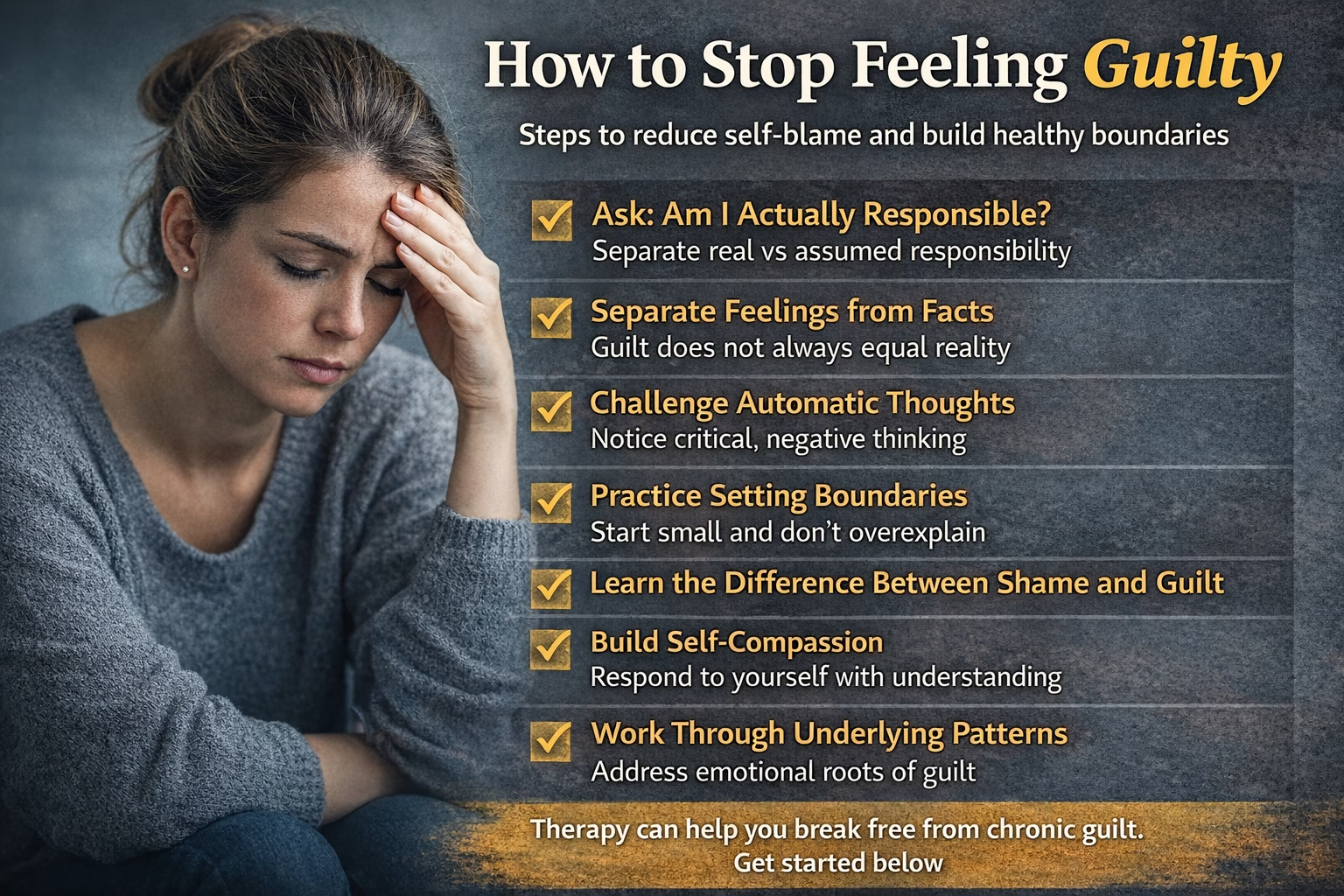
Guilt is supposed to be a signal — a brief, useful indicator that something you did conflicted with your values, and that repair might be needed. But for many people, guilt has become a constant background noise: always present, always pointing inward, always finding something to latch onto. If you feel guilty for resting, for having needs, for saying no, for taking up space — that is not a healthy conscience at work. That is something else entirely.
This guide walks through the specific steps to stop feeling guilty — not by suppressing guilt or becoming indifferent to others, but by learning to distinguish between guilt that serves you and guilt that is hurting you, and by addressing the deeper roots that keep chronic guilt in place.
How to Stop Feeling Guilty: The 5-Step Framework
✓ Separate guilt from shame
✓ Address what can be addressed — then release
✓ Challenge the beliefs driving the guilt
✓ Work with the underlying trauma or conditioning
✓ Over-apologizing hoping it will go away
✓ People pleasing to avoid triggering guilt
✓ Self-punishment as a substitute for resolution
✓ Ignoring guilt and hoping it fades on its own
Feel free to share or embed this infographic with credit to darinkingcounselingllc.com
Step 1: Understand the Type of Guilt You’re Dealing With
Not all guilt is the same — and the approach to stopping it depends entirely on which type you’re experiencing. Before doing anything else, identify which of these categories applies:
| Type of Guilt | What It Looks Like | What Actually Helps |
|---|---|---|
| Proportionate guilt | You did something that genuinely harmed someone and feel appropriately bad | Acknowledge, repair where possible, forgive yourself, and move forward |
| Disproportionate guilt | The guilt is far bigger than the actual harm caused — or no harm was caused at all | Reality-test the guilt, identify the belief underneath it, address the root |
| Misplaced guilt | You feel guilty for something that wasn’t your fault or responsibility | Identify whose responsibility it actually was, work on releasing borrowed guilt |
| Chronic background guilt | A pervasive, persistent sense of guilt that isn’t tied to specific events | Address the deeper roots — usually trauma, shame, or early conditioning |
According to the American Psychiatric Association, excessive or inappropriate guilt is a recognized symptom of depression, anxiety, and PTSD — which means that chronic guilt is often a mental health signal worth taking seriously, not just a moral failing to push through.
Step 2: Separate Guilt from Shame
Guilt and shame feel similar but work very differently — and they require different approaches. Before you can stop feeling guilty, you need to know which one you’re actually dealing with.
- Guilt says: “I did something bad” — it’s about a specific behavior
- Shame says: “I am something bad” — it’s about your identity and worth
Guilt can be addressed directly — through acknowledgment, repair, and self-forgiveness. Shame requires deeper work, because it targets the self rather than a behavior. If what feels like guilt is actually shame — a deep sense of being fundamentally defective rather than having done something specific — then the steps for stopping guilt won’t fully work until the shame underneath is addressed.
Read our full guide on shame vs guilt to understand the difference more deeply.
Key question to ask yourself: Is this guilt about something I specifically did — or is it a general, pervasive sense that I am always somehow wrong or failing? If it’s the latter, what feels like guilt is likely shame — and it needs to be addressed at a different level.
Step 3: Check the Facts on the Guilt
The National Institute of Mental Health recognizes that distorted thinking — including disproportionate guilt — is a core feature of depression and anxiety. One of the most effective short-term tools for managing guilt is to check the facts:
- Did I actually cause harm? Or am I assuming harm without evidence?
- Was this my responsibility? Or am I taking responsibility for something that belongs to someone else?
- Is my response proportionate? Would a reasonable person feel this guilty about this situation?
- Have I already addressed this? Am I continuing to feel guilty about something I’ve already acknowledged and repaired?
- Whose voice is this? Does this guilt sound like a specific person from your past — a parent, a religious authority, a critical caregiver?
This fact-checking process is not about dismissing genuine guilt. It is about distinguishing between guilt that is giving you accurate information and guilt that is giving you inaccurate information — often based on old programming rather than present reality.
Step 4: Address What Can Be Addressed — Then Release
For guilt that is proportionate and connected to a real situation, the path forward is clear: acknowledge the harm, make repair where possible, offer a genuine apology if appropriate, and then practice self-forgiveness.
Self-forgiveness is not the same as excusing harm or pretending it didn’t happen. It is recognizing that you are a human being capable of both failure and growth — and that continuing to punish yourself long after a situation has been addressed serves no one.
The Repair Process
- Acknowledge — to yourself and to whoever was harmed, what you did and its impact
- Apologize — genuinely, without defensiveness or excessive self-flagellation
- Make repair — where possible and appropriate
- Commit to change — what will you do differently?
- Release — guilt that has been fully addressed has done its job. Continuing to carry it is self-punishment, not conscience
Step 5: Challenge the Beliefs Driving Chronic Guilt
Chronic, disproportionate guilt is almost always driven by underlying beliefs — often formed in childhood — that generate guilt regardless of what you actually do. Common beliefs include:
- “I am responsible for everyone’s feelings and wellbeing”
- “Having needs is selfish”
- “I have to earn my place — I always need to be doing more”
- “If someone is upset, it must be my fault”
- “I don’t deserve good things unless I’ve suffered enough”
- “Saying no makes me a bad person”
These beliefs need to be identified, examined, and challenged — not just cognitively, but at the level of the nervous system where they were installed. This is work that therapy does particularly well. Read more about the connection between these beliefs and people pleasing, signs of a guilt complex, and childhood trauma.
Step 6: Address the Deeper Roots
If guilt is chronic, pervasive, and resistant to the steps above, it is almost certainly rooted in something deeper than current behavior — most commonly trauma, shame, or early conditioning. The Substance Abuse and Mental Health Services Administration emphasizes that trauma-informed care recognizes chronic guilt as a trauma response that needs to be addressed at its roots, not just managed symptom by symptom.
Common deeper roots of chronic guilt:
- Childhood trauma — particularly being made responsible for a caregiver’s emotions or wellbeing. Read more about signs of childhood trauma in adults.
- Growing up in a dysfunctional family system where guilt was used as a tool of control
- Religious trauma — environments that used guilt as a primary spiritual tool
- PTSD — where survivor’s guilt or guilt about trauma responses is a core symptom
- Generational trauma — guilt patterns passed down through family systems
Professional Support for Stopping Chronic Guilt
When guilt is chronic and resistant to self-help approaches, professional therapy is the most reliable path to lasting relief:
EMDR Therapy
EMDR therapy processes the specific memories that seeded the guilt — reducing their emotional charge and helping the nervous system update its response to present-day situations.
IFS Therapy
IFS therapy works directly with the guilt-carrying parts — helping them understand their role and find a less punishing way of operating.
DBT Skills
DBT therapy provides practical, evidence-based tools for checking the facts on guilt, tolerating the discomfort of not acting on guilt-driven urges, and building a more self-compassionate relationship with yourself.
Trauma-Focused Therapy
Trauma counseling in Pennsylvania addresses the root experiences driving chronic guilt, available via telehealth across the state.
Related reading: Our guides on shame vs guilt, signs of a guilt complex, and why do I feel guilty all the time provide important context for understanding and healing chronic guilt.
Frequently Asked Questions
Why can’t I stop feeling guilty even when I haven’t done anything wrong?
Guilt that persists without a clear cause is almost always rooted in something deeper — most commonly early experiences that installed beliefs like “I am responsible for everyone’s feelings.” This chronic background guilt is not your conscience giving you accurate information — it is an old pattern, often rooted in childhood or trauma, that needs to be addressed at its source. Read our guide on why you feel guilty all the time for more.
Is it normal to feel guilty all the time?
It is common — but it is not healthy or inevitable. Chronic guilt that is persistent and disproportionate is often a sign of underlying trauma, depression, or anxiety worth exploring with a trauma-informed therapist.
How do I forgive myself and stop feeling guilty?
Self-forgiveness for genuine wrongs involves acknowledging harm, making repair, committing to change, and then releasing ongoing self-punishment. For chronic disproportionate guilt, self-forgiveness requires addressing deeper roots — the beliefs and experiences that generate guilt regardless of what you do. EMDR therapy and IFS therapy facilitate this powerfully.
Can anxiety cause excessive guilt?
Yes — anxiety amplifies guilt responses and often generates guilt about hypothetical harms. Anxiety counseling alongside trauma-focused therapy addresses both effectively.
How long does it take to stop feeling guilty?
For proportionate guilt addressed directly, relief can come relatively quickly. For chronic, deep-rooted guilt connected to trauma or early conditioning, meaningful improvement typically happens over months of consistent therapeutic work. Telehealth therapy makes that support accessible from anywhere in Pennsylvania.
Guilt that never resolves is not your conscience — it’s a wound. And wounds can heal.
Darin King, LPC specializes in trauma, shame, guilt, and healing in Pennsylvania. Telehealth available statewide.
See more from Darin King Counseling on Google