

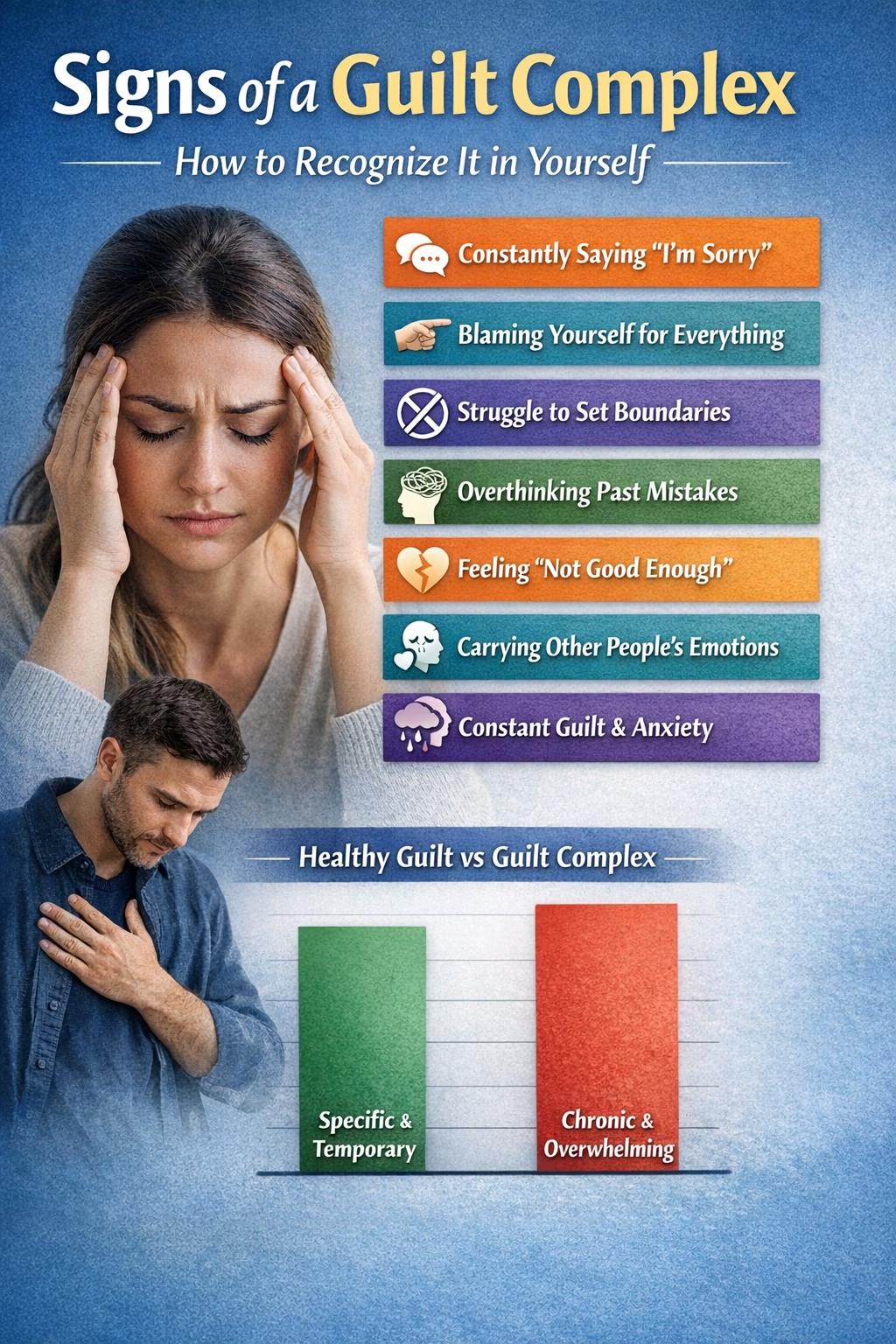
Most people feel guilty sometimes — after saying something unkind, letting someone down, or falling short of their own standards. That kind of guilt is healthy. It signals that your values are intact and that repair might be needed. But a guilt complex is something different entirely. It’s guilt that is chronic, disproportionate, and disconnected from any specific wrong you’ve actually committed — a pervasive sense that you are always somehow at fault, always failing, always responsible for everyone else’s pain.
If guilt feels like a constant companion rather than an occasional visitor, you may be dealing with a guilt complex — and understanding where it comes from is the first step toward freedom from it.
Healthy Guilt vs Guilt Complex: Key Differences
✓ Proportionate to the actual harm caused
✓ Motivates repair, apology, and change
✓ Resolves once addressed
✓ Leaves the sense of self largely intact
✓ Disproportionate — or without clear cause
✓ Motivates people pleasing and self-punishment
✓ Persists regardless of what you do
✓ Tied to a deeper sense of being fundamentally bad
Feel free to share or embed this infographic with credit to darinkingcounselingllc.com
What Is a Guilt Complex?
A guilt complex is a pattern of chronic, disproportionate guilt that operates largely independently of actual wrongdoing. Unlike healthy guilt — which arises in response to specific actions and resolves when those actions are addressed — a guilt complex is pervasive, persistent, and often rooted in deeper beliefs about the self.
The American Psychiatric Association recognizes excessive or inappropriate guilt as a symptom in several mental health conditions, including depression, anxiety disorders, and PTSD. When guilt is chronic and disproportionate, it is often a signal that something deeper — shame, trauma, or learned responsibility for others — is driving it.
Key distinction: A guilt complex is guilt that has become part of your identity rather than a response to your behavior. It says not just “I did something wrong” but “I am always doing something wrong” — and often “I am responsible for everything that goes wrong around me.” Understanding the difference between guilt and shame, and between healthy guilt and a guilt complex, is explored in depth in our guide on shame vs guilt.
12 Signs of a Guilt Complex
1. You Feel Guilty for Things That Aren’t Your Fault
Feeling responsible for other people’s moods, reactions, problems, or pain — even when you had nothing to do with causing them. A colleague is having a bad day and you wonder what you did. A partner is quiet and you assume you’ve done something wrong. This reflexive self-blame is one of the most common signs of a guilt complex.
2. You Apologize Constantly — Even When You’ve Done Nothing Wrong
Automatic, reflexive apologizing — for taking up space, for having needs, for asking questions, for existing in ways that might inconvenience others. The apology comes before any actual assessment of whether you’ve caused harm.
3. You Can’t Accept Compliments or Positive Feedback
Positive feedback doesn’t land — it bounces off or is immediately countered with self-criticism. A compliment is met with “oh, it was nothing” or instant deflection. The underlying belief that you are always falling short makes it impossible to take in evidence to the contrary.
4. You Feel Responsible for Everyone’s Happiness
A sense that it is your job to manage other people’s emotional states — to prevent their distress, to fix their problems, to keep them happy. When they are unhappy, you feel guilty, even if their feelings have nothing to do with you. This is closely connected to people pleasing.
5. You Have Difficulty Saying No
Saying no triggers immediate guilt — even for completely reasonable boundaries. The anticipated guilt of disappointing someone feels unbearable, so you say yes to things you don’t want to do, can’t afford, or genuinely shouldn’t take on.
6. You Replay Conversations and Interactions Looking for What You Did Wrong
A tendency to ruminate after interactions — replaying conversations, analyzing your tone, wondering if you said the wrong thing, whether you came across badly, whether someone was upset with you. This mental replaying is the guilt complex searching for confirmation of what it already believes.
7. You Feel Guilty for Having Needs
Shame or guilt around having normal human needs — for rest, for help, for connection, for food, for enjoyment. Needs feel like burdens placed on others, and experiencing them triggers guilt rather than simply prompting you to meet them.
8. You Punish Yourself
Self-punishment as a response to perceived failures — overworking, restricting pleasure, speaking harshly to yourself, or sabotaging good things in your life because you don’t feel you deserve them. The guilt complex often drives self-punishment as a way of “paying” for imagined wrongs.
9. You Find It Hard to Forgive Yourself
Even genuine mistakes that you’ve acknowledged and tried to repair continue to generate guilt long after the situation has been addressed. The guilt complex doesn’t respond to resolution — it continues regardless of what you do because it is not really about the specific action.
10. You Feel Guilty for Prioritizing Yourself
Self-care, boundaries, and prioritizing your own needs feel selfish and generate immediate guilt. Taking time for yourself, saying no to help someone else, or simply choosing what you want triggers the sense that you are failing in your responsibility to others.
11. You Minimize Your Own Suffering
Dismissing or minimizing your own pain in comparison to others — “other people have it so much worse,” “I have no right to complain.” This comparative minimization is the guilt complex applied to your own suffering: even being hurt becomes something you feel guilty about.
12. Guilt Wakes You Up at Night
Lying awake replaying situations, worrying about things you said or did, anxious about whether you’ve let someone down. The guilt complex doesn’t respect sleep — it follows you into the quiet.
| Sign | What’s Driving It |
|---|---|
| Guilt for things not your fault | Learned hyperresponsibility — often from childhood caregiving roles |
| Constant apologizing | Anticipatory guilt — trying to manage others’ reactions before they occur |
| Inability to accept compliments | Core belief of unworthiness blocking positive evidence |
| Responsibility for others’ happiness | Parentified child role or people-pleasing survival strategy |
| Difficulty saying no | Anticipated guilt of disappointing others outweighs own needs |
| Replaying conversations | Anxiety and guilt complex looking for confirmation of wrongdoing |
| Self-punishment | Guilt complex driving internal “payment” for imagined wrongs |
Where Does a Guilt Complex Come From?
A guilt complex almost always has roots in early experiences. The most common origins include:
Being Made Responsible for Others’ Emotions as a Child
Children who grew up with emotionally volatile, mentally ill, or addicted parents often learned to monitor and manage their caregiver’s emotional state. Taking responsibility for others’ feelings was not a choice — it was a survival strategy. That strategy becomes a guilt complex in adulthood.
Childhood Abuse or Neglect
Children who are abused often conclude that the abuse was their fault — a developmental protective mechanism that attributes the cause of harm to themselves rather than the caregiver. This misplaced guilt can persist for decades. Read more about signs of childhood trauma in adults.
Growing Up in a Dysfunctional Family System
In dysfunctional family systems, certain children take on the role of the family caretaker or scapegoat — both of which generate chronic guilt. The caretaker feels guilty for not doing enough; the scapegoat is blamed for the family’s problems.
Religious or Cultural Conditioning
Religious environments that use guilt as a primary tool of moral formation can produce a guilt complex that is deeply internalized and very difficult to distinguish from genuine conscience. Read more about religious trauma and its connection to chronic guilt and shame.
Trauma and PTSD
The National Institute of Mental Health recognizes excessive guilt as a core symptom of PTSD. Trauma survivors frequently carry guilt about the traumatic event itself — survivor’s guilt, guilt about their response to the trauma, or guilt about ongoing symptoms.
Note: The Substance Abuse and Mental Health Services Administration emphasizes that trauma-informed care recognizes excessive guilt as a trauma response — not a moral failing — and addresses it as part of the broader healing process rather than simply challenging the guilt cognitively.
How to Heal a Guilt Complex
Healing a guilt complex requires more than recognizing that your guilt is disproportionate. Because it is rooted in early experiences and nervous system patterns, it needs to be addressed at that level.
EMDR Therapy
EMDR therapy targets the specific memories and experiences that seeded the guilt complex — processing them so the misplaced responsibility and guilt lose their emotional charge.
IFS Therapy
IFS therapy works directly with the guilt-carrying parts — the inner caretaker, the self-punisher, the part that believes it is always at fault — helping them understand their role and find a less punishing way of being.
Trauma-Focused Therapy
Trauma counseling in Pennsylvania addresses the root experiences that generated the guilt complex, available via telehealth across the state.
DBT Skills
DBT therapy provides practical tools for checking the facts on guilt — distinguishing between guilt that is proportionate and guilt that is not — and for tolerating the discomfort of not acting on guilt-driven urges.
Related reading: Our guides on shame vs guilt, people pleasing, and signs of childhood trauma in adults provide important context for understanding the roots of a guilt complex and what healing looks like.
Frequently Asked Questions
What is a guilt complex?
A guilt complex is a pattern of chronic, disproportionate guilt that operates largely independently of actual wrongdoing. Unlike healthy guilt — which arises in response to specific actions and resolves when addressed — a guilt complex is pervasive and rooted in deeper beliefs about the self, often stemming from childhood experiences or trauma. Read more about shame vs guilt for important context.
What causes a guilt complex?
A guilt complex most commonly develops from being made responsible for others’ emotions as a child, childhood abuse or neglect where the child concluded they were at fault, growing up in a dysfunctional family system, religious conditioning, or trauma and PTSD where excessive guilt is a recognized symptom.
Is a guilt complex the same as anxiety?
A guilt complex and anxiety are closely related but distinct. Chronic guilt can drive anxiety — particularly social and relationship anxiety — and anxiety can amplify guilt responses. Both frequently co-occur in people with trauma histories. Anxiety counseling alongside trauma therapy addresses both effectively.
How do I stop feeling guilty all the time?
Stopping a guilt complex requires more than willpower — because the guilt is rooted in early experiences and nervous system patterns. EMDR therapy addresses the root experiences. IFS therapy works with the guilt-carrying parts of the self. DBT skills help distinguish proportionate from disproportionate guilt responses.
Can therapy help with a guilt complex?
Yes — therapy is highly effective, particularly when trauma-informed and addressing root experiences rather than just symptoms. Many people find significant relief within months of consistent therapeutic work. Telehealth therapy makes that support accessible from anywhere in Pennsylvania.
Guilt that never resolves is not your conscience — it’s a wound. And wounds can heal.
Darin King, LPC specializes in trauma, shame, guilt, and healing in Pennsylvania. Telehealth available statewide.
See more from Darin King Counseling on Google