

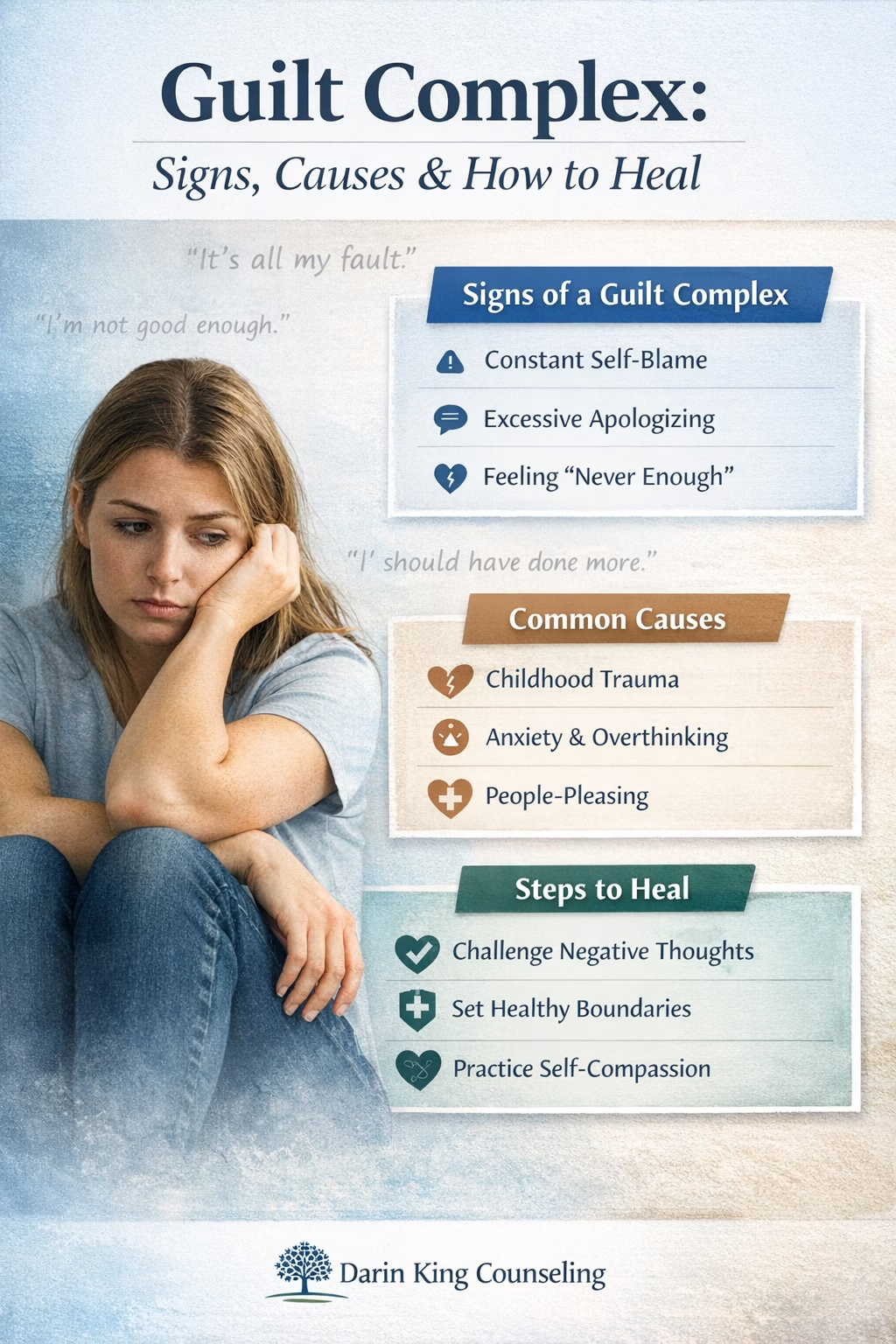
Most people feel guilty sometimes. That is a normal, functional part of being human — guilt is the signal that says something I did matters, and it may have caused harm. But a guilt complex is something different. It is guilt that becomes permanent, pervasive, and untethered from anything you actually did. It is carrying responsibility for things that were never yours to carry, and feeling like something is perpetually, undeniably wrong with you.
If you often feel guilty without knowing exactly why, apologize reflexively even when you haven’t done anything wrong, or find yourself exhausted by the weight of other people’s emotions — this post is for you.
Healthy Guilt vs. Guilt Complex: What’s the Difference?
✓ Motivates repair and accountability
✓ Fades once amends are made
✓ Forward-looking — “What can I do?”
✓ Proportional to what actually happened
✓ Supports growth and connection
✓ Leads to rumination and self-blame
✓ Lingers even when nothing is wrong
✓ Backward-looking — “You have failed”
✓ Disproportionate to actual events
✓ Damages self-worth and relationships
Feel free to share or embed this infographic with credit to darinkingcounselingllc.com
What Is a Guilt Complex?
A guilt complex is a pattern of chronic, excessive guilt that goes beyond what is proportional or reasonable for a given situation. According to the American Psychological Association, guilt can significantly influence thoughts, emotions, and behavior — and when it becomes persistent and distorted, it stops functioning as a moral compass and starts functioning as a source of ongoing psychological harm.
While guilt is not formally listed as a standalone diagnosis in the DSM-5, mental health professionals widely recognize guilt complexes as a significant clinical pattern — one that underlies and fuels anxiety, depression, people-pleasing, and relationship difficulties. Unlike healthy guilt, which is temporary and tied to a specific action, a guilt complex is diffuse. It attaches itself to everything. Your mind’s first response to anything going wrong — at work, in a relationship, in the room — is this is my fault.
If you recognize this pattern in yourself, it’s also worth exploring the full cluster of related experiences: the signs of a guilt complex, why you feel guilty all the time, and how to stop feeling guilty. The connection between guilt and shame is also worth understanding — they are related but meaningfully different. See our full breakdown of shame vs. guilt.
Signs of a Guilt Complex
A guilt complex rarely announces itself clearly. It tends to operate in the background — shaping decisions, exhausting relationships, and quietly eroding self-worth. The following signs are worth taking seriously, particularly when they appear together or feel chronic rather than situational.
| Sign | What It Looks Like | Why It Happens |
|---|---|---|
| Excessive apologizing | Saying sorry reflexively, even when you’ve done nothing wrong | Guilt has become an automatic response to potential displeasure |
| Feeling responsible for others’ emotions | When someone is upset, your first thought is what you did to cause it | Learned in environments where others’ moods were your responsibility |
| Chronic rumination | Replaying past conversations and decisions repeatedly | The brain scans for what you did wrong, even when nothing is evident |
| Difficulty setting limits | Saying no triggers intense guilt or dread | Limits feel like abandonment or selfishness rather than self-care |
| Feeling “never enough” | No matter how much you do, it doesn’t feel sufficient | The standard for earning relief from guilt keeps moving |
| Guilt without a clear cause | A persistent low-level sense that something is wrong, even in calm moments | Free-floating guilt has detached from specific events entirely |
| Physical symptoms | Tension, fatigue, headaches, difficulty sleeping | Chronic guilt activates the stress response and takes a physical toll |
Important distinction: Feeling guilty because you genuinely hurt someone and want to make it right is healthy guilt — it is doing its job. A guilt complex is when guilt persists after accountability has been taken, attaches to things outside your control, or arrives without any clear cause at all. For a deeper look at the specific patterns, see our post on the signs of a guilt complex.
What Causes a Guilt Complex?
Guilt complexes rarely develop in a vacuum. They are almost always rooted in early experiences — family environments, relational dynamics, and formative beliefs about what it means to be loved, safe, or worthy. Understanding the roots of your guilt does not excuse you from accountability, but it does help you stop holding yourself responsible for things that were never your fault.
Childhood Conditioning and Dysfunctional Family Systems
Children who grow up in environments where they were held responsible for a caregiver’s moods, stress, or unhappiness often internalize a distorted belief: when something is wrong, I caused it. This belief does not dissolve when childhood ends — it follows people into adult relationships, workplaces, and parenting. If a parent’s anger, sadness, or withdrawal felt like your job to manage, chronic guilt is often the result. If this resonates, our posts on growing up in a dysfunctional family system and recognizing childhood trauma may also be worth exploring.
Trauma
Trauma and guilt are deeply connected. When something terrible happens — especially in childhood — the mind sometimes reaches for guilt as a strange form of control. If it was my fault, then I can prevent it from happening again. This is a survival mechanism, not a moral failing. It is a way of creating a sense of agency in a situation that had none. Understanding how trauma affects the nervous system helps explain why these guilt patterns can feel so automatic and so hard to reason your way out of. Our post on what trauma is and how it shows up in daily life provides broader context.
Abandonment and Attachment Wounds
People with abandonment wounds often carry guilt as a way of explaining why relationships have gone wrong. If I had been better, they would have stayed. This keeps the illusion of control intact — but at the cost of persistent self-blame that makes genuine connection much harder. You can explore this further through our posts on abandonment trauma in relationships, signs of abandonment trauma in adults, and how to heal abandonment trauma.
People-Pleasing Patterns
Chronic guilt and people-pleasing are closely entangled. When your sense of safety or belonging depends on keeping others comfortable, disappointing someone — even for legitimate reasons — triggers guilt as though you’ve committed a real harm. Over time, this teaches you that your own needs are the threat, and guilt becomes the enforcement mechanism. Our posts on people-pleasing, why you might be a people pleaser, signs of a people pleaser, and how to stop being a people pleaser explore this pattern in depth.
Anxiety and Cognitive Distortions
The National Institute of Mental Health recognizes that anxiety significantly intensifies rumination and self-critical thinking. People with anxiety tend to replay events looking for what they did wrong, catastrophize minor missteps into moral failures, and engage in thought patterns — like all-or-nothing thinking and mind-reading — that make guilt feel more justified than it is.
Depression
Excessive guilt is one of the recognized diagnostic criteria for a major depressive episode. Depression does not just make you sad — it filters all experience through a lens of worthlessness and failure, amplifying every small mistake into evidence of something fundamentally wrong with you. Guilt and depression tend to reinforce each other in a cycle that is hard to break without professional support.
Religious and Cultural Messages
Guilt is also shaped by the moral frameworks people are raised in. Religious teachings about sin, shame, and unworthiness — when rigidly applied — can create an internalized guilt that has little to do with any specific action and everything to do with a sense of being inherently flawed. If religious messaging has contributed to your guilt patterns, our post on religious trauma explores how those experiences affect mental health and what healing can look like.
Note: Guilt complexes are more common in women than in men, according to research — largely because women are more often socialized to feel responsible for the emotional wellbeing of others. Men more often experience guilt around specific failures in roles or responsibilities. Both are real and both deserve attention.
How a Guilt Complex Affects Your Life
Chronic guilt is not just an uncomfortable feeling — it has measurable effects on mental health, relationships, and physical wellbeing.
Mental and Emotional Impact
Prolonged guilt disrupts the balance of neurotransmitters including serotonin, dopamine, and norepinephrine — affecting mood, motivation, focus, and the capacity for pleasure. It is closely associated with depression, anxiety, low self-esteem, and in severe cases, OCD, where guilt becomes entangled with compulsive checking or reassurance-seeking behaviors. If you’ve been asking yourself why you feel guilty all the time, the answer is often neurological as much as psychological.
Relationship Impact
A guilt complex makes relationships exhausting and unbalanced. You may take too much responsibility during conflict, apologize just to keep the peace, struggle to maintain healthy limits, or stay in dynamics that aren’t working out of a fear that leaving would make you a bad person. In some relationships, guilt becomes entangled with patterns of reactive abuse — where accumulated guilt and emotional overwhelm eventually cause reactive responses that are then used against you. Understanding signs of narcissistic abuse can be important for people whose guilt is being weaponized in a relationship.
Physical Impact
The Cleveland Clinic notes that chronic stress — which guilt reliably produces — can cause headaches, fatigue, digestive issues, muscle tension, sleep disruption, and a suppressed immune response. Carrying guilt in the body is not a metaphor. It is a physiological reality.
How to Heal a Guilt Complex
Healing from a guilt complex is not about deciding to feel less guilty. It is about understanding where the guilt came from, challenging the distorted beliefs that sustain it, and gradually building a more honest relationship with accountability — one that includes genuine responsibility without self-punishment. Our dedicated post on how to stop feeling guilty goes deeper on the practical steps.
Distinguish real responsibility from distorted self-blame
A useful three-part check: What actually happened? What was my actual role? What is a proportional response? If your guilt significantly exceeds what those three questions would suggest, it is likely distorted. Naming that is not making excuses — it is accurate thinking.
Challenge cognitive distortions
All-or-nothing thinking, mind-reading, catastrophizing, and over-responsibility are the thinking patterns most associated with a guilt complex. Cognitive behavioral therapy (CBT) specifically targets these patterns — teaching you to identify distorted thoughts and replace them with more accurate, balanced alternatives.
Practice self-compassion as a skill
Self-compassion is not letting yourself off the hook. It is treating yourself with the same basic fairness you would offer a friend who made a mistake. Research consistently shows that self-compassion supports accountability and change more effectively than self-criticism — because criticism activates threat responses that shut down learning, while compassion creates the safety needed for genuine reflection.
Work through the roots in therapy
Surface-level coping strategies help, but a guilt complex rooted in childhood conditioning, trauma, or attachment wounds usually requires deeper work. Trauma-informed approaches and EMDR therapy address the underlying beliefs and nervous system patterns that make guilt feel so automatic. If you’re wondering what therapy actually helps with, guilt and self-blame are near the top of the list. You might also find it helpful to read about nervous system reset techniques — because chronic guilt keeps the body in a stress state, and learning to regulate that is part of the healing.
Related reading: Shame vs. guilt · Signs of a guilt complex · Why you feel guilty all the time · How to stop feeling guilty · People-pleasing · Abandonment trauma in relationships · Religious trauma
Frequently Asked Questions
What is a guilt complex?
A guilt complex is a pattern of chronic, excessive guilt that persists beyond what is proportional or reasonable. Unlike healthy guilt — tied to a specific action and fading after accountability — a guilt complex is diffuse, ongoing, and often disconnected from anything you actually did wrong. See the full breakdown on our signs of a guilt complex page.
What causes a guilt complex?
Guilt complexes most commonly develop from childhood conditioning, trauma, abandonment wounds, anxiety, depression, and people-pleasing patterns. They rarely have a single cause — most involve several overlapping factors. Read more about why you feel guilty all the time.
What is the difference between guilt and shame?
Guilt says I did something bad — it is tied to behavior and can motivate repair. Shame says I am bad — it targets the self and fuels hiding and self-punishment rather than growth. A guilt complex often involves both. Read our full post on shame vs. guilt.
Is a guilt complex the same as OCD?
Not the same, but they can overlap significantly. In OCD, intrusive thoughts can feel equivalent to actually doing something wrong — producing intense guilt without any wrongdoing. People with OCD may develop compulsive checking, confessing, or reassurance-seeking behaviors in an attempt to manage that guilt. A therapist can help distinguish these patterns and identify the most effective treatment approach. Learn more about OCD counseling in Pennsylvania.
Can therapy help with a guilt complex?
Yes. CBT directly targets distorted thought patterns. EMDR therapy addresses deeper trauma roots. Many people find that understanding where their guilt came from is itself profoundly relieving. Learn more about what therapy helps with and how to know when it’s time to start.
Why do I feel guilty even when I haven’t done anything wrong?
Feeling guilty without a clear cause usually means guilt has become detached from specific events and is running as a general background state. This often traces back to childhood environments of anxious vigilance, or to anxiety that keeps the mind scanning for potential failures. Our post on why you feel guilty all the time goes deeper on this.
You don’t have to keep carrying responsibility that was never yours to hold.
Darin King, LPC specializes in trauma-informed therapy for chronic guilt, shame, anxiety, and the patterns that make it hard to feel like enough. Telehealth available statewide across Pennsylvania.
See more from Darin King Counseling on Google