

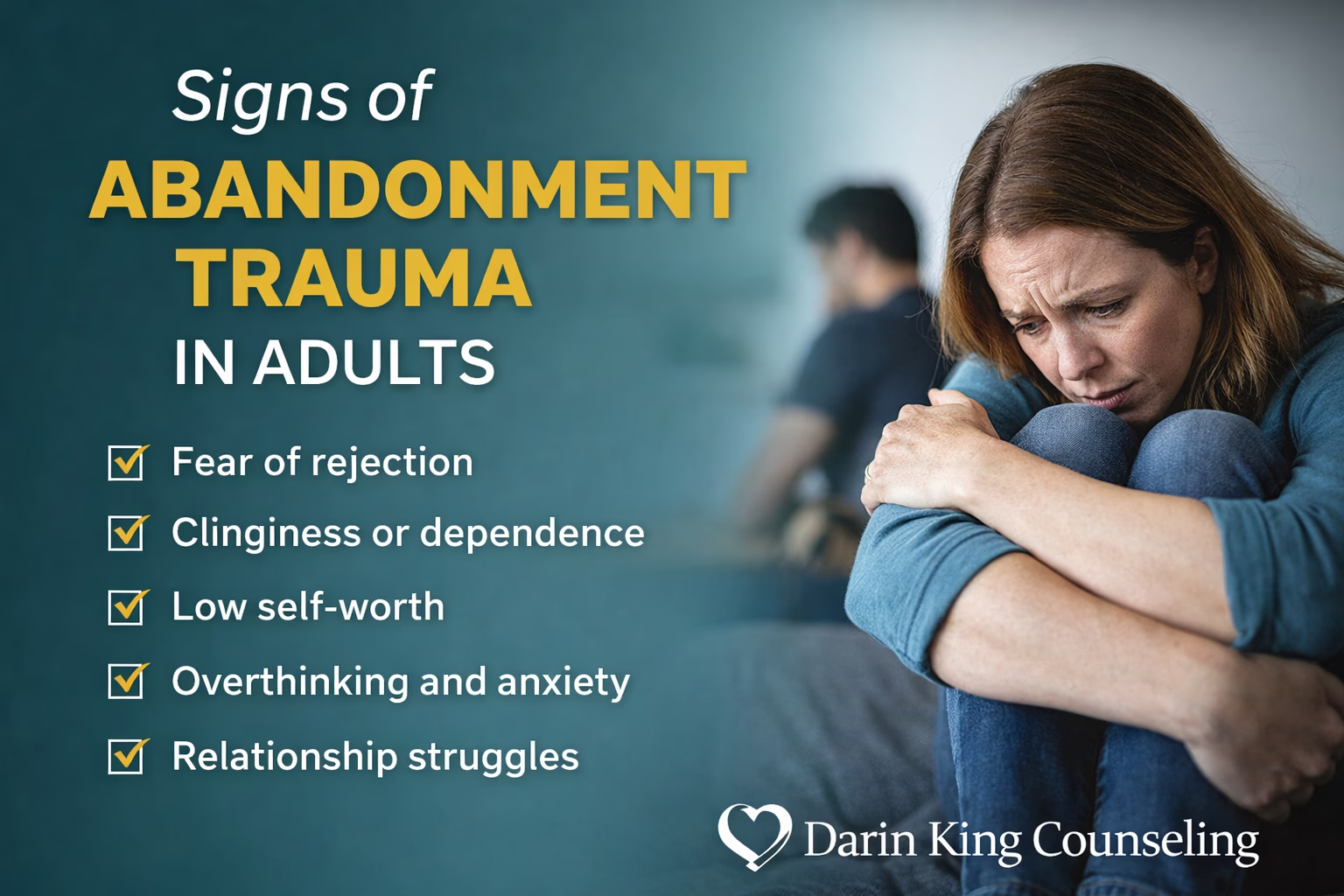
Abandonment trauma in adults rarely announces itself clearly. Instead it shows up quietly — in the way you panic when someone doesn’t text back, in the walls you build before anyone can get close enough to hurt you, in the relationships you keep leaving before they can leave you. Many adults with abandonment trauma don’t recognize it because it has always felt like just the way they are — anxious, guarded, needy, or emotionally unpredictable.
But these patterns are not personality traits. They are the footprint of early experiences that taught the nervous system that love is unreliable and people leave. Recognizing the signs of abandonment trauma in adults is the first step toward understanding yourself — and toward healing.
Signs of Abandonment Trauma in Adults: Anxious vs Avoidant Patterns
✓ Panic when a partner seems distant
✓ Difficulty being alone
✓ Interpreting silence as rejection
✓ Staying in unhealthy relationships to avoid loss
✓ Sabotaging connections before being hurt
✓ Emotional walls that keep people at a distance
✓ Leaving relationships before they can leave you
✓ Discomfort with intimacy and vulnerability
Feel free to share or embed this infographic with credit to darinkingcounselingllc.com
What Is Abandonment Trauma?
Abandonment trauma develops when early experiences of being left, rejected, or emotionally unsupported create lasting wounds in a person’s sense of security and self-worth. It is not limited to dramatic events like a parent walking out. Emotional abandonment — a caregiver who was physically present but emotionally unavailable, inconsistent, or unpredictable — produces the same core wound: the belief, held in the nervous system rather than just the mind, that you are not worth staying for.
According to the Substance Abuse and Mental Health Services Administration, early relational trauma — including disrupted attachment — has profound and lasting effects on mental health, relationships, and sense of self in adulthood. The nervous system learns what relationships feel like during childhood, and it carries those lessons into every adult connection.
Key insight: Abandonment trauma is not about being “too sensitive” or “too needy.” It is a learned nervous system response to experiences that genuinely taught the body that love is unreliable and connection is dangerous. Recognizing it as a trauma response — not a character flaw — changes everything about how you can work with it.
15 Signs of Abandonment Trauma in Adults
1. Intense Fear of Rejection
A fear of rejection that feels disproportionate to the actual situation — panic over a brief text delay, devastation over mild criticism, catastrophizing a partner’s bad mood as a sign they’re leaving. This intensity belongs to an older wound being activated by present circumstances.
2. Difficulty Being Alone
Profound discomfort with solitude — not just a preference for company, but a near-physical inability to be alone without anxiety, emptiness, or a desperate need to reach out to someone. Being alone activates the abandonment alarm.
3. Constant Need for Reassurance
Repeatedly seeking reassurance from a partner — “Do you still love me?” “Are you upset with me?” “Are we okay?” — even when the partner has given no reason for concern. No amount of reassurance fully quiets the alarm, because the alarm is coming from a much older place than the current relationship.
4. Hypervigilance to Relationship Cues
Constantly monitoring a partner’s tone, facial expression, response time, and mood for any sign of withdrawal or dissatisfaction. This hypervigilance is exhausting — and is a direct echo of what it felt like to grow up in an unpredictable emotional environment. Read more about how trauma creates hypervigilance.
5. Emotional Reactions That Feel Disproportionate
Reactions to relationship events — a cancelled plan, an unanswered message, a partner needing space — that feel far bigger than the situation warrants. The current event has activated the full emotional weight of past abandonment experiences.
6. Difficulty Trusting Partners
Struggling to trust a partner’s love or commitment even when they’ve consistently shown up. The nervous system learned that people don’t stay — so even evidence of stability doesn’t fully register as safe.
7. Staying in Unhealthy Relationships
Tolerating mistreatment, disrespect, or unhealthy dynamics because the prospect of being alone feels more unbearable than staying. The fear of abandonment outweighs the recognition that the relationship is harmful. Read more about trauma bonding and why leaving is so difficult.
8. Leaving Relationships Preemptively
The opposite pattern — ending relationships before they can end, pulling away as things get close, or sabotaging connections that are becoming intimate. The logic is survival: if I leave first, I control the pain.
9. People Pleasing and Over-Giving
Compulsively prioritizing a partner’s needs, happiness, and approval — making yourself indispensable as a strategy to prevent abandonment. If I give enough, do enough, am enough — they won’t leave. Read more about the connection between people pleasing and abandonment trauma.
10. Deep Shame and Feeling Unlovable
A core belief — often not fully conscious — that you are fundamentally not enough to make someone stay. This toxic shame was the child’s way of making sense of being left: “They left because something is wrong with me.”
11. Difficulty with Intimacy and Vulnerability
Either avoiding vulnerability entirely — keeping emotional walls firmly in place — or swinging to the other extreme and becoming intensely intimate very quickly (to secure the attachment before the other person can leave). Neither extreme is genuine intimacy.
12. Jealousy and Possessiveness
Difficulty trusting a partner’s independence, friendships, or time apart. Interpreting normal autonomy as a threat — as the beginning of being replaced or left. This jealousy is driven by fear, not evidence.
13. Pattern of Abandonment in Relationships
A recurring pattern — across multiple relationships — of being left, or of leaving, or of creating dynamics that re-enact the original abandonment. The nervous system gravitates toward the familiar, even when the familiar is painful.
14. Fear of Commitment
Difficulty committing to relationships — not because you don’t want connection, but because commitment increases vulnerability. The deeper the investment, the greater the potential loss. Fear of commitment is often fear of abandonment in disguise.
15. Overreacting to Endings
Breakups, friendship endings, or even minor relationship ruptures that trigger grief far beyond what the relationship itself would seem to warrant. Each ending activates the full weight of every previous abandonment.
| Sign | What’s Happening Underneath |
|---|---|
| Intense fear of rejection | Present trigger activating full weight of past abandonment |
| Constant reassurance-seeking | Alarm system that can’t be quieted by present-day safety signals |
| Staying in unhealthy relationships | Fear of being alone outweighing recognition of harm |
| Leaving first | Self-protection through controlling the timing of loss |
| People pleasing | Making yourself indispensable as an abandonment prevention strategy |
| Deep shame and feeling unlovable | Child’s conclusion that abandonment was their fault |
| Difficulty trusting | Nervous system learned that people are unreliable |
| Pattern repetition | Nervous system gravitating toward the familiar, even when painful |
Where Abandonment Trauma Comes From
Abandonment trauma most commonly traces back to early experiences including:
- A parent who was physically absent — through death, divorce, or abandonment
- A caregiver who was emotionally unavailable, inconsistent, or neglectful
- Growing up in a dysfunctional family system where emotional needs went unmet
- Early experiences of rejection — by peers, caregivers, or romantic partners
- Childhood abuse or neglect
- A parent with untreated mental illness or addiction who was present but emotionally absent
- Generational trauma — abandonment patterns passed down through family systems
The National Institute of Mental Health recognizes that early attachment disruptions are among the strongest predictors of anxiety disorders and relationship difficulties in adulthood — both of which are closely linked to abandonment trauma.
Note: You don’t have to have been dramatically abandoned to have abandonment trauma. Emotional neglect — a caregiver who was physically present but emotionally checked out, inconsistent, or unresponsive — can produce the same core wound as physical abandonment. The nervous system responds to the absence of reliable emotional connection, regardless of whether a parent was physically in the home.
Abandonment Trauma and the Nervous System
Abandonment trauma is not just an emotional experience — it lives in the body. When an abandonment trigger activates, the nervous system responds as it would to a physical threat: heart racing, chest tightening, the urge to cling or flee, emotional flooding, or complete shutdown. This is the body responding to a survival threat — because in childhood, losing the caregiver’s attachment genuinely was a survival threat.
Understanding this as a nervous system response — not a personality flaw — is one of the most important reframes in abandonment trauma healing. Read more about how trauma affects the nervous system and our guide on nervous system reset techniques.
How Abandonment Trauma Is Treated
The World Health Organization recommends trauma-focused psychological therapies as first-line treatment for trauma-related conditions. For abandonment trauma specifically, the most effective approaches include:
EMDR Therapy
EMDR therapy processes the early relational memories that created the abandonment wound — reducing their emotional charge and helping the nervous system learn that past experiences don’t have to dictate present relationships.
Internal Family Systems (IFS)
IFS therapy works with the parts of the self that formed around the abandonment wound — the clinging part, the withdrawing part, the part that tests — helping them find safety rather than needing to run every relationship.
Trauma-Focused Therapy
Trauma counseling in Pennsylvania provides the consistent, safe therapeutic relationship that begins teaching the nervous system that connection can be reliable. Telehealth available statewide.
Couples Counseling
When abandonment trauma is affecting an existing relationship, couples therapy helps both partners understand the patterns and develop new ways of connecting. Read more about how to heal abandonment trauma for a complete guide to the recovery process.
Related reading: Our guides on abandonment trauma in relationships, how to heal abandonment trauma, and people pleasing provide the full picture of abandonment trauma and recovery.
Frequently Asked Questions
What are the signs of abandonment trauma in adults?
Common signs include intense fear of rejection, difficulty being alone, constant need for reassurance, hypervigilance to relationship cues, emotional reactions that feel disproportionate, difficulty trusting partners, staying in unhealthy relationships, leaving relationships preemptively, people pleasing, deep shame, difficulty with intimacy, and a recurring pattern of abandonment across relationships.
What causes abandonment trauma in adults?
Abandonment trauma most commonly traces back to early experiences including a parent who was physically or emotionally absent, inconsistent caregiving, dysfunctional family systems, childhood abuse or neglect, or a parent with untreated mental illness or addiction. Emotional abandonment produces the same wound as physical abandonment.
Can abandonment trauma cause anxiety?
Yes — abandonment trauma is one of the most common drivers of relationship anxiety in adults. The nervous system learned early that people are unreliable, keeping it in chronic threat vigilance in relationships. Anxiety counseling alongside trauma therapy addresses both the symptoms and the root cause.
How do I know if I have abandonment trauma or just attachment anxiety?
Attachment anxiety is essentially one of the primary expressions of abandonment trauma. If your anxiety centers on fear of being left, intense need for reassurance, and emotional reactions that feel bigger than the situation warrants, abandonment trauma is likely part of the picture. A licensed telehealth therapist in Pennsylvania can help you clarify what’s driving your experience.
Can therapy help with abandonment trauma?
Yes — abandonment trauma responds well to trauma-focused therapy. EMDR therapy processes the early memories that created the wound. IFS therapy works with the parts shaped by abandonment. Many people see meaningful improvement in their relationship patterns within months of consistent therapy. Read our full guide on how to heal abandonment trauma.
You were not too much. You were not too needy. You were a child who needed more than you got.
Darin King, LPC specializes in abandonment trauma, attachment wounds, and EMDR therapy in Pennsylvania. Telehealth available statewide.
See more from Darin King Counseling on Google