

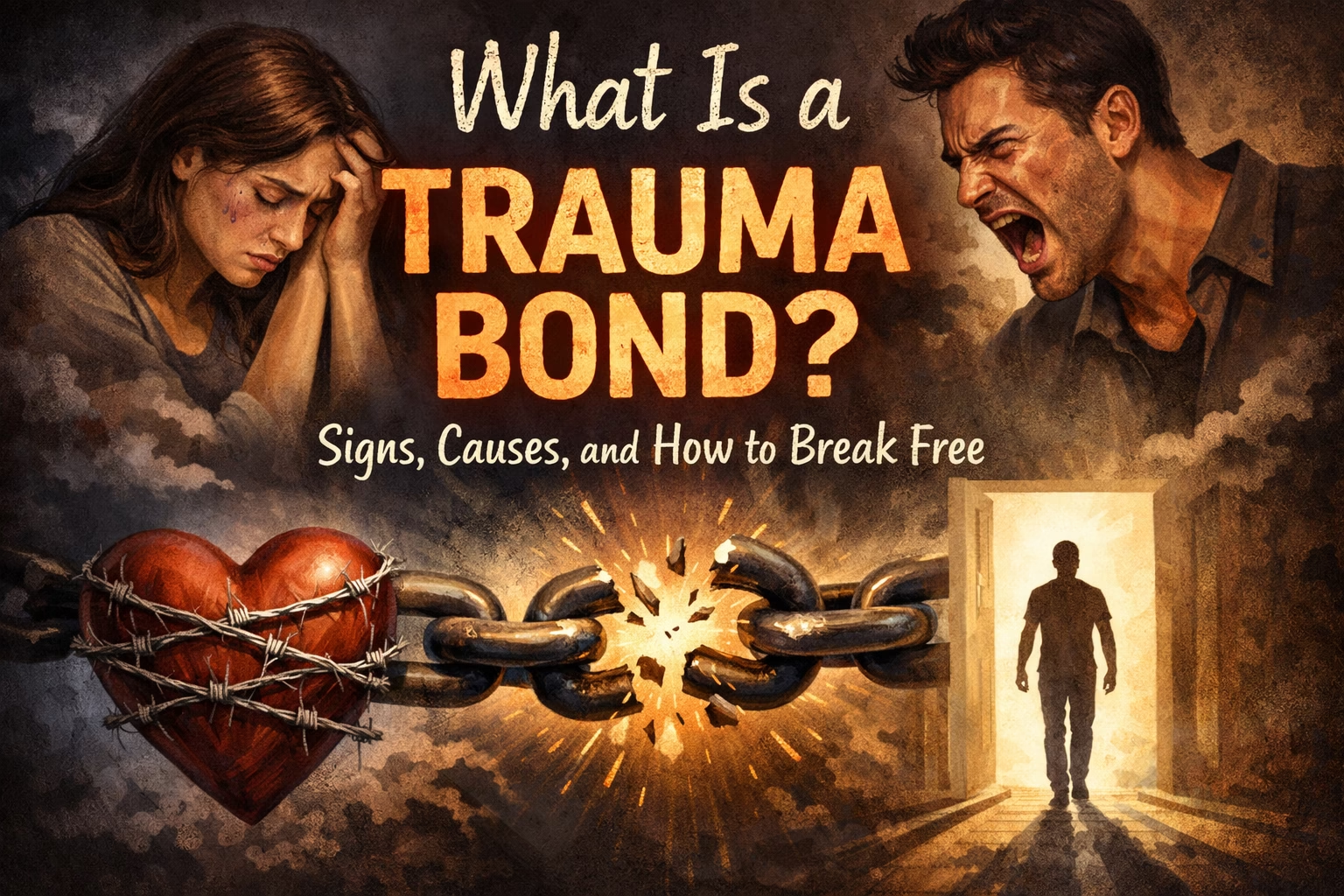
If you’ve ever stayed in a relationship that was hurting you — or found yourself unable to stop thinking about someone who treated you badly — you may have experienced a trauma bond. Trauma bonding is one of the most misunderstood dynamics in abusive relationships, because from the outside it looks like a choice. From the inside, it feels like anything but.
Understanding what a trauma bond is, how it forms, and why it’s so difficult to break is essential — both for people in these relationships and for those who love them.
The Trauma Bond Cycle
✓ Walking on eggshells
✓ Fear, confusion, and hypervigilance
✓ Feeling like you’re failing to keep them happy
✓ Reactive abuse may be provoked
✓ The person you fell in love with reappears
✓ Relief floods the nervous system
✓ Hope returns — “maybe it will be different”
✓ The bond deepens with each cycle
Feel free to share or embed this infographic with credit to darinkingcounselingllc.com
What Is a Trauma Bond?
A trauma bond is a powerful emotional attachment that forms between an abuse victim and their abuser as a result of a cycle of abuse and intermittent reinforcement — periods of cruelty alternating with periods of affection, remorse, or kindness. The bond is not a sign of weakness or poor judgment. It is a predictable neurobiological response to a specific type of relational dynamic.
The Substance Abuse and Mental Health Services Administration recognizes that trauma bonding is a trauma response — not a lifestyle choice — and that survivors of abusive relationships require trauma-informed care that understands the power of these bonds rather than simply asking why the person didn’t leave.
Key insight: Trauma bonds are not built on love — they are built on fear, relief, and the neurochemistry of intermittent reinforcement. The attachment feels like love because it activates the same brain systems. But it is driven by something very different underneath.
How Trauma Bonds Form: The Neuroscience
Trauma bonds form through intermittent reinforcement — one of the most powerful conditioning mechanisms known in psychology. When reward and punishment alternate unpredictably, the brain becomes hyper-focused on obtaining the reward and hyper-alert to avoiding the punishment. This is the same mechanism that makes gambling addictive.
In an abusive relationship, the cycle works like this:
| Phase | What Happens | Neurological Effect |
|---|---|---|
| Tension building | Criticism, control, withdrawal, or cruelty escalates | Cortisol and adrenaline rise — nervous system on high alert |
| Incident | Abuse occurs — emotional, physical, or psychological | Nervous system floods — fight, flight, or freeze activates |
| Reconciliation | Apologies, affection, promises, the “good” version returns | Dopamine and oxytocin surge — profound relief and connection |
| Calm | A period of relative peace and normalcy | Hope rebuilds — the person you fell in love with seems to be back |
| Cycle repeats | Tension begins building again | Each cycle deepens the bond and increases trauma symptoms |
The relief that floods the nervous system during the reconciliation phase — after the terror of the abuse — produces an intense neurochemical response that feels like love. Over time, the brain associates the abuser with both the source of pain and the source of relief. This is what makes the bond so powerful and so difficult to break. Read more about how trauma affects the nervous system.
Signs You May Be in a Trauma Bond
- You know the relationship is harmful but feel unable to leave
- You defend your partner to others even when you know their behavior is wrong
- After abuse or conflict, the reconciliation feels intensely loving — even more than in healthy relationships
- You find yourself focused on getting back to the “good” version of your partner
- When you try to leave, you feel overwhelming anxiety, grief, or physical withdrawal symptoms
- You minimize or rationalize the abusive behavior — “they were stressed,” “it wasn’t that bad”
- Your sense of self has become organized around the relationship
- Friends and family are concerned but you feel they don’t understand
- You have experienced reactive abuse and wonder if you are the problem
- Leaving feels more frightening than staying
Trauma Bonding vs Loving Someone Difficult
| Loving Someone Difficult | Trauma Bond | |
|---|---|---|
| Safety | You feel fundamentally safe with the person | You walk on eggshells — safety is unpredictable |
| Conflict | Conflict is uncomfortable but resolvable | Conflict is frightening — outcomes feel uncontrollable |
| Self | You maintain your sense of identity | Your sense of self erodes over time |
| Leaving | Leaving would be painful but feels possible | Leaving feels neurologically impossible — like withdrawal |
| Good times | Good times are the norm | Good times are the relief after bad times — which intensifies them |
Who Is Most Vulnerable to Trauma Bonding?
Anyone can develop a trauma bond — but certain experiences increase vulnerability:
- Childhood trauma, neglect, or abuse — especially early attachment wounds
- Abandonment trauma — making the fear of losing the relationship overwhelming
- Low self-worth or toxic shame — making it easier to accept mistreatment as deserved. Read more about shame vs guilt.
- People pleasing patterns — making it hard to prioritize your own safety
- Previous trauma bonds — the pattern becomes familiar and therefore feels like home
The National Institute of Mental Health notes that trauma survivors have a significantly higher risk of entering into and remaining in abusive relationships — not because of poor judgment, but because of how trauma shapes attachment, self-worth, and nervous system responses to threat.
Important: Trauma bonding is not a sign of weakness, stupidity, or poor character. It is a predictable response to a specific type of psychological manipulation — one that specifically targets the attachment system. Understanding this is not about excusing the abuser. It’s about removing the shame from the survivor.
How to Break a Trauma Bond
Breaking a trauma bond is not as simple as deciding to leave. The neurochemistry of the bond means that leaving often feels like going through withdrawal — with genuine physical and emotional symptoms. Healing requires support, time, and usually professional help.
Therapy for Narcissistic Abuse
Trauma bonds most commonly form in relationships with narcissistic or controlling partners. Therapy for narcissistic abuse addresses the specific dynamics at play and supports recovery from the ground up.
Trauma-Focused Therapy
Trauma counseling in Pennsylvania helps survivors understand the bond, process the trauma it created, and rebuild a sense of self that doesn’t depend on the relationship.
EMDR Therapy
EMDR therapy processes the traumatic memories from the abusive relationship — reducing the emotional pull of the bond and helping the nervous system regulate without the abuser’s presence.
IFS Therapy
IFS therapy works with the parts of the self that are attached to the bond — understanding what they’re seeking and helping them find safety in healthier ways.
Related reading: Our guides on reactive abuse, therapy for narcissistic abuse, and abandonment trauma in relationships provide essential context for understanding trauma bonding and the path to recovery.
Frequently Asked Questions
What does a trauma bond feel like?
A trauma bond feels like an intense, almost unbreakable attachment to someone who also causes you significant pain. It often feels like love — and mimics love neurochemically — but is driven by fear, relief, and intermittent reinforcement rather than genuine safety and connection. Trying to leave can feel like withdrawal from a substance, with genuine physical and emotional symptoms.
Why is it so hard to leave a trauma bond?
Leaving is neurologically difficult because the abuser has become associated with both the source of pain and the source of relief. The intermittent reinforcement of abuse followed by reconciliation creates a powerful conditioning effect. This is compounded by shame, fear, and the erosion of self that occurs over time in abusive relationships. Trauma therapy provides the support needed to navigate this.
Can you trauma bond with a parent?
Yes — trauma bonds can form with parents, siblings, friends, and colleagues, not just romantic partners. Parent-child trauma bonds are particularly powerful and often set the template for later relationship patterns. Read more about childhood trauma and its lasting effects.
How long does it take to break a trauma bond?
Breaking a trauma bond is a process, not an event. The initial separation is often the hardest phase — with intense grief, anxiety, and urges to return. With consistent therapeutic support, most people begin to feel meaningful relief within months, though deeper healing of the underlying trauma may take longer.
Is trauma bonding the same as Stockholm Syndrome?
They share similar mechanisms — both involve developing attachment to a source of threat as a survival response — but they are not identical. Stockholm Syndrome traditionally refers to hostage situations. Trauma bonding is a broader term applying to any abusive relationship where intermittent reinforcement creates a persistent attachment.
The bond isn’t love — but the pain of breaking it is real. You don’t have to do it alone.
Darin King, LPC specializes in trauma bonding, narcissistic abuse recovery, and EMDR therapy in Pennsylvania. Telehealth available statewide.
See more from Darin King Counseling on Google