

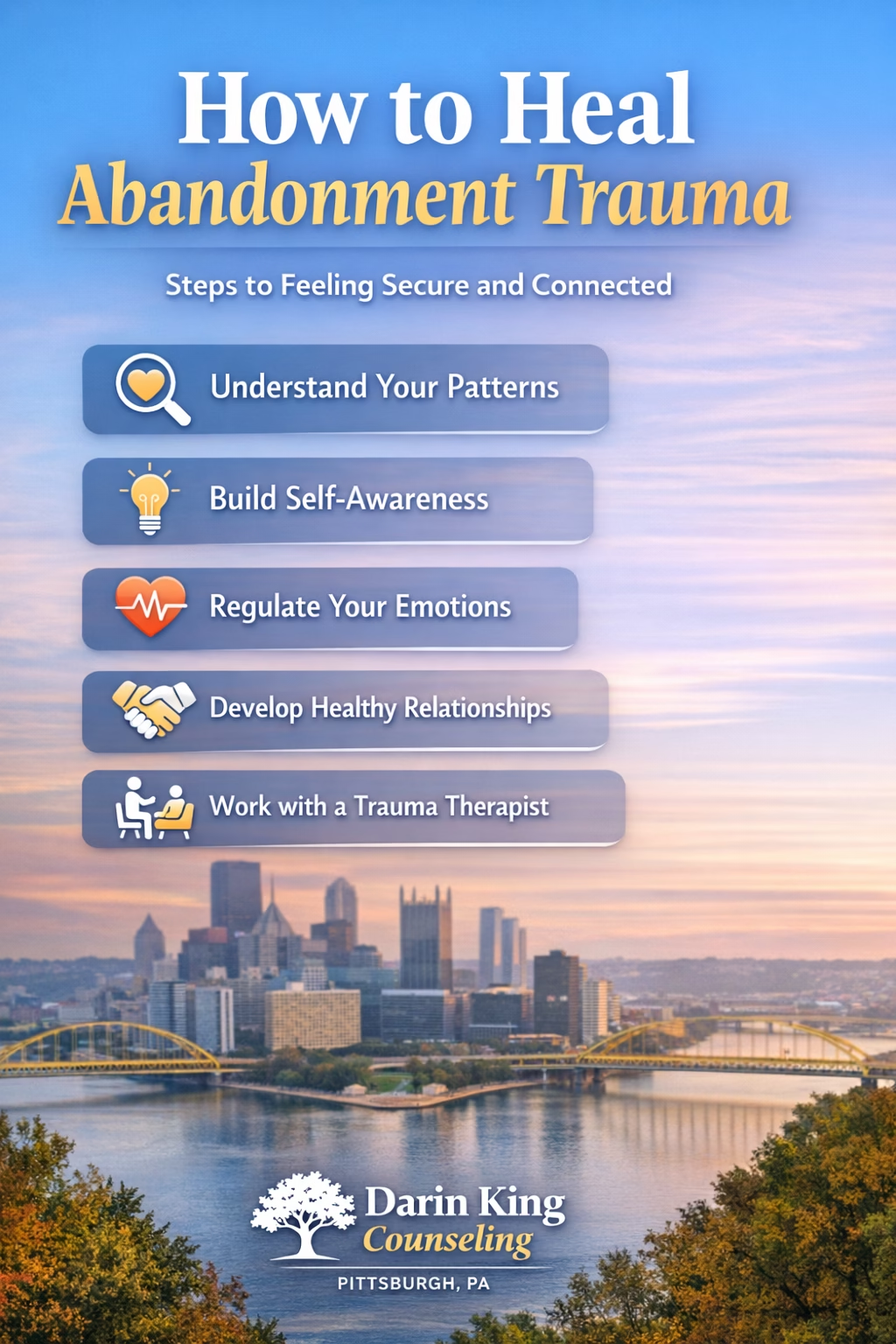
Abandonment trauma doesn’t just hurt — it reorganizes the way you experience relationships, safety, and your own worth. It teaches the nervous system that people leave, that love is unreliable, and that depending on anyone is dangerous. And because it was learned so early and so deeply, healing it requires more than insight, more than time, and more than simply deciding to trust again.
This guide explains what healing abandonment trauma actually looks like — the real process, not the simplified version — and what evidence-based approaches consistently help people move from surviving to genuinely connecting.
How to Heal Abandonment Trauma: The Four Phases
✓ Processing the grief underneath the fear
✓ Nervous system regulation skills
✓ Corrective relational experiences
✓ Rebuilding self-worth independent of others’ staying
✓ Finding the “right” relationship
✓ Positive thinking or affirmations alone
✓ Just giving it time
✓ Avoiding all situations that trigger the wound
Feel free to share or embed this infographic with credit to darinkingcounselingllc.com
What Is Abandonment Trauma and Why Is It So Hard to Heal?
Abandonment trauma develops when early experiences of being left, rejected, or emotionally unsupported create lasting wounds in a person’s sense of security and self-worth. It can stem from physical abandonment — a parent leaving, a death, a divorce — or from emotional abandonment: a caregiver who was physically present but emotionally unavailable, inconsistent, or unreliable.
What makes abandonment trauma particularly difficult to heal is that it is not just a memory — it is a nervous system state. The body learned that people leave, and it continues to respond to perceived threats of abandonment with the same urgency it would respond to physical danger. According to the Substance Abuse and Mental Health Services Administration, trauma responses — including those rooted in early relational wounds — are neurobiological, not merely psychological, which is why insight alone rarely produces lasting change.
Read more about how abandonment trauma shows up in adult relationships in our guide on abandonment trauma in relationships.
Key insight: Healing abandonment trauma is not about learning to stop caring whether people stay. It’s about building enough internal security that the question of whether someone will leave no longer feels like a matter of survival. That internal security is built — through therapy, through corrective relational experiences, and through the gradual retraining of a nervous system that learned too early that it was on its own.
The Four Phases of Healing Abandonment Trauma
Phase 1: Understanding and Naming the Wound
Healing begins with recognition — understanding that what you’re experiencing has a name, an origin, and a neurological explanation. This phase involves:
- Identifying the early experiences that created the abandonment wound
- Understanding how that wound is showing up in current relationships and behavior
- Recognizing abandonment triggers — the situations, tones, or cues that activate the fear
- Releasing the self-blame that so often accompanies abandonment trauma (“something is wrong with me — that’s why people leave”)
Psychoeducation — learning about the neuroscience of attachment, trauma, and the nervous system — is a powerful part of this phase. Understanding that your responses are not character flaws but learned adaptations can begin the process of self-compassion that healing requires.
Phase 2: Processing the Grief
Underneath abandonment fear is almost always grief — grief for the love that wasn’t consistent, the security that wasn’t reliable, the childhood that wasn’t safe. Many people with abandonment trauma have never fully grieved these losses because the fear keeps them in a state of anticipation (bracing for the next abandonment) rather than mourning what was lost.
Processing this grief is essential. It is not about blaming the people who left — it is about fully acknowledging the loss and letting it move through rather than getting stuck as chronic fear and hypervigilance.
Phase 3: Nervous System Regulation
Because abandonment trauma lives in the nervous system, healing requires working at the nervous system level — not just through understanding, but through the gradual retraining of the body’s threat response. This phase involves:
- Learning to recognize abandonment trigger responses in the body — the racing heart, the flooding, the urge to cling or flee
- Building skills to regulate those responses in the moment
- Gradually expanding the window of tolerance so that relational uncertainty no longer triggers a full survival response
For practical nervous system regulation tools, see our guide on nervous system reset techniques and our post on how trauma affects the nervous system.
Phase 4: Corrective Relational Experiences
Abandonment trauma was created in relationship and it heals in relationship. This doesn’t mean the healing relationship has to be romantic — the therapeutic relationship is often the first place this happens. Consistent, boundaried, safe connection with a therapist who shows up reliably, repairs ruptures, and doesn’t abandon the client even when things are difficult begins to teach the nervous system that some relationships are safe.
Over time, this learning generalizes — the person begins to be able to tolerate intimacy, to trust in increments, to stay present in relationships without the constant activation of the abandonment alarm.
Evidence-Based Therapies for Healing Abandonment Trauma
EMDR Therapy
EMDR therapy targets the specific early memories that created the abandonment wound — processing them so they lose their emotional charge and the nervous system’s alarm response to perceived abandonment gradually reduces. The World Health Organization recommends EMDR as a first-line treatment for trauma-related conditions.
Internal Family Systems (IFS)
IFS therapy works directly with the parts of the self shaped by abandonment — the part that clings, the part that withdraws preemptively, the part that tests partners to see if they’ll really stay. IFS helps these parts find safety rather than continuing to run the relational show from a place of fear.
Trauma-Focused Therapy
Trauma counseling in Pennsylvania provides the consistent, safe therapeutic relationship that is itself a corrective experience — directly addressing the relational wound at the heart of abandonment trauma.
DBT Skills
DBT therapy provides practical skills for managing the intense emotional responses that abandonment triggers produce — distress tolerance, emotional regulation, and interpersonal effectiveness tools that help people navigate relationships without being overwhelmed by the abandonment alarm.
Couples Therapy
When abandonment trauma is affecting an existing relationship, couples counseling can help both partners understand the pattern and develop ways of connecting that don’t continuously re-trigger the wound.
What Healing Abandonment Trauma Looks Like in Practice
| Before Healing | After Healing |
|---|---|
| A partner’s unavailability triggers panic | A partner’s unavailability is uncomfortable but manageable |
| Conflict feels like the relationship is ending | Conflict is uncomfortable but feels survivable and resolvable |
| Need for constant reassurance | Ability to self-soothe without external validation |
| Preemptively leaving relationships | Ability to stay present and work through difficulty |
| Emotional reactions that feel disproportionate | Reactions that match the actual situation |
| Sense of worth tied to whether people stay | Sense of worth that exists independently |
Note: The National Institute of Mental Health recognizes that anxiety disorders — which frequently co-occur with and drive abandonment trauma — are among the most treatable mental health conditions. Healing abandonment trauma does not require perfection, and it does not mean the fear will never arise again. It means the fear no longer runs your relationship life.
Self-Help Strategies That Support the Healing Process
These strategies support but do not replace trauma therapy — they work best as complements to professional treatment:
- Notice your triggers without acting on them — create a pause between the trigger and the response. What just happened? What did my body do? What fear activated?
- Practice tolerating uncertainty in small doses — exposure to low-stakes relational uncertainty, without immediately seeking reassurance, gradually builds tolerance
- Build self-soothing skills — develop an internal source of comfort that doesn’t depend on another person’s presence or reassurance
- Address people pleasing and shame — both are closely connected to abandonment trauma and deserve attention alongside the core wound
- Be honest with safe people — vulnerability in safe relationships is one of the most direct pathways to healing the relational wound
Related reading: Our guides on abandonment trauma in relationships, signs of abandonment trauma in adults, and people pleasing provide important context for understanding abandonment trauma and the healing journey.
Frequently Asked Questions
How long does it take to heal abandonment trauma?
Healing varies significantly by individual — depending on the depth of the wound, whether childhood trauma is involved, and the quality of therapeutic support. Many people notice meaningful improvement within months of consistent trauma-focused therapy. Healing is not linear — it moves in waves — but lasting change is reliably possible with the right support.
Can you heal abandonment trauma on your own?
Self-help strategies can meaningfully support the process. However, because abandonment trauma is rooted in early relational wounds and lives in the nervous system, the most reliable healing typically happens in a therapeutic relationship. The corrective experience of a consistent, safe therapeutic connection is itself part of the medicine.
What is the best therapy for abandonment trauma?
EMDR therapy processes the traumatic memories that created the abandonment wound. IFS therapy works directly with the parts shaped by abandonment. DBT skills build the emotional regulation capacity needed to navigate relationships. A trauma-informed therapist can help determine the right fit for your specific history.
How do I know if I have unhealed abandonment trauma?
Signs include intense fear of rejection that feels disproportionate to the situation, difficulty trusting partners, relationship patterns that follow similar painful cycles, and a deep belief that you are not enough to make someone stay. See our guide on signs of abandonment trauma in adults for a complete picture.
Does healing abandonment trauma mean I’ll stop caring if people leave?
No — it means building enough internal security that the question of whether someone will stay no longer feels like a matter of survival. You will still care if people leave. But you’ll be able to tolerate that grief without it triggering a full nervous system survival response, and without it defining your sense of your own worth.
You deserve relationships where you don’t have to earn your right to stay — and a self that believes it.
Darin King, LPC specializes in abandonment trauma, attachment wounds, and EMDR therapy in Pennsylvania. Telehealth available statewide.
See more from Darin King Counseling on Google