
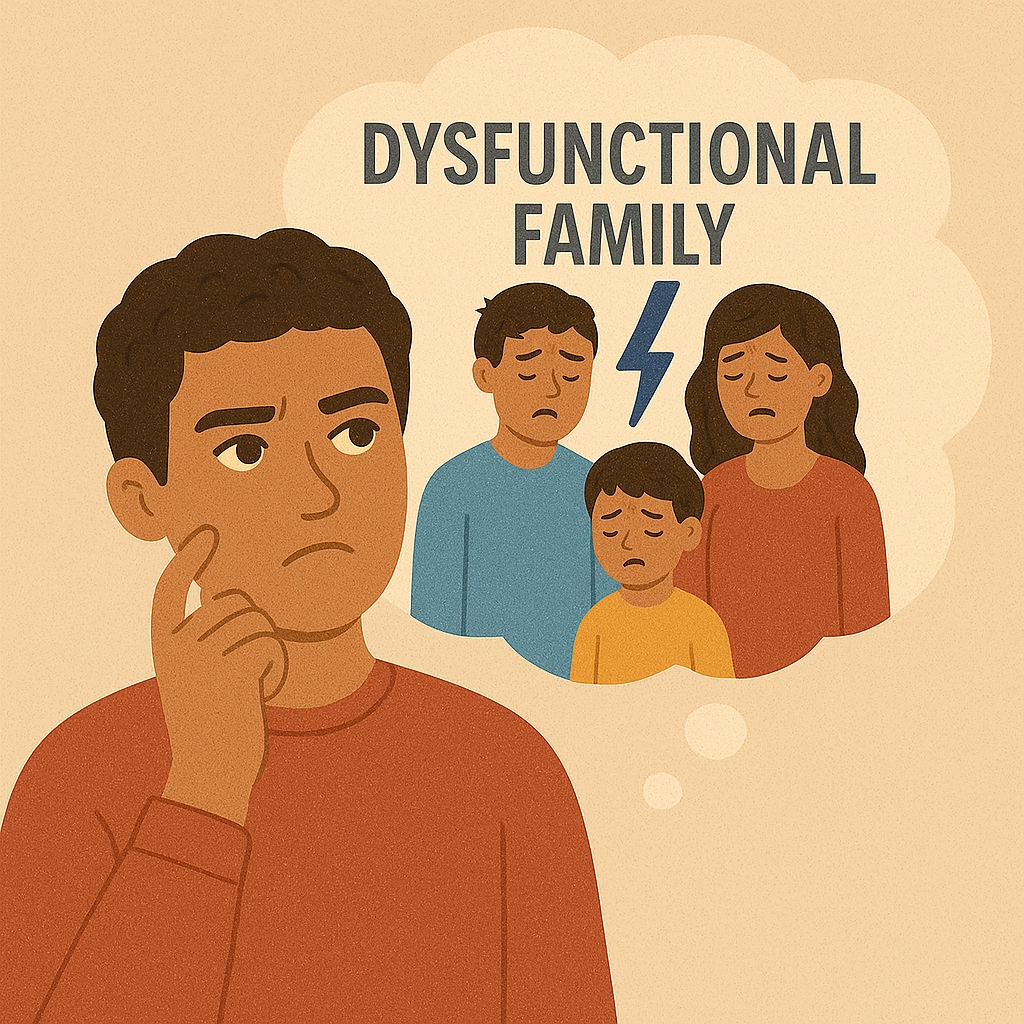
One of the most disorienting things about growing up in a dysfunctional family system is that it felt normal. When the chaos, the emotional unavailability, the walking on eggshells, or the unspoken rules are all you’ve ever known — they don’t register as dysfunction. They register as just the way things are. It’s often not until adulthood — when you encounter other families, enter therapy, or find yourself repeating painful patterns — that the picture comes into focus.
If you’ve ever wondered whether your family of origin was dysfunctional, this guide will help you answer that question clearly — and understand what healing looks like on the other side.
Signs of a Dysfunctional Family System
✓ Unclear or violated boundaries
✓ Parentification — children taking adult roles
✓ Favoritism or scapegoating
✓ Secrets that everyone knows but no one discusses
✓ Love felt conditional on performance
✓ Conflict was either explosive or completely avoided
✓ One parent’s needs dominated everything
✓ Children felt responsible for parents’ emotions
Feel free to share or embed this infographic with credit to darinkingcounselingllc.com
What Is a Dysfunctional Family System?
A dysfunctional family system is one in which the normal functions of a healthy family — providing safety, consistent emotional support, appropriate boundaries, and a foundation for healthy development — are significantly and chronically compromised. Dysfunction doesn’t require abuse in the traditional sense. It can be quieter than that: emotional unavailability, unpredictability, chronic conflict, rigid control, or the systematic suppression of authentic emotional expression.
The Substance Abuse and Mental Health Services Administration recognizes that growing up in a dysfunctional family environment is one of the most significant adverse childhood experiences — with lasting effects on mental health, relationships, and physical wellbeing. The CDC’s ACE research consistently demonstrates these lasting effects across the lifespan.
Important framing: Identifying your family as dysfunctional is not about blaming your parents or rewriting your childhood. It is about understanding the environment that shaped you — including its limitations — so you can make sense of the patterns you carry today and make conscious choices about what you want to do differently.
Signs You Grew Up in a Dysfunctional Family System
1. There Were Unspoken Rules That Everyone Followed
Dysfunctional families run on implicit rules that are never stated but strictly enforced. Common unspoken rules include: don’t feel, don’t talk, don’t trust; keep family matters private at all costs; one parent’s needs always come first; never challenge the authority figure; maintaining the family image is more important than truth. These rules shape behavior profoundly — and often persist into adulthood as automatic responses.
2. Emotions Were Not Welcome
In healthy families, children’s emotional experiences are acknowledged, validated, and helped to be understood. In dysfunctional families, emotions are often punished, dismissed, mocked, or simply ignored. “Stop crying or I’ll give you something to cry about.” “You’re too sensitive.” “We don’t talk about that.” Learning that emotions are dangerous or unwelcome produces adults who struggle to identify, express, or regulate their own feelings.
3. Love Felt Conditional
Healthy parental love is consistent and not contingent on performance, compliance, or behavior. In dysfunctional families, love — or its withdrawal — is frequently used as a tool of control. Affection increases when the child complies and decreases when they don’t. This produces adults who believe they must earn love and are never quite sure they’ve done enough. Read more about abandonment trauma in relationships.
4. One Person’s Needs Dominated
In many dysfunctional families, the emotional, psychological, or practical needs of one person — often a parent with untreated mental illness, addiction, or narcissistic traits — organize the entire family system. Everyone else adjusts, accommodates, and suppresses their own needs to manage that person’s state. This is called an enmeshed or parentified family dynamic.
5. Children Took on Adult Roles
Parentification — when children take on emotional or practical adult responsibilities — is common in dysfunctional families. This might look like a child managing a parent’s emotions, mediating parental conflict, caring for younger siblings in a parental role, or being the emotional confidant of a parent. Parentified children often become adults who feel responsible for everyone around them and struggle to identify their own needs. Read more about people pleasing as a common outcome.
6. There Was a Scapegoat and a Golden Child
Many dysfunctional families assign roles to children — often unconsciously. The scapegoat is blamed for the family’s problems; the golden child can do no wrong. These roles are not based on actual behavior — they serve the family system’s need to manage tension and protect the parent’s self-image. Both roles are damaging: the scapegoat carries shame and blame; the golden child carries unrealistic expectations and often profound anxiety.
7. Conflict Was Either Explosive or Completely Avoided
Healthy families handle conflict through open communication and repair. Dysfunctional families tend toward one of two extremes: explosive, frightening conflict that feels dangerous — or complete conflict avoidance, where problems fester unaddressed beneath a surface of enforced peace. Neither extreme teaches children healthy conflict resolution. Read about rules for fair fighting in a relationship.
8. Family Secrets Were Kept at All Costs
Dysfunctional families frequently have secrets — addiction, abuse, mental illness, infidelity, financial crises — that are maintained through collective silence. “What happens in this house stays in this house.” The energy required to maintain these secrets shapes the entire family culture and teaches children that authenticity and truth are dangerous.
9. Boundaries Were Either Nonexistent or Rigid
Healthy families have flexible, appropriate boundaries — privacy is respected, individual differences are honored, and the emotional space between family members is neither smothering nor distant. Dysfunctional families tend toward enmeshment (no boundaries — everyone’s business is everyone’s business) or emotional distance (walls so high that genuine connection is impossible).
10. You Walked on Eggshells
A pervasive sense of monitoring the emotional environment — reading a parent’s mood the moment they walked in the door, adjusting your behavior to prevent an explosion, always bracing for something to go wrong — is one of the most consistent experiences reported by adults who grew up in dysfunctional families. This hypervigilance doesn’t disappear when you leave home. Read more about how trauma affects the nervous system.
| Family Role | What It Looked Like in Childhood | How It Shows Up in Adulthood |
|---|---|---|
| The Caretaker | Managed parents’ emotions, kept the peace | People pleasing, difficulty with own needs, exhaustion |
| The Scapegoat | Blamed for family problems, acted out | Deep shame, anger, difficulty trusting |
| The Golden Child | Could do no wrong, parent’s favorite | Perfectionism, anxiety, difficulty with failure |
| The Lost Child | Invisible, stayed out of the way | Difficulty asserting needs, disconnection, loneliness |
| The Mascot | Used humor to deflect family tension | Difficulty being taken seriously, avoiding depth |
How Growing Up in a Dysfunctional Family Affects You as an Adult
The National Institute of Mental Health recognizes that early adverse experiences — including growing up in dysfunctional family environments — are among the strongest predictors of adult mental health challenges. Common adult effects include:
- Difficulty trusting others or forming secure attachments
- Chronic anxiety, hypervigilance, or depression
- Deep shame and difficulty believing you are enough
- Repeating family patterns in your own relationships or parenting
- Difficulty identifying or expressing your own needs and emotions
- People pleasing, over-responsibility for others’ feelings
- Attracting or remaining in relationships that echo childhood dynamics
Read more about generational trauma and how these patterns pass from one generation to the next — and how healing them breaks the cycle.
Note: Recognizing that your family was dysfunctional does not require cutting off your family or condemning your parents. Many parents who created dysfunctional environments were themselves products of dysfunctional families — doing the best they could with what they had. Understanding this can make space for both accountability and compassion — without requiring you to minimize what happened or its impact on you.
How Therapy Helps
EMDR Therapy
EMDR therapy processes the specific memories from the family environment that are driving current symptoms and patterns.
IFS Therapy
IFS therapy works with the parts of the self that formed in response to the family system — the caretaker, the people pleaser, the one who hides — helping them find safety and new roles.
Trauma-Focused Therapy
Trauma counseling in Pennsylvania addresses the lasting effects of growing up in a dysfunctional family environment — available via telehealth statewide.
Family Systems Counseling
Dysfunctional family systems counseling helps you map the specific dynamics of the system you grew up in and make conscious choices about what you carry forward.
Related reading: Our guides on signs of childhood trauma in adults, generational trauma, people pleasing, and shame vs guilt provide important context for understanding and healing the effects of a dysfunctional family system.
Frequently Asked Questions
How do I know if my family was dysfunctional?
Key signs include unspoken rules everyone followed, emotions being dismissed or punished, conditional love, one parent’s needs dominating everything, children taking adult roles, scapegoating, explosive or avoided conflict, family secrets, and a pervasive sense of walking on eggshells. A licensed therapist can help you map your family dynamics and understand their impact.
Can you have a dysfunctional family without abuse?
Yes — emotional neglect, conditional love, parentification, chronic conflict, and emotional unavailability can all produce significant psychological wounds even without overt abuse. The measure is the impact on the child’s development, not the presence of dramatic events. Read more about signs of childhood trauma in adults.
Is it normal to not realize your family was dysfunctional until adulthood?
Completely normal and extremely common. When dysfunction is all you’ve known, it registers as normal. It’s often not until adulthood — entering therapy, beginning a significant relationship, or becoming a parent — that the picture comes into focus. Read more about generational trauma and how these patterns surface across generations.
Do I need to cut off my family to heal?
Not necessarily. Healing is about understanding the dynamics that shaped you and making conscious choices — not about any particular relationship outcome. A therapist can help you navigate what is right for your specific situation. Telehealth therapy makes that support accessible from anywhere in Pennsylvania.
Can growing up in a dysfunctional family cause PTSD?
Yes — it is one of the most common causes of Complex PTSD. Prolonged relational trauma produces lasting effects on emotional regulation, identity, and relationships. EMDR therapy and trauma-focused approaches address these effects directly.
Understanding where you came from is how you choose where you’re going.
Darin King, LPC specializes in family systems, childhood trauma, and EMDR therapy in Pennsylvania. Telehealth available statewide.
See more from Darin King Counseling on Google