

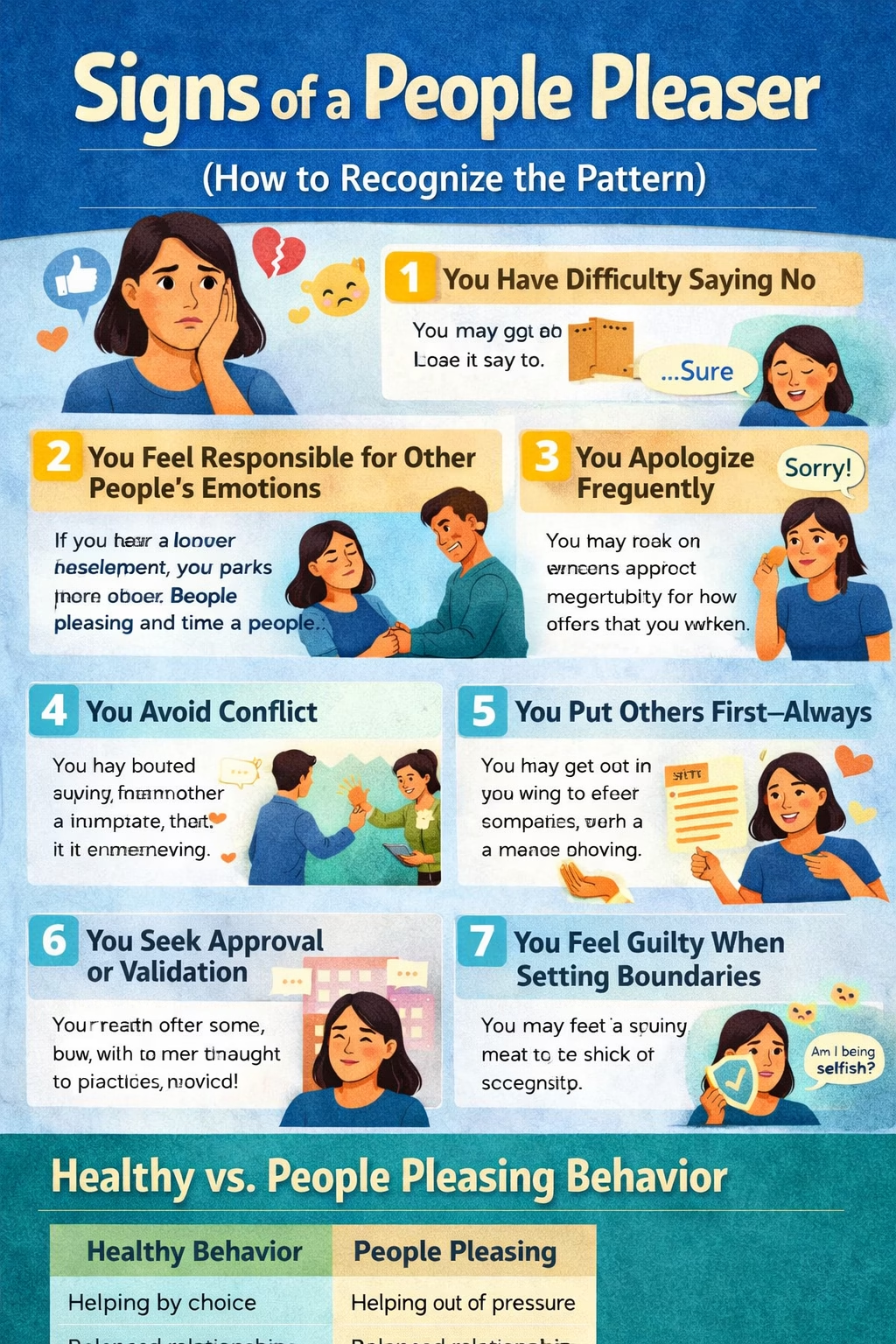
People pleasing is one of the hardest patterns to recognize in yourself — partly because it so often looks like kindness, helpfulness, or being a good person. From the inside, it doesn’t feel like a problem. It feels like just the way you are. It’s only when you look more closely — at the exhaustion, the resentment that builds under the surface, the difficulty knowing what you actually want — that the pattern becomes visible. This guide walks through the most common signs of a people pleaser so you can see the pattern clearly and begin to understand what’s driving it.
Signs of a People Pleaser: Internal vs External Patterns
✓ Apologizing constantly — even when not at fault
✓ Avoiding conflict at all costs
✓ Doing more than your share to keep peace
✓ Changing your opinions based on who you’re with
✓ Anxiety when someone seems displeased
✓ Resentment that builds under the surface
✓ Difficulty knowing what you actually want
✓ Measuring your worth by how much you do for others
Feel free to share or embed this infographic with credit to darinkingcounselingllc.com
What Is People Pleasing?
People pleasing is a pattern of prioritizing others’ needs, feelings, and approval over your own — not from genuine generosity, but from a fear-based drive to avoid conflict, rejection, or disapproval. The Substance Abuse and Mental Health Services Administration recognizes people pleasing as a fawn trauma response — a survival strategy that develops in environments where keeping others happy was necessary for safety or belonging.
For a deeper understanding of where people pleasing comes from and what drives it, read our guides on why people pleasing develops and what people pleasing is.
Important distinction: People pleasing looks like kindness from the outside — and it often feels like kindness from the inside. The difference is what drives it. Genuine kindness is freely chosen from a place of authentic care. People pleasing is driven by fear — of rejection, disapproval, conflict, or abandonment. If the giving stops feeling optional, it’s people pleasing.
15 Signs of a People Pleaser
1. You Say Yes Before Consulting Your Own Feelings
The automatic yes arrives before you’ve had a chance to check whether you actually want to — or even can — do what’s being asked. The agreement comes first; the resentment or regret comes later. This automatic compliance happens because the nervous system has learned that saying yes is safer than the alternative.
2. You Apologize Constantly — Even When You’ve Done Nothing Wrong
Reflexive apology — for taking up space, for having needs, for asking a question, for existing in ways that might inconvenience others. The apology comes before any actual assessment of whether you’ve caused harm. It is a preemptive appeasement, not a genuine acknowledgment of wrongdoing. Read more about signs of a guilt complex.
3. You Feel Responsible for Everyone’s Emotional State
When someone in the room is unhappy — a partner, a parent, a colleague — you feel responsible. Not just concerned, but responsible — as though their emotional state is yours to manage. This hyperresponsibility for others’ feelings is one of the most consistent internal markers of people pleasing.
4. You Find It Almost Impossible to Say No
Saying no produces immediate anxiety, guilt, and often a cascade of justifications and apologies. The anticipated cost of disappointing someone feels greater than the actual cost of saying yes to something you don’t want to do. The no that eventually comes — if it comes — is usually heavily qualified.
5. You Avoid Conflict at All Costs
Disagreeing, asserting a different opinion, or addressing a problem directly feel dangerous in a way that is disproportionate to the actual risk. You would rather absorb mistreatment, swallow your opinion, or pretend everything is fine than risk the discomfort of conflict. Read more about rules for fair fighting in a relationship.
6. You Change Your Opinions Based on Who You’re With
Your views, preferences, and even personality seem to shift depending on who you’re with — adapting to what you sense the other person wants to see or hear. This chameleon-like quality is not flexibility — it is the deep suppression of authentic self in service of acceptance.
7. You Do More Than Your Share to Keep the Peace
Taking on extra work, extra responsibilities, extra emotional labor — not because you genuinely want to but because the anxiety of not doing enough is greater than the exhaustion of doing too much. The doing is driven by fear of what will happen if you don’t.
8. You Feel Anxious When Someone Seems Displeased With You
A colleague’s short email, a partner’s quiet mood, a friend’s delayed text reply — all of these trigger disproportionate anxiety. The nervous system interprets any hint of displeasure as a significant threat and mobilizes accordingly. Read more about why waiting for a text back feels stressful.
9. You Have Difficulty Knowing What You Actually Want
When asked what you want — where to eat, what movie to watch, how to spend a weekend — you often genuinely don’t know. Years of prioritizing others’ preferences have disconnected you from your own. This disconnection from self is one of the deeper costs of long-term people pleasing.
10. You Take Criticism Very Hard
Criticism — even mild, constructive, well-intentioned feedback — lands as a significant threat to your sense of safety and worth. Because your value has been tied to others’ approval, disapproval feels devastating rather than merely uncomfortable.
11. You Can’t Receive Compliments Comfortably
Compliments are deflected, minimized, or immediately countered with self-deprecation. The underlying belief that you are always falling short makes it impossible to take in evidence to the contrary — and the discomfort of being seen positively can feel as threatening as the discomfort of being criticized.
12. You Stay in Situations That Don’t Serve You — To Avoid Disappointing Others
Jobs, relationships, commitments, friendships that you’ve outgrown or that are actively harmful — but leaving feels impossible because of the anticipated guilt and others’ disappointment. The fear of letting people down keeps you in places that are wrong for you. Read more about abandonment trauma in relationships.
13. You Feel Resentful — But Rarely Express It
Resentment builds under the surface — the accumulation of yeses you didn’t mean, needs you suppressed, and feelings you swallowed. But expressing that resentment feels dangerous, so it stays internal, occasionally leaking out in ways that confuse both you and others.
14. You Measure Your Worth by How Much You Do for Others
Your sense of value is tied not to who you are but to what you do for others. When you’re not actively helping, giving, or being useful, you feel uncomfortable — as though your right to take up space depends on your continued productivity for others. Read more about shame vs guilt and the deep shame that often underlies this pattern.
15. You Struggle With Healthy Boundaries
Setting and holding limits feels almost impossible — the guilt, the anxiety, and the fear of others’ reactions make it far easier to simply not have limits than to establish and defend them. Read our guides on healthy boundaries during the holidays and how to stop being a people pleaser.
| Sign | What’s Driving It |
|---|---|
| Automatic yes before checking your own feelings | Nervous system learned that agreeing is safer than declining |
| Constant apologizing | Preemptive appeasement to manage anticipated displeasure |
| Responsible for others’ emotions | Parentification or emotionally volatile caregiving environment |
| Inability to say no | Anticipated guilt and rejection outweigh the cost of compliance |
| Conflict avoidance | Conflict learned as dangerous rather than normal |
| Changing opinions by person | Deep suppression of authentic self in service of acceptance |
| Resentment without expression | Giving without choice produces resentment; expressing it feels dangerous |
| Worth tied to doing for others | Conditional love — value was tied to performance and helpfulness |
How People Pleasing Connects to Trauma
People pleasing is deeply connected to trauma — particularly childhood trauma and attachment wounds. The National Institute of Mental Health recognizes that early relational trauma produces lasting effects on behavior, emotional regulation, and relationship patterns. People pleasing is one of the most common of these lasting effects — a survival strategy that outlived its usefulness but continues to run on autopilot.
Related patterns that often co-occur with people pleasing include:
- Abandonment trauma — people pleasing as abandonment prevention
- Chronic guilt — the internal enforcer of the people-pleasing pattern
- Generational trauma — people-pleasing patterns transmitted across family systems
- Dysfunctional family systems — where people pleasing was the only safe role available
How Therapy Helps
Recognizing the signs of people pleasing is the first step. Changing the pattern requires addressing it at the level where it lives — in the nervous system, in the early memories that installed it, and in the deeply held beliefs about safety and worth that drive it.
- EMDR therapy — processes the specific memories that taught the system that pleasing others was necessary for safety
- IFS therapy — works directly with the people-pleasing part, helping it find safety rather than needing to manage others to feel secure
- Trauma counseling in Pennsylvania — available via telehealth statewide
The CDC’s ACE research underscores that adverse childhood experiences produce lasting behavioral patterns — including people pleasing — that are not character flaws but learned adaptations. And learned adaptations can be unlearned.
Related reading: Our guides on why people pleasing develops, how to stop being a people pleaser, and what people pleasing is complete the picture of the people-pleasing pattern and what healing looks like.
Frequently Asked Questions
What are the signs of a people pleaser?
Common signs include saying yes automatically, constant apologizing, feeling responsible for others’ emotions, inability to say no, conflict avoidance, changing opinions by person, resentment that builds but rarely gets expressed, worth tied to doing for others, and difficulty setting limits. Read more about why people pleasing develops.
How do I know if I’m a people pleaser or just a kind person?
The distinction is what drives the behavior. Genuine kindness is freely chosen and doesn’t produce resentment. People pleasing is driven by fear of rejection or conflict. The clearest test: does saying no feel genuinely dangerous? Does giving feel optional? If no feels impossible, it’s people pleasing.
Is people pleasing related to anxiety?
Yes — deeply. The anxiety of anticipated disapproval drives much of people-pleasing behavior. And people pleasing maintains anxiety by never allowing the nervous system to learn that saying no is survivable. Anxiety counseling alongside trauma therapy addresses both effectively.
Can people pleasing damage relationships?
Yes — through accumulated resentment, inauthenticity, and the dynamic it creates where genuine connection becomes impossible. The pattern intended to maintain relationships often undermines them by preventing real intimacy. Read about abandonment trauma in relationships.
Can therapy help with people pleasing?
EMDR therapy processes the memories that installed the pattern. IFS therapy works with the people-pleasing part directly. Many people experience significant shifts within months of consistent work. Telehealth therapy makes that support accessible from anywhere in Pennsylvania.
Recognizing the pattern is the first step to changing it. You don’t have to keep living this way.
Darin King, LPC specializes in trauma, people pleasing, and identity healing in Pennsylvania. Telehealth available statewide.
See more from Darin King Counseling on Google