

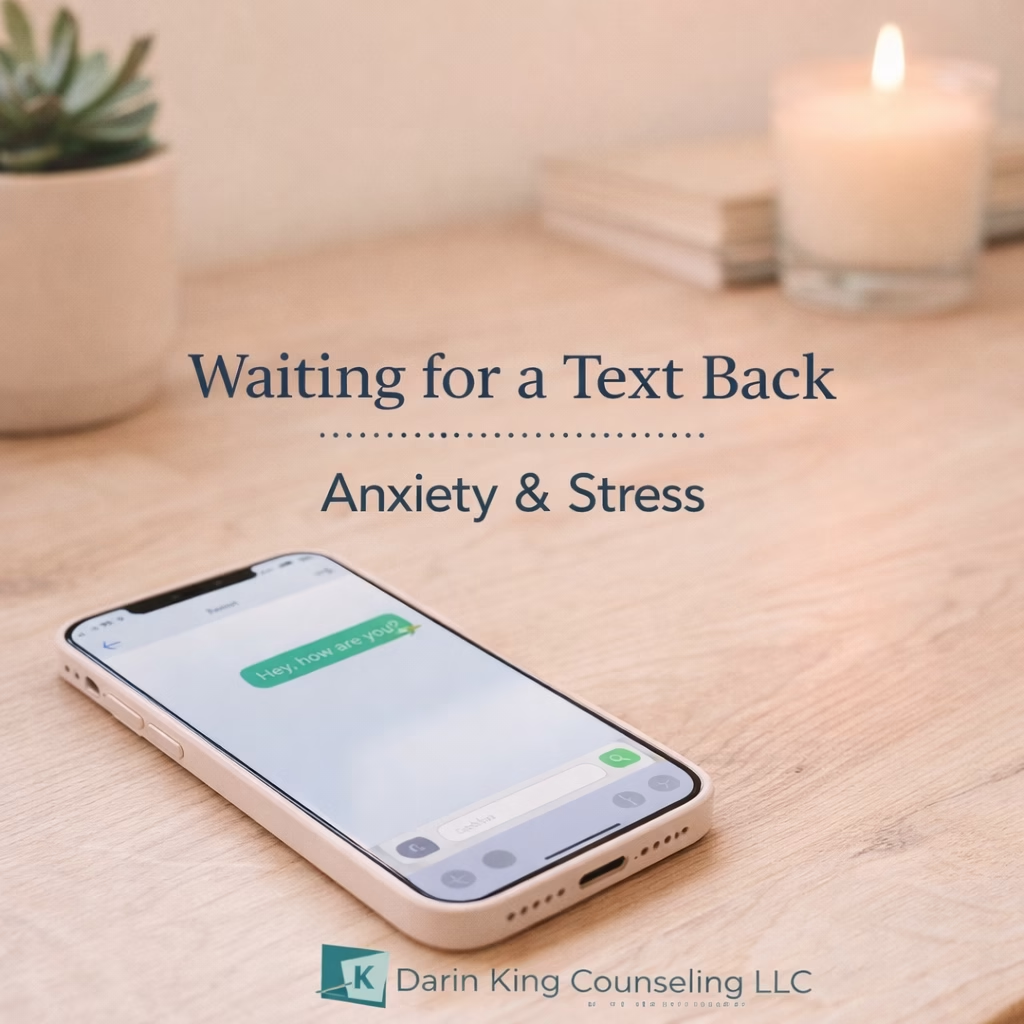
You send a message — and then the waiting begins. You check your phone. Nothing. You check again. Still nothing. A minute feels like an hour. You start wondering what it means, running through scenarios, trying to figure out if you said something wrong. By the time the reply arrives, you’ve already exhausted yourself imagining every possible reason for the delay.
If this sounds familiar, you’re not alone — and you’re also not overreacting. The anxiety of waiting for a text back is a genuinely common experience, and for many people it’s far more intense than the situation seems to warrant. Understanding why it happens — and what it’s actually telling you about your nervous system and history — can make it significantly less powerful.
Why Waiting for a Text Back Feels So Stressful
✓ Uncertainty about what the silence means
✓ Checking the phone repeatedly
✓ Running through possible explanations
✓ Feeling anxious until the message arrives
✓ Nervous system reading silence as rejection
✓ Old attachment wound triggered
✓ Hypervigilance to relationship cues
✓ Need for reassurance that the relationship is safe
Feel free to share or embed this infographic with credit to darinkingcounselingllc.com
The Neuroscience of Waiting for a Text
The stress of waiting for a text back is not just a modern inconvenience — it has genuine neurological roots. When you send a message and receive no response, your brain registers an uncertain social situation. And uncertain social situations — particularly ones involving people you care about — activate the brain’s threat detection system.
For most of human history, social rejection was genuinely dangerous. Being excluded from the group meant losing access to resources, protection, and survival. The brain evolved to treat social uncertainty as a threat signal — which is why waiting for a text can produce the same physiological stress response as a much more objectively serious situation. The National Institute of Mental Health recognizes that social anxiety — which includes fear of rejection and negative evaluation — is one of the most common anxiety disorders, affecting millions of American adults.
Key insight: The intensity of the anxiety you feel while waiting for a text is almost never really about the text. It is about what the text represents — connection, approval, safety — and about what your nervous system has learned to expect from people who don’t respond quickly.
Why It’s More Intense for Some People
While everyone experiences some degree of impatience or uncertainty when waiting for a response, for some people the anxiety is disproportionately intense — and that disproportionality is important information. Here are the most common reasons text anxiety hits harder for some people than others:
Abandonment Trauma or Anxious Attachment
For people with abandonment trauma or anxious attachment styles, a delayed text is not just a delayed text. It is the nervous system activating its abandonment alarm — the same alarm that fired when people left, when love felt inconsistent, when silence meant something was wrong. The brain learned early that people who don’t respond are people who are pulling away — and it responds accordingly, regardless of present reality.
Hypervigilance from Trauma
People with trauma histories often have a nervous system that is chronically primed for threat — scanning relationships for signs of danger the way it learned to scan for physical threat. A delayed text becomes a data point that the hypervigilant nervous system immediately processes as potential rejection, disapproval, or abandonment. Read more about how trauma affects the nervous system.
Anxious Attachment Style
Attachment styles — formed in early childhood based on the consistency and responsiveness of caregivers — shape how we experience relational uncertainty as adults. People with anxious attachment styles experience elevated distress during relational uncertainty because their nervous system learned early that connection is unreliable. A delayed text activates exactly this kind of relational uncertainty.
Low Self-Worth or Fear of Rejection
When underlying self-worth is fragile, external validation — including prompt replies from people who matter — becomes more important as a signal of safety and acceptance. The absence of that signal reads as potential rejection. Deep shame and a sense of not being enough can make ordinary social delays feel personally meaningful and threatening.
ADHD and Emotional Dysregulation
People with ADHD often experience emotions — including social anxiety and rejection sensitivity — more intensely than neurotypical people. Rejection Sensitive Dysphoria (RSD) — a feature of ADHD — can make perceived slights or delays in response feel extremely painful and activating. Read more about ADHD counseling.
What Your Text Anxiety Is Telling You
Rather than dismissing text anxiety as irrational or trying to suppress it, it can be more useful to get curious about what it’s communicating. Some useful questions to ask when you notice the anxiety rising:
- What am I afraid is happening? Getting specific about the fear — “they’re angry with me,” “they’ve lost interest,” “I did something wrong” — often reveals the underlying belief worth examining
- Is this proportionate? Would a neutral observer find this level of concern reasonable for the situation? If not, the intensity belongs somewhere else
- What does this remind me of? Does the feeling of waiting and not knowing connect to earlier experiences of people being unavailable or unreliable?
- What do I need right now? Reassurance? Connection? To feel safe? Identifying the underlying need is more useful than focusing on the text itself
The Role of Intermittent Reinforcement
There’s also a neurological reason that texting specifically can be so anxiety-provoking — and it has to do with intermittent reinforcement. When responses are unpredictable — sometimes immediate, sometimes delayed — the brain’s dopamine system becomes particularly activated around the uncertainty. This is the same mechanism that makes gambling compelling: unpredictable rewards produce stronger engagement than consistent ones. The unpredictability of text response times keeps the anxiety system engaged in a way that more consistent communication patterns wouldn’t. Read more about trauma bonding for a deeper look at how intermittent reinforcement shapes attachment.
Note: If text anxiety is a persistent pattern that significantly affects your relationships or daily life — if you find yourself constantly monitoring your phone, spiraling into worst-case scenarios, or unable to function comfortably until you receive a response — it may be worth exploring with a therapist. This level of anxiety often points to underlying attachment wounds or trauma that respond well to treatment. The Substance Abuse and Mental Health Services Administration recognizes anxiety as highly treatable with evidence-based approaches.
What Helps in the Moment
- Notice and name the feeling — “I’m feeling anxious about not hearing back” — without immediately acting on it
- Put the phone down — checking repeatedly amplifies the anxiety by keeping the uncertainty front and center
- Engage in something absorbing — shifting attention to something that requires genuine focus interrupts the rumination cycle
- Ground in the present — use grounding techniques to bring your nervous system back to what is actually happening right now, rather than the story it’s telling. See our guide on nervous system reset techniques
- Challenge the interpretation — is silence definitely bad news? What are the other explanations? How many times has someone been slow to respond for completely neutral reasons?
When to Seek Support
If text anxiety — or relationship anxiety more broadly — is a persistent pattern that feels bigger than the situation warrants, it may be pointing to attachment wounds or anxiety that would benefit from professional support.
- Anxiety counseling addresses the underlying anxiety patterns driving relationship hypervigilance
- EMDR therapy processes the early attachment experiences that taught the nervous system that relational uncertainty means danger
- Trauma counseling addresses abandonment wounds and attachment disruptions at their root
Related reading: Our guides on abandonment trauma in relationships, signs of abandonment trauma in adults, and anxiety vs panic attacks provide important context for understanding relationship anxiety and what drives it.
Frequently Asked Questions
Why does waiting for a text make me so anxious?
The anxiety is rarely just about the text — it’s about what the text represents. For many people, a delayed response activates underlying fears of rejection or abandonment rooted in early attachment experiences. The nervous system treats uncertain social situations as potential threats. Read more about abandonment trauma in relationships.
Is text anxiety a sign of anxiety disorder?
Occasional text anxiety is common and normal. When it’s persistent, intense, and significantly affects your relationships or daily functioning, it may point to underlying anxiety, attachment wounds, or trauma worth exploring with a therapist. Anxiety counseling addresses this effectively.
Can abandonment trauma cause text anxiety?
Yes — abandonment trauma is one of the most common drivers. When the nervous system learned early that unavailable people are people who are leaving, a delayed text activates the same alarm. EMDR therapy and trauma-focused approaches address the underlying abandonment wound most effectively.
How do I stop being anxious about waiting for texts?
In the moment, put the phone down, engage in something absorbing, and ground in the present. See our guide on nervous system reset techniques. Longer term, working with a therapist to address what the anxiety is really about produces the most lasting change.
Is it normal to feel rejected when someone doesn’t text back quickly?
It is common — but the intensity of the feeling often tells you something important. Intense feelings of rejection based on a text delay usually point to underlying abandonment trauma or anxiety that deserves attention. Telehealth therapy makes support accessible from anywhere in Pennsylvania.
If the waiting feels bigger than the message, something deeper deserves attention.
Darin King, LPC specializes in anxiety, attachment wounds, and trauma therapy in Pennsylvania. Telehealth available statewide.
See more from Darin King Counseling on Google