

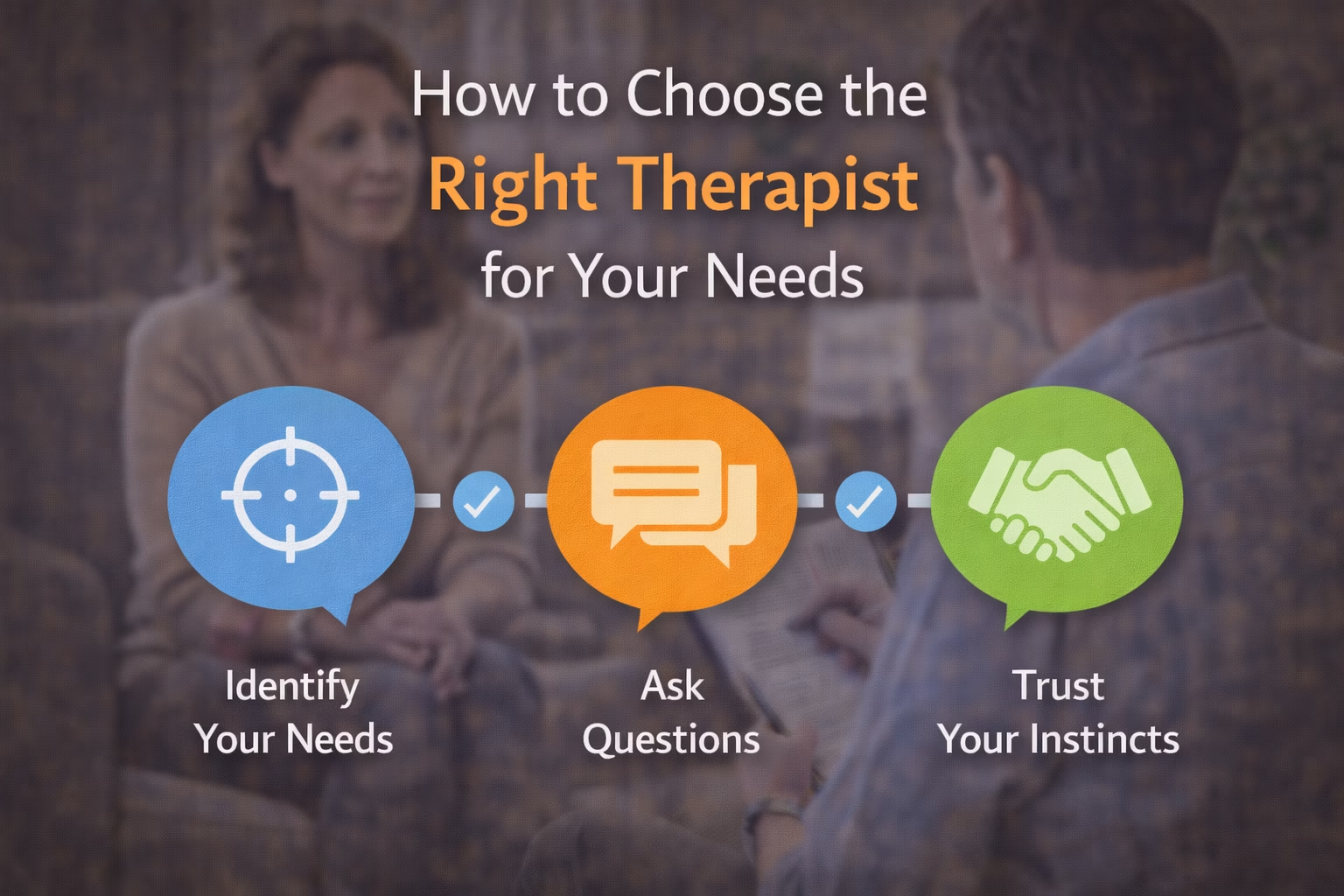
Finding a therapist is one thing. Finding the right therapist — one whose approach, expertise, and personality genuinely fit your needs — is something else entirely. Research consistently shows that the therapeutic relationship is one of the strongest predictors of therapy outcome. Which means that choosing your therapist thoughtfully is not just a logistical decision. It is a clinical one.
This guide walks through exactly what to look for when choosing a therapist, what questions to ask, and how to evaluate whether someone is the right fit — even after you’ve started working with them.
How to Choose the Right Therapist: Key Factors
✓ Specializes in your presenting concern
✓ Approach matches what you need
✓ You feel safe and unjudged
✓ They can explain what they do and why
✓ Similar values or life experience
✓ Gender preference
✓ In-network insurance status
✓ Location or telehealth availability
Feel free to share or embed this infographic with credit to darinkingcounselingllc.com
Why Choosing the Right Therapist Matters
The therapeutic relationship — the quality of the connection, trust, and collaboration between therapist and client — is consistently identified in research as one of the strongest predictors of therapy outcome. The Substance Abuse and Mental Health Services Administration recognizes that a strong therapeutic alliance is central to effective treatment across all modalities and presenting concerns.
This means that finding a therapist with the right credentials, the right specialization, and the right interpersonal fit is not a luxury — it is a clinical priority. A technically skilled therapist who is not a good relational fit will be less effective than a somewhat less credentialed therapist with whom you feel genuinely safe and understood.
Key principle: You are interviewing the therapist as much as they are assessing you. Finding the right fit may take more than one attempt — and that is completely appropriate. Changing therapists when the fit is wrong is not failure. It is good clinical self-advocacy.
Step 1: Clarify What You Need Help With
Before you can find the right therapist, you need a working sense of what you’re looking for support with. You don’t need a diagnosis or a perfectly articulated problem — but having a general sense of your presenting concern helps you find a therapist with relevant expertise.
Common presenting concerns and corresponding specializations:
| Presenting Concern | Look For |
|---|---|
| Trauma, PTSD, childhood abuse | Trauma-informed therapist with EMDR, IFS, or somatic training. See trauma counseling in Pennsylvania |
| Anxiety, panic, hypervigilance | Anxiety specialist — CBT, DBT, or trauma-informed. See anxiety counseling in Pittsburgh |
| Depression, seasonal depression | Depression specialist with evidence-based approach. See depression counseling |
| Relationship issues, couples conflict | Couples therapist or attachment-focused therapist. See couples counseling |
| ADHD, emotional dysregulation | ADHD specialist or DBT-trained therapist. See ADHD counseling |
| Complex PTSD, identity wounds | Complex trauma specialist with IFS or EMDR training. See CPTSD therapy |
Step 2: Understand the Key Credentials
Therapist credentials vary — and understanding what they mean helps you make an informed choice. The National Institute of Mental Health recommends verifying that any therapist you work with is licensed in your state.
- LPC (Licensed Professional Counselor) — master’s-level mental health counselor licensed to provide therapy
- LCSW (Licensed Clinical Social Worker) — master’s-level social worker licensed to provide therapy
- Licensed Psychologist (PhD or PsyD) — doctoral-level clinician licensed to provide therapy and psychological testing
- MFT (Marriage and Family Therapist) — specializes in relational and systemic approaches
- LPC-A or similar — associate or provisional license (working under supervision toward full licensure)
In Pennsylvania, therapists are licensed by the State Board of Social Workers, Marriage and Family Therapists and Professional Counselors. You can verify any therapist’s license status online before beginning work with them.
Step 3: Look for Relevant Specialization and Training
Beyond basic licensure, look for specific training in approaches relevant to your needs:
- EMDR trained — for trauma, PTSD, anxiety with trauma roots. Read more about how EMDR therapy works
- IFS trained — for complex trauma, shame, and identity wounds. Read about IFS therapy
- DBT trained — for emotional dysregulation, self-harm urges, and high-intensity anxiety. Read about DBT therapy
- Trauma-informed — for any presenting concern with trauma roots
- Attachment-focused — for relationship patterns, abandonment trauma, and relational healing
Step 4: Use a Consultation to Assess Fit
Most therapists offer a free initial consultation — 15-20 minutes by phone or video. This is your opportunity to assess fit before committing to ongoing sessions. Questions worth asking during a consultation:
- “What is your experience working with [your presenting concern]?”
- “What approaches do you use and why?”
- “How do you typically structure the first few sessions?”
- “What does progress look like in your work?”
- “How do you handle it if a client feels stuck or isn’t progressing?”
A good therapist will welcome these questions. They are not intrusive — they are evidence of an informed, self-advocating client.
Step 5: Pay Attention to How You Feel in Session
After your first session — or first few sessions — check in honestly with yourself:
- Did you feel genuinely heard and understood?
- Did you feel safe enough to be honest?
- Did the therapist’s approach make sense to you?
- Did you feel respected and not judged?
- Can you imagine being able to go deeper with this person over time?
You don’t need to feel immediately comfortable — some discomfort in early sessions is normal and expected. But a basic sense of safety, respect, and being understood should be present from early on. Read more about what to expect when starting therapy.
Red Flags to Watch For
- Consistently feeling judged, dismissed, or misunderstood
- A therapist who talks more than they listen
- Feeling pressured to go faster or deeper than feels safe
- A therapist who can’t explain their approach in plain language
- Feeling worse consistently after sessions without any sense of productive difficulty
- A therapist who shares excessive personal information or creates social relationship with clients
- Feeling your concerns about the process are dismissed rather than explored
It’s Okay to Change Therapists
If after a genuine effort — typically 3-6 sessions — the fit doesn’t feel right, changing therapists is appropriate and often clinically important. The therapeutic relationship is so central to outcome that persisting with the wrong fit can actually impede progress. Changing therapists is not a failure — it is information.
When changing therapists, it is appropriate to briefly explain what wasn’t working — not as criticism, but as information the therapist can use and that you can use in finding the next fit. Read more about signs therapy is working to help you evaluate whether it’s a fit issue or part of the normal difficulty of the therapeutic process.
Note: Telehealth significantly expands your options when choosing a therapist — you are no longer limited to therapists within driving distance. Anyone licensed in Pennsylvania can provide telehealth services to you regardless of where you are in the state. This is particularly valuable for accessing specialized trauma therapists, EMDR-trained clinicians, or IFS practitioners who might not be available locally. Read more about telehealth therapy in Pennsylvania.
Related reading: Our guides on nervous about starting therapy, what happens in your first therapy session, signs therapy is working, and how long therapy takes to work provide the full picture of starting and navigating the therapy process.
Frequently Asked Questions
How do I choose the right therapist?
Clarify what you need help with, verify licensure and relevant specialization, use a consultation to assess fit, pay attention to how you feel in early sessions, and be willing to change therapists if the fit isn’t right. The therapeutic relationship is one of the strongest predictors of outcome — choosing thoughtfully is a clinical priority.
What should I look for in a trauma therapist?
A trauma therapist should be licensed in your state with specific training in evidence-based approaches — such as EMDR, IFS, or somatic therapies. They should follow a phased model prioritizing stabilization before processing and create a relationship where you feel genuinely safe.
Is it okay to change therapists if it doesn’t feel right?
Yes — absolutely. Persisting with the wrong fit can impede progress. If after 3-6 sessions the fit doesn’t feel right, changing therapists is appropriate and often clinically important. Read more about signs therapy is working to help evaluate whether it’s a fit issue or normal difficulty.
Does my therapist need to specialize in my specific issue?
For complex presentations like trauma, PTSD, or ADHD, specialization matters significantly. A generalist may be appropriate for mild concerns. For trauma or Complex PTSD, specific training and experience will typically be significantly more effective.
Can I find a good therapist via telehealth?
Yes — telehealth removes geographic limitations, giving you access to any licensed therapist in Pennsylvania regardless of their location. This is particularly valuable for accessing specialized trauma therapists or EMDR-trained clinicians who might not be available locally.
Finding the right therapist changes everything. We’d love to be that fit for you.
Darin King, LPC offers a free consultation — trauma-specialized, EMDR-trained, telehealth across Pennsylvania.
See more from Darin King Counseling on Google