

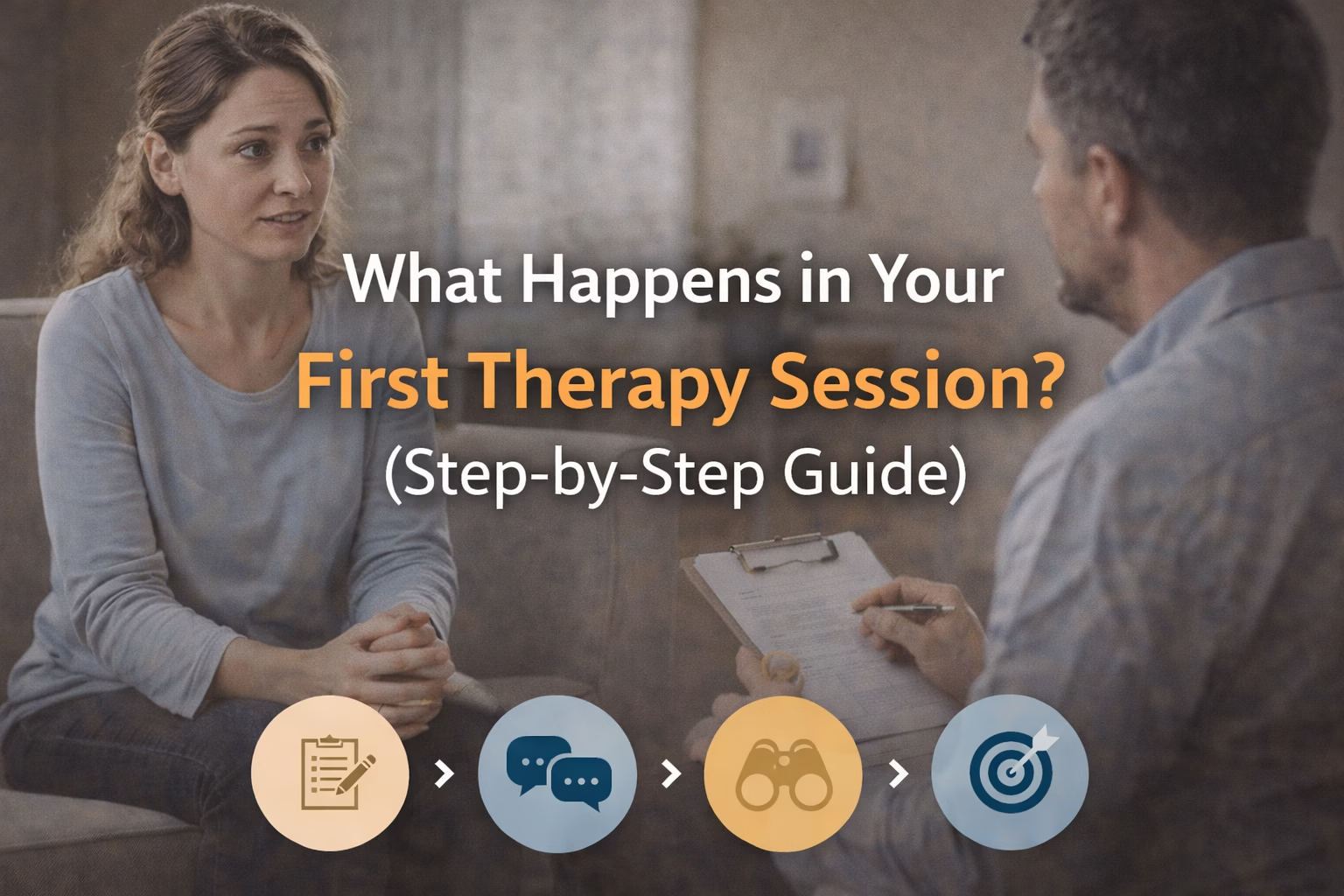
One of the biggest barriers to starting therapy is not knowing what to expect. The unknown is anxiety-provoking by itself — and when the unknown involves sharing personal material with a stranger, the anxiety can feel significant enough to keep people from making that first appointment. This guide removes the unknown entirely by walking through exactly what happens in a first therapy session, step by step, so you know what you’re walking into before you arrive.
Your First Therapy Session: What to Expect
✓ Confidentiality explained clearly
✓ Questions about what brought you in
✓ Relevant background history
✓ Beginning to understand your goals
✓ Deep trauma processing in session one
✓ Judgment about anything you share
✓ Being told what to do with your life
✓ Having to have everything figured out
Feel free to share or embed this infographic with credit to darinkingcounselingllc.com
Before the Session: Paperwork and Preparation
Before your first session begins — either sent to you in advance or completed at the start of the appointment — you’ll typically complete intake paperwork. This usually includes:
- Informed consent — a document explaining your rights as a client, the therapist’s approach, confidentiality and its limits, fees and cancellation policy, and how to contact the therapist between sessions. Read this carefully — it is your roadmap for the therapeutic relationship.
- HIPAA acknowledgment — confirming that you’ve been informed of your privacy rights under federal law. Read more about what is and isn’t confidential in therapy.
- Intake questionnaire — questions about your current concerns, mental health history, medical history, medications, and relevant background. Some therapists send this in advance via a secure client portal; others complete it at the start of the session.
- Insurance information — if you’re using insurance to cover sessions.
For telehealth sessions, all of this is typically handled electronically through a secure client portal before the session begins. Read more about how telehealth counseling works in Pennsylvania.
The Opening: Settling In and Setting the Stage
Your therapist will begin by welcoming you — briefly introducing themselves, explaining how sessions typically work, and giving you a chance to settle in. For telehealth sessions, they’ll confirm that you’re in a private space where you can speak freely.
Many therapists spend a few minutes at the start of the first session reviewing key elements of informed consent — particularly confidentiality and its limits — so you understand exactly what is and isn’t protected before you begin sharing. This is not bureaucratic formality. It is foundation-building — creating the conditions of trust and transparency that make genuine therapeutic work possible.
The Heart of the First Session: Your Story
The central part of the first session is the therapist getting to know you and what brought you to therapy. Expect questions in several areas:
What Brought You In
Your therapist will ask about your presenting concern — what’s been happening, what prompted you to seek therapy now, and what you’re hoping to get from the process. You don’t need to have a perfectly articulated answer. “I’ve been struggling with anxiety and don’t know where it’s coming from” is a completely sufficient opening. The therapist will follow up with questions that help clarify the picture.
Current Life Context
Understanding your current life situation — work, relationships, living situation, significant stressors — helps the therapist understand the context in which your presenting concern is occurring. You share as much or as little of this as feels relevant and comfortable.
Relevant History
Your therapist may ask about relevant background — family history, previous mental health treatment, significant life experiences that have shaped your current situation. This history-gathering is not intended to be exhaustive in the first session. It is a beginning — you’ll develop a much fuller picture together over subsequent sessions.
Previous Therapy Experiences
If you’ve been in therapy before, your therapist will likely ask about those experiences — what worked, what didn’t, what approach was used. This information helps them understand what has and hasn’t been helpful and tailor their approach accordingly. Read more about how to choose the right therapist.
Your Goals
What are you hoping to get from therapy? What would need to change for you to feel that therapy was successful? These goal questions help establish a shared direction and give both you and the therapist something concrete to work toward and evaluate progress against.
What the Therapist Is Doing
While you’re sharing, your therapist is doing several things simultaneously:
- Listening carefully — not just to the content of what you’re saying but to the patterns, themes, and emotional texture of how you tell your story
- Building the therapeutic relationship — establishing the safety, warmth, and trust that are the foundation of effective therapy
- Beginning a clinical assessment — developing a working understanding of your presenting concern, relevant history, and what might be driving your difficulties
- Noticing what you’re bringing — both verbally and nonverbally — to begin understanding how you relate to yourself and others
The Substance Abuse and Mental Health Services Administration recognizes the therapeutic relationship as one of the strongest predictors of therapy outcome — and the first session is where that relationship begins to form.
The Closing: What Comes Next
Most therapists reserve the last 5-10 minutes of the first session for wrapping up and looking ahead:
- Sharing initial impressions — the therapist may offer some early observations or reflections on what they’ve heard
- Discussing approach — explaining how they typically work and whether their approach seems like a fit for your needs
- Answering your questions — this is your opportunity to ask anything you want to know about the therapist, their approach, or the process
- Scheduling — deciding on frequency and timing of subsequent sessions
- Between-session expectations — some therapists offer simple practices or reflections for between sessions; others don’t until the therapeutic relationship is more established
How You Might Feel After the First Session
The first therapy session often produces a range of feelings — and most of them are normal:
- Relief — finally starting, finally saying some of what you’ve been carrying
- Emotional stirring — accessing material that has been held back can produce feelings of sadness, grief, or anxiety
- Uncertainty — you may not yet be sure if this therapist is the right fit, or if therapy is what you expected
- Fatigue — genuine emotional engagement is tiring in a way that ordinary conversation is not
- Hopefulness — many people feel a sense of possibility after starting that they haven’t felt in a while
All of these responses are normal and worth noting. If you feel significant distress after a first session, reach out to your therapist — this is exactly the kind of thing they want to know about. Read more about signs therapy is working and what to expect as the process unfolds.
Note: The first session is a mutual evaluation — you are assessing the therapist as much as they are assessing your needs. It is completely appropriate to decide after the first session that the fit isn’t right and to look for a different therapist. The National Institute of Mental Health recognizes that the therapeutic relationship is one of the strongest predictors of therapy outcome — finding the right fit matters.
Questions Worth Asking Your Therapist in the First Session
- “What is your experience working with [your presenting concern]?”
- “What approach do you use and why?”
- “How will we know if therapy is working?”
- “What do you typically expect from clients between sessions?”
- “How do you handle it if I feel stuck or that we’re not making progress?”
Related reading: Our guides on nervous about starting therapy, is therapy confidential, how to choose the right therapist, and signs therapy is working provide everything you need to navigate the start of therapy with confidence.
Frequently Asked Questions
What should I expect in my first therapy session?
Paperwork and informed consent review, a brief introduction about how sessions work and confidentiality, questions about what brought you in, relevant background history, and discussion of your goals. The session closes with the therapist sharing initial impressions and scheduling next steps. You are not expected to share everything — it is a beginning. Read more about what is confidential in therapy.
What should I say in my first therapy session?
You don’t need a prepared speech. Your therapist will guide the conversation. Even “I’m not sure where to start” is a perfectly fine opening. The therapist’s job is to help you articulate what you’re experiencing — not to expect you to have it figured out. Read more about what to do if you’re nervous about starting therapy.
Is the first therapy session just an intake?
It involves intake but it is also the beginning of the therapeutic relationship. A skilled therapist is not just collecting information — they are building the connection and safety that make therapy work. Many clients feel some benefit from the first session simply from being heard without judgment.
What if I don’t like my therapist after the first session?
It is completely appropriate to decide the fit isn’t right and look for a different therapist. The therapeutic relationship is one of the strongest predictors of outcome — finding the right fit matters. Read more about how to choose the right therapist.
What happens in a first telehealth therapy session?
A first telehealth session follows the same structure as in-person, with paperwork completed electronically beforehand. The therapist confirms you’re in a private space and proceeds with the same introduction, history-gathering, and goal-setting. Read more about how telehealth counseling works in Pennsylvania.
Now you know what to expect. The only step left is making the appointment.
Darin King, LPC offers a free consultation — trauma-specialized, evidence-based, telehealth across Pennsylvania.
See more from Darin King Counseling on Google