

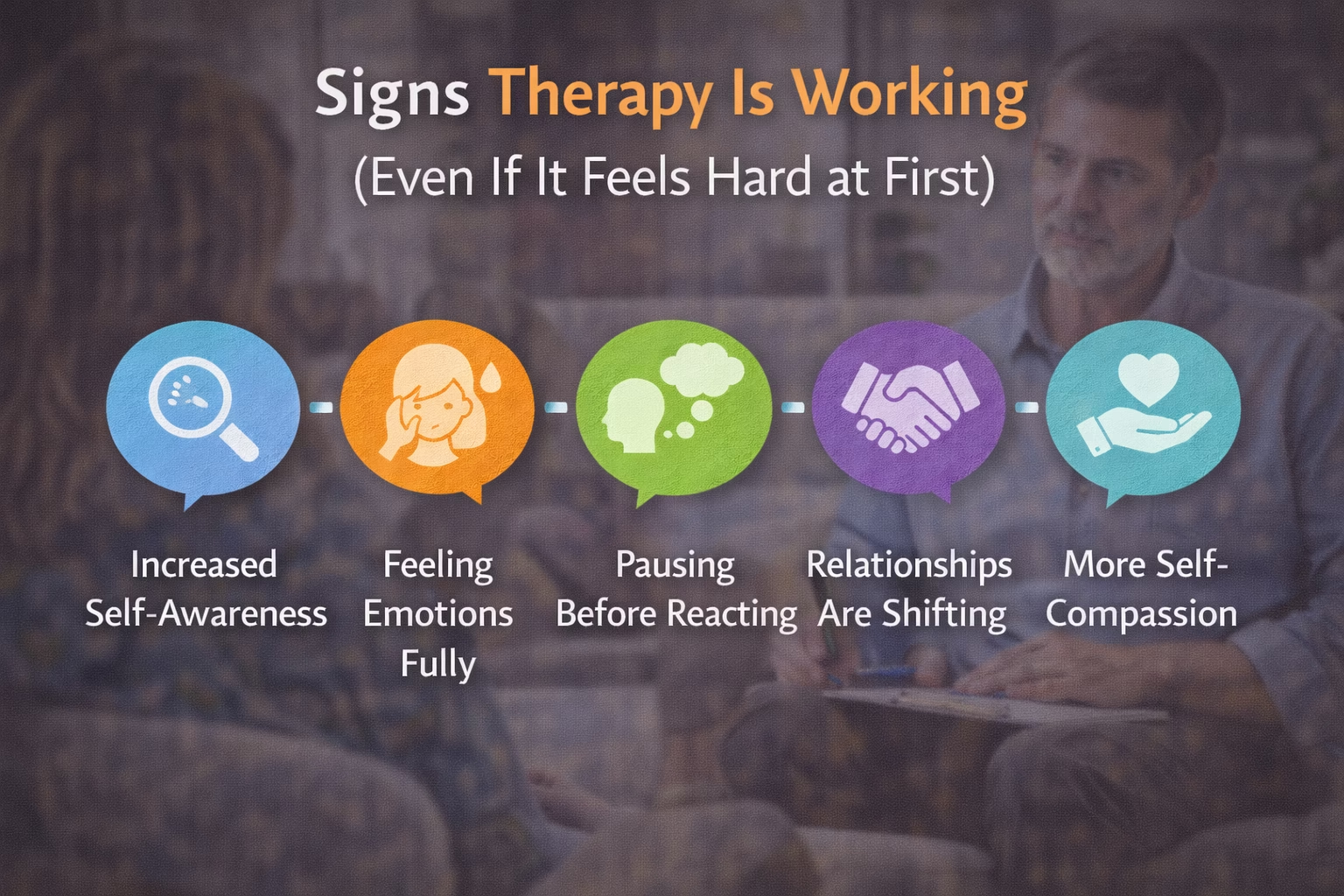
One of the most common questions people ask mid-therapy is: is this actually working? It’s a fair question — and a surprisingly difficult one to answer from the inside. Therapy progress is not always linear, not always obvious, and sometimes the signs that something meaningful is happening look nothing like what people expect. In fact, some of the most reliable signs that therapy is working are things that might initially seem like setbacks.
This guide walks through the real signs that therapy is working — including the ones that are easy to miss, misinterpret, or dismiss when you’re in the middle of the process.
Signs Therapy Is Working: Obvious vs Easy to Miss
✓ You’re sleeping better
✓ Relationships feel less charged
✓ You’re using coping skills that actually help
✓ You feel generally more stable
✓ You’re more aware of patterns you didn’t see before
✓ Old coping mechanisms feel less satisfying
✓ You’re setting limits and feeling guilty about it
✓ You’re having feelings you used to avoid
Feel free to share or embed this infographic with credit to darinkingcounselingllc.com
Why Therapy Progress Is Hard to See From the Inside
The National Institute of Mental Health recognizes that evidence-based psychotherapies produce meaningful improvement for the majority of people who engage with them — but progress is rarely a straight line. Therapy often involves periods of increased difficulty before sustained improvement, moments of apparent regression that are actually signs of deeper work happening, and changes that are more visible to others than to the person in therapy.
Part of what makes therapy progress hard to see is that you are always measuring from your own internal perspective — which is precisely what therapy is working to change. It is like trying to see your own blind spots.
Key point: The most meaningful therapy progress often happens gradually and below conscious awareness — until one day you notice you responded differently to a trigger, you set a limit without spiraling, or you felt something you used to avoid. These moments of noticing are themselves signs that the work is happening.
The Clear Signs Therapy Is Working
1. Your Symptoms Are Reducing in Frequency or Intensity
Anxiety attacks are happening less often or feel less overwhelming. Depressive episodes are shorter. Intrusive thoughts are less sticky. Triggers that used to derail you are less potent. These reductions in symptom frequency and intensity are the most straightforward signs of therapeutic progress — and they are measurable.
2. You’re Sleeping Better
Sleep is profoundly connected to mental health and nervous system regulation. As therapy addresses the underlying drivers of anxiety and nervous system dysregulation, sleep often improves — sometimes significantly before other symptoms do. Better sleep is both a sign of progress and a further support for it. Read more about nervous system reset techniques.
3. Your Relationships Feel Different
The patterns you carry into therapy were almost certainly shaped by early relational experiences — and as therapy addresses those roots, your relationships begin to reflect the change. You’re less reactive in conflict. You’re more able to express needs. You’re setting limits that you previously couldn’t. You’re choosing differently in relationships. These relational shifts are among the most meaningful signs of therapeutic progress.
4. You Have Language for Your Experience
One of the early gifts of therapy is vocabulary — the words, frameworks, and concepts that help you understand what’s happening inside you. When you can name what you’re experiencing — “I’m being hypervigilant,” “this is my abandonment alarm activating,” “this is a shame response” — you’ve gained significant ground. Naming creates distance between you and the experience, which creates choice.
5. You’re Using Coping Skills That Actually Help
You’re reaching for the breathing techniques, the grounding practices, the regulation tools — and they’re working. Not perfectly, not every time, but increasingly. The toolkit is getting used and the tools are getting sharper. See our guide on nervous system reset techniques.
6. You Feel More Stable Between Sessions
Early in therapy, the effects of sessions may fade quickly between appointments. As therapy progresses, the stability tends to extend — the regulation learned in session becomes more available between sessions, and the window between disruptions gets wider.
The Easy-to-Miss Signs Therapy Is Working
7. Things Feel Harder Before They Feel Better
This is one of the most important and counterintuitive signs that therapy is working. When you begin accessing material that has been suppressed or avoided — old grief, old anger, old fear — it can feel like things are getting worse. They are not. The material was always there. What’s changed is that you now have enough safety to begin feeling it. This is the process of healing, not evidence that therapy is making things worse.
8. You’re More Aware of Patterns You Didn’t Notice Before
Suddenly you can see the people-pleasing in real time. You notice yourself about to dissociate before you’re fully gone. You recognize the shame response as it’s activating. This increased awareness can feel disorienting — even worse than the blissful unawareness that preceded it. But awareness is the necessary prerequisite for change. You cannot change what you cannot see.
9. Old Coping Mechanisms Feel Less Satisfying
The things you used to do to manage difficult feelings — overworking, drinking, numbing out, people pleasing — are starting to feel hollow or insufficient. This can feel like loss. It is also a sign that the underlying needs those mechanisms were meeting are beginning to be met in more genuine ways — and that the old strategies are no longer necessary in the same way.
10. You’re Setting Limits and Feeling Guilty About It
You’re starting to say no. You’re starting to have needs and express them. And you feel terrible about it — the guilt, the anxiety, the fear of abandonment. But you’re doing it anyway. This uncomfortable period — where the new behavior is in place but the emotional response hasn’t yet caught up — is one of the clearest signs that real change is happening. Read more about how to stop feeling guilty and signs of a people pleaser.
11. You’re Feeling Things You Used to Avoid
Grief that was locked away is surfacing. Anger that was suppressed is finding voice. Longing that was dismissed is being acknowledged. The return of avoided feelings is not a sign that therapy is making you worse — it is a sign that the therapeutic relationship has become safe enough for the nervous system to begin releasing what it has been holding. Read more about what dissociation feels like and why emotions return as the system becomes safer.
12. You’re Thinking About Therapy Between Sessions
Something happens in daily life and you immediately think about what you talked about in session. You notice a pattern in real time that you discussed last week. You find yourself applying something your therapist said. This active integration of therapeutic insight into daily life is one of the clearest signs the work is taking hold.
13. You’re More Compassionate With Yourself
The inner critic is a little quieter. The shame that used to flood you after a mistake is less consuming. You’re beginning to relate to your own history with more understanding and less condemnation. Self-compassion — which is genuinely difficult for most people in therapy — develops gradually and unevenly, but its growth is one of the most meaningful signs of therapeutic progress. Read more about shame vs guilt.
14. Other People Notice Changes Before You Do
A friend comments that you seem different. A partner notices you’re less reactive. A colleague observes that you seem calmer. People in our lives often see our changes before we do — because they are comparing us to the person they’ve known, while we are comparing ourselves to the person we wish we were.
| Sign | What It Means |
|---|---|
| Things feel harder before better | Suppressed material is being accessed — healing is underway |
| Increased awareness of patterns | Consciousness precedes change — you can now see what you couldn’t |
| Old coping feels hollow | Underlying needs are being met more genuinely |
| Setting limits with guilt | New behavior is installed — emotional response catching up |
| Feeling avoided emotions | Nervous system now safe enough to release what it was holding |
| Applying insights between sessions | Active integration — the work is becoming part of daily life |
| Growing self-compassion | The shame-based inner critic is losing power |
What to Do If You’re Not Sure Therapy Is Working
If you’re genuinely uncertain whether you’re making progress, the best thing to do is talk to your therapist directly. A good therapist welcomes this conversation — it provides important information about the therapeutic process and the relationship. You can also ask your therapist to help you identify specific, measurable goals so you have a clearer sense of what progress looks like for your particular situation.
If after an honest conversation you still feel stuck, it may be worth considering whether the therapeutic approach or the therapeutic relationship is the right fit. Read more about how to choose the right therapist.
Note: The Substance Abuse and Mental Health Services Administration emphasizes that the therapeutic relationship is one of the strongest predictors of therapy outcome. If the relationship doesn’t feel right, changing therapists is not a failure — it is an important act of self-advocacy.
Related reading: Our guides on nervous about starting therapy, how to choose the right therapist, how long therapy takes to work, and what happens in your first therapy session provide important context for navigating the therapy process.
Frequently Asked Questions
How do I know if therapy is working?
Signs include reducing symptoms, better sleep, more stable relationships, effective coping skills, increased self-awareness, feeling emotions previously avoided, old coping mechanisms feeling less satisfying, and other people noticing changes before you do. Progress is rarely linear and may initially feel harder before it feels better.
Is it normal for therapy to feel harder before it gets better?
Yes — particularly in trauma therapy. When you begin accessing suppressed material, it can feel like things are getting worse. In reality it is a sign that meaningful work is happening and the therapeutic relationship has created enough safety for processing. Read more about what trauma therapy is.
How long does it take to see results from therapy?
Many people notice early signs within the first few sessions. More significant change typically develops over months of consistent work. For complex or childhood trauma, meaningful improvement takes longer but is consistently achievable. Read our guide on how long therapy takes to work.
What if I feel worse after therapy sessions?
Feeling emotionally tender or stirred up after sessions is common — particularly after sessions that accessed difficult material. Having self-care strategies for after sessions helps support integration. If you consistently feel significantly worse for extended periods, discuss this with your therapist so the pace can be adjusted.
What if therapy doesn’t seem to be working?
Raise the concern directly with your therapist first. If you still feel stuck, consider whether the approach or relationship is the right fit. Changing therapists is not a failure — it is self-advocacy. Read more about how to choose the right therapist.
Progress in therapy is real — even when it’s hard to see. You’re doing more than you know.
Darin King, LPC specializes in trauma, anxiety, and evidence-based therapy in Pennsylvania. Telehealth available statewide.
See more from Darin King Counseling on Google