

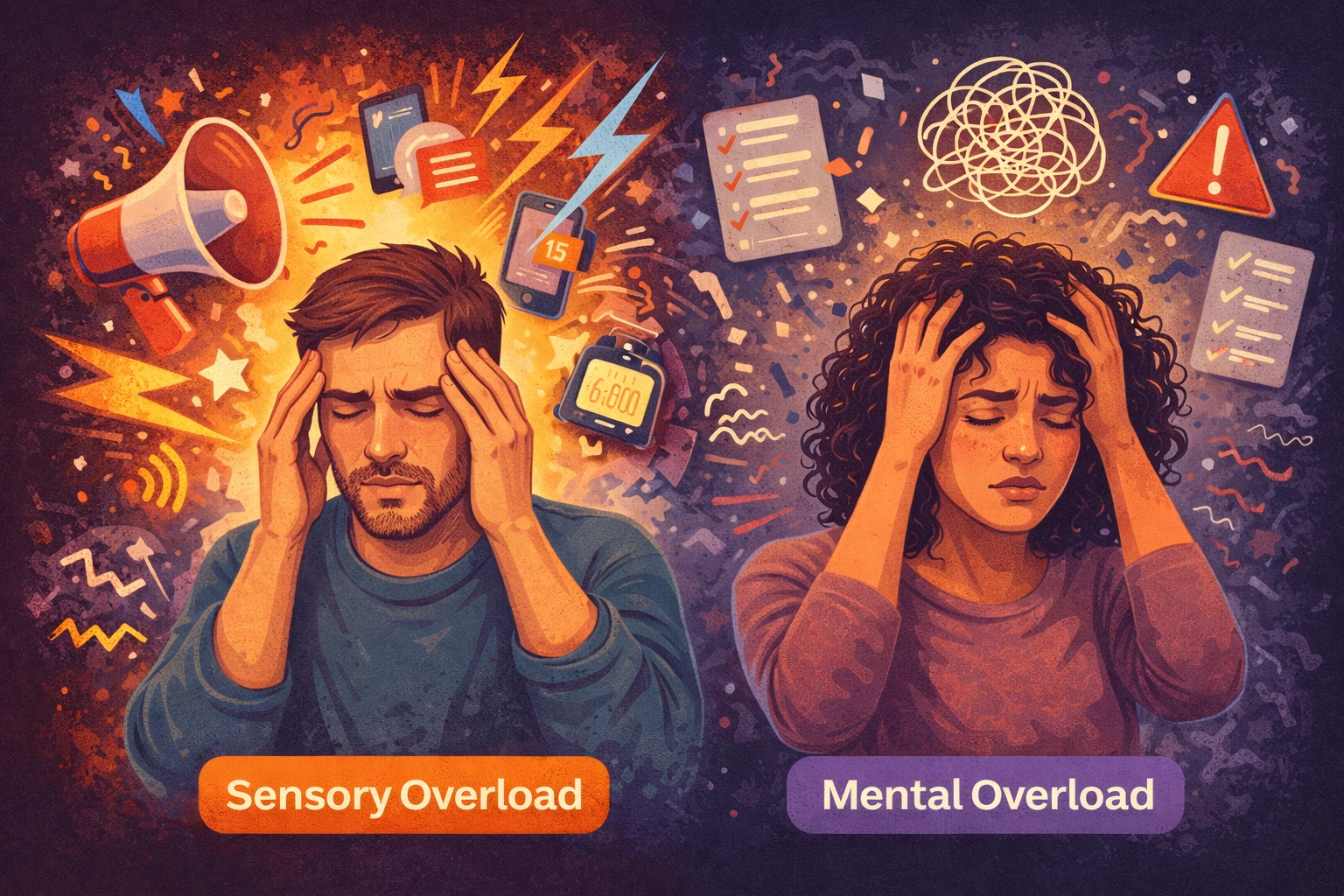
You’re in the middle of a normal day — maybe at the grocery store, in a meeting, or just scrolling your phone — and suddenly everything feels like too much. The lights are too bright, the noise is overwhelming, your skin feels like it’s crawling, and you just need everyone to stop. That feeling has a name: overstimulation.
Understanding what overstimulated means, why it happens, and what you can do about it is the first step toward feeling more in control of your nervous system and your daily life.
Could this be you? Take 30 seconds and check how many feel familiar:
- Bright lights, loud sounds, or busy environments leave you wanting to escape
- You snap at people you love over small things, then feel awful afterward
- You hit a wall of exhaustion mid-day and can’t push through it
- You cry, shut down, or go numb when too much is happening at once
- Recovering from a normal day takes hours of being alone
- You’ve been called “too sensitive,” “moody,” or “lazy” — but it doesn’t feel like that from the inside
If three or more sound like your everyday experience, the rest of this guide is going to feel less like a definition and more like recognition.
What Does Overstimulated Mean? 6 Key Signs
✓ Feeling irritable or on edge
✓ Difficulty concentrating
✓ Need to escape or be alone
✓ Crying without knowing why
✓ Shutting down or going numb
✓ Difficulty making decisions
Feel free to share or embed this infographic with credit to darinkingcounselingllc.com
What Does Overstimulated Mean?
Overstimulated means your nervous system is receiving more input than it can process at one time. This input can be sensory (noise, light, touch, smell), emotional (conflict, stress, social demands), or cognitive (too many decisions, too much information). According to the National Institute of Mental Health, sensory processing differences and anxiety — both closely linked to overstimulation — affect tens of millions of Americans.
When your brain hits its processing limit, it responds with a cascade of physical and emotional signals designed to make you slow down, withdraw, or escape the overwhelming environment. This is not a character flaw or weakness — it’s your nervous system doing exactly what it was designed to do.
Key definition: Overstimulated means your brain and nervous system are receiving more sensory, emotional, or cognitive input than they can effectively process — leading to overwhelm, irritability, shutdown, or the urgent need to escape.
6 Types of Overstimulation
| Type | What It Feels Like | Common Triggers |
|---|---|---|
| Sensory | Lights too bright, sounds too loud, textures unbearable | Crowds, busy environments, fluorescent lighting |
| Emotional | Flooded with feelings, can’t regulate, tearful | Conflict, criticism, emotional conversations |
| Cognitive | Brain fog, decision fatigue, inability to focus | Too many tasks, information overload, multitasking |
| Social | Drained after interaction, need solitude urgently | Large groups, small talk, prolonged socializing |
| Physical | Skin sensitivity, headaches, muscle tension | Touch, temperature changes, physical discomfort |
| Trauma-related | Hypervigilance, startle response, dissociation | Triggers related to past traumatic experiences |
Common Signs You Are Overstimulated
Physical Signs
- Sensitivity to light, sound, touch, or smell that feels unbearable
- Headaches or migraines
- Muscle tension, especially in the shoulders, neck, or jaw
- Racing heart or shallow breathing
- Skin sensitivity or feeling like you can’t stand being touched
- Fatigue that comes on suddenly and intensely
Emotional and Behavioral Signs
- Irritability or snapping at people for minor things
- Crying without a clear reason
- Feeling like you need to escape immediately
- Emotional numbness or shutdown
- Difficulty making even simple decisions
- Feeling overwhelmed by tasks that are usually manageable
Cognitive Signs
- Difficulty concentrating or following conversations
- Brain fog or mental fatigue
- Forgetting what you were doing mid-task
- Feeling scattered or unable to organize thoughts
Important: Chronic overstimulation — especially in people with trauma histories, ADHD, or anxiety — can look like emotional dysregulation, moodiness, or even laziness. If you or someone you love frequently hits a wall of overwhelm, it’s worth exploring what’s driving it with a licensed therapist.
What Causes Overstimulation?
ADHD and Neurodivergence
People with ADHD often experience the world more intensely than neurotypical people. The ADHD brain has difficulty filtering irrelevant stimuli — so instead of background noise fading out, it stays front and center. This is why ADHD and overstimulation are so frequently linked. Read more about ADHD and overstimulation in adults.
Trauma and PTSD
People who have experienced trauma often have a nervous system chronically set to “high alert.” This hypervigilance means the brain is constantly scanning for threats. For some people, the nervous system swings the opposite direction into shutdown — a state known as dorsal vagal shutdown — where you go numb, foggy, or disconnected instead of activated. Others develop a fawn response, where overstimulation drives them to over-accommodate others to keep the peace. Trauma therapy can help regulate the nervous system so it’s not always in overdrive.
Anxiety
Anxiety amplifies sensory and emotional input. When your nervous system is already activated by anxious thoughts, it takes far less external stimulation to tip you into overwhelm. Anxiety counseling can help you build a more regulated nervous system.
Burnout and Depletion
When you’re running on empty — sleep-deprived, chronically stressed, or emotionally exhausted — your threshold for overstimulation drops significantly.
Overstimulated vs Overwhelmed: What’s the Difference?
| Overstimulated | Overwhelmed | |
|---|---|---|
| Primary cause | Too much sensory/emotional input | Too many demands or responsibilities |
| Feels like | Sensory overload, need to escape | Pressure, anxiety, feeling behind |
| Relief comes from | Removing stimuli — quiet, dim light, solitude | Reducing demands — prioritizing, delegating |
| Common in | ADHD, trauma, anxiety, sensory differences | Anyone under significant stress |
How to Calm Down When You’re Overstimulated
Immediate Relief Strategies
- Remove yourself from the environment — step outside, find a quiet room, sit in your car
- Reduce sensory input — dim lights, use earplugs or noise-canceling headphones
- Slow your breathing — exhale longer than you inhale (4 counts in, 6 counts out)
- Ground yourself physically — feel your feet on the floor, hold something cold or textured
- Stop talking — verbal processing uses cognitive bandwidth you don’t have right now
Longer-Term Strategies
- Identify your triggers — keep a log of when overstimulation hits
- Build recovery time — transitions between demanding activities need buffer time
- Work with a therapist — especially if overstimulation is frequent or linked to trauma or ADHD
Related reading: Explore our guides on signs of overstimulation in adults, dorsal vagal shutdown, and ADHD and overstimulation in adults.
Living in Pennsylvania and Feeling Overstimulated More Often Than Not?
If overstimulation has stopped feeling like a bad day and started feeling like every day, your nervous system is telling you something. The good news is this is exactly what therapy is built for — and you don’t need to figure out which “type” of therapy you need before you reach out.
I’m Darin King, a licensed professional counselor based in Pennsylvania. My team and I specialize in ADHD, trauma, anxiety, and the kind of nervous system dysregulation that shows up as chronic overstimulation. We meet clients in person at our Ruffsdale and Pittsburgh offices, and via secure telehealth from anywhere in Pennsylvania.
You can:
- Schedule a free 15-minute consultation to talk through what you’re experiencing — no commitment
- Learn about our statewide telehealth therapy if getting to an office isn’t realistic
- Read more about our approach to anxiety, trauma, or ADHD counseling across Pennsylvania
If you’re closer to one of our offices, you can also explore counseling in Pittsburgh or counseling in Westmoreland County.
When Is Overstimulation a Sign of Something More?
The Centers for Disease Control and Prevention notes that ADHD affects an estimated 4.4% of American adults — one of the most common causes of chronic overstimulation. If overstimulation is happening frequently, it may point to:
- ADHD — difficulty filtering sensory input is a core feature
- PTSD or complex trauma — hypervigilance keeps the nervous system activated
- Anxiety disorders — lowers the threshold for overwhelm
- Sensory Processing Disorder — brain struggles to organize sensory information
- Burnout — depletion dramatically reduces stimulation tolerance
Frequently Asked Questions
What does it mean to be overstimulated as an adult?
Being overstimulated as an adult means your nervous system is receiving more sensory, emotional, or cognitive input than it can process at one time. This leads to overwhelm, irritability, shutdown, or an urgent need to escape. It’s more common in adults with ADHD, trauma histories, or anxiety — but anyone can experience it, especially during periods of high stress or sleep deprivation.
Is overstimulation the same as sensory overload?
Sensory overload is one type of overstimulation — specifically when the overload is driven by sensory input (light, sound, touch, smell). Overstimulation is a broader term that includes emotional and cognitive overload as well. All sensory overload is overstimulation, but not all overstimulation is purely sensory.
Can trauma cause overstimulation?
Yes — trauma is one of the most common causes of chronic overstimulation. When the nervous system has been conditioned by traumatic experiences to stay on high alert, ordinary stimuli can trigger an outsized response. EMDR therapy and other trauma-focused approaches can help regulate this response over time.
How do I stop being overstimulated?
In the moment, reduce sensory input — find a quiet space, dim the lights, slow your breathing, and give yourself permission to disengage. Long-term, identify your triggers, build recovery time into your schedule, and consider working with a therapist if overstimulation is frequent or significantly impacting your quality of life.
Is being overstimulated a mental health condition?
Overstimulation itself is not a diagnosis — it’s a symptom or experience that can occur in anyone. However, when it’s frequent and disruptive, it may indicate an underlying condition like ADHD, PTSD, anxiety, or sensory processing differences. A licensed therapist can help you determine whether further evaluation or treatment would be helpful.
Struggling with overstimulation? You don’t have to figure it out alone.
Darin King, LPC specializes in ADHD, trauma, and nervous system regulation in Pennsylvania. Telehealth available statewide.
See more from Darin King Counseling on Google