

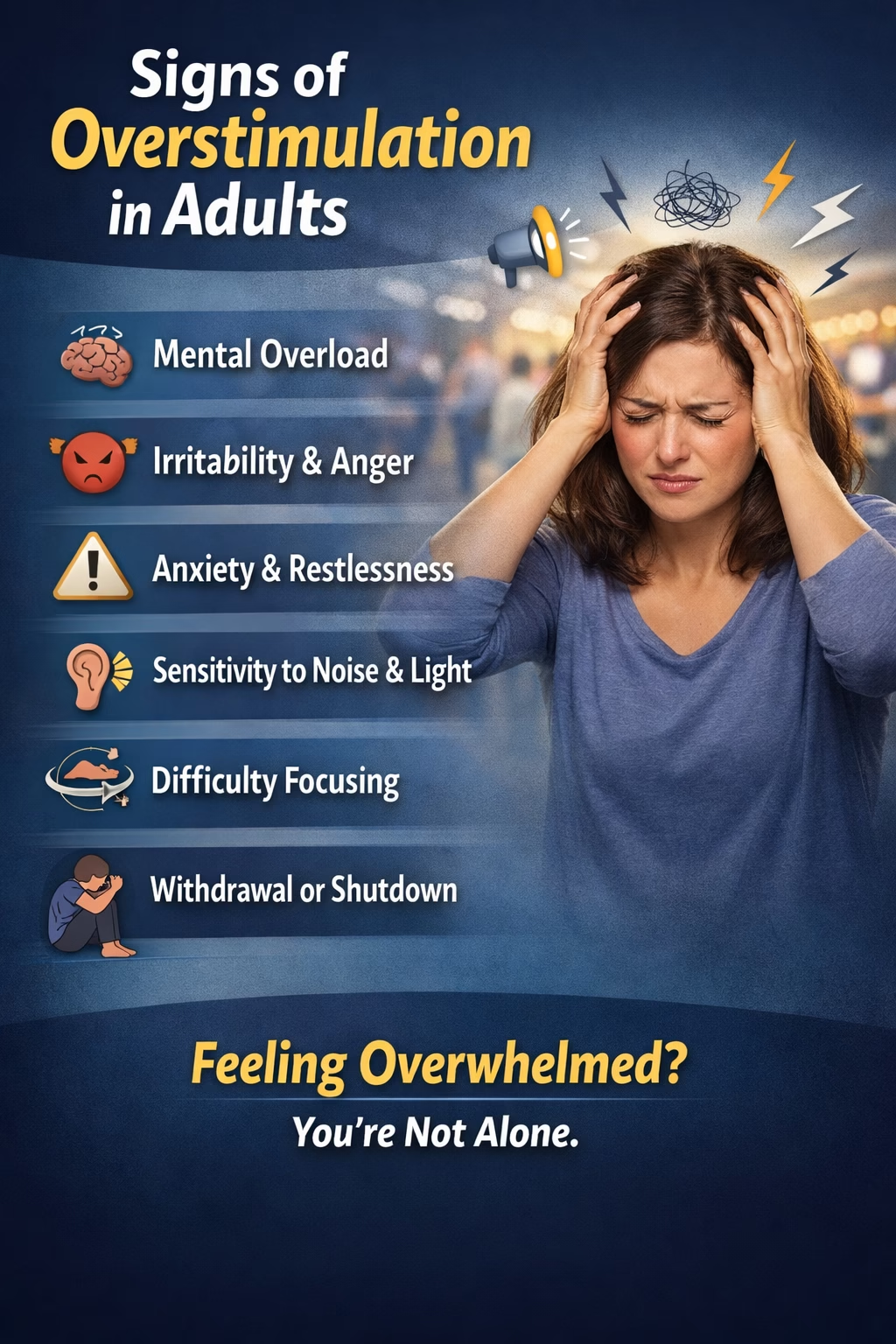
Most people associate overstimulation with toddlers having meltdowns in busy grocery stores. But overstimulation in adults is just as real — and significantly more common than most people realize. The difference is that adults have learned to mask it, push through it, or simply not recognize it for what it is. By the time they understand what’s happening, they’re already exhausted, overwhelmed, and running on empty.
If you’ve ever found yourself suddenly unable to cope, irritable for no clear reason, or desperately needing to escape a situation that seemed perfectly manageable a moment ago — you may be more familiar with overstimulation than you realize.
Signs of Overstimulation in Adults: Physical vs Emotional
✓ Headaches or physical tension
✓ Racing heart or shallow breathing
✓ Sudden fatigue that hits like a wall
✓ Skin sensitivity or need to remove clothing
✓ Feeling like you need to escape immediately
✓ Difficulty concentrating or making decisions
✓ Emotional flooding or sudden tearfulness
✓ Shutting down or going emotionally numb
Feel free to share or embed this infographic with credit to darinkingcounselingllc.com
What Is Overstimulation in Adults?
Overstimulation occurs when the nervous system receives more sensory, emotional, or cognitive input than it can effectively process. In adults, this can be triggered by busy environments, prolonged social demands, emotional stress, sensory input, or a combination of all of these at once.
According to the National Institute of Mental Health, anxiety disorders — which are closely linked to sensory and emotional overstimulation — affect nearly one in five American adults. For many of those people, overstimulation is not an occasional inconvenience but a frequent, disruptive experience that significantly affects quality of life.
Understanding the specific signs of overstimulation in adults is the first step toward managing it more effectively — and toward understanding whether something deeper, like trauma or ADHD, might be driving it.
Key distinction: Adult overstimulation rarely looks like a child’s meltdown. It’s more likely to look like sudden withdrawal, irritability, emotional flatness, or a desperate need to leave — responses that can easily be misread as rudeness, moodiness, or antisocial behavior rather than what they actually are: a nervous system that has hit its limit.
15 Signs of Overstimulation in Adults
1. Sudden, Intense Irritability
One of the most common signs of overstimulation is a sudden shift into irritability — snapping at people over minor things, feeling inexplicably annoyed by sounds or movements that weren’t bothering you moments before. This is the nervous system signaling that it has reached capacity.
2. Sensitivity to Sensory Input
Sounds that suddenly feel too loud, lights that seem too bright, textures on your skin that become unbearable, smells that are overwhelming — sensory sensitivity that spikes suddenly is a hallmark sign of overstimulation. What was manageable an hour ago has crossed a threshold.
3. An Urgent Need to Escape
A sudden, almost physical compulsion to leave — the party, the office, the conversation, the room — is a clear sign that the nervous system is overwhelmed. This is not rudeness. It is the body attempting to reduce input before it completely breaks down.
4. Difficulty Concentrating or Making Decisions
Cognitive overstimulation shows up as sudden difficulty following conversations, making even simple decisions, or organizing thoughts. The brain is processing too much and executive function is the first casualty.
5. Emotional Flooding
Sudden tearfulness, emotional intensity, or feeling emotionally flooded by something that wouldn’t normally affect you this way — this is the nervous system losing its capacity to regulate emotional input. It often happens after a period of sustained demand.
6. Physical Symptoms — Headaches, Tension, Fatigue
Headaches that come on suddenly, muscle tension (especially in the neck, shoulders, and jaw), and a fatigue that feels like hitting a wall rather than gradually getting tired are common physical manifestations of overstimulation. Trauma is stored in the body, and the physical signs are real. Read more about how trauma affects the nervous system.
7. Emotional Shutdown or Numbness
On the opposite end from emotional flooding — some people’s nervous systems respond to overstimulation by shutting down entirely. Emotional numbness, feeling blank or flat, going quiet and withdrawing, or feeling like you’re watching yourself from a distance. This is the freeze response — the nervous system protecting itself by reducing all output. Read more about what dissociation feels like.
8. Difficulty Tolerating Sound
Background noise that suddenly feels intolerable — music, conversation, traffic, the TV — is one of the most frequently reported signs of adult overstimulation. The auditory system is particularly sensitive to nervous system state.
9. Feeling Touched Out
A sudden inability to tolerate physical touch — even from people you love — is a specific form of sensory overstimulation particularly common in parents of young children, people with trauma histories, and individuals with ADHD or sensory processing differences.
10. Racing Heart or Shallow Breathing
Physical activation symptoms — racing heart, chest tightness, shallow breathing — that occur without a clear physical trigger are signs that the sympathetic nervous system has been activated by the overload of input. These can sometimes escalate into panic attacks, particularly in people with trauma histories.
11. Needing to Be Alone — Urgently
A powerful, almost desperate need for solitude — not because you don’t like people, but because your nervous system cannot handle any more social input — is a classic sign of overstimulation. This is different from introversion, which is a preference. This is a need driven by nervous system state.
12. Difficulty Speaking or Finding Words
When overstimulation hits during social situations, some people find that words become harder to access — difficulty finding what they want to say, losing their train of thought mid-sentence, or feeling unable to articulate themselves. The cognitive load of overstimulation temporarily impairs verbal processing.
13. Feeling Overwhelmed by Ordinary Demands
Tasks that are normally manageable — answering emails, making dinner, having a simple conversation — suddenly feel impossible. This is not laziness or incapability. It is the nervous system at capacity, unable to add anything more to its processing load.
14. Increased Anxiety or Sense of Dread
A sudden increase in anxiety — a vague sense that something is wrong, a feeling of dread, or hypervigilance — can accompany overstimulation, particularly in people with trauma histories whose nervous systems are already operating close to their threshold.
15. Post-Event Exhaustion (Emotional Hangover)
Feeling completely depleted — physically and emotionally exhausted — after social events, demanding workdays, or stimulating environments, even when the event itself wasn’t particularly stressful, is a sign that overstimulation occurred and the nervous system needs recovery time.
| Type of Sign | What It Looks Like in Adults |
|---|---|
| Physical | Headaches, muscle tension, fatigue, racing heart, sensory sensitivity |
| Emotional | Irritability, sudden tearfulness, emotional flooding or numbness |
| Cognitive | Difficulty concentrating, decision fatigue, losing words mid-sentence |
| Behavioral | Urgent need to escape or be alone, withdrawal, shutting down |
| Social | Feeling touched out, unable to tolerate noise, post-event exhaustion |
What Causes Overstimulation in Adults?
Overstimulation in adults is almost always driven by an underlying factor — not just by particularly busy environments. The most common causes include:
Trauma and PTSD
A nervous system shaped by trauma operates closer to its threshold at baseline. It takes less input to tip into overwhelm, and recovery takes longer. Trauma therapy can help regulate the nervous system so that the threshold is no longer so easily breached. Learn more about the connection between overstimulation and trauma.
ADHD
The ADHD brain has difficulty filtering irrelevant sensory and cognitive input — meaning everything comes in at roughly equal intensity. This makes environments that neurotypical brains filter easily feel overwhelming to someone with ADHD. Read more about ADHD and overstimulation in adults and ADHD counseling in Pittsburgh.
Anxiety
Anxiety activates the sympathetic nervous system — the threat-response branch — which makes the entire system more reactive to additional input. Anxiety counseling can help lower the baseline activation that makes overstimulation more likely.
Sensory Processing Differences
Some adults process sensory information more intensely than average — a trait that can exist on its own or alongside ADHD, autism spectrum conditions, or anxiety.
Burnout and Depletion
When physical and emotional reserves are depleted — through chronic stress, sleep deprivation, or overwork — the nervous system’s threshold for overstimulation drops significantly. The Substance Abuse and Mental Health Services Administration recognizes that chronic stress significantly reduces the nervous system’s capacity to regulate effectively.
Note: The CDC’s Adverse Childhood Experiences research shows that childhood trauma significantly affects nervous system development — including how the system responds to sensory and emotional input in adulthood. If overstimulation has been a lifelong pattern, childhood experiences may be part of the picture.
What to Do When You’re Overstimulated
Immediate Strategies
- Remove yourself from the environment — step outside, find a quiet space, sit in your car
- Reduce sensory input — dim lights, use earplugs or noise-canceling headphones, remove uncomfortable clothing
- Use extended exhale breathing — breathe in for 4 counts, out for 6 to 8. This activates the parasympathetic nervous system
- Ground in your body — press your feet into the floor, hold something cold or textured, notice what you can see and hear
- Stop talking — verbal processing uses cognitive bandwidth you don’t have right now
Longer-Term Strategies
- Track your triggers — identify the situations, environments, and times of day when overstimulation is most likely
- Build in recovery time — schedule decompression time after demanding social or sensory experiences
- Address the underlying driver — if trauma, ADHD, or anxiety is driving the pattern, treating that directly is the most effective long-term approach
For a full toolkit of nervous system regulation techniques, see our guide on nervous system reset techniques.
Related reading: Our guides on what overstimulated means, ADHD and overstimulation in adults, and nervous system reset techniques provide the full picture of overstimulation and how to manage it.
Frequently Asked Questions
Is overstimulation in adults a mental health condition?
Overstimulation itself is not a diagnosis — it is a symptom that can occur in anyone. However, when frequent and disruptive, it often signals an underlying condition like ADHD, PTSD, anxiety, or sensory processing differences. A licensed therapist can help identify what’s driving the pattern.
Why do I get overstimulated so easily?
Frequent overstimulation usually points to an underlying factor — most commonly ADHD, trauma, anxiety, sensory processing differences, or burnout. Each affects the nervous system’s threshold for input before hitting overload. Identifying the underlying driver is key to addressing the pattern effectively rather than just managing symptoms.
Can trauma cause overstimulation in adults?
Yes — trauma is one of the most common causes of chronic overstimulation in adults. A nervous system shaped by trauma operates closer to its threshold at baseline. Trauma therapy — including EMDR — can help regulate the nervous system so overstimulation becomes less frequent and less intense.
How do I recover from overstimulation faster?
In the moment, reducing sensory input and using grounding or breathing techniques helps shift the nervous system out of overwhelm. Longer term, consistent sleep, moderate exercise, and addressing any underlying trauma or ADHD build a more resilient nervous system. See our full guide on nervous system reset techniques.
Is needing alone time after social events a sign of overstimulation?
It can be. While recharging after social events is normal for introverts, needing significant recovery time — feeling depleted, irritable, or physically exhausted — can indicate overstimulation occurred. If this pattern significantly affects your daily life, it’s worth exploring with a telehealth therapist in Pennsylvania.
Chronic overstimulation is a signal — not a personality flaw. Let’s figure out what’s driving it.
Darin King, LPC specializes in trauma, ADHD, and nervous system regulation in Pennsylvania. Telehealth available statewide.
See more from Darin King Counseling on Google