

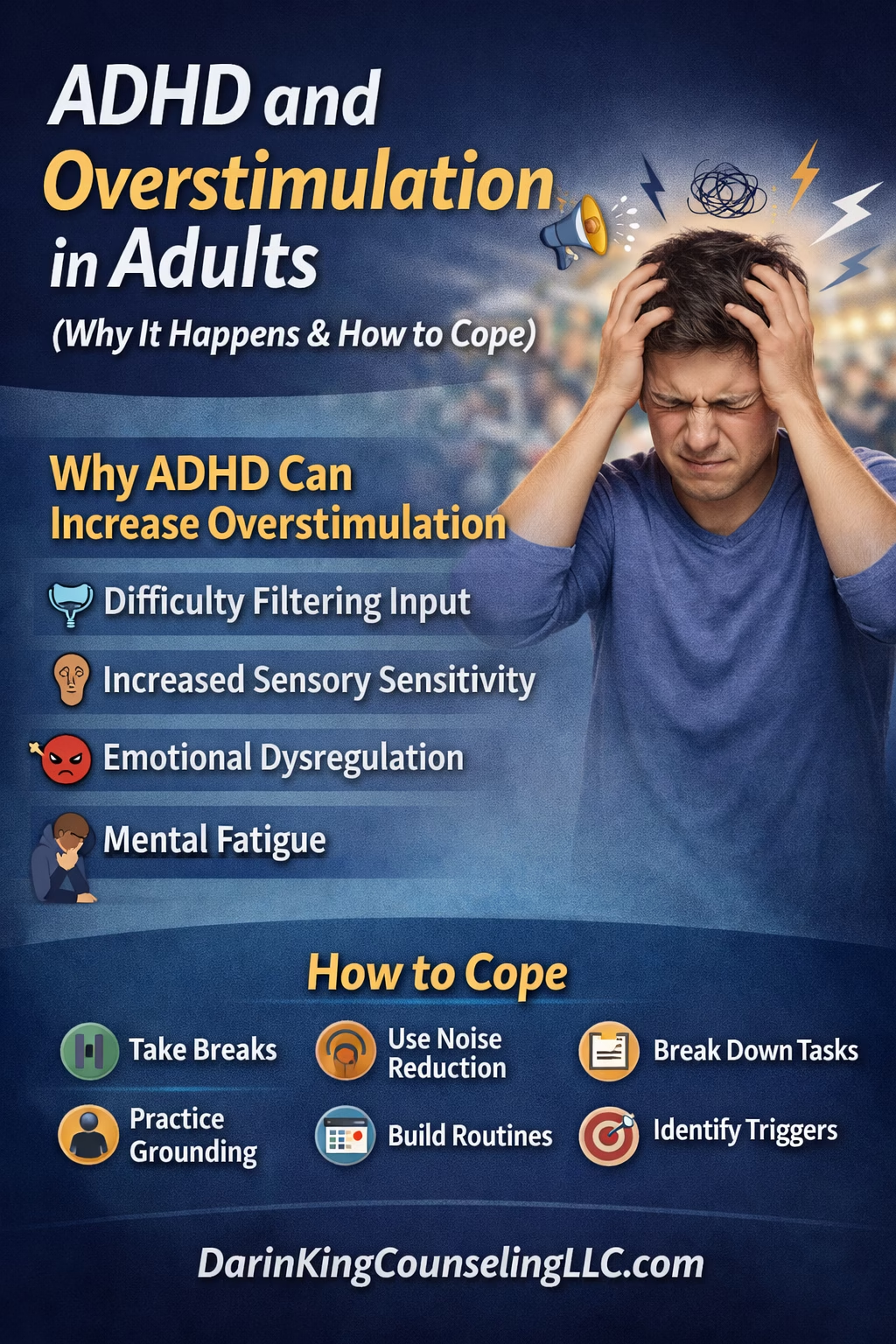
If you have ADHD and find yourself regularly hitting a wall of overwhelm — unable to filter out background noise, flooded by too many demands at once, desperately needing to escape situations that other people seem to handle easily — you’re not being dramatic. You’re experiencing one of the most common and least talked-about features of adult ADHD: overstimulation.
The ADHD brain is wired differently when it comes to filtering sensory and cognitive input. Understanding exactly why ADHD makes overstimulation more likely — and what you can do about it — can be genuinely life-changing.
ADHD and Overstimulation: How the ADHD Brain Processes Input Differently
✓ Background noise fades into the background
✓ Can prioritize which input to attend to
✓ Threshold for overwhelm is higher
✓ Transitions between tasks more smoothly
✓ Background noise stays front and center
✓ All input competes for attention equally
✓ Threshold for overwhelm is lower
✓ Transitions are cognitively costly
Feel free to share or embed this infographic with credit to darinkingcounselingllc.com
Why ADHD and Overstimulation Are So Closely Linked
The connection between ADHD and overstimulation comes down to how the ADHD brain processes and filters input. The Centers for Disease Control and Prevention estimates that ADHD affects approximately 4.4% of American adults — and for most of those adults, sensory and cognitive overwhelm is a significant part of their daily experience, even if they’ve never had a name for it.
In a neurotypical brain, the prefrontal cortex acts as a gatekeeper — automatically filtering out irrelevant sensory and cognitive input so the brain can focus on what matters. In the ADHD brain, this filtering system is less reliable. The result is that background noise, competing conversations, visual clutter, and cognitive demands all arrive at roughly equal intensity, creating a processing load that quickly becomes overwhelming.
Key insight: ADHD overstimulation is not about being weak or unable to cope. It is a direct consequence of neurological differences in how the brain filters and prioritizes input. The same brain that struggles with overstimulation often also has remarkable capacity for hyperfocus, creativity, and pattern recognition — the filtering system works differently in both directions.
Signs of ADHD Overstimulation in Adults
ADHD overstimulation in adults can look different from what most people expect. Here are the most common signs:
Sensory Signs
- Inability to filter background noise — conversations, music, and ambient sounds all compete equally for attention
- Extreme sensitivity to certain sounds, textures, lights, or smells
- Feeling overwhelmed in busy environments — open plan offices, crowded restaurants, shopping centers
- Needing music or white noise to concentrate — paradoxically using controlled sensory input to block uncontrolled input
- Feeling “touched out” — unable to tolerate physical contact when already overstimulated
Cognitive Signs
- Brain fog that descends suddenly — difficulty thinking, speaking, or processing information
- Decision paralysis — inability to make even simple choices when cognitively overloaded
- Losing track of conversations mid-sentence — the thread simply disappears
- Feeling like your brain has “crashed” — similar to a computer with too many windows open
- Difficulty transitioning between tasks when overwhelmed
Emotional Signs
- Sudden, intense irritability — the emotional equivalent of the nervous system hitting a wall
- Emotional flooding — tearfulness or emotional intensity that feels disproportionate
- Emotional shutdown — going flat or numb rather than flooding
- RSD (Rejection Sensitive Dysphoria) flares — emotional pain in response to perceived criticism that feels overwhelming when already overstimulated
Behavioral Signs
- Urgent need to escape social situations — not social anxiety, but sensory and cognitive overload
- Stimming — repetitive movements or behaviors that provide sensory regulation
- Shutting down entirely — becoming non-communicative or unresponsive
- Post-event exhaustion — feeling completely depleted after stimulating environments
| ADHD Overstimulation Trigger | Why It’s Particularly Difficult with ADHD |
|---|---|
| Open plan offices | Multiple conversations, visual movement, and noise compete equally for attention |
| Crowded social events | Sensory overload plus social demands plus difficulty filtering conversations |
| Multiple tasks or demands at once | Task-switching is cognitively expensive; parallel demands cause overload |
| Interruptions during focused work | Breaking hyperfocus is jarring; re-entry to overstimulating environment after calm |
| Emotional conversations | Emotional intensity plus cognitive demand of communication plus RSD vulnerability |
| Transitional periods | Transitions require cognitive flexibility that is already strained under overstimulation |
ADHD, Overstimulation, and Emotional Dysregulation
One of the most important — and least discussed — aspects of ADHD in adults is emotional dysregulation. The National Institute of Mental Health recognizes that emotional dysregulation is a significant feature of adult ADHD, affecting relationships, work, and quality of life.
When overstimulation occurs in an already emotionally dysregulated ADHD nervous system, the results can be intense — emotional meltdowns, sudden withdrawal, explosive irritability, or complete shutdown. These responses are not character flaws. They are the predictable output of a nervous system that has hit its limit with fewer internal regulatory resources than a neurotypical nervous system has at baseline.
This is why understanding the connection between ADHD and overstimulation is so important — not for self-excuse, but for self-understanding and self-compassion. When you know what’s happening, you can work with it rather than fighting it or being ashamed of it.
Note: Many adults with ADHD also have trauma histories — and trauma further lowers the threshold for overstimulation by keeping the nervous system in chronic activation. If both are present, addressing both through appropriate therapy is important. Read more about how trauma affects the nervous system and how this interacts with ADHD.
ADHD Overstimulation vs Sensory Processing Disorder
| ADHD Overstimulation | Sensory Processing Disorder | |
|---|---|---|
| Primary cause | Filtering difficulties due to executive function differences | Neurological differences in how sensory information is processed and organized |
| Onset | Often situational — triggered by overload | Often more consistent — certain sensory inputs are always difficult |
| Cognitive component | Significant — cognitive overload is a major driver | Less central — primarily sensory |
| Co-occurrence | Can co-occur with SPD | Can co-occur with ADHD |
| Treatment | ADHD treatment plus nervous system regulation strategies | Occupational therapy, sensory integration approaches |
Strategies for Managing ADHD Overstimulation
Environmental Modifications
- Control your sensory environment where possible — noise-canceling headphones, softer lighting, designated quiet workspaces
- Reduce visual clutter — the ADHD brain attends to everything in its visual field; reducing clutter reduces processing load
- Use white noise or brown noise — controlled auditory input that helps block unpredictable sensory intrusions
- Create transition rituals — brief decompression routines between demanding environments help the nervous system adjust
Nervous System Regulation
- Extended exhale breathing — 4 counts in, 6 to 8 counts out activates the parasympathetic nervous system
- Movement breaks — short movement intervals help discharge cognitive and sensory overload
- Grounding techniques — physical grounding brings awareness back to the body and present moment
See our full guide on nervous system reset techniques for a complete toolkit.
Schedule and Demand Management
- Build recovery time into your schedule after demanding or stimulating activities
- Limit back-to-back high-demand activities — cognitive and sensory recovery takes time
- Communicate your needs to employers and family — accommodations are not special treatment, they are appropriate support
Professional Support
Managing ADHD overstimulation is significantly more effective with professional support. ADHD counseling in Pittsburgh provides strategies tailored to your specific presentation, while addressing any co-occurring anxiety or trauma that may be compounding the overstimulation pattern. Telehealth therapy makes this support accessible from anywhere in Pennsylvania.
Related reading: Our guides on signs of overstimulation in adults, what overstimulated means, and nervous system reset techniques provide important context for understanding and managing overstimulation in the context of ADHD.
Frequently Asked Questions
Why does ADHD cause overstimulation?
ADHD causes overstimulation because the ADHD brain has difficulty filtering irrelevant sensory and cognitive input. In a neurotypical brain, the prefrontal cortex automatically prioritizes what to attend to. In the ADHD brain, this filtering is less reliable — meaning background noise, visual clutter, and competing demands all arrive at roughly equal intensity, creating a processing load that quickly becomes overwhelming.
What does ADHD overstimulation feel like?
ADHD overstimulation can feel like a sudden crash — a wall of overwhelm where thinking becomes difficult, irritability spikes, sensory input feels unbearable, and the only relief seems to be escape or shutdown. Some people describe it as their brain “crashing” like a computer with too many windows open. Read more about the signs of overstimulation in adults.
How do I calm down from ADHD overstimulation?
In the moment, reduce sensory input, use extended exhale breathing, and give yourself permission to stop all demands temporarily. Movement — even a short walk — can help discharge the overload. See our full guide on nervous system reset techniques for a complete toolkit.
Is ADHD overstimulation the same as a meltdown?
An ADHD meltdown is what can happen when overstimulation is not addressed — the nervous system becomes so overwhelmed that emotional and behavioral regulation breaks down completely. Meltdowns are not tantrums or manipulative behavior — they are the nervous system’s response to being pushed beyond its capacity to cope.
Can therapy help with ADHD overstimulation?
Yes — ADHD counseling helps you understand your specific triggers, build personalized strategies, and address any co-occurring anxiety or trauma. If trauma is part of the picture, EMDR therapy can help regulate the nervous system at a deeper level. Telehealth therapy makes support accessible from anywhere in Pennsylvania.
Your ADHD brain isn’t broken — it just needs the right support to thrive.
Darin King, LPC specializes in ADHD, trauma, and nervous system regulation in Pennsylvania. Telehealth available statewide.
See more from Darin King Counseling on Google