
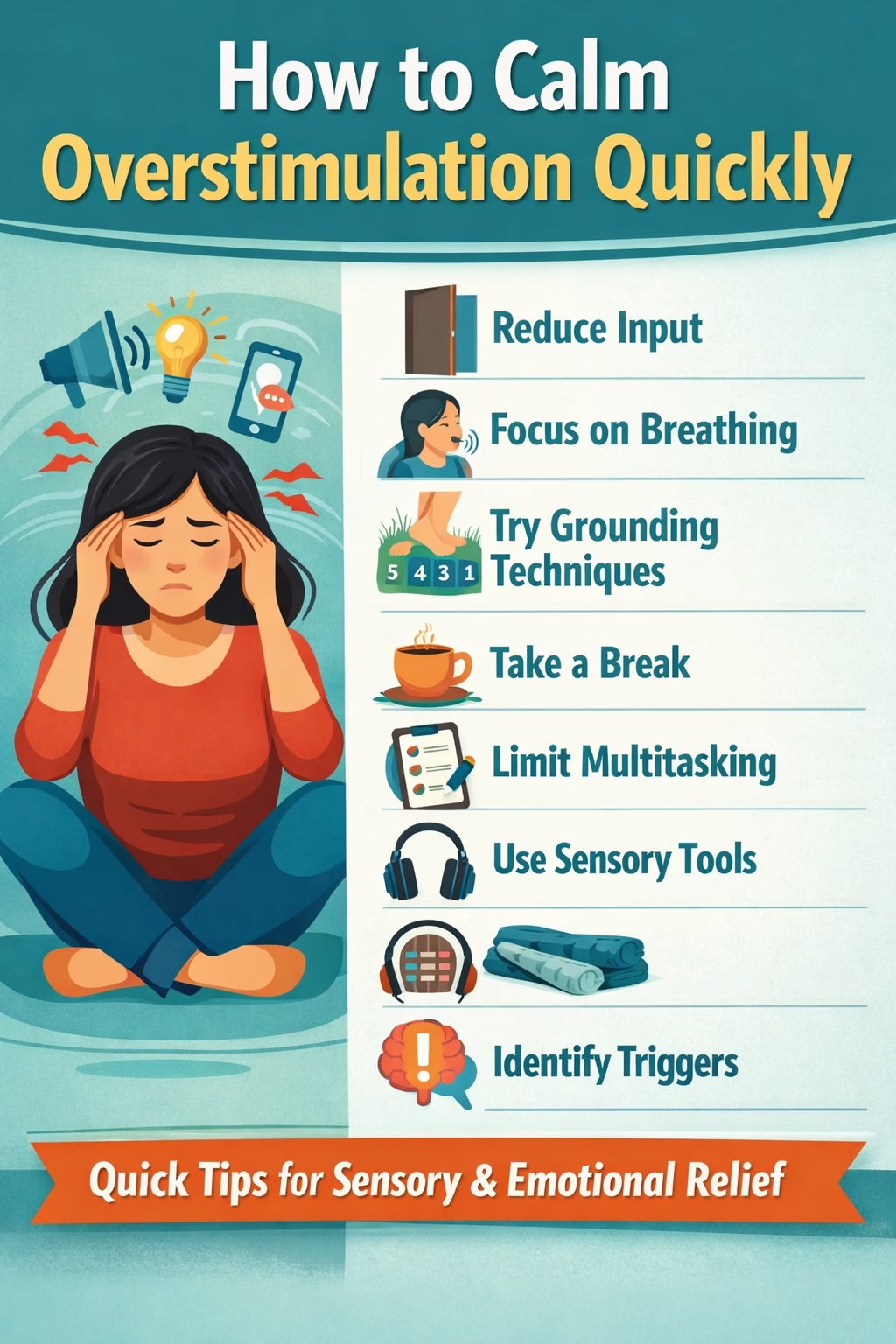
When overstimulation hits — that sudden wall of too much noise, too many demands, too much everything — you don’t need a lengthy explanation. You need relief, and you need it now. This guide gives you exactly that: the most effective, evidence-based techniques for calming overstimulation quickly, organized by what works in the moment and what builds longer-term resilience.
Understanding why these techniques work — and which ones work best for your specific type of overstimulation — makes them significantly more effective than simply trying them randomly when you’re already overwhelmed.
How to Calm Overstimulation: Hyperarousal vs Shutdown
✓ Cold water on face or wrists
✓ Remove yourself from the environment
✓ Reduce all sensory input immediately
✓ Ground in the physical — feet on floor
✓ Splash cold water on face to activate alertness
✓ Upbeat rhythmic music
✓ Brief safe social contact
✓ Breathe slightly faster to increase activation
Feel free to share or embed this infographic with credit to darinkingcounselingllc.com
First: Identify Which Type of Overstimulation You’re Experiencing
Not all overstimulation looks the same — and the techniques that help depend on which direction your nervous system has gone. The National Institute of Mental Health recognizes that nervous system dysregulation can move in two directions — hyperarousal (too activated) or hypoarousal (shutdown) — and each requires a different regulatory approach.
| Hyperarousal (Too Activated) | Hypoarousal (Shutdown) |
|---|---|
| Anxious, flooded, reactive | Numb, flat, disconnected |
| Racing heart, shallow breathing | Heavy, slow, foggy |
| Irritable, snapping at people | Withdrawn, non-communicative |
| Desperate urge to escape | Can’t move or respond |
| Sensory input feels unbearable | Emotionally and physically flat |
Read more about these two states in our guides on what overstimulation means, signs of overstimulation in adults, and how the sympathetic and parasympathetic nervous systems affect mental health.
Key principle: You cannot think your way out of overstimulation. The prefrontal cortex — the thinking brain — is partially offline when the nervous system is flooded. The techniques below work because they communicate directly with the body and brain stem, bypassing the thinking mind to signal safety or activation from the bottom up.
How to Calm Overstimulation Quickly: 10 Techniques That Work
1. Extended Exhale Breathing (Best for Hyperarousal)
This is the single most accessible and evidence-based tool for quickly calming an activated nervous system. The exhale activates the parasympathetic nervous system — the brake on the stress response. Breathe in for 4 counts, out for 6 to 8. Even 60 seconds of this pattern produces measurable changes in heart rate and nervous system state.
Why it works: The vagus nerve — the primary pathway of the parasympathetic system — is activated by slow, extended exhales. This directly counteracts the sympathetic activation of overstimulation.
2. Cold Water on Face or Wrists (Best for Hyperarousal)
Splashing cold water on your face activates the dive reflex — a hardwired physiological response that immediately slows heart rate and activates parasympathetic response. This is one of the fastest-acting calming techniques available. Cold water on the wrists is a more subtle version that can be used in public settings.
Why it works: The dive reflex is a subcortical, automatic response — it bypasses the thinking brain entirely and directly impacts the cardiovascular and nervous system.
3. Remove Yourself from the Environment (Both Types)
The most direct way to reduce overstimulation is to reduce input. Leave the room, step outside, sit in your car, find a quiet corner. Even two minutes away from the stimulating environment can make a significant difference. This is not avoidance — it is sensory triage.
4. Reduce All Sensory Input (Best for Hyperarousal)
Once you’ve removed yourself, actively reduce input: dim or cover lights, put in earplugs or noise-canceling headphones, remove uncomfortable clothing, lower the temperature if possible. Create the lowest-stimulation environment you can access.
5. Grounding — Feel Your Body in the Present (Both Types)
Grounding brings attention back to the present moment and the physical body, countering the tendency to be pulled into threat anticipation or emotional flooding. Effective grounding techniques include:
- Press your feet firmly into the floor and notice the sensation
- Hold something cold, heavy, or textured
- Name 5 things you can see, 4 you can touch, 3 you can hear
- Run cold water over your hands and focus entirely on the sensation
6. Orienting (Both Types)
Slowly turn your head from side to side, visually scanning the room. This is the same movement a animal makes after a threat has passed — and it sends a powerful “all clear” signal to the nervous system. It seems simple but is surprisingly effective for rapidly reducing activation.
7. Stop Talking (Best for Hyperarousal)
Verbal processing uses significant cognitive bandwidth. When you’re flooded, talking — particularly trying to explain or resolve the situation — makes it worse. Give yourself explicit permission to stop talking, communicate that you need a few minutes, and use that time for breathing and grounding rather than continued processing.
8. Gentle Movement (Best for Hypoarousal)
When overstimulation has led to shutdown — numbness, flatness, inability to respond — gentle movement helps bring the nervous system back online. A brief walk, gentle stretching, or slow rhythmic movement discharges the freeze response and activates enough sympathetic energy to return to the regulated middle ground.
9. Rhythmic Sound or Music (Best for Hypoarousal)
Rhythm is one of the most powerful regulators of the nervous system. For shutdown states, upbeat rhythmic music or even humming can help restore activation. For hyperarousal, slow, low-frequency music or nature sounds can support calming. The auditory system has a direct connection to the vagus nerve and autonomic nervous system.
10. Safe Social Micro-Contact (Both Types)
A brief, low-demand interaction with a trusted person — even just a few minutes of calm co-presence — can significantly shift nervous system state in either direction. The social engagement system is parasympathetically mediated, and safe connection is one of the most powerful regulators available. This doesn’t require discussing what’s happening — simply being near someone safe is often enough.
ADHD and Overstimulation: Extra Considerations
For people with ADHD, overstimulation is particularly common — and the techniques above remain effective, but may need to be applied more proactively and more frequently. The ADHD brain’s difficulty filtering irrelevant input means the threshold for overstimulation is lower, and recovery may take longer. Read more about ADHD and overstimulation in adults and ADHD counseling in Pittsburgh.
The Centers for Disease Control and Prevention estimates that ADHD affects approximately 4.4% of American adults — and for many of those adults, learning to recognize and manage overstimulation is one of the highest-impact skills they can develop.
Trauma and Overstimulation: What’s Different
When overstimulation is driven by trauma — as it often is in people with PTSD, Complex PTSD, or childhood trauma histories — the techniques above help in the moment, but the underlying nervous system dysregulation requires deeper treatment. The Substance Abuse and Mental Health Services Administration emphasizes that trauma-informed care addresses the root causes of nervous system dysregulation, not just its symptoms.
If overstimulation is frequent, severe, or significantly affecting your quality of life, trauma counseling or EMDR therapy — available via telehealth across Pennsylvania — addresses the root nervous system patterns rather than just managing the symptoms.
Related reading: Our guides on nervous system reset techniques, signs of overstimulation in adults, ADHD and overstimulation in adults, and what overstimulation means provide the complete picture of overstimulation and how to manage it.
Frequently Asked Questions
What is the fastest way to calm overstimulation?
The fastest techniques are extended exhale breathing and cold water on the face — which activates the dive reflex and rapidly slows heart rate. Removing yourself from the stimulating environment and reducing all sensory input are also highly effective immediate steps. For a complete toolkit see our guide on nervous system reset techniques.
How long does it take to recover from overstimulation?
With active regulation techniques, many people find relief within 5-20 minutes. Without intervention, recovery may take hours. People with ADHD or trauma histories often have a lower threshold and slower recovery — which is why addressing underlying causes through therapy is so important. Read more about ADHD and overstimulation.
Why does cold water help with overstimulation?
Cold water on the face activates the mammalian dive reflex — a hardwired physiological response that immediately slows heart rate and shifts the nervous system toward parasympathetic dominance. It bypasses the thinking brain entirely and directly impacts the autonomic nervous system — which is why it works quickly even when you’re fully flooded.
Is needing to calm down from overstimulation a sign of anxiety or ADHD?
Frequent overstimulation can signal anxiety, ADHD, trauma, sensory processing differences, or burnout — or a combination. When it’s frequent or significantly impacting daily life, it’s worth exploring with a licensed therapist. Telehealth therapy makes that support accessible from anywhere in Pennsylvania.
Can therapy help with chronic overstimulation?
Yes — ADHD counseling, EMDR therapy, and trauma-focused therapy all address the underlying causes of chronic overstimulation rather than just managing symptoms. Many people see significant reduction in frequency and severity with consistent therapeutic support.
Overstimulation doesn’t have to run your life. The right support changes everything.
Darin King, LPC specializes in ADHD, trauma, and nervous system regulation in Pennsylvania. Telehealth available statewide.
See more from Darin King Counseling on Google