
Deciding to start therapy takes courage — and for many people, the decision is followed almost immediately by a wave of anxiety. What if I don’t know what to say? What if the therapist judges me? What if talking about it makes things worse? What if I cry? These fears are so common that most therapists hear some version of them from nearly every new client. If you’re feeling nervous about starting therapy, that nervousness doesn’t mean something is wrong with you or that therapy isn’t right for you. It almost certainly means exactly the opposite.
This guide addresses the most common fears about starting therapy and gives you practical guidance for taking the first step anyway.
Nervous About Starting Therapy? Common Fears vs Reality
✓ The therapist will judge me
✓ Talking about it will make things worse
✓ I’m not “bad enough” to need therapy
✓ It won’t work for me
✓ Therapists are trained to be nonjudgmental
✓ Talking in a safe space supports healing
✓ You don’t need to hit rock bottom first
✓ Most people see meaningful improvement
Feel free to share or embed this infographic with credit to darinkingcounselingllc.com
Why Feeling Nervous About Starting Therapy Is Normal
Nervousness about starting therapy makes complete sense. You’re about to share personal, often painful experiences with someone you’ve never met. You’re entering an unfamiliar process without a clear sense of what will happen. And for many people — particularly those with trauma histories — vulnerability itself is associated with risk rather than safety.
The National Institute of Mental Health recognizes that seeking mental health treatment is a significant step that many people delay — often for years — due to stigma, uncertainty, or fear. Understanding that your nervousness is normal and shared by most people who start therapy can itself reduce some of its power.
Key point: The nervousness you feel about starting therapy is not a sign that therapy is wrong for you. It is often a sign that you are someone for whom vulnerability has historically felt risky — which is exactly the kind of person who tends to benefit most from a safe, consistent therapeutic relationship.
The Most Common Fears About Starting Therapy — Addressed
“I Won’t Know What to Say”
This is perhaps the most universal fear — and the most easily resolved. You don’t need to know what to say. A skilled therapist will guide the conversation, ask questions, and follow your lead. The first session typically involves the therapist asking about what brought you in, what you’re hoping to get from therapy, and relevant background. You don’t need to have your thoughts organized or your story polished. You just need to show up.
“The Therapist Will Judge Me”
Therapists are specifically trained to maintain a nonjudgmental stance — and most people find that their therapist is the least judgmental person they’ve ever talked to. Whatever you’re carrying — the things you’ve never told anyone, the behaviors you’re ashamed of, the thoughts that frighten you — therapists have heard versions of all of it. You are not going to shock or horrify your therapist. You are going to be met with curiosity and care.
“Talking About It Will Make Things Worse”
This fear often comes from experience of trying to talk about difficult things in contexts that weren’t safe or supportive — and having it backfire. Therapy is a specifically constructed safe context, with a trained professional whose entire role is to help you process difficult material without being overwhelmed by it. Talking about difficult things in therapy doesn’t make them worse — it begins the process of integrating them. Read more about what trauma therapy is and how it’s designed to be safe.
“I’m Not Bad Enough to Need Therapy”
Therapy is not only for people in crisis. It is for anyone whose quality of life, relationships, or sense of wellbeing would benefit from professional support — which is most people at some point in their lives. You don’t need to hit rock bottom before seeking help. The earlier you seek support, the less accumulated difficulty there is to work through. Read more about how to know when it’s time to start therapy.
“What If I Cry?”
Crying in therapy is completely normal and entirely welcome. Therapists are not made uncomfortable by tears — they are a sign that you’re accessing something real. Tissues are always available. You will not be embarrassed by your emotions in a good therapist’s office.
“What If It Doesn’t Work for Me?”
The Substance Abuse and Mental Health Services Administration recognizes that evidence-based therapies produce meaningful improvement for the majority of people who engage with them consistently. The most important factors are finding a therapist who is a good fit, showing up consistently, and being willing to engage honestly with the process — even when it’s uncomfortable. Read more about signs therapy is working so you know what progress looks like.
“What If My Therapist Doesn’t Get Me?”
The therapeutic relationship is one of the most important factors in whether therapy is effective — and finding the right fit matters. If after a few sessions you don’t feel a sense of being understood or that the therapist’s approach fits your needs, it is completely appropriate to try someone else. Read more about how to choose the right therapist.
What to Expect in Your First Session
Knowing what to expect can significantly reduce first-session anxiety. Here’s what typically happens:
- Your therapist will introduce themselves and explain how sessions work — including confidentiality
- They’ll ask what brought you in — what you’re struggling with and what you’re hoping to get from therapy
- They may ask about relevant background — family history, previous therapy experiences, current life circumstances
- There is no pressure to share everything in the first session — or even the first several sessions
- The therapist will explain their approach and answer any questions you have
- You’ll discuss what you’re hoping to work toward and begin to develop a sense of the therapeutic relationship
For a full walkthrough, read our guide on what happens in your first therapy session.
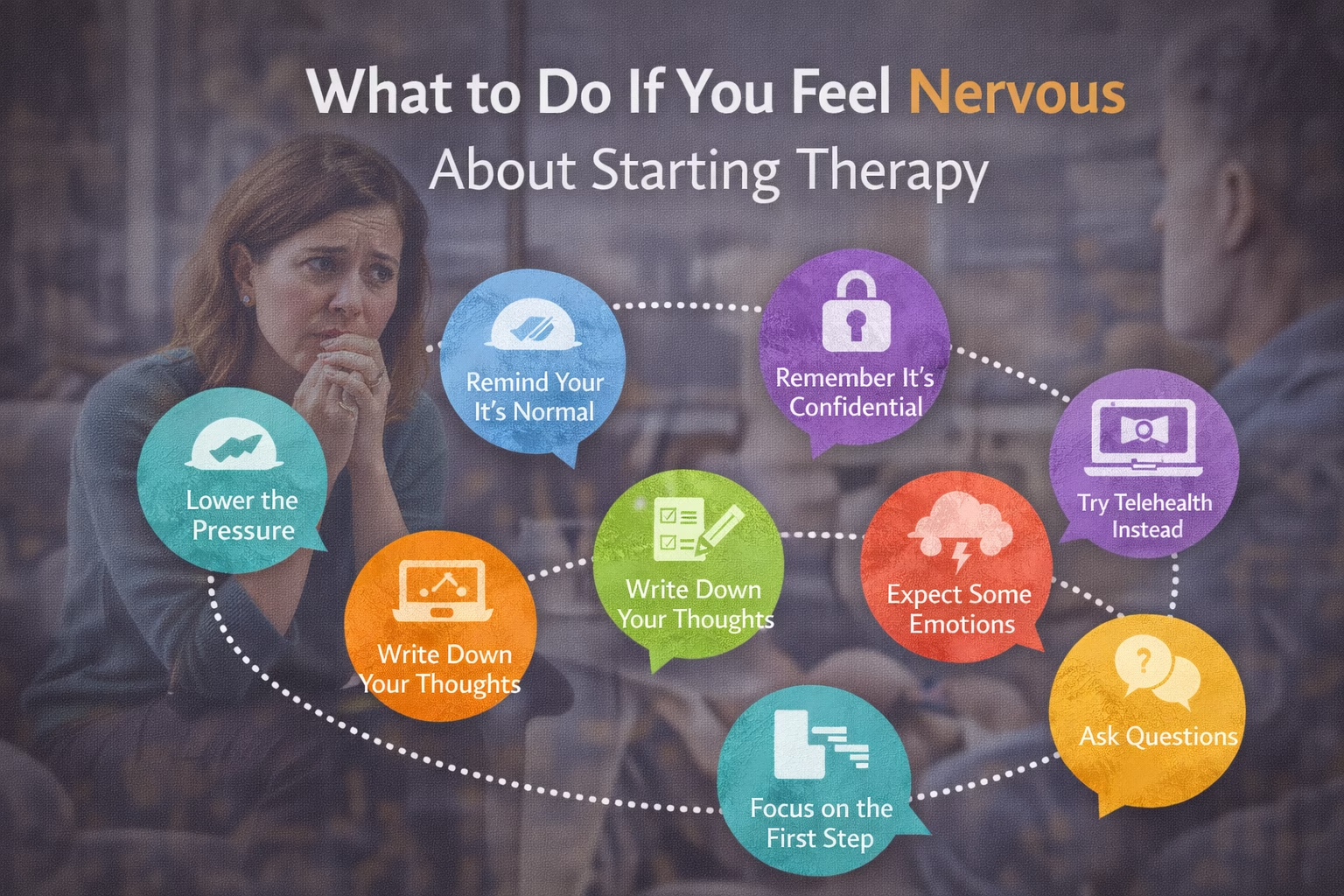
Practical Steps for Getting Started Despite the Nervousness
Start With a Consultation
Many therapists — including Darin King Counseling — offer a free initial consultation. This is a low-stakes way to get a sense of the therapist and the process before committing to ongoing sessions. A consultation removes much of the unknown that drives pre-therapy anxiety.
Write Down What You Want to Say
If you’re worried about not knowing what to say, jot down a few notes before your first session — what brought you to therapy, what you’re hoping to work on, any concerns you want to mention. Having notes removes the pressure of trying to remember everything in the moment.
Use Telehealth
For many people, starting therapy via telehealth feels significantly less intimidating than going to an in-person office. Being in your own home, in a familiar and comfortable environment, can reduce the anxiety of the unknown enough to make the first step more manageable. Read more about whether telehealth therapy is as effective as in-person.
Remind Yourself Why You’re Going
The nervousness about starting therapy is real — and so is the reason you’re considering it. When the anxiety about starting rises, return to what brought you here: the exhaustion, the patterns you want to change, the quality of life you’re hoping for. The discomfort of starting is temporary. The benefit of not starting continues.
Note: For people with trauma histories, the nervousness about starting therapy can be particularly intense — because vulnerability itself has historically been associated with risk. A trauma-informed therapist understands this and will pace the work accordingly, never pushing faster than your nervous system can integrate. Read more about what trauma therapy is and how it’s designed with safety at its foundation.
Related reading: Our guides on what happens in your first therapy session, how to choose the right therapist, how to know when it’s time to start therapy, and signs therapy is working answer the most common questions people have when considering therapy.
Frequently Asked Questions
Is it normal to feel nervous about starting therapy?
Completely normal and extremely common. The nervousness typically comes from uncertainty about what will happen and vulnerability about sharing personal material. A good therapist expects this and will work with you at a manageable pace. Read about what happens in your first therapy session.
What do I say in my first therapy session?
You don’t need a prepared speech. Your therapist will guide the conversation. You can simply start with what feels most pressing — even “I’m not sure where to start” is a perfectly fine opening. The first session is about getting to know each other, not covering everything at once.
Will my therapist judge me?
No — therapists are specifically trained to maintain a nonjudgmental stance. Whatever you’re carrying, however ashamed you feel — you will be met with curiosity and care. Most people are surprised by how unjudged they feel in therapy compared to other relationships.
What if I start crying in therapy?
Completely normal and entirely welcome. It is a sign you’re accessing something real — not that something is wrong. Therapists are not made uncomfortable by tears. Many people find that crying in the safe context of therapy feels releasing rather than overwhelming.
Is telehealth therapy less intimidating than in-person?
For many people, yes. Being in your own home can reduce first-session anxiety significantly. Telehealth therapy is equally effective as in-person and accessible from anywhere in Pennsylvania. Read more about whether telehealth is as effective as in-person therapy.
The hardest part is usually making the first appointment. We make that part easy.
Darin King, LPC offers a free consultation — no pressure, no commitment. Telehealth available statewide in Pennsylvania.
See more from Darin King Counseling on Google