

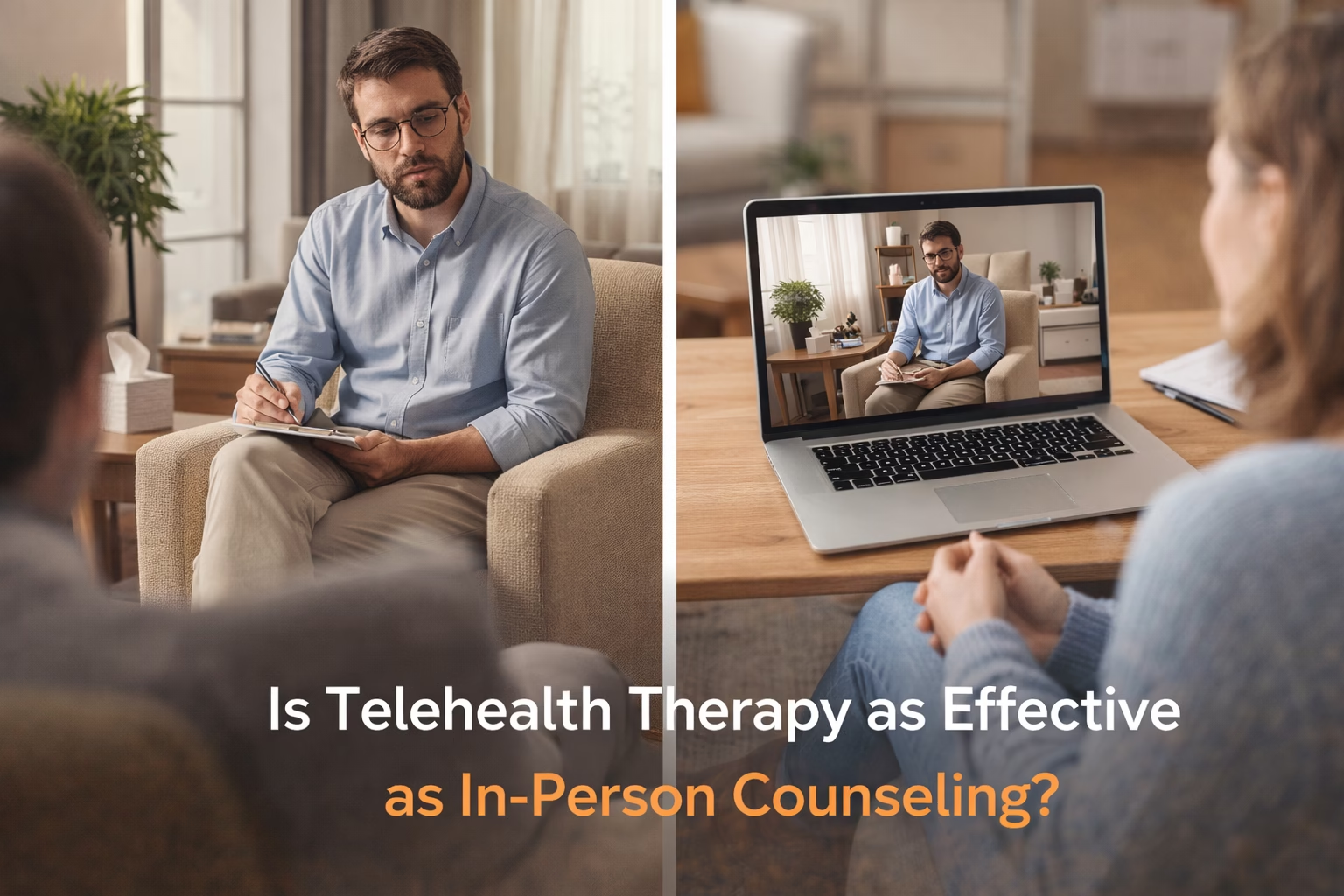
When telehealth therapy became widely available, many people wondered whether it could possibly be as effective as sitting in a therapist’s office. It is a reasonable question — therapy is fundamentally about human connection, and it seems natural to wonder whether a screen changes something essential about that. The research has now answered this question clearly and consistently: for most people and most presenting concerns, telehealth therapy is equally effective as in-person therapy. And for some people, it is actually preferable.
This guide explains what the research shows, why telehealth works as well as in-person, who benefits most from it, and what to consider when deciding which format is right for you.
Telehealth vs In-Person Therapy: Key Differences
✓ More scheduling flexibility
✓ Familiar home environment supports safety
✓ Access to specialized therapists statewide
✓ Easier to maintain consistency
✓ Dedicated, distraction-free space
✓ Some somatic work easier in person
✓ Preferred by some clients personally
✓ No technology requirements
Feel free to share or embed this infographic with credit to darinkingcounselingllc.com
What the Research Says
The evidence base for telehealth therapy has grown substantially. The findings are consistent across multiple studies and meta-analyses: telehealth therapy produces outcomes comparable to in-person therapy for anxiety, depression, PTSD, trauma, and relationship issues. Client satisfaction is consistently high, the therapeutic relationship develops effectively via video, and EMDR has been successfully adapted for telehealth delivery.
The National Institute of Mental Health recognizes telehealth as an effective modality for delivering evidence-based psychological therapies. The Substance Abuse and Mental Health Services Administration has actively promoted telehealth as a means of expanding access to mental health care, particularly in underserved geographic areas.
Bottom line: Telehealth therapy is not a lesser version of in-person therapy. It is a different format that produces equivalent outcomes for most people. What makes therapy effective — the quality of the therapeutic relationship, the evidence-based techniques used, and the consistency of engagement — translates fully to a telehealth format.
Why Telehealth Works as Well as In-Person
The Therapeutic Relationship Forms Effectively Online
The therapeutic relationship is the most consistent predictor of therapy outcome. Research shows that clients and therapists form strong, effective alliances via telehealth — with warmth, trust, and genuine connection developing through video just as it does in person.
Evidence-Based Techniques Transfer Fully
The specific techniques that make therapy effective — cognitive restructuring, bilateral stimulation in EMDR, IFS parts work, DBT skills training — all translate to telehealth delivery. EMDR has been successfully adapted for online delivery using eye movements guided by the therapist on screen, audio tones through headphones, or self-administered tapping. Read more about how EMDR therapy works online.
Home Environment Can Support Safety
For many clients — particularly those working on trauma — being in their own familiar, safe home environment is actually advantageous. The sense of safety and control that comes from familiar ground supports the therapeutic work, particularly in trauma processing. Read more about what trauma therapy looks like.
Consistency Is Easier to Maintain
Consistent attendance is one of the strongest predictors of therapy outcome. Telehealth removes the logistical barriers that cause people to miss sessions — commute time, transportation difficulties, bad weather, childcare challenges. Clients in telehealth consistently report better session attendance than with in-person therapy.
Who Benefits Most From Telehealth Therapy
- People in rural or underserved areas — access to specialized therapists regardless of geography
- People with anxiety — particularly social anxiety or agoraphobia, for whom leaving the house may itself be a barrier
- People with trauma histories — who may find the safety of home supportive for processing work
- Busy parents or professionals — for whom removing the commute makes consistent attendance possible
- People with physical health limitations — for whom travel is difficult
- People seeking specialized care — EMDR, IFS, or specific trauma approaches not available locally
Practical Considerations for Telehealth Therapy
Technology Requirements
- A device with a camera and microphone — laptop, tablet, or smartphone
- A stable internet connection
- A HIPAA-compliant video platform — your therapist will provide the link
- Headphones are helpful for audio quality and privacy but not required
Creating a Private Space
The most important practical consideration is privacy — ensuring you’re in a space where you can speak freely without being overheard. Options include a closed room with white noise outside the door, sitting in a parked car, or using headphones to limit what others might hear. Read more about how telehealth counseling works in Pennsylvania.
When In-Person Therapy May Be Preferable
While telehealth is equally effective for most people, in-person may be preferable when the client has a strong personal preference for in-person connection, when technology access is a significant barrier, for some specific somatic techniques easier to facilitate in person, or when the home environment is not safe or private enough for telehealth.
| Telehealth | In-Person | |
|---|---|---|
| Effectiveness | Comparable to in-person for most concerns | Well-established evidence base |
| Therapeutic relationship | Forms effectively via video | Full nonverbal cues available |
| Access | Anywhere in Pennsylvania — no geographic limits | Limited to therapists within driving distance |
| Consistency | Easier to maintain — no commute | May be disrupted by logistics |
| Environment | Familiar home — may support safety for trauma work | Dedicated clinical space |
| EMDR | Fully deliverable online — research supported | Traditional delivery |
Note: In Pennsylvania, therapists providing telehealth services must be licensed in Pennsylvania. Always verify your telehealth therapist holds a current Pennsylvania license. At Darin King Counseling, we offer telehealth therapy to anyone located anywhere in Pennsylvania.
Related reading: Our guides on how telehealth counseling works in Pennsylvania, how couples therapy works in a virtual setting, and nervous about starting therapy provide important context for getting started with telehealth therapy.
Frequently Asked Questions
Is telehealth therapy as effective as in-person therapy?
Yes — research consistently shows comparable outcomes for most presenting concerns. The therapeutic relationship develops effectively via video and evidence-based techniques transfer fully. Read more about how telehealth counseling works in Pennsylvania.
Can EMDR be done via telehealth?
Yes — fully and effectively. Bilateral stimulation is adapted using eye movements, audio tones, or tapping. Many clients find their home environment actually supports the safety important to trauma processing. Read more about how EMDR therapy works online.
What are the benefits of telehealth therapy over in-person?
No commute, access to specialized therapists statewide, easier consistent attendance, familiar home environment supporting safety, and flexible scheduling. For people in rural areas or seeking specialized care, telehealth provides access otherwise unavailable.
What do I need for telehealth therapy?
A device with camera and microphone, stable internet, a private space, and the HIPAA-compliant video link your therapist provides. Headphones help with audio quality and privacy.
Can I do telehealth therapy if I live in a rural area of Pennsylvania?
Yes — any Pennsylvania-licensed therapist can provide telehealth to anyone in the state. At Darin King Counseling, we offer telehealth therapy to anyone in Pennsylvania regardless of location.
Effective therapy — from the comfort of your own home. Available anywhere in Pennsylvania.
Darin King, LPC offers telehealth therapy for trauma, anxiety, EMDR, and more across Pennsylvania.
See more from Darin King Counseling on Google