
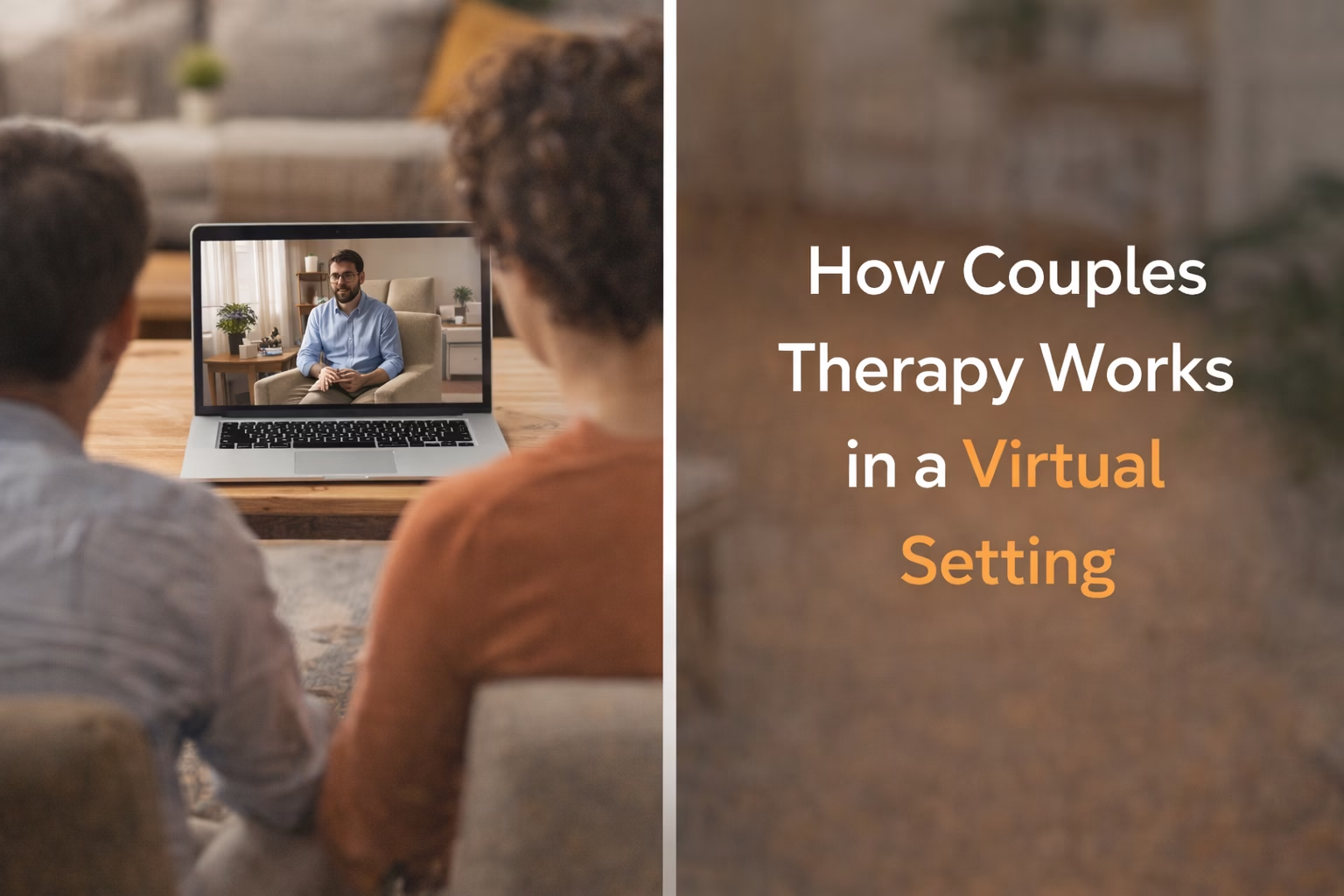
If you and your partner have considered couples therapy but found it hard to make in-person sessions work — conflicting schedules, distance, childcare, or simply the logistical hurdle of getting two people to the same place at the same time — virtual couples therapy may be exactly what you’ve been looking for. Online couples therapy has grown significantly in recent years, and the research is clear: it is just as effective as in-person therapy for most couples, with the added benefit of being accessible wherever you are.
This guide explains how virtual couples therapy actually works, what to expect, how to prepare, and whether it might be the right fit for your relationship.
Virtual Couples Therapy: What’s the Same vs What’s Different
✓ Evidence-based techniques and approaches
✓ Session length and structure
✓ Confidentiality and privacy protections
✓ Clinical outcomes — equally effective
✓ More flexible scheduling
✓ Both partners in familiar environment
✓ Easier to fit into busy schedules
✓ Accessible from anywhere in Pennsylvania
Feel free to share or embed this infographic with credit to darinkingcounselingllc.com
Does Virtual Couples Therapy Actually Work?
Yes — and the research supports this clearly. The National Institute of Mental Health recognizes telehealth as an effective modality for delivering evidence-based psychological therapies, with outcomes comparable to in-person treatment for most conditions and populations. For couples therapy specifically, research supports that virtual delivery does not meaningfully compromise therapeutic effectiveness.
Many couples actually find virtual sessions more comfortable — being in their own home reduces the performance anxiety some people feel in a clinical setting, and the familiar environment can make it easier to access genuine emotion and authentic communication.
Key point: What makes couples therapy effective is not the physical setting — it is the therapeutic relationship, the quality of the interventions, and the commitment of both partners. All of these translate fully to a virtual format.
How Virtual Couples Therapy Works: Step by Step
Step 1: Initial Contact and Scheduling
The process begins the same way as in-person therapy — reaching out to a therapist, completing any intake paperwork, and scheduling your first appointment. At Darin King Counseling, this is done through our contact page, where you can request a free consultation to discuss whether couples therapy is the right fit.
Step 2: Setting Up Your Technology
Virtual sessions are conducted via secure, HIPAA-compliant video platform. You’ll need:
- A device with a camera and microphone — laptop, tablet, or smartphone all work
- A stable internet connection
- A private space where both partners can speak freely
- Headphones are helpful but not required
Your therapist will provide a link for each session — there is typically nothing to download or install.
Step 3: The First Session — Assessment and Goals
The first session (or first few sessions) focuses on assessment — understanding your relationship history, the specific concerns that brought you to therapy, and what each partner hopes to get out of the process. The therapist will ask about:
- How you met and the history of your relationship
- What’s working well — strengths to build on
- What brought you to therapy now — the presenting concerns
- Each partner’s individual history and how it affects the relationship
- Goals for therapy — what would need to change for both of you to feel the relationship has improved
Step 4: Ongoing Sessions — Active Therapeutic Work
Once the assessment is complete, sessions move into the active work of therapy. Depending on what your relationship needs, this might include:
- Learning and practicing fair fighting skills and communication tools
- Understanding each partner’s attachment style and how it shows up in conflict
- Addressing specific recurring conflicts
- Working through the impact of one partner’s trauma on the relationship
- Rebuilding trust after a breach — infidelity, emotional distance, or repeated conflict
- Developing shared understanding of each other’s emotional worlds
Step 5: Between-Session Work
Like all good therapy, virtual couples therapy extends beyond the session. Your therapist may suggest:
- Specific communication practices to try between sessions
- Reflection exercises or journaling prompts
- Agreed-upon relationship agreements to experiment with
- Individual reading or resources to support the work
What Virtual Couples Therapy Can Help With
| Issue | How Virtual Couples Therapy Addresses It |
|---|---|
| Communication breakdown | Building specific skills for hearing and being heard — including fair fighting tools |
| Recurring conflict | Identifying what’s really underneath the surface argument and addressing it |
| Emotional distance | Rebuilding connection, vulnerability, and understanding between partners |
| Trauma affecting the relationship | Understanding how one partner’s history shows up in the dynamic and developing compassion and tools |
| Abandonment and attachment wounds | Helping both partners understand the nervous system roots of reactive patterns. Read more about abandonment trauma in relationships |
| Life transitions | Navigating parenthood, loss, career changes, and other major transitions as a team |
| Trust and intimacy | Rebuilding trust after breaches and developing deeper emotional and physical intimacy |
Tips for Getting the Most Out of Virtual Couples Therapy
Find a Private Space
Privacy is essential — both for confidentiality and for the ability to speak freely. If you have children at home, plan for childcare during sessions. If you share a small space, consider sitting in a car parked in the driveway, using a white noise machine outside a closed door, or finding a time when the space is naturally quieter.
Sit Together — or Separately
Some couples sit side by side sharing a screen; others each use their own device in the same room. Either works — choose what feels most natural. Some therapists prefer each partner on their own device so they can see each person clearly. Discuss this with your therapist in advance.
Minimize Distractions
Put phones on silent, close other browser tabs, and let any others in the home know you’re in a session. Treat virtual sessions with the same intentionality you would bring to an in-person appointment.
Be Willing to Be Uncomfortable
Good couples therapy will sometimes be uncomfortable — it addresses real things and requires real vulnerability from both partners. That discomfort is a sign the work is reaching something important, not a sign something is wrong.
Do the Between-Session Work
The most meaningful change happens between sessions, not just in them. Couples who practice the skills and apply the insights from sessions in their daily life see significantly better outcomes than those who treat therapy as a weekly conversation without follow-through.
Note: Virtual couples therapy is not appropriate in all situations. When one partner is actively abusing the other, individual trauma-focused therapy for the survivor is the most important first step — not couples therapy. The Substance Abuse and Mental Health Services Administration emphasizes that trauma-informed approaches recognize this distinction. Read more about individual therapy vs couples therapy to understand when each is appropriate.
Virtual Couples Therapy in Pennsylvania
At Darin King Counseling, we offer virtual couples therapy via telehealth across Pennsylvania. Sessions are conducted on a secure, HIPAA-compliant platform — accessible from anywhere in the state. Whether you’re in Pittsburgh or a rural area with limited access to specialized couples therapists, telehealth makes high-quality relationship support available to you.
Learn more about our couples counseling in Pittsburgh and our telehealth therapy services across Pennsylvania.
Related reading: Our guides on individual therapy vs couples therapy, rules for fair fighting in a relationship, and abandonment trauma in relationships provide important context for understanding whether and how couples therapy can help.
Frequently Asked Questions
Is virtual couples therapy as effective as in-person?
Yes — research supports that virtual couples therapy produces outcomes comparable to in-person therapy for most couples. What makes therapy effective is the quality of the therapeutic relationship and the commitment of both partners — all of which translate fully to a virtual format. Learn more about our telehealth therapy services across Pennsylvania.
Can we do virtual couples therapy if we are in different locations?
Yes — virtual couples therapy is particularly valuable for couples temporarily in different locations. Each partner can join from their own device. Both partners need to be in Pennsylvania, as our therapist is licensed in that state.
What should we do if we get into a conflict during a virtual session?
Conflict during sessions is completely normal and expected — skilled couples therapists are trained to work with it directly. You don’t need to be on your best behavior in sessions. Authentic interaction, including difficult moments, gives the therapist the clearest picture of what the relationship actually needs.
How long does virtual couples therapy take?
It varies depending on the complexity of the issues. Some couples see significant improvement in 8-12 sessions focused on specific skill-building. Others work for longer on deeper relational patterns or rebuilding trust. Most sessions are 50-60 minutes, typically weekly or bi-weekly.
What if only one of us wants to do couples therapy?
Both partners need to be willing participants for couples therapy to be effective. If your partner is resistant, individual therapy can still be tremendously valuable. Read more about individual therapy vs couples therapy to understand your options.
Better relationships don’t happen by accident — they’re built. We can help you build yours.
Darin King, LPC offers virtual couples therapy across Pennsylvania. Schedule a free consultation today.
See more from Darin King Counseling on Google