
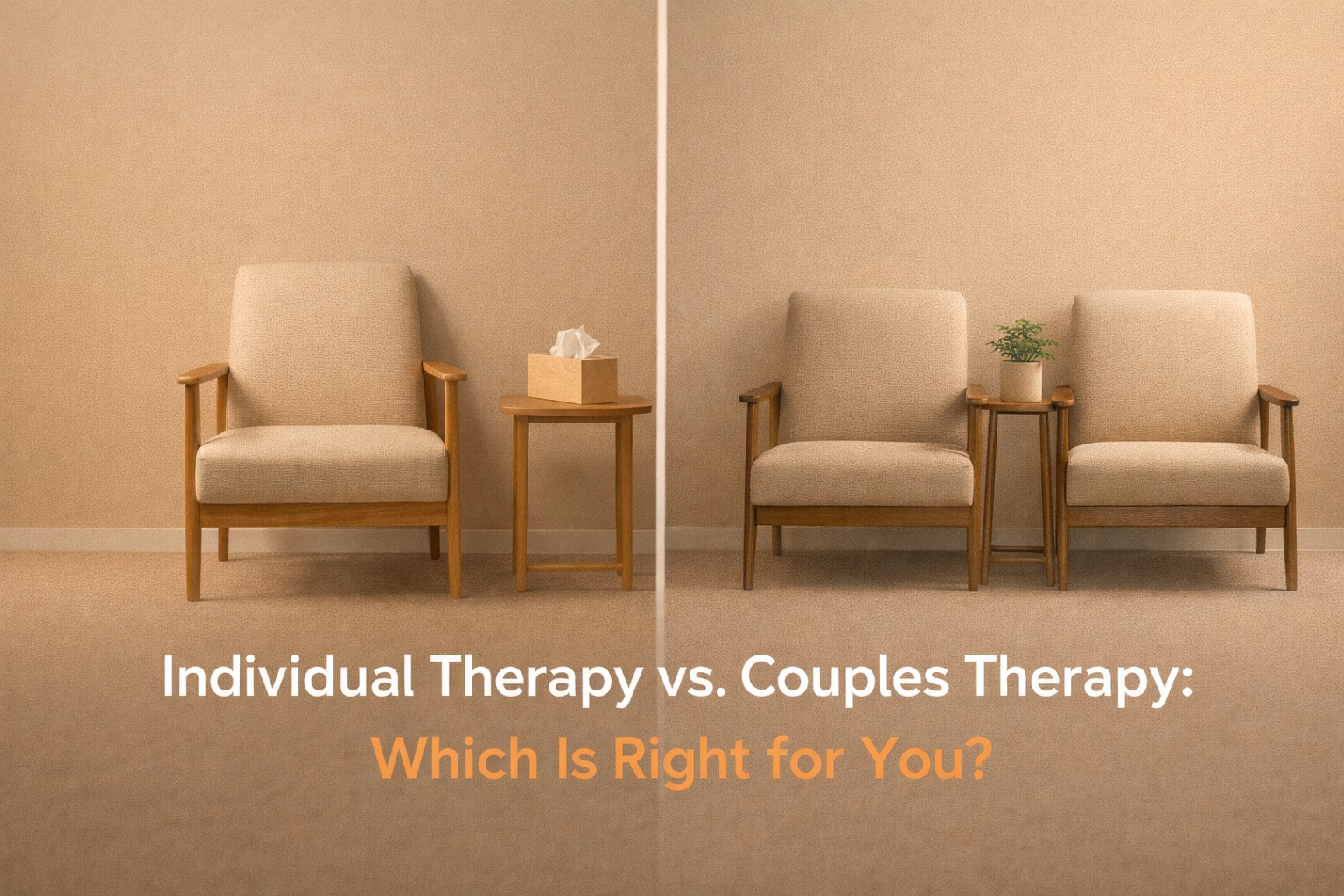
One of the most common questions people have when considering therapy for relationship challenges is: should we do couples therapy, or should I start with individual therapy first? It’s a genuinely important question — and the answer depends on your specific situation, what you’re hoping to address, and whether certain conditions make one approach more appropriate than the other.
This guide breaks down the key differences between individual therapy and couples therapy, explains when each is most effective, and helps you figure out the right starting point for your situation.
Individual Therapy vs Couples Therapy: When Each Is Most Appropriate
✓ There is an active abusive dynamic
✓ One partner is resistant to couples therapy
✓ You need clarity on whether to stay or go
✓ Mental health symptoms need direct treatment
✓ Communication has broken down
✓ The same conflicts keep recurring
✓ Emotional distance has grown
✓ You want to strengthen an already good relationship
Feel free to share or embed this infographic with credit to darinkingcounselingllc.com
What Is Individual Therapy?
Individual therapy is a one-on-one therapeutic relationship between a client and a therapist. It focuses on the individual’s mental health, personal history, patterns of thinking and behavior, and goals for their own growth and healing. Individual therapy is not inherently focused on relationships — but because our relationships are so central to our lives, relationship issues frequently come up and are addressed in individual work.
In individual therapy, you have the full therapeutic hour to explore your own experience — your history, your patterns, your needs, and your healing — without needing to hold space for a partner’s perspective or experience in the room.
What Is Couples Therapy?
Couples therapy — also called marriage counseling or relationship therapy — involves both partners working with a therapist together to address the relationship dynamic. The relationship itself is the client. The therapist helps both partners understand each other better, improve communication, resolve conflicts, and build a stronger connection.
According to the National Institute of Mental Health, relationship therapies have strong research support for improving relationship satisfaction, communication, and conflict resolution. Learn more about how couples therapy works in a virtual setting and what to expect from the process.
Key Differences Between Individual and Couples Therapy
| Individual Therapy | Couples Therapy | |
|---|---|---|
| Who is the client | The individual | The relationship |
| Who attends | One person | Both partners |
| Primary focus | Individual’s mental health, history, patterns, and goals | Relationship dynamic, communication, conflict, and connection |
| Confidentiality | Full — only between client and therapist | Shared — therapist works with both partners |
| Partner involvement | Not required | Both partners must be willing participants |
| Best for | Personal healing, trauma processing, mental health treatment, clarity | Communication skills, recurring conflict, rebuilding connection |
| When NOT appropriate | When the primary issue is the relationship dynamic and partner is willing | When one partner is actively abusing the other |
When Individual Therapy Is the Right Starting Point
When One Partner Has Significant Unresolved Trauma
If one partner is carrying significant unresolved trauma — childhood abuse, PTSD, abandonment wounds, or Complex PTSD — that trauma is likely showing up in the relationship in significant ways. In this case, individual trauma therapy — particularly EMDR therapy — often needs to happen first, or alongside couples therapy, rather than instead of it. Bringing unprocessed trauma into couples therapy can overwhelm the process.
When There Is an Active Abusive Dynamic
This is one of the clearest situations where individual therapy — not couples therapy — is the right starting point. When one partner is emotionally, physically, or psychologically abusing the other, couples therapy is not appropriate. It can give the abusive partner more information and access, and can be actively dangerous for the survivor. Individual trauma-focused therapy for the survivor is the most important first step.
If you recognize patterns of reactive abuse, narcissistic abuse, or other controlling dynamics in your relationship, individual therapy with a trauma-informed therapist is the appropriate starting point. The Substance Abuse and Mental Health Services Administration emphasizes the importance of trauma-informed care in these situations.
When One Partner Is Resistant or Unwilling
Couples therapy requires genuine willingness from both partners. If your partner is not willing to attend, individual therapy can still be enormously valuable — helping you understand your own patterns, communicate more effectively, and clarify what you need from the relationship. Individual therapy can sometimes be the entry point that eventually leads a hesitant partner to consider couples work.
When You Need Clarity About the Relationship Itself
If you are genuinely uncertain whether you want to stay in the relationship — or if you need to process your own feelings before you can work on the relationship with your partner — individual therapy gives you a space to do that without your partner in the room.
When Mental Health Symptoms Need Direct Treatment
If one partner is experiencing significant depression, anxiety, PTSD, or other mental health conditions that are affecting the relationship, individual therapy that addresses those conditions directly is often the most effective first intervention. Untreated mental health conditions can significantly limit what couples therapy can accomplish. See our guides on anxiety counseling and depression counseling.
When Couples Therapy Is the Right Starting Point
When Communication Has Broken Down
If you and your partner struggle to communicate — if conversations escalate quickly, if one or both of you shut down, if you feel chronically unheard — couples therapy provides a structured environment with a skilled facilitator to help you actually hear each other. Learn about rules for fair fighting in a relationship as a starting point.
When the Same Conflicts Keep Recurring
Recurring conflicts that never truly resolve — the same argument, over and over, with the same outcome — often point to underlying dynamics that individual insight alone won’t address. Couples therapy helps identify what is really driving the recurring conflict and addresses it at that level.
When Emotional Distance Has Grown
Couples who have drifted into emotional disconnection — who feel more like roommates than partners — benefit significantly from couples therapy that helps them understand what happened and rebuild genuine intimacy and connection.
When Both Partners Are Willing and Committed
When both partners recognize that the relationship needs support and are genuinely willing to do the work — even if it’s uncomfortable — couples therapy can be highly effective. The research is clear that couples who engage genuinely with the process see meaningful improvement.
When You Want to Strengthen a Good Relationship
Couples therapy is not just for relationships in crisis. Many couples seek therapy proactively — to strengthen communication, deepen connection, navigate a major life transition, or simply invest in the relationship they value. The World Health Organization recognizes that relationship health is a significant contributor to overall mental and physical wellbeing.
Can You Do Both at the Same Time?
Yes — and in many cases, doing both simultaneously is the most powerful approach. Individual therapy addresses each partner’s personal history, patterns, and mental health, while couples therapy addresses the relationship dynamic. The two modalities complement each other powerfully.
One important note: if you are doing individual therapy and couples therapy simultaneously, it is generally recommended that these are with different therapists. Having the same therapist serve both roles creates complex confidentiality and role conflicts that can compromise both the individual and couples work.
Note: The CDC’s ACE research consistently shows that unresolved childhood trauma significantly affects adult relationships. For many couples, addressing the individual trauma that each partner brings to the relationship — through individual trauma therapy — is what makes lasting relationship change possible.
Related reading: Our guides on how couples therapy works in a virtual setting, abandonment trauma in relationships, and rules for fair fighting in a relationship provide important context for understanding your options and what to expect.
Frequently Asked Questions
Should I do individual therapy or couples therapy first?
It depends on your situation. Individual therapy first is recommended when there is significant unresolved trauma, an active abusive dynamic, or a resistant partner. Couples therapy first works well when both partners are willing and communication has broken down. In many cases, both simultaneously — with different therapists — is most effective. Read more about how couples therapy works.
Can individual therapy help my relationship?
Yes — significantly. When you understand your own patterns, triggers, and attachment wounds more clearly, you bring a more self-aware version of yourself to your relationship. EMDR therapy and other trauma-focused approaches often produce significant relationship improvement even without the partner present.
Is couples therapy appropriate when there is abuse?
No — when one partner is actively abusing the other, individual trauma-focused therapy for the survivor is the most important first step. Couples therapy in an abusive dynamic can be actively unsafe. Read more about signs of reactive abuse and therapy for narcissistic abuse.
What if my partner won’t come to couples therapy?
Individual therapy is still enormously valuable. Working on your own patterns and understanding of the relationship dynamic can produce significant changes — and sometimes gives you clarity about what you need to do next. A resistant partner may also become more open after seeing the positive changes individual therapy produces.
Can the same therapist do both individual and couples therapy?
Generally not recommended — it creates complex confidentiality and role conflicts. Different therapists for each modality is the standard recommendation. Telehealth therapy across Pennsylvania makes accessing both modalities more convenient.
Not sure where to start? A free consultation can help you figure out the right first step.
Darin King, LPC offers individual therapy, couples counseling, and telehealth across Pennsylvania.
See more from Darin King Counseling on Google