

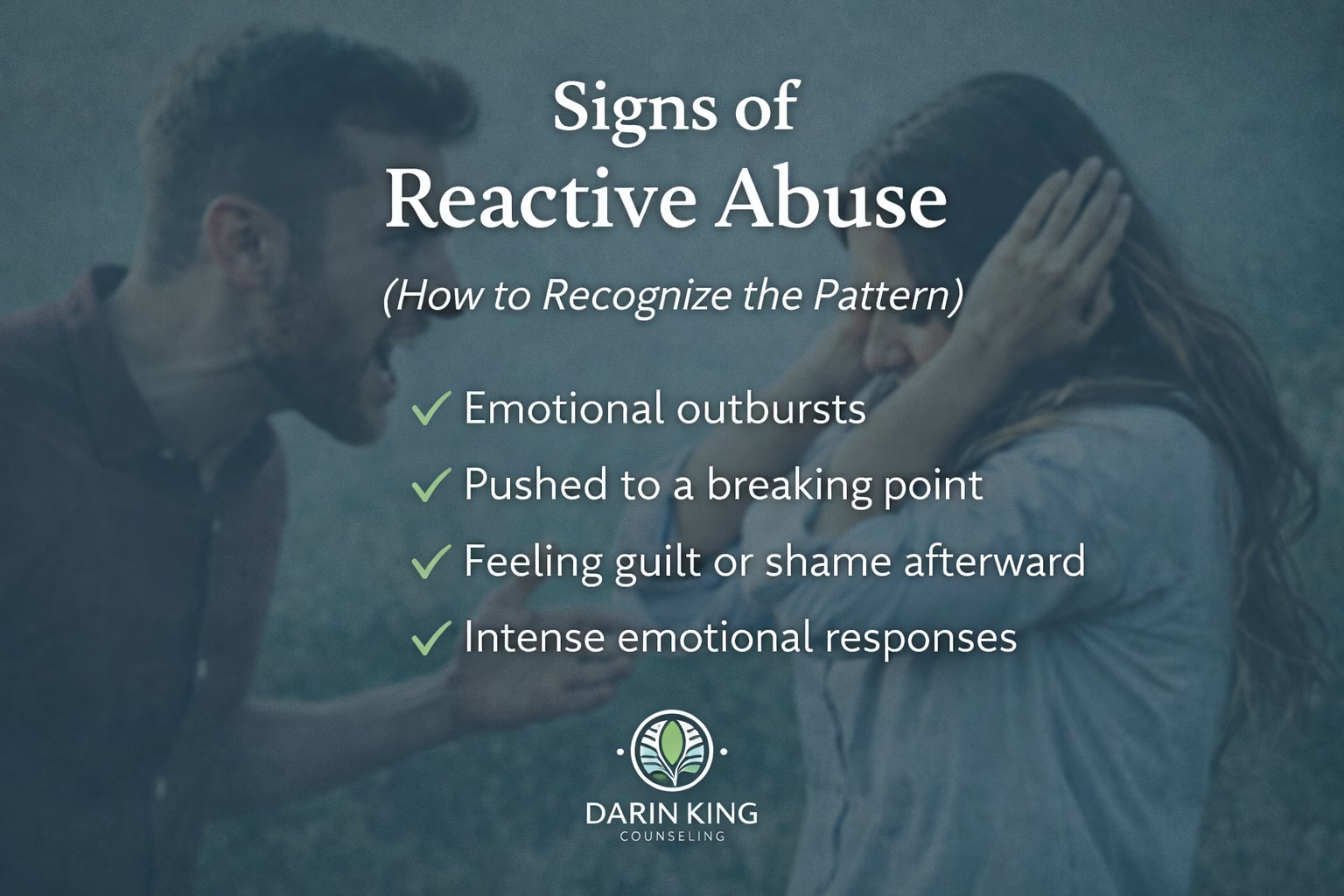
Reactive abuse is one of the most confusing dynamics in abusive relationships — precisely because it is designed to be. If you’ve ever found yourself wondering whether you are the abuser in your relationship, whether your reactions prove that you are the problem, or why you keep losing control in ways that feel completely unlike you — you may be experiencing reactive abuse. Recognizing the signs is the first step toward clarity.
This guide walks through the specific signs of reactive abuse — both in the relationship dynamic and in your own experience — so you can begin to see clearly what has actually been happening.
Signs of Reactive Abuse: In the Relationship vs In Your Experience
✓ The provoker stays calm while you escalate
✓ Your reaction gets pointed to as the problem
✓ The original provocation disappears from the story
✓ You feel like you don’t recognize yourself
✓ Believing you might be the abusive one
✓ Walking on eggshells to avoid reacting
✓ Your reactions feel completely unlike you
✓ Confusion about what actually happened
Feel free to share or embed this infographic with credit to darinkingcounselingllc.com
What Is Reactive Abuse?
Reactive abuse occurs when an abuser deliberately provokes their victim until the victim reacts — then uses that reaction as evidence that the victim is the abusive, unstable, or unreasonable one. The reaction itself is not abuse — it is a trauma response to sustained mistreatment. For full context, read our guides on what reactive abuse is and why reactive abuse happens.
The Substance Abuse and Mental Health Services Administration recognizes that prolonged psychological abuse and manipulation produce genuine trauma — including the nervous system dysregulation that makes emotional flooding and reactive outbursts far more likely. Your reaction was not a character defect. It was a nervous system pushed past its limit.
Key point: The most reliable sign of reactive abuse is this: the provocation always comes first. If you can trace your most intense reactions back to a sustained pattern of provocation — taunting, gaslighting, contempt, boundary violations — you are likely experiencing reactive abuse, not initiating emotional abuse.
Signs of Reactive Abuse in the Relationship Dynamic
1. One Partner Consistently Provokes — The Other Consistently Reacts
Look at the pattern over time. Is there a consistent dynamic where one partner initiates — through taunting, criticism, gaslighting, or boundary violations — and the other partner reacts? This directional pattern is one of the clearest signs of reactive abuse. Emotional abusers initiate. Reactive abuse follows provocation.
2. Your Partner Stays Calm While You Escalate
If your partner is able to remain calm — even serene — while systematically pushing you past your limit, this is not evidence of their emotional maturity. It is evidence that they are in control of the provocation. They are not being triggered; they are triggering. Their calm is calculated contrast designed to make your reaction look irrational.
3. Your Reaction Becomes the Entire Story
After you react, the provocation that caused the reaction disappears from the conversation. Suddenly the only thing being discussed is how you yelled, what you said, how you “lost it.” The behavior that led up to your reaction is minimized, denied, or simply not mentioned. The narrative has been completely flipped.
4. The Original Provocation Is Denied or Minimized
When you try to explain what led to your reaction, you’re told it didn’t happen, it wasn’t that bad, you’re being too sensitive, or you misremember. This gaslighting — which is a form of emotional abuse — compounds the reactive abuse dynamic by erasing the evidence of provocation.
5. Your Reactions Are Recorded or Used as Evidence
Your partner records your reactions, shows them to friends or family, references them in arguments, or uses them to justify their own behavior. The strategic documentation of provoked reactions — without the surrounding context of what caused them — is a particularly calculated sign of reactive abuse.
6. You Are Told You Are the Abusive One
You are consistently told — by your partner, and possibly by others who have only seen your reactions without context — that you are the abuser in the relationship. This inversion of reality is the goal of reactive abuse: to make the victim doubt their own experience and believe they are the problem. Read more about signs of narcissistic abuse where this tactic is particularly common.
7. Your Partner’s Behavior Never Changes — Only Yours Is Scrutinized
Despite ongoing discussion about the relationship dynamic, the focus is always on your reactions, your behavior, your need to “control yourself better.” Your partner’s provoking behavior is never genuinely addressed — or is briefly acknowledged before being excused.
Signs of Reactive Abuse in Your Own Experience
8. You Feel Intense Shame After Reacting
Profound shame and remorse after a reactive episode — shame that feels disproportionate and persistent — is one of the most reliable internal signs of reactive abuse. Genuine abusers minimize or justify their behavior. Reactive abuse survivors are often overwhelmed by guilt and shame, questioning their own character and wondering how they could have said or done what they did.
9. You Feel Like You Don’t Recognize Yourself
Looking back at how you’ve behaved in the relationship — the yelling, the crying, the things you’ve said — and feeling like that person is not you. Before this relationship, you were not like this. This is one of the most consistent reports from reactive abuse survivors: a profound sense of having lost themselves. Read more about therapy for narcissistic abuse and how identity is restored through healing.
10. You Walk on Eggshells Trying Not to React
Spending significant mental and emotional energy trying to manage yourself so you won’t react — monitoring your own responses, bracing for provocation, rehearsing how to stay calm. This hypervigilance is exhausting, and it is a sign that you are living in a relationship where provocation is a consistent threat. Read more about how trauma affects the nervous system.
11. Your Reactions Feel Completely Disproportionate — Even to You
The intensity of your reaction surprises even you — you couldn’t believe how intensely you responded to something that might seem minor to an outside observer. This is because the reaction is not just to the immediate trigger — it is to the accumulated weight of sustained provocation. The last straw breaks you, even if it looks small in isolation.
12. You Have Started to Believe You Are the Problem
Over time, the consistent narrative that your reactions are the problem has eroded your trust in your own perception. You find yourself agreeing that you need to “work on yourself,” that you are “too reactive,” that the relationship would be fine if you could just control yourself better. This gradual acceptance of the abuser’s narrative is one of the most insidious effects of reactive abuse.
13. Confusion About What Actually Happened
After incidents, you feel genuinely confused — unable to piece together the sequence of events clearly, unable to trust your own memory of what was said or done. This confusion is not a sign of mental instability — it is the predictable result of gaslighting combined with nervous system flooding, which impairs memory encoding during intense emotional states.
| Sign | What It Tells You |
|---|---|
| Partner stays calm while you escalate | Provocation is calculated, not reactive |
| Your reaction becomes the entire story | Narrative has been deliberately flipped |
| Reactions are recorded or used against you | Strategic documentation of provoked behavior |
| Intense shame after reacting | Reactive abuse survivors feel remorse — abusers minimize |
| You don’t recognize yourself | The relationship has eroded your sense of self |
| Walking on eggshells | Living in a chronic state of anticipating provocation |
| You believe you are the problem | Abuser’s narrative has been successfully internalized |
What to Do If You Recognize These Signs
Recognizing the signs of reactive abuse does not automatically tell you what to do next — that depends on your specific situation, safety, and support. But it does give you a foundation of clarity to work from.
Individual Trauma Therapy
Trauma counseling in Pennsylvania with a therapist who understands abusive relationship dynamics is the most important first step. A trauma-informed therapist can help you understand what happened, release the false shame, and begin rebuilding trust in your own perception.
EMDR Therapy
EMDR therapy processes the traumatic memories from the relationship — reducing the emotional charge and helping the nervous system regulate more effectively. The World Health Organization recommends EMDR as a first-line treatment for trauma-related conditions.
Therapy for Narcissistic Abuse
Therapy for narcissistic abuse addresses the specific dynamics of abusive relationships — including reactive abuse, gaslighting, trauma bonding, and the identity rebuilding that recovery requires.
Note: Standard couples therapy is generally not recommended when one partner is abusing the other. Individual therapy for the survivor is the most important first step. Read more about individual therapy vs couples therapy to understand when each is appropriate.
Related reading: Our complete reactive abuse cluster — what is reactive abuse, why reactive abuse happens, reactive abuse vs emotional abuse — and our guides on trauma bonding and therapy for narcissistic abuse provide the full picture.
Frequently Asked Questions
How do I know if I am experiencing reactive abuse?
The most reliable indicator is the consistent pattern: provocation always precedes your reaction. If you can trace your most intense responses back to sustained taunting, gaslighting, or boundary violations — and if your partner consistently stays calm while provoking, then points to your reaction as the problem — you are likely experiencing reactive abuse. Read our full guide on what reactive abuse is.
Can reactive abuse happen without physical abuse?
Yes — reactive abuse most commonly occurs in the context of psychological and emotional abuse, without any physical component. The absence of physical abuse does not make the dynamic any less real or harmful. Read more about reactive abuse vs emotional abuse.
Is it reactive abuse if I started the argument?
Reactive abuse is about the sustained pattern, not individual incidents. If you raised a legitimate concern and your partner responded with escalating provocation designed to push you past your limit — then used your eventual reaction as evidence against you — that is reactive abuse, regardless of who technically started the conversation.
Why do I feel so ashamed after reacting in reactive abuse?
The shame you feel is one of the clearest indicators that you are the victim, not the abuser. Genuine abusers minimize or deny. Reactive abuse survivors are overwhelmed by remorse. This shame is also deliberately cultivated by the abuser — who uses it to deepen the trauma bond and maintain control.
Should I go to couples therapy if I think I’m experiencing reactive abuse?
Standard couples therapy is generally not recommended when one partner is abusing the other. Individual trauma-focused therapy for the survivor is the most important first step. Telehealth therapy makes that support accessible from anywhere in Pennsylvania.
Recognizing what’s been happening is not weakness — it’s the beginning of getting free.
Darin King, LPC specializes in trauma, narcissistic abuse recovery, and EMDR therapy in Pennsylvania. Telehealth available statewide.
See more from Darin King Counseling on Google