

One of the most common and painful questions survivors of abusive relationships ask is: “But I yelled, I said horrible things, I lost control — doesn’t that make me abusive too?” This question is exactly what reactive abuse is designed to produce. And answering it clearly — understanding the real difference between reactive abuse and emotional abuse — is one of the most important things a survivor can do to reclaim their clarity and begin healing.
Reactive abuse and emotional abuse are not the same thing. They look superficially similar in the moment — both involve hurtful words or intense emotional reactions — but they are fundamentally different in their origin, intent, pattern, and effect. Understanding that difference changes everything.
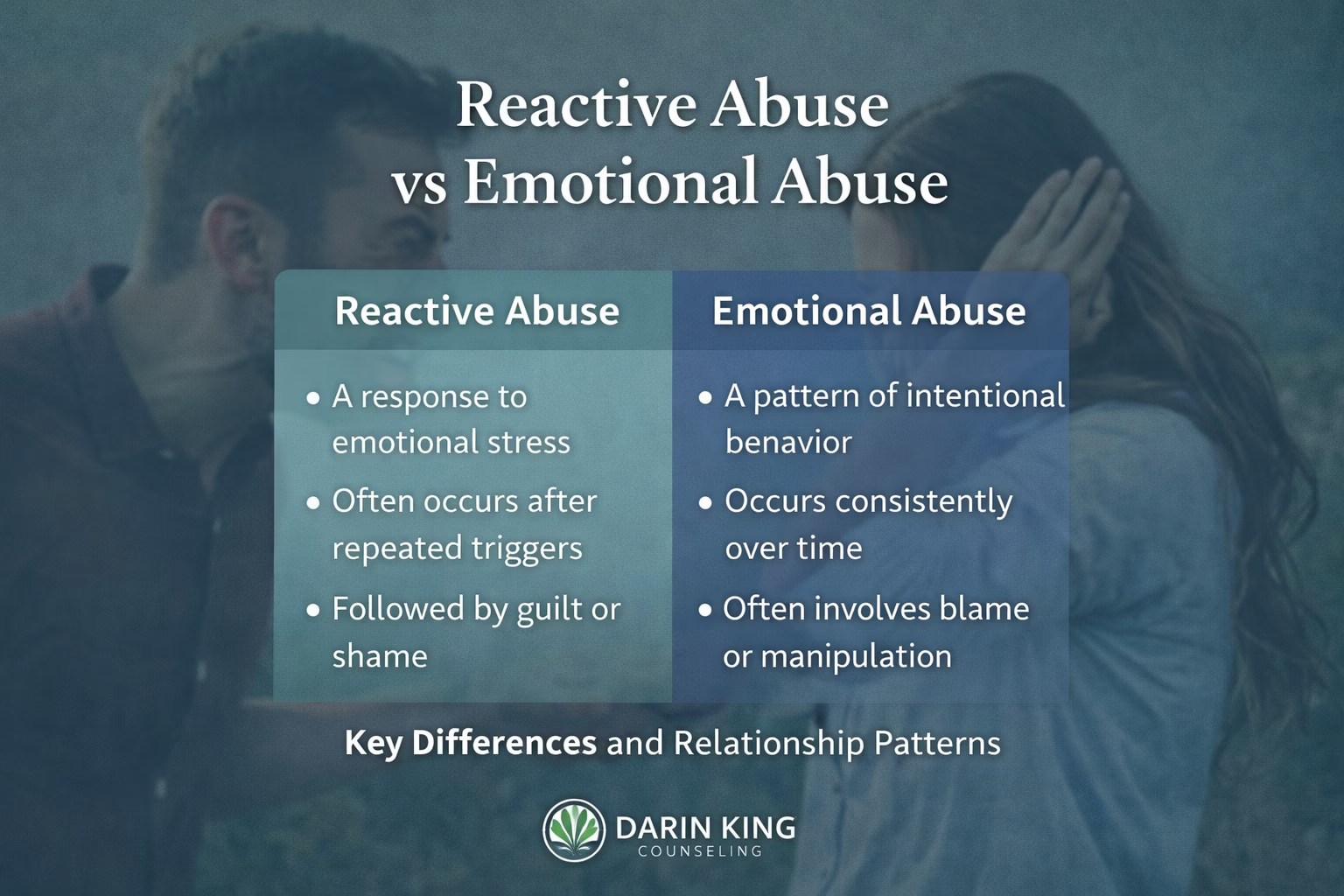
Reactive Abuse vs Emotional Abuse: The Core Differences
✓ Driven by overwhelm — not desire to control
✓ Followed by genuine guilt and remorse
✓ Does not follow a pattern of deliberate harm
✓ The person does not return to provoking behavior
✓ Driven by desire to control and dominate
✓ Followed by minimization, denial, or blame-shifting
✓ Part of a consistent dynamic of power and control
✓ Does not require provocation to occur
Feel free to share or embed this infographic with credit to darinkingcounselingllc.com
What Is Reactive Abuse?
Reactive abuse occurs when an abuser deliberately provokes their victim — through taunting, gaslighting, relentless criticism, or boundary violations — until the victim finally reacts. That reaction is then used as evidence that the victim is abusive, unstable, or the “real” problem in the relationship.
The term “reactive abuse” is misleading — the reaction itself is not abuse. It is a trauma response to sustained mistreatment. Read our full guides on what reactive abuse is and why reactive abuse happens for complete context.
What Is Emotional Abuse?
Emotional abuse is a pattern of behavior designed to control, manipulate, demean, or isolate another person. Unlike reactive abuse — which is a response — emotional abuse is initiated. It does not require a trigger. It is sustained, deliberate, and serves the abuser’s goal of maintaining power and control.
The CDC’s research on adverse childhood experiences recognizes emotional abuse as one of the most damaging forms of childhood adversity, with lasting effects on mental health, relationships, and physical health across the lifespan. In adult relationships, emotional abuse produces the same kinds of trauma — including Complex PTSD — as other forms of sustained mistreatment.
Common forms of emotional abuse include:
- Gaslighting — systematically distorting the victim’s reality
- Chronic criticism and contempt
- Silent treatment and emotional withholding as punishment
- Threats and intimidation
- Humiliation — private and public
- Controlling behavior — finances, social connections, appearance
- Isolation from support networks
- Triangulation — using real or implied third parties to provoke insecurity
Key distinction: Emotional abuse is about power and control. Reactive abuse is about a nervous system that has been pushed past its limit. They may both produce hurtful behavior in the moment — but they are driven by entirely different things and they have entirely different patterns, intentions, and aftermaths.
Reactive Abuse vs Emotional Abuse: A Detailed Comparison
| Reactive Abuse | Emotional Abuse | |
|---|---|---|
| Origin | A response to deliberate provocation | Initiated without provocation |
| Intent | Driven by overwhelm and survival response | Driven by desire to control, dominate, or harm |
| Pattern | Occurs after sustained provocation — not a consistent initiating pattern | Consistent, patterned behavior that is the norm rather than the exception |
| Aftermath | Genuine guilt, remorse, and shame | Minimization, denial, blame-shifting, or using it against the victim |
| Power dynamic | The reactor is not in power — they are responding from a deficit | The abuser uses behavior to maintain power and control |
| Effect on victim | The reactor often ends up feeling like the abuser | The victim is systematically destabilized, controlled, and harmed |
| Self-awareness | The reactor is horrified by their behavior and wants to change it | The abuser minimizes, justifies, or denies their behavior |
| Requires provocation? | Yes — always follows sustained provocation | No — occurs regardless of partner’s behavior |
The Questions That Distinguish Them
If you are trying to understand whether what happened in your relationship was reactive abuse, emotional abuse, or both, these questions help clarify the picture:
Who consistently initiated the harmful dynamic?
Emotional abusers initiate. Reactive abuse follows. If one person consistently created the conditions that led to the other’s reaction, the initiator’s behavior is the abuse — not the reaction it produced.
Whose behavior required the other person to walk on eggshells?
Emotional abuse creates a constant atmosphere of unpredictability and threat. If you were constantly monitoring your partner’s mood, adjusting your behavior to prevent their anger, and afraid of triggering their contempt — you were walking on eggshells. People walking on eggshells are not the abusers.
Who felt genuine remorse — and who minimized or blamed?
After harmful behavior, emotional abusers typically minimize (“it wasn’t that bad”), deny (“that didn’t happen”), or blame-shift (“you made me do it”). Reactive abuse survivors typically feel profound shame and remorse — often excessive amounts of it. This difference in aftermath is one of the clearest distinguishing features.
Was there a consistent pattern of control?
Emotional abuse is part of a sustained pattern of control. Reactive abuse is a response — it doesn’t initiate, doesn’t follow a controlling pattern, and doesn’t serve the reactor’s goal of dominating their partner.
Note: The Substance Abuse and Mental Health Services Administration emphasizes that trauma-informed care recognizes the difference between trauma responses and deliberate abuse — and that survivors of abusive relationships frequently carry false guilt about their reactive behavior that needs to be directly addressed in treatment.
Can Both Be Happening at Once?
Yes — in some cases, both people in a relationship may be engaging in genuinely harmful behavior. Recognizing reactive abuse does not automatically mean the reactor bears no responsibility for any of their behavior. However, context matters enormously:
- Reactive behavior that occurs after sustained provocation is categorically different from deliberate, patterned abuse
- Accountability for reactive behavior does not erase or excuse the provocation that caused it
- A licensed therapist who specializes in abuse dynamics can help clarify what was actually happening in a relationship
The National Institute of Mental Health recognizes that PTSD — which commonly develops in survivors of abusive relationships — affects behavior, emotional regulation, and impulse control in ways that can produce reactive behavior. Treating the underlying trauma addresses the root of the reactive responses.
How Therapy Helps
Whether you experienced reactive abuse, emotional abuse, or both, therapy addresses the specific wounds these dynamics create:
Therapy for Narcissistic Abuse
Therapy for narcissistic abuse addresses the specific manipulation tactics, gaslighting, and trauma recovery needs of survivors of emotionally abusive relationships.
EMDR Therapy
EMDR therapy processes the traumatic memories from the abusive relationship, reducing the emotional charge and helping the nervous system regulate more effectively.
Trauma-Focused Therapy
Trauma counseling in Pennsylvania helps survivors rebuild self-trust, reclaim their sense of reality, and release the false guilt that reactive abuse so reliably produces. Telehealth available statewide.
Related reading: Our complete reactive abuse cluster — what is reactive abuse, why reactive abuse happens, signs of reactive abuse — and our guides on signs of narcissistic abuse and therapy for narcissistic abuse provide the full picture.
Frequently Asked Questions
Is reactive abuse the same as emotional abuse?
No — they are fundamentally different. Reactive abuse is a response to deliberate provocation, driven by nervous system overwhelm. Emotional abuse is deliberate, patterned, and initiated without provocation. The key differences lie in origin, intent, pattern, and aftermath. Read our full guide on what reactive abuse is for complete context.
If I reacted badly in my relationship, does that make me emotionally abusive?
Not necessarily. The key questions are: Was your reaction provoked by sustained mistreatment? Did you feel genuine remorse? Was your behavior a response rather than an initiating pattern? If your reactions were responses to deliberate provocation followed by genuine shame, they are much more consistent with reactive abuse than deliberate emotional abuse.
Can emotional abuse cause reactive abuse?
Yes — emotional abuse is one of the primary causes of reactive abuse. Sustained psychological manipulation chronically dysregulates the victim’s nervous system, making emotional flooding far more likely. The abuser then uses these provoked reactions as further evidence of the victim’s instability — a calculated feature of the tactic. Read more about why reactive abuse happens.
How do I know if I was the victim or the abuser?
Key questions: Who consistently initiated the harmful dynamic? Whose behavior required the other to walk on eggshells? Who felt genuine remorse and who minimized or blamed? A licensed trauma therapist can help you gain clarity — particularly important because the abuser’s narrative is almost always designed to position them as the victim.
What is the best therapy for recovering from emotional abuse?
EMDR therapy processes the traumatic memories created by emotional abuse. Therapy for narcissistic abuse addresses specific manipulation tactics and gaslighting. Telehealth therapy makes specialized care accessible from anywhere in Pennsylvania.
Understanding the difference between what was done to you and how you reacted is the beginning of healing.
Darin King, LPC specializes in trauma, narcissistic abuse recovery, and EMDR therapy in Pennsylvania. Telehealth available statewide.
See more from Darin King Counseling on Google