

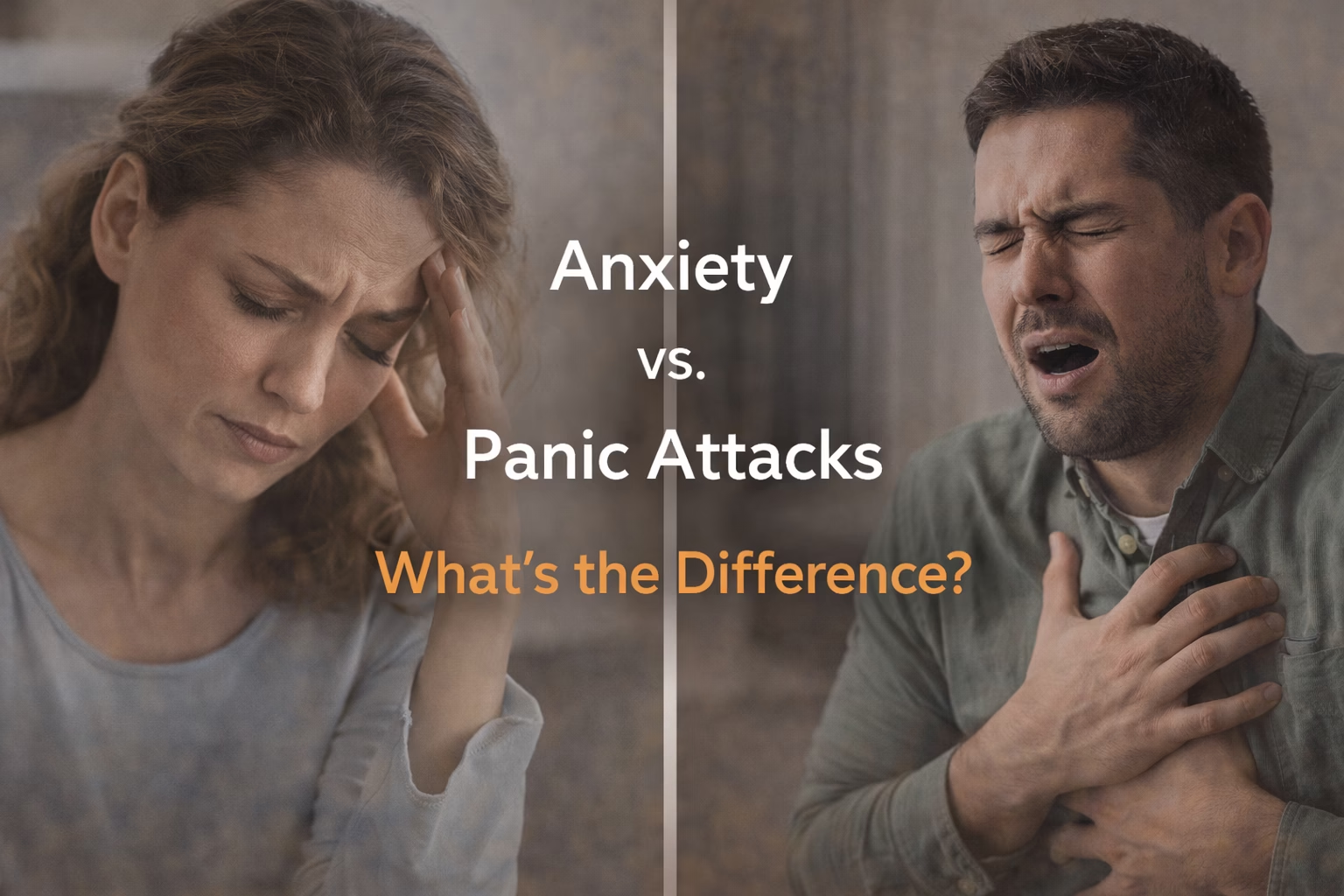
Anxiety and panic attacks are often used interchangeably — but they are distinct experiences with different triggers, different physiological profiles, and different treatment approaches. If you’ve ever wondered whether what you’re experiencing is “just” anxiety or something more intense, or why sometimes your anxiety seems to spike suddenly and overwhelmingly out of nowhere, understanding the difference between anxiety and panic attacks can be genuinely clarifying — and point you toward the most effective help.
Anxiety vs Panic Attacks: Key Differences at a Glance
✓ Usually connected to a specific concern
✓ Can last hours, days, or longer
✓ Intensity is moderate — uncomfortable but manageable
✓ Future-focused — anticipating what might go wrong
✓ Often without an obvious trigger
✓ Typically resolves within 20-30 minutes
✓ Intensity is extreme — feels life-threatening
✓ Present-focused — intense fear of dying or losing control
Feel free to share or embed this infographic with credit to darinkingcounselingllc.com
What Is Anxiety?
Anxiety is a sustained state of worry, apprehension, or fear — typically oriented toward future threats or uncertainties. Some anxiety is completely normal and even adaptive — it motivates preparation, caution, and appropriate response to genuine risks. Anxiety becomes a clinical concern when it is excessive, persistent, and significantly interferes with daily functioning.
The National Institute of Mental Health estimates that anxiety disorders affect nearly 19% of American adults — making them the most common category of mental health conditions in the United States. Anxiety disorders include generalized anxiety disorder, social anxiety disorder, specific phobias, and others — each with its own specific presentation but sharing the common feature of excessive, persistent fear or worry.
Common Signs of Anxiety
- Persistent worry about a range of topics — work, health, relationships, finances
- Difficulty controlling the worry — it continues despite efforts to stop
- Physical tension — muscle tightness, headaches, fatigue
- Restlessness or feeling on edge
- Difficulty concentrating — the mind keeps returning to worries
- Sleep disturbances — difficulty falling or staying asleep
- Irritability
- Avoidance of situations that trigger anxiety
What Is a Panic Attack?
A panic attack is a sudden surge of intense fear or discomfort that peaks within minutes and is accompanied by a cluster of physical and psychological symptoms. According to the American Psychiatric Association’s DSM-5, a panic attack involves at least four of the following symptoms reaching peak intensity within minutes:
Physical Symptoms of a Panic Attack
- Racing or pounding heart (palpitations)
- Sweating
- Trembling or shaking
- Shortness of breath or feeling smothered
- Feeling of choking
- Chest pain or tightness
- Nausea or stomach distress
- Dizziness, lightheadedness, or faintness
- Chills or hot flushes
- Numbness or tingling sensations
Psychological Symptoms of a Panic Attack
- Intense fear of dying
- Fear of losing control or “going crazy”
- Feeling detached from yourself — depersonalization
- Feeling that the world is unreal — derealization
Important note: Panic attack symptoms — particularly chest pain and difficulty breathing — can overlap with cardiac and respiratory conditions. If you haven’t been evaluated by a doctor, ruling out medical causes is always a wise first step. Once medical causes are ruled out, therapy is the most effective long-term treatment for panic attacks.
Anxiety vs Panic Attacks: A Detailed Comparison
| Anxiety | Panic Attack | |
|---|---|---|
| Onset | Gradual — builds over time | Sudden — peaks within minutes |
| Duration | Hours, days, or chronic | Typically 10-30 minutes |
| Trigger | Usually identifiable — a worry, situation, or concern | Often no obvious trigger (unexpected) |
| Intensity | Moderate — uncomfortable but not overwhelming | Extreme — feels life-threatening |
| Time orientation | Future-focused — anticipatory dread | Present-focused — immediate terror |
| Physical symptoms | Tension, restlessness, fatigue | Racing heart, shortness of breath, chest pain, dizziness |
| Fear of dying | Rarely present | Very common during the attack |
| Dissociation | Occasionally | Common — depersonalization, derealization |
Can You Have Both Anxiety and Panic Attacks?
Yes — and this is very common. Many people with anxiety disorders also experience panic attacks. In fact, anticipatory anxiety — the anxiety that develops about having another panic attack — can itself become a significant source of ongoing distress and avoidance. This is called panic disorder: a condition in which recurring panic attacks lead to persistent worry about future attacks and behavioral changes to avoid them.
When trauma is driving both anxiety and panic attacks, the picture becomes more complex — and addressing the underlying trauma is often the most effective path to lasting relief. Read more about trauma and panic attacks and how they are connected.
What Causes Anxiety and Panic Attacks?
Common Causes of Chronic Anxiety
- Trauma and PTSD — a chronically activated nervous system. Read about how trauma affects the nervous system
- Childhood experiences — growing up in unpredictable or threatening environments
- ADHD — which often co-occurs with anxiety. Read about ADHD counseling
- Genetic predisposition — anxiety tends to run in families
- Chronic stress — burnout, life pressures, lack of adequate support
- Cortisol dysregulation — read about cortisol and trauma
Common Causes of Panic Attacks
- Trauma triggers — stimuli that activate the nervous system’s threat response. Read about trauma and panic attacks
- Existing anxiety disorders — panic attacks frequently occur in anxious individuals
- Stimulant use — caffeine, certain medications
- Medical conditions — thyroid disorders, cardiac arrhythmias
- Significant life stress or major transitions
Note: The Substance Abuse and Mental Health Services Administration recognizes that anxiety disorders — including panic disorder — are among the most treatable mental health conditions. Effective treatment is available and produces significant, lasting improvement for most people.
How Anxiety and Panic Attacks Are Treated
In the Moment — Panic Attack Relief
- Extended exhale breathing — 4 counts in, 6-8 counts out activates the parasympathetic nervous system
- Grounding techniques — name 5 things you can see, feel your feet on the floor
- Cold water on face — activates the dive reflex and rapidly slows heart rate
- Remind yourself it will pass — panic attacks, while terrifying, are not dangerous and do resolve
See our complete guide on nervous system reset techniques for a full toolkit.
Longer-Term Treatment
Anxiety Counseling — Anxiety counseling in Pittsburgh addresses the underlying drivers of chronic anxiety and panic — including trauma, nervous system dysregulation, and the beliefs and patterns that maintain the anxiety cycle.
EMDR Therapy — When trauma is driving anxiety or panic attacks, EMDR therapy addresses the traumatic memories maintaining the threat response — often producing significant reduction in both anxiety and panic frequency.
DBT Skills — DBT therapy provides powerful distress tolerance and emotional regulation tools specifically designed for managing intense anxiety and panic.
Related reading: Our guides on trauma and panic attacks, how trauma affects the nervous system, and nervous system reset techniques provide important context for understanding and managing anxiety and panic attacks.
Frequently Asked Questions
What is the main difference between anxiety and a panic attack?
Anxiety builds gradually and can last hours or days — it is future-focused worry that is uncomfortable but manageable. A panic attack comes on suddenly, peaks within minutes, feels overwhelming and often life-threatening, and typically resolves within 20-30 minutes. The two frequently co-occur — read more about trauma and panic attacks.
Can anxiety cause panic attacks?
Yes — chronic anxiety keeps the nervous system in a state closer to its threshold for full fight-or-flight activation, making panic attacks more likely. Anticipatory anxiety about having a panic attack can itself trigger one — a cycle central to panic disorder. Anxiety counseling addresses both.
Are panic attacks dangerous?
Panic attacks are extremely distressing but not physically dangerous in themselves. The intense symptoms are produced by the fight-or-flight response. However, because symptoms can overlap with cardiac conditions, a medical evaluation is worth having if you haven’t already. Once medically cleared, therapy is the most effective long-term treatment.
What is the best therapy for panic attacks?
When driven by anxiety alone, CBT-based approaches are highly effective. When driven by trauma, EMDR therapy addresses the traumatic memories maintaining the threat response. DBT skills provide powerful in-the-moment tools. A licensed therapist can help determine the right fit.
How do I stop a panic attack quickly?
Extended exhale breathing, grounding techniques, and cold water on the face are the fastest evidence-based tools. Reminding yourself that the panic attack will pass also helps prevent secondary anxiety that can extend the episode. See our complete guide on nervous system reset techniques.
Anxiety and panic attacks are among the most treatable conditions there are. You don’t have to keep managing them alone.
Darin King, LPC specializes in anxiety, panic, and trauma therapy in Pennsylvania. Telehealth available statewide.
See more from Darin King Counseling on Google