

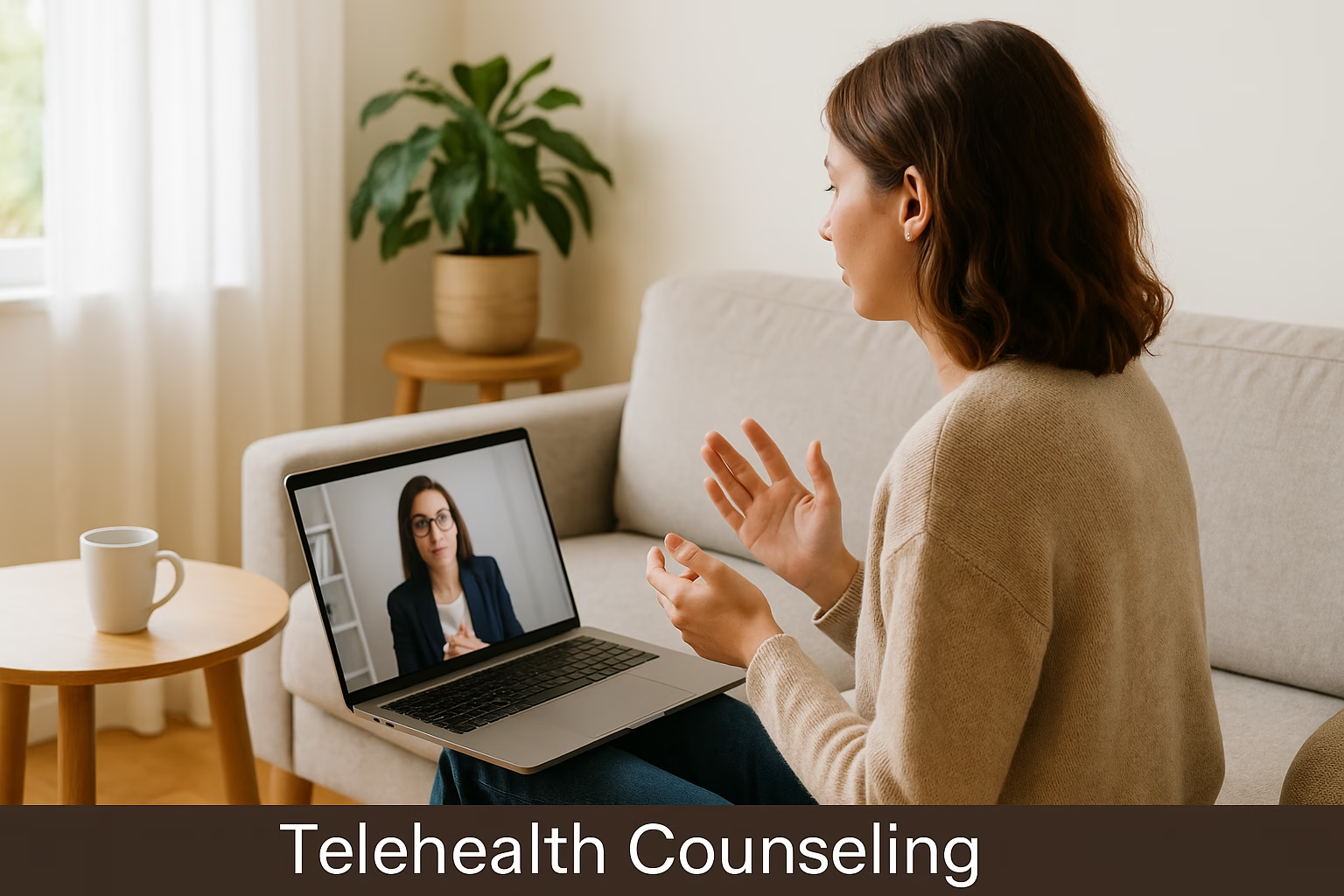
Telehealth counseling has transformed access to mental health care in Pennsylvania — making it possible for anyone in the state, from Pittsburgh to Philadelphia to rural communities in between, to access specialized, evidence-based therapy from the comfort of their own home. If you’ve been curious about how telehealth counseling actually works, what to expect, and whether it’s right for you, this guide answers all of it.
How Telehealth Counseling Works: Step by Step
✓ Stable internet connection
✓ Private space where you can speak freely
✓ A Pennsylvania-licensed therapist
✓ To be located in Pennsylvania during sessions
✓ To be near Pittsburgh or a major city
✓ Special software to download
✓ To be in crisis to qualify
✓ A referral from your doctor
Feel free to share or embed this infographic with credit to darinkingcounselingllc.com
What Is Telehealth Counseling?
Telehealth counseling — also called online therapy, virtual therapy, or e-therapy — is the delivery of mental health services via secure video technology rather than in-person office visits. Sessions look like a video call with your therapist — you can see and hear each other clearly, work through material together, and build a genuine therapeutic relationship — all without leaving your home.
The Substance Abuse and Mental Health Services Administration has actively promoted telehealth as a means of expanding access to mental health care, recognizing that geographic barriers, transportation limitations, and scheduling constraints prevent many people from accessing the in-person care they need. Telehealth removes all of these barriers simultaneously.
Key point: Telehealth counseling is not a lesser version of in-person therapy. Research consistently shows that telehealth produces outcomes comparable to in-person for most presenting concerns — including trauma, anxiety, depression, and relationship issues. Read more about whether telehealth therapy is as effective as in-person.
Pennsylvania Telehealth Regulations
In Pennsylvania, telehealth mental health services are regulated by the same licensing boards that govern in-person therapy. Key regulations to know:
- Your therapist must be licensed in Pennsylvania — regardless of where they are physically located. A therapist licensed only in another state cannot legally provide telehealth services to Pennsylvania residents.
- You must be located in Pennsylvania during sessions — telehealth services are tied to the state where the client is located at the time of service. If you travel out of state, you cannot have a session with your Pennsylvania-licensed therapist unless they are also licensed in that state.
- Sessions must be conducted on a HIPAA-compliant platform — regular video calling apps like FaceTime or standard Zoom are not compliant. Your therapist uses a secure, encrypted platform specifically designed for healthcare.
- The same confidentiality protections apply — everything discussed in telehealth sessions is protected by the same laws that govern in-person therapy. Read more about what is confidential in therapy.
The National Institute of Mental Health recognizes telehealth as a fully valid modality for delivering evidence-based psychological therapies, with outcomes comparable to in-person treatment for most conditions.
How Telehealth Counseling Works: Step by Step
Step 1: Schedule a Consultation
The first step is reaching out to schedule a free consultation — a brief initial conversation where you can share what you’re looking for, ask questions, and get a sense of whether the therapist is a good fit. At Darin King Counseling, you can request a free consultation through our contact page.
Step 2: Complete Intake Paperwork
Before your first session, you’ll complete intake paperwork electronically through a secure client portal. This typically includes informed consent, a HIPAA acknowledgment, an intake questionnaire about your current concerns and relevant history, and insurance information if applicable. The portal is HIPAA-compliant and accessible from any device.
Step 3: Join Your Session
At your scheduled session time, you’ll receive a secure link — either emailed in advance or accessible through the client portal — that connects you to your therapist’s virtual waiting room. No downloads are required for most platforms. You click the link, and you’re in session. Sessions are typically 50-60 minutes.
Step 4: The Session Itself
The session proceeds exactly as an in-person session would — conversation, therapeutic work, skill-building, and processing — via video. You can see your therapist clearly and they can see you. The therapeutic relationship develops just as it does in person. Read more about what happens in your first therapy session.
Step 5: Between Sessions
Between sessions, you may use the client portal to message your therapist with non-urgent questions, access any resources they’ve shared, or schedule future appointments. Many therapists also offer brief between-session support for clients who need it.
Step 6: Ongoing Scheduling
Most clients schedule weekly or biweekly sessions — the frequency that produces the best outcomes for most presentations. As therapy progresses and stability increases, session frequency can decrease to monthly or as-needed maintenance.
What Telehealth Can Treat in Pennsylvania
Telehealth counseling in Pennsylvania is effective for the same range of presenting concerns as in-person therapy:
- Trauma and PTSD — including EMDR therapy delivered fully via telehealth. Read about trauma counseling in Pennsylvania and EMDR therapy
- Anxiety disorders — read about anxiety counseling in Pittsburgh
- Depression and seasonal depression — read about depression counseling
- Complex PTSD — read about CPTSD therapy
- ADHD — read about ADHD counseling
- Couples and relationship therapy — read about how couples therapy works in a virtual setting
- People pleasing, shame, guilt, and identity work
- Narcissistic abuse recovery — read about therapy for narcissistic abuse
Tips for Getting the Most From Telehealth Counseling
Create a Private, Comfortable Space
Choose a space where you can speak freely without being overheard. Options include a private room with a door closed and white noise outside, sitting in a parked car, using headphones to limit what others can hear, or finding a time when others in your home are occupied.
Minimize Distractions
Put your phone on silent, close other browser tabs, and let others in your home know you’re in a session. Treat your telehealth appointment with the same intentionality you’d bring to an in-person visit.
Test Your Technology in Advance
Before your first session, test your camera, microphone, and internet connection. Most telehealth platforms have a test option that lets you check your setup before the session begins. Having headphones available improves audio quality significantly.
Be in Your Session Fully
The temptation to multitask during a telehealth session is real — you’re in your own home, your phone is nearby, other things are visible. Resist this. Full presence produces significantly better outcomes. Therapy works in proportion to your engagement.
Do the Between-Session Work
Telehealth makes accessing therapy easier — but the most meaningful change still happens between sessions. Apply the insights and practice the skills discussed in sessions. The therapeutic work lives in daily life, not just in the session hour. See our guide on nervous system reset techniques for tools to use between sessions.
Who Is Telehealth Counseling in Pennsylvania For?
- Anyone located anywhere in Pennsylvania — from Pittsburgh to Philadelphia to rural communities
- People who struggle to get to in-person appointments due to work schedules, childcare, transportation, or distance
- People with anxiety or agoraphobia for whom leaving the house is itself a barrier
- People seeking specialized therapy — EMDR, IFS, trauma-focused — not available locally
- People who feel more comfortable and regulated in their own home environment
- People in individual or couples therapy who want to attend sessions from the same location or different locations
Note: Insurance coverage for telehealth mental health services varies by plan. Many Pennsylvania insurance plans cover telehealth therapy at the same rate as in-person services — but it’s worth contacting your insurance provider to confirm your specific coverage before beginning. At Darin King Counseling, we can help you understand your options during your free consultation.
Related reading: Our guides on is telehealth therapy as effective as in-person, what happens in your first therapy session, nervous about starting therapy, and how to choose the right therapist provide everything you need to get started with telehealth counseling in Pennsylvania.
Frequently Asked Questions
How does telehealth counseling work in Pennsylvania?
You complete intake paperwork electronically, then join sessions via a secure link on any device with camera and microphone. Your therapist must be Pennsylvania-licensed, sessions use a HIPAA-compliant platform, and you must be located in Pennsylvania during sessions. The same confidentiality protections apply as in-person therapy. Read more about what is confidential in therapy.
Can I do telehealth therapy from anywhere in Pennsylvania?
Yes — whether you’re in Pittsburgh, Philadelphia, or a rural community anywhere in the state. Telehealth removes geographic barriers entirely, providing access to specialized therapists who might not be available locally. At Darin King Counseling, we offer telehealth therapy to anyone in Pennsylvania.
Does insurance cover telehealth counseling in Pennsylvania?
Many Pennsylvania insurance plans cover telehealth mental health services at the same rate as in-person services. Coverage varies by plan — contact your insurance provider to confirm your specific coverage before beginning.
What technology do I need for telehealth therapy in Pennsylvania?
A device with camera and microphone, stable internet, and a private space. Your therapist provides a secure link — no special downloads required for most platforms. Headphones help with audio quality and privacy.
Can EMDR therapy be done via telehealth in Pennsylvania?
Yes — fully and effectively. Bilateral stimulation is adapted using eye movements, audio tones, or tapping. Many clients find their home environment actually supports the safety important to trauma processing. Read more about how EMDR therapy works online.
Wherever you are in Pennsylvania — effective therapy is one click away.
Darin King, LPC offers telehealth counseling for trauma, anxiety, EMDR, and more across Pennsylvania. Schedule a free consultation today.
See more from Darin King Counseling on Google