

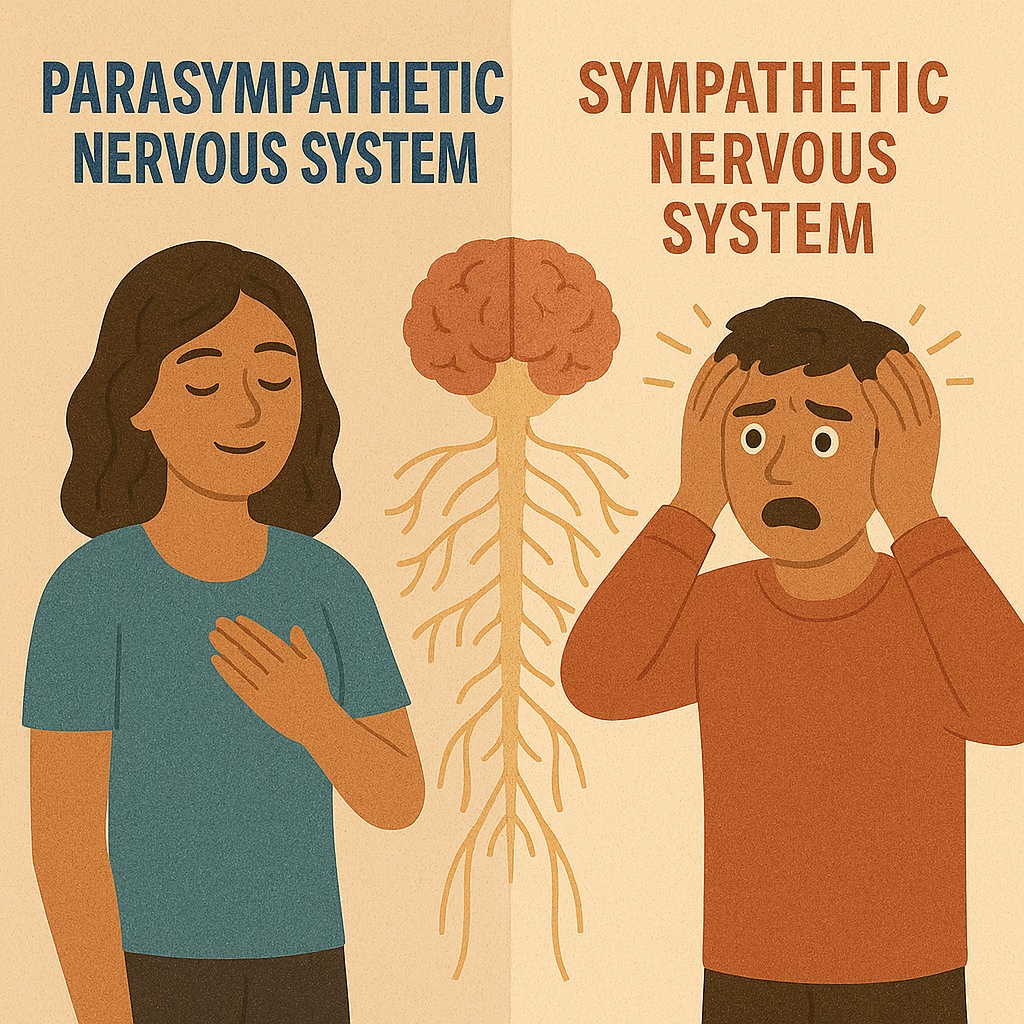
If you’ve ever wondered why anxiety feels physical — why your heart races, your breathing shallows, and your muscles tense when nothing is physically threatening you — the answer lies in your autonomic nervous system. Specifically, in the relationship between its two primary branches: the sympathetic and parasympathetic nervous systems. Understanding how these two systems work — and how trauma, anxiety, and chronic stress dysregulate them — is one of the most clarifying frameworks available for understanding mental health.
This guide explains what the sympathetic and parasympathetic nervous systems do, how they are connected to mental health, and what you can do to support a more balanced nervous system state.
Sympathetic vs Parasympathetic: Two Branches of the Autonomic Nervous System
✓ Fight, flight, or freeze response
✓ Increases heart rate and breathing
✓ Releases adrenaline and cortisol
✓ Redirects resources away from digestion and rest
✓ Rest, digest, and connect response
✓ Slows heart rate and deepens breathing
✓ Supports immune function and digestion
✓ Enables genuine relaxation and connection
Feel free to share or embed this infographic with credit to darinkingcounselingllc.com
The Autonomic Nervous System: Your Body’s Automatic Regulator
The autonomic nervous system (ANS) governs the body’s automatic functions — heart rate, breathing, digestion, immune response, and more — largely outside of conscious awareness. It has two primary branches that work in dynamic balance:
- The sympathetic nervous system — the accelerator. Activates in response to threat, mobilizing the body for action.
- The parasympathetic nervous system — the brake. Promotes rest, recovery, digestion, and social connection.
In a healthy, regulated nervous system, these two branches shift fluidly — the sympathetic activates when genuine threat demands it, and the parasympathetic restores balance once the threat has passed. The problem for many people — particularly those with trauma histories, anxiety disorders, or chronic stress — is that this dynamic balance becomes disrupted. The sympathetic branch stays chronically activated, and the parasympathetic branch can’t do its job.
According to the National Institute of Mental Health, anxiety disorders — which affect nearly one in five American adults — are characterized by exactly this kind of nervous system dysregulation: a chronically activated threat response system that activates disproportionately and struggles to return to baseline.
The Sympathetic Nervous System and Mental Health
What the Sympathetic Nervous System Does
When the sympathetic nervous system activates — triggered by the amygdala detecting a real or perceived threat — it produces a cascade of physiological changes designed to support survival:
- Heart rate increases — pumping more blood to muscles
- Breathing becomes faster and shallower — increasing oxygen intake
- Adrenaline and cortisol are released — providing immediate energy and focus
- Digestion slows — resources are redirected to muscles and brain
- Immune function is temporarily suppressed
- Pupils dilate — improving visual scanning for threat
- Muscles tense — preparing for fight or flight
In acute threat situations, this response is lifesaving. The problem is when it activates chronically — in response to perceived threats that are not physically dangerous, or in people whose threat detection system has been sensitized by trauma.
Chronic Sympathetic Activation and Mental Health
When the sympathetic nervous system is chronically activated, the physical and mental health consequences are significant. Read more about cortisol and trauma and the effects of sustained stress hormone elevation on the body and brain.
| Chronic Sympathetic Activation | Mental Health Effect | Physical Effect |
|---|---|---|
| Sustained adrenaline and cortisol | Persistent anxiety, hypervigilance, difficulty relaxing | Fatigue, immune suppression, cardiovascular stress |
| Amygdala hypersensitivity | Disproportionate fear responses, panic attacks | Elevated heart rate, muscle tension, shallow breathing |
| Prefrontal cortex suppression | Difficulty thinking clearly, emotional flooding, impulsivity | Headaches, jaw tension, disrupted sleep |
| Digestive system suppression | Gut-brain connection affects mood and anxiety | IBS, nausea, digestive discomfort |
The Parasympathetic Nervous System and Mental Health
What the Parasympathetic Nervous System Does
The parasympathetic nervous system — often described as “rest and digest” — promotes restoration and recovery when safety is perceived:
- Heart rate slows and stabilizes
- Breathing deepens and slows
- Digestion resumes and functions normally
- Immune function is supported rather than suppressed
- Muscles relax
- The body enters repair and restoration mode
- Social engagement becomes possible — the “tend and befriend” response
The parasympathetic system is activated through the vagus nerve — the longest cranial nerve in the body, running from the brainstem through the heart, lungs, and digestive system. This is why deep breathing, humming, singing, and cold water on the face all activate parasympathetic response — they directly stimulate the vagus nerve.
Impaired Parasympathetic Access and Mental Health
For many people with trauma histories, anxiety, or depression, accessing genuine parasympathetic rest is difficult. Safety doesn’t feel safe. Relaxation triggers anxiety rather than relief. The body has learned — through repeated experience — that dropping its guard is dangerous.
This impaired parasympathetic access shows up as:
- Inability to relax even in objectively safe situations
- Feeling “wired but tired” — exhausted but unable to rest
- Difficulty sleeping or feeling rested
- Difficulty with social connection — the social engagement system is parasympathetically mediated
- Chronic physical tension that doesn’t release with rest
- Digestive issues — the gut doesn’t function well under sympathetic dominance
Key insight: Many mental health symptoms that appear psychological are actually the body’s nervous system stuck in sympathetic dominance — unable to access the parasympathetic state needed for genuine rest, connection, and healing. This is why addressing the nervous system directly — not just thoughts and behavior — is so important in trauma and anxiety treatment. Read more about how trauma affects the nervous system.
Polyvagal Theory: A Deeper Map of the Nervous System
Dr. Stephen Porges’ Polyvagal Theory adds important nuance to the sympathetic/parasympathetic framework by dividing the parasympathetic system into two distinct pathways:
| Nervous System State | Branch | Feels Like | Common In |
|---|---|---|---|
| Social engagement / Safety | Ventral vagal (parasympathetic) | Calm, connected, present, able to think and feel | Secure, regulated individuals |
| Fight or Flight | Sympathetic | Anxious, hypervigilant, reactive, angry | Anxiety, PTSD, trauma activation |
| Freeze / Shutdown | Dorsal vagal (parasympathetic) | Numb, collapsed, dissociated, depressed | Complex trauma, severe overwhelm |
Understanding which state you are in — and having tools to move toward the ventral vagal “window of tolerance” — is one of the core skills of trauma recovery and nervous system regulation. Read more about what dissociation feels like as an expression of the dorsal vagal shutdown state.
How Trauma Disrupts the Sympathetic/Parasympathetic Balance
Trauma — particularly childhood trauma and Complex PTSD — produces lasting changes in how the sympathetic and parasympathetic systems function and interact. The Substance Abuse and Mental Health Services Administration recognizes that trauma-informed care must address this nervous system dysregulation as a core component of treatment, not just an afterthought.
Key effects of trauma on the sympathetic/parasympathetic balance include:
- Lower threshold for sympathetic activation — the alarm fires more easily
- Slower return to parasympathetic baseline after activation — harder to come down
- Reduced heart rate variability — a measurable marker of nervous system flexibility and resilience
- Impaired vagal tone — reduced parasympathetic capacity overall
- Oscillation between hyperarousal and shutdown — flooding then collapsing, with little time in the regulated middle
Read more in our guides on how childhood abuse changes the brain and cortisol and trauma.
How to Support a Healthier Sympathetic/Parasympathetic Balance
Activate the Parasympathetic System Directly
Several evidence-based techniques directly activate the vagus nerve and parasympathetic response. For a complete toolkit, see our guide on nervous system reset techniques. Key approaches include:
- Extended exhale breathing — longer exhale than inhale (4 counts in, 6-8 out) directly activates parasympathetic response
- Cold water on face — activates the dive reflex, rapidly slowing heart rate
- Humming or singing — vibrates the vagus nerve, activating parasympathetic response
- Slow, rhythmic movement — walking, gentle yoga, swimming
- Safe social connection — the social engagement system is parasympathetically mediated
Address the Root Cause Through Trauma Therapy
Nervous system regulation techniques are powerful tools — but they address the symptom rather than the root. When trauma is driving chronic sympathetic activation, addressing the trauma directly through evidence-based therapy produces lasting change in nervous system baseline.
- EMDR therapy — produces measurable neurological changes that reduce amygdala hyperreactivity and support nervous system regulation
- Trauma-focused therapy — addresses the experiences driving chronic activation
- IFS therapy — works with the protective parts that keep the system in sympathetic dominance
- DBT therapy — provides practical distress tolerance and emotion regulation skills
The CDC’s ACE research demonstrates the profound impact of early adversity on nervous system development — underscoring that addressing the root causes of dysregulation, not just managing symptoms, is what produces lasting change.
Related reading: Our guides on nervous system reset techniques, how trauma affects the nervous system, cortisol and trauma, and how PTSD affects GABA in the brain complete the neuroscience picture of mental health and nervous system regulation.
Frequently Asked Questions
How do the sympathetic and parasympathetic nervous systems affect mental health?
The sympathetic system activates the stress response — increasing heart rate and releasing stress hormones. The parasympathetic system promotes rest, digestion, and connection. Mental health is profoundly shaped by the balance between the two. Chronic sympathetic dominance — caused by trauma or anxiety — produces persistent anxiety, difficulty relaxing, emotional flooding, and physical health problems.
What activates the parasympathetic nervous system?
Effective techniques include extended exhale breathing, cold water on the face, slow rhythmic movement, humming or singing, and safe social connection. EMDR therapy produces lasting changes in parasympathetic access by addressing root causes of chronic sympathetic activation. See our full guide on nervous system reset techniques.
What does it feel like when the sympathetic nervous system is overactive?
It feels like persistent anxiety, difficulty relaxing even in safe situations, racing heart, shallow breathing, muscle tension, digestive issues, sleep disruption, and emotional flooding. Many people describe feeling “wired but tired.” This is extremely common in people with PTSD and anxiety disorders.
Can trauma permanently dysregulate the autonomic nervous system?
Trauma produces lasting changes but not permanent ones. The nervous system retains neuroplasticity throughout life, and effective trauma treatment produces measurable improvements in regulation. Read more about how trauma affects the nervous system and the path to healing.
What is the connection between the vagus nerve and mental health?
The vagus nerve is the primary pathway of the parasympathetic system — running from the brainstem through the heart, lungs, and gut. Vagal tone is a measurable indicator of nervous system resilience. Trauma reduces vagal tone; slow breathing, cold exposure, and safe social connection help restore it alongside trauma therapy.
Your nervous system learned to survive. Therapy helps it learn to thrive.
Darin King, LPC specializes in trauma, nervous system regulation, and EMDR therapy in Pennsylvania. Telehealth available statewide.
See more from Darin King Counseling on Google