

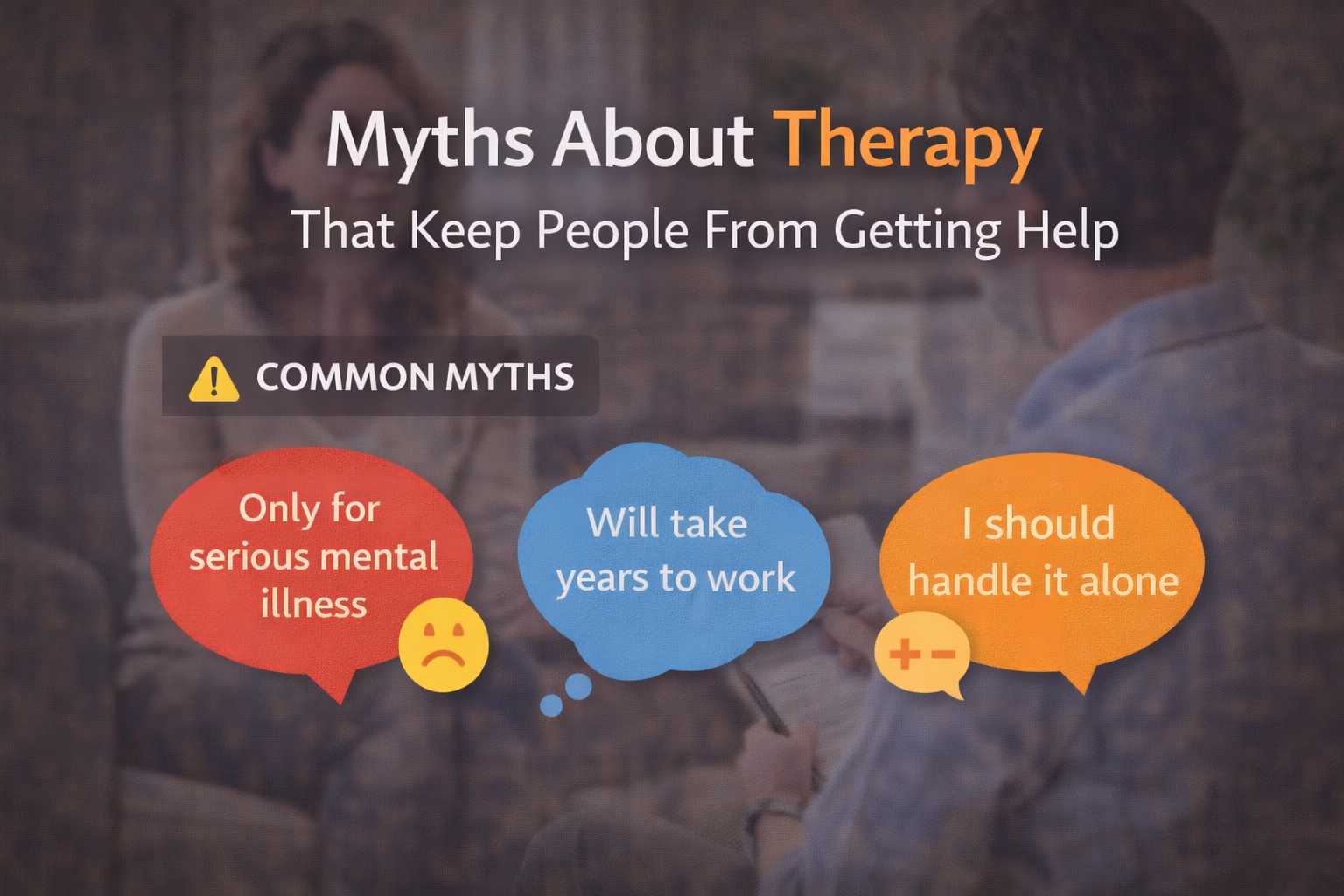
Despite decades of research showing that therapy is one of the most effective treatments for mental health conditions, millions of people who could benefit from it never seek it out. The barrier is rarely lack of interest. It is almost always some version of a myth — a belief about what therapy is, who it’s for, or what it involves that simply isn’t accurate. This guide addresses the most common myths about therapy directly, replacing them with what the research and clinical experience actually show.
Common Therapy Myths vs Reality
✓ Talking about problems makes them worse
✓ Therapy takes years to work
✓ A good therapist tells you what to do
✓ Going to therapy means you’re weak
✓ Talking in a safe context supports healing
✓ Many people see meaningful progress in months
✓ Good therapists help you find your own answers
✓ Seeking help takes courage and self-awareness
Feel free to share or embed this infographic with credit to darinkingcounselingllc.com
Myth 1: Therapy Is Only for People Who Are Seriously Mentally Ill
The reality: Therapy is for anyone whose quality of life, relationships, or sense of wellbeing would benefit from professional support. The National Institute of Mental Health recognizes that psychotherapy is effective across a wide range of concerns — from diagnosable mental health conditions to life transitions, grief, relationship difficulties, work stress, and personal growth. You do not need a diagnosis to benefit from therapy. You do not need to be in crisis. You need only to have something worth working on — which is most people, at most points in their lives.
Myth 2: Going to Therapy Means You’re Weak
The reality: Seeking therapy requires self-awareness, courage, and a willingness to be honest about what isn’t working — qualities that are more accurately described as strength than weakness. The people who struggle most are often those who are most convinced they should be able to handle everything alone. Recognizing that support could help — and choosing to seek it — is the opposite of weakness. Read more about how to know when it’s time to start therapy.
Myth 3: Talking About Problems Makes Them Worse
The reality: This myth usually comes from experience of talking about difficult things in contexts that were unsafe, invalidating, or overwhelming — and having it backfire. Therapy is a specifically constructed safe context, with a trained professional whose entire role is to help you process difficult material without being overwhelmed by it. The Substance Abuse and Mental Health Services Administration recognizes that evidence-based therapy produces meaningful improvement for the majority of people who engage with it. Talking in the right context doesn’t make things worse — it begins the process of integrating them.
Myth 4: Therapy Takes Years to Work
The reality: Many people see meaningful improvement within weeks or months of consistent therapy. The length of treatment depends on what you’re addressing — simple presenting concerns may respond quickly, while complex or childhood trauma may require longer work. But therapy is not necessarily an open-ended indefinite commitment. Many evidence-based approaches — including EMDR for trauma — produce significant results in a focused number of sessions. Read more about how long therapy takes to work.
Myth 5: A Good Therapist Tells You What to Do
The reality: Good therapists don’t give advice in the traditional sense — they help you develop clarity, insight, and skills so you can make your own informed decisions. The goal of therapy is to increase your capacity to understand yourself and navigate your life — not to create dependence on someone else’s judgment. A therapist who simply tells you what to do is not doing therapy — they’re giving advice, which is a very different thing.
Myth 6: Therapy Is Just Venting — You Can Get the Same Thing From Talking to a Friend
The reality: Good therapy is fundamentally different from conversation with a friend. A trained therapist brings clinical expertise, specific evidence-based techniques, a structured approach to change, and the ability to work with unconscious patterns, nervous system dysregulation, and trauma in ways that supportive conversation cannot. A good friend is valuable — and not a substitute for professional mental health treatment. Read more about what therapy actually helps with.
Myth 7: If Therapy Hasn’t Worked Before, It Won’t Work Now
The reality: Previous therapy experiences that didn’t produce meaningful change are often a function of the fit between the person, the therapist, and the approach — not evidence that therapy doesn’t work for you. Different approaches work for different presentations. Someone whose anxiety is rooted in trauma may not respond to CBT alone but may respond dramatically to EMDR. Finding the right therapist with the right approach is often the missing piece. Read more about how to choose the right therapist.
Myth 8: Therapy Means Lying on a Couch and Talking About Your Childhood
The reality: Modern evidence-based therapy looks very different from the psychoanalytic model most people picture. Approaches like EMDR, IFS, DBT, and trauma-focused therapy are highly structured, present-focused, and skills-oriented. While childhood experiences are often relevant context, therapy is not primarily about excavating the past — it is about understanding patterns, building skills, processing what needs processing, and creating change in the present. Read more about what trauma therapy actually looks like.
Myth 9: Telehealth Therapy Is Less Effective Than In-Person
The reality: Research consistently shows that telehealth therapy is equally effective as in-person for most presenting concerns — including trauma, anxiety, depression, and relationship issues. For many people, telehealth is actually preferable — the comfort of their own home can support the sense of safety important to therapeutic work, and the removal of travel barriers supports consistent attendance. Read more about whether telehealth therapy is as effective as in-person.
Myth 10: Medication Is More Effective Than Therapy
The reality: Both medication and therapy are effective for many mental health conditions — and they work through different mechanisms. Research generally shows that therapy, particularly evidence-based approaches like CBT and EMDR, produces more lasting change than medication alone because it addresses underlying patterns rather than managing symptoms. For many conditions, a combination of therapy and medication produces the best outcomes. The American Psychiatric Association recommends psychotherapy as a first-line or combined treatment for most anxiety and depressive conditions.
Myth 11: You Have to Be Ready to Talk About Everything Right Away
The reality: Good therapy is paced. A skilled therapist — particularly one working with trauma — will not push you to disclose more than you’re ready to share. The first sessions are typically about building the therapeutic relationship and understanding your situation. Deeper material is accessed gradually as trust and safety develop. You are always in control of what you share and when. Read more about what to do if you’re nervous about starting therapy.
Myth 12: Therapy Is Too Expensive
The reality: Cost is a genuine barrier for many people — and it is worth noting that many therapists offer sliding scale fees, that telehealth has expanded geographic access to a wider range of providers, and that many insurance plans cover mental health services. The CDC’s ACE research also documents the significant physical and mental health costs of untreated trauma and mental health conditions over time — making early treatment an investment rather than just an expense. Read more about telehealth therapy in Pennsylvania as an accessible option.
| The Myth | The Reality |
|---|---|
| Only for seriously mentally ill people | Helpful across the full range of human struggle |
| Going to therapy means you’re weak | Seeking help takes courage and self-awareness |
| Talking about problems makes them worse | Talking in a safe context supports healing |
| Therapy takes years | Many people see meaningful progress in months |
| Therapists tell you what to do | Good therapists help you find your own answers |
| Same as talking to a friend | Therapy uses clinical expertise and specific techniques |
| Telehealth is less effective | Research shows equal effectiveness for most concerns |
| If it hasn’t worked before, it won’t now | Often a fit or approach issue — not a therapy issue |
Related reading: Our guides on how to know when it’s time to start therapy, nervous about starting therapy, how to choose the right therapist, and what therapy helps with provide everything you need to take the first step.
Frequently Asked Questions
Do you have to be seriously mentally ill to benefit from therapy?
No — therapy is beneficial across the full range of human experience. You don’t need a diagnosis or a crisis. You need only something worth working on — which is most people at most points in life. Read more about what therapy helps with.
Is therapy just venting?
No — good therapy brings clinical expertise, specific evidence-based techniques, and the ability to work with unconscious patterns and nervous system dysregulation in ways that supportive conversation cannot. Venting provides temporary relief. Therapy produces lasting change.
Is telehealth therapy as good as in-person?
Yes — research consistently shows comparable outcomes. For many people telehealth is actually preferable. Read more about whether telehealth is as effective as in-person therapy and our telehealth therapy services across Pennsylvania.
What if therapy hasn’t worked for me before?
Previous unsuccessful therapy is often a fit or approach issue — not evidence that therapy can’t work for you. Someone whose anxiety is rooted in trauma may not respond to general talk therapy but may respond significantly to EMDR. Read more about how to choose the right therapist.
How long does therapy actually take to work?
Many people see meaningful improvement within weeks or months. The length depends on what you’re addressing. Read our complete guide on how long therapy takes to work.
Don’t let a myth keep you from the support you deserve.
Darin King, LPC offers evidence-based therapy for trauma, anxiety, and more in Pennsylvania. Telehealth available statewide.
See more from Darin King Counseling on Google