

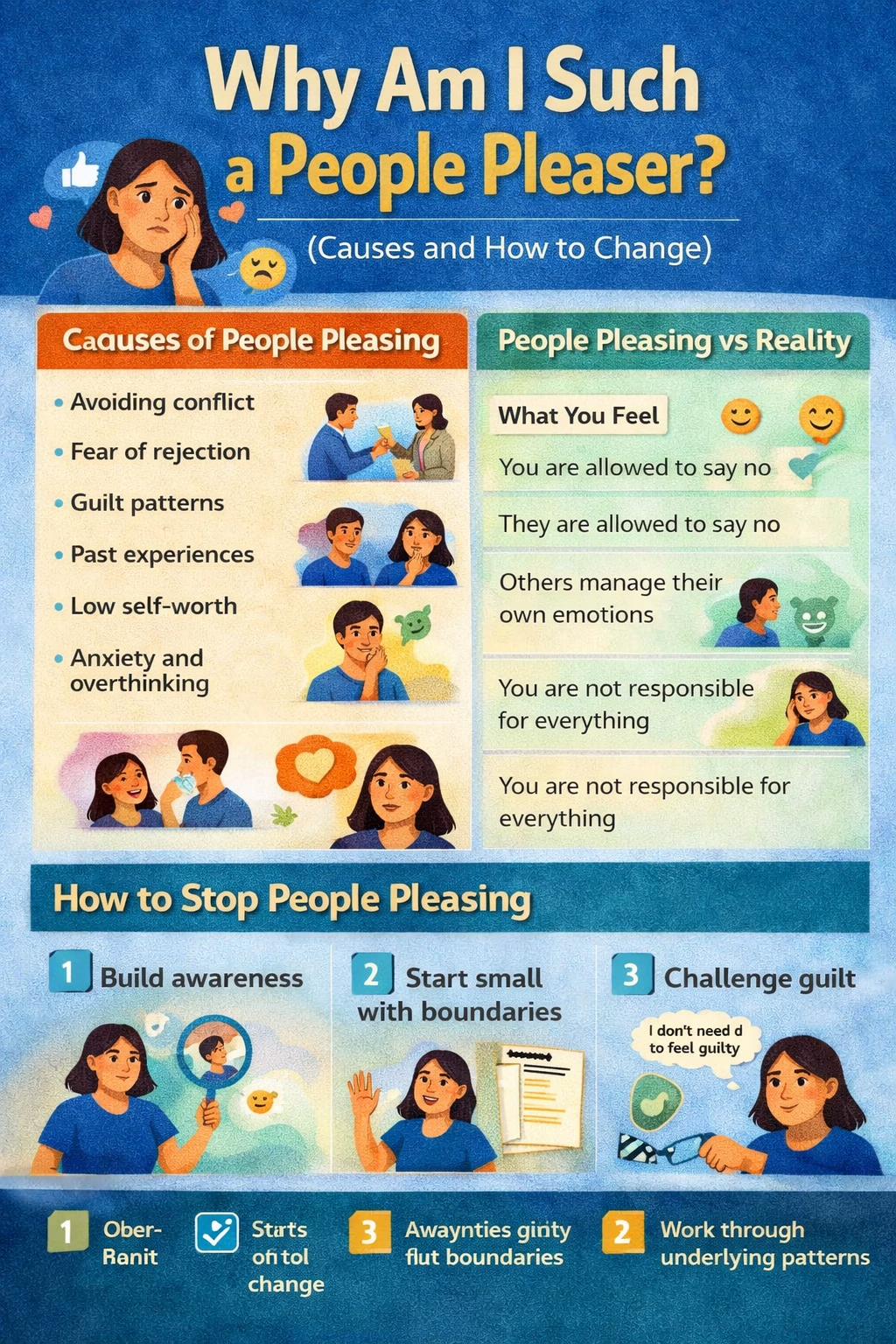
If you’ve ever caught yourself agreeing to something you didn’t want to do, apologizing for things that weren’t your fault, or feeling responsible for everyone’s comfort in a room — and wondered why you can’t seem to stop — you’re asking exactly the right question. People pleasing is not a personality type you were born with. It is a learned pattern, shaped by specific experiences, that made perfect sense at the time it developed. Understanding why you became a people pleaser is the foundation for changing it.
Why People Pleasing Develops: Root Causes
✓ Emotionally volatile or unpredictable parent
✓ Parentification — caretaking adult roles
✓ Abuse or neglect requiring constant vigilance
✓ Being rewarded for being “good” and agreeable
✓ Chronic guilt when disappointing others
✓ Difficulty knowing what you actually want
✓ Resentment that builds under the surface
✓ Exhaustion from constant emotional labor
Feel free to share or embed this infographic with credit to darinkingcounselingllc.com
People Pleasing Is a Survival Strategy — Not a Personality Flaw
The single most important thing to understand about people pleasing is that it is not a character weakness. It is a survival strategy — a response pattern the nervous system learned, often very early in life, to maintain safety and connection in an environment where those things felt conditional or threatened.
The Substance Abuse and Mental Health Services Administration recognizes people pleasing — or the “fawn” response — as one of four primary trauma responses alongside fight, flight, and freeze. It develops in environments where fighting, fleeing, or shutting down are not available options, and where appeasing the source of threat is the most viable path to safety. Understanding this reframe — from “I am a people pleaser” to “I learned to people please” — is the beginning of genuine change.
Key insight: You didn’t become a people pleaser because something is wrong with you. You became a people pleaser because something was wrong in your environment — and your nervous system adapted brilliantly. The adaptation that once protected you is now limiting you. And it can change.
Why You Became a People Pleaser: The Most Common Causes
Conditional Love and Conditional Approval
When parental love or approval was tied to behavior — to being agreeable, helpful, compliant, or emotionally low-maintenance — the child learns a fundamental equation: I am loved when I please. I am at risk when I don’t. This equation becomes the operating system for relationships going forward. Seeking approval and avoiding disapproval become primary motivators because they were once genuinely connected to safety and belonging.
An Emotionally Volatile or Unpredictable Parent
Children who grew up with parents whose moods were unpredictable — who could be warm one moment and explosive or cold the next — learned to monitor and manage the parent’s emotional state as a survival skill. Reading the room, anticipating needs, staying small, and keeping the peace were not optional — they were the daily work of navigating an unpredictable emotional environment. Read more about dysfunctional family systems.
Parentification
In some families, children take on adult emotional or practical responsibilities — managing a parent’s mental health, mediating parental conflict, or serving as the primary emotional confidant for a parent. This parentification installs a deep sense of responsibility for others’ wellbeing that persists long after childhood. The parentified child becomes the adult who cannot see someone struggling without feeling compelled to fix it. Read more about signs of childhood trauma in adults.
Abuse, Neglect, or Chronic Criticism
Children who experienced abuse, neglect, or chronic criticism often learn that making themselves small, agreeable, and undemanding reduces the likelihood of harm. People pleasing in this context is genuine self-protection — an intelligent strategy for minimizing threat in a dangerous environment. The CDC’s ACE research consistently demonstrates the lasting behavioral effects of childhood adversity, including exactly these kinds of adaptive responses.
Being Rewarded for Being “Good”
Some people develop people pleasing not from overtly difficult environments but from environments where being agreeable, helpful, and self-effacing was consistently praised and rewarded. The “good girl” or “good boy” who never caused trouble, always helped, and never complained received approval and warmth — and learned to maintain that role as the primary strategy for belonging.
Abandonment Fear
People with abandonment trauma often people please as a strategy to prevent being left. If I am indispensable — if I give enough, help enough, ask for little enough — they won’t leave. The people pleasing is driven by the terror of loss rather than the desire to be kind, and it never fully quiets the underlying fear because approval and continued presence are never permanently secured by any amount of giving.
Cultural and Gender Conditioning
Cultural messaging — particularly for women — consistently equates agreeableness, self-sacrifice, and emotional caretaking with virtue. This cultural conditioning amplifies individual psychological tendencies toward people pleasing, making it harder to recognize as a problem rather than a virtue. People pleasing dressed as kindness is still people pleasing.
The Hidden Costs of People Pleasing
| People Pleasing Behavior | Hidden Cost |
|---|---|
| Always saying yes | Chronic resentment and depletion |
| Making yourself small | Loss of authentic self and identity |
| Taking responsibility for others’ feelings | Exhaustion and chronic anxiety |
| Avoiding conflict at all costs | Unresolved issues that fester and accumulate |
| Seeking external validation | Fragile self-worth dependent on others’ approval |
| Difficulty identifying own needs | Disconnection from self — not knowing what you want |
How People Pleasing Connects to Other Patterns
People pleasing rarely exists in isolation. It is closely connected to:
- Chronic guilt — the internal enforcer that punishes any deviation from pleasing others
- Toxic shame — the deeper belief that you are not enough, which drives the compulsive proving through giving
- Abandonment trauma — the fear that drives the people-pleasing as a prevention strategy
- Trauma bonding — where people pleasing becomes entangled with an abusive attachment
- Generational trauma — people-pleasing patterns passed down through family systems
How to Change It
Changing people pleasing requires both practical skill-building and deeper therapeutic work. For the practical steps — how to say no, how to tolerate the discomfort, how to reconnect with your own needs — see our guide on how to stop being a people pleaser.
For the deeper work — addressing the root experiences that installed the pattern — trauma-focused therapy is most effective:
- EMDR therapy — processes the specific memories that taught the nervous system that safety depended on pleasing others
- IFS therapy — works directly with the people-pleasing part, understanding what it protects and helping it find safety
- Trauma counseling in Pennsylvania — available via telehealth statewide
The National Institute of Mental Health recognizes that trauma-related patterns — including fawn responses like people pleasing — respond well to evidence-based trauma treatment. Change is possible, and it happens at a deeper level than willpower.
Related reading: Our guides on signs of a people pleaser, how to stop being a people pleaser, what people pleasing is, and abandonment trauma in relationships complete the picture of why people pleasing develops and how to heal it.
Frequently Asked Questions
Why am I such a people pleaser?
People pleasing develops as a survival response — most commonly in childhood environments where love was conditional, a parent’s mood was unpredictable, or being agreeable reduced the likelihood of harm. It is not a personality flaw — it is a learned adaptation. Read more about what people pleasing is and signs of childhood trauma in adults.
Is people pleasing a trauma response?
Yes — people pleasing is the fawn trauma response, one of four primary responses to threat alongside fight, flight, and freeze. Understanding it as a trauma response rather than a character trait is an important reframe. Read more about what trauma is and how it shows up in daily life.
Can people pleasers change?
Yes — people pleasing is a learned pattern, not a fixed trait. Change requires practical skill-building and deeper therapeutic work addressing root experiences. See our complete guide on how to stop being a people pleaser.
What is the difference between being kind and being a people pleaser?
Genuine kindness is freely chosen from authentic care. People pleasing is driven by fear of rejection or abandonment — prioritizing others at the expense of yourself. The key distinction is internal: are you giving because you want to, or because you’re afraid of what happens if you don’t?
Does therapy help with people pleasing?
EMDR therapy processes the memories that installed the survival pattern. IFS therapy works directly with the people-pleasing part. Many people see meaningful shifts within months of consistent work. Telehealth therapy makes that support accessible from anywhere in Pennsylvania.
You learned to put yourself last. You can learn something different.
Darin King, LPC specializes in trauma, people pleasing, and identity healing in Pennsylvania. Telehealth available statewide.
See more from Darin King Counseling on Google