

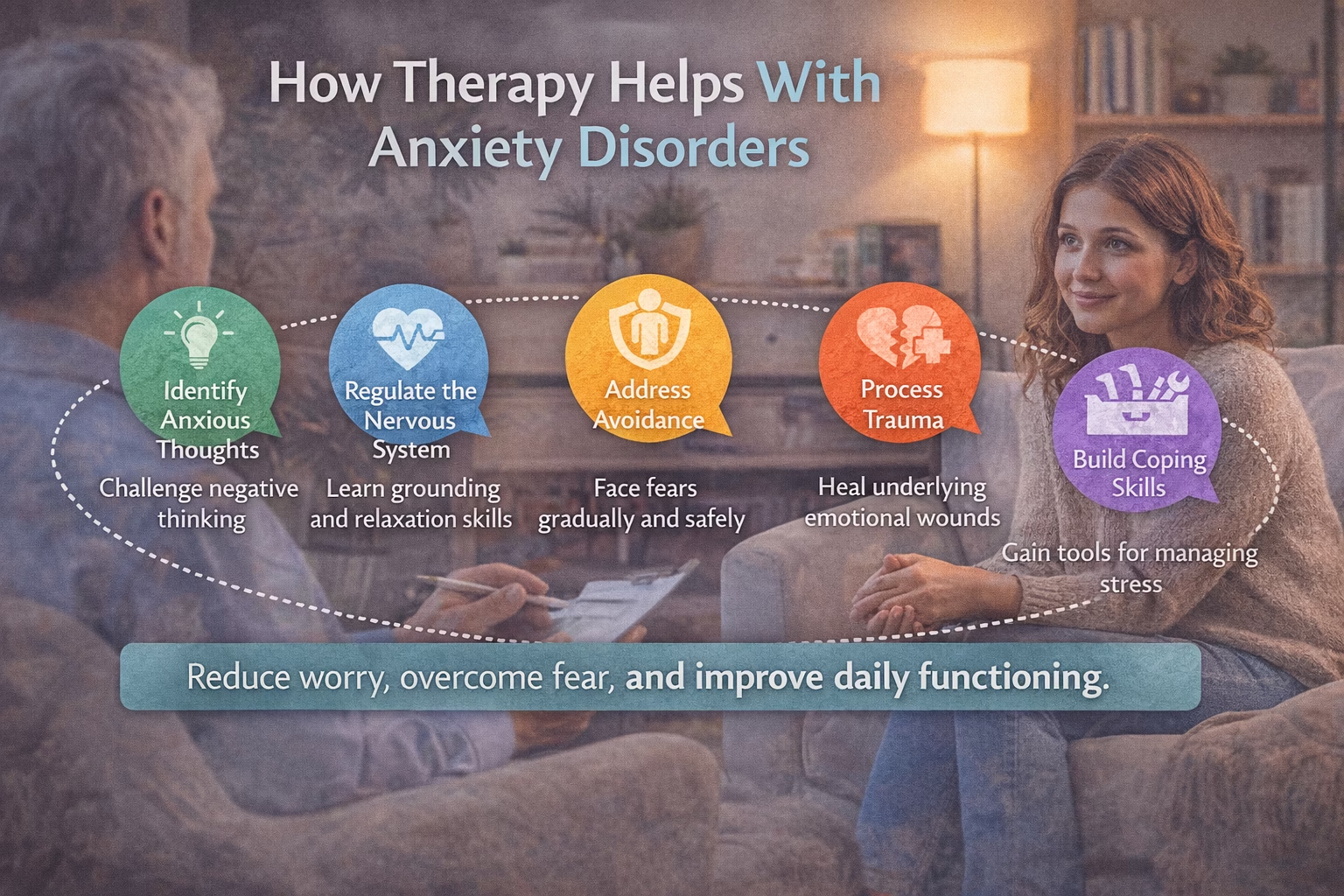
Anxiety is one of the most common reasons people seek therapy — and one of the most responsive to it. But not all therapy for anxiety is the same, and understanding how therapy actually helps — what it’s doing in your brain and nervous system, not just in your thinking — can significantly increase both your confidence in the process and your ability to engage with it effectively.
This guide explains how therapy helps with anxiety disorders, which approaches have the strongest evidence, and what you can expect from the process.
How Therapy Helps With Anxiety: What Changes
✓ Prefrontal cortex regulation — better top-down control
✓ Nervous system baseline — wider window of tolerance
✓ Thought patterns that fuel anxiety
✓ Avoidance behaviors that maintain anxiety
✓ Work instantly — change takes time
✓ Require you to relive trauma in detail
✓ Give advice or tell you what to do
✓ Replace medication when medication is needed
Feel free to share or embed this infographic with credit to darinkingcounselingllc.com
Why Anxiety Needs More Than Willpower
One of the most important things to understand about anxiety disorders is that they are not primarily a thinking problem — they are a nervous system problem. The National Institute of Mental Health estimates that anxiety disorders affect nearly 19% of American adults and recognizes them as among the most common and most treatable mental health conditions.
Anxiety disorders involve a nervous system that is chronically over-activated — an amygdala that fires too easily, a prefrontal cortex that struggles to regulate it, and a stress response system that has difficulty returning to baseline. Simply deciding to worry less or telling yourself that your fears are irrational doesn’t change these underlying neurological patterns. Therapy does — because effective therapy works at the neurological level, not just the cognitive one. Read more about how the nervous system affects mental health.
Key point: Effective therapy for anxiety doesn’t just teach you to think differently about anxiety — it changes the nervous system patterns that produce anxiety in the first place. This is why therapy produces lasting change while willpower and reassurance-seeking typically don’t.
How Different Therapy Approaches Help With Anxiety
Cognitive Behavioral Therapy (CBT)
CBT is one of the most extensively researched treatments for anxiety disorders. It addresses two core drivers of anxiety: distorted thinking patterns that fuel anxious interpretation of situations, and avoidance behaviors that maintain anxiety by preventing the nervous system from learning that feared situations are manageable.
CBT for anxiety typically involves:
- Identifying anxious thought patterns — catastrophizing, all-or-nothing thinking, fortune-telling
- Challenging these patterns with evidence and more balanced perspectives
- Gradual exposure to feared situations — helping the nervous system learn that anxiety is tolerable and situations are survivable
- Building a toolkit of coping strategies for managing anxiety in the moment
EMDR Therapy
When anxiety has roots in trauma — which is very common — EMDR therapy addresses the traumatic memories driving the chronic nervous system activation. By processing these memories neurologically, EMDR reduces the amygdala’s alarm response and helps the nervous system find a more regulated baseline. Read more about how EMDR therapy works.
The World Health Organization recommends EMDR as a first-line treatment for trauma-related conditions — including trauma-driven anxiety.
DBT (Dialectical Behavior Therapy)
DBT therapy provides a comprehensive set of practical skills for managing intense emotions including anxiety. DBT skills for anxiety include distress tolerance techniques, mindfulness practices, and emotional regulation strategies — all grounded in evidence and designed for practical daily use.
IFS (Internal Family Systems)
IFS therapy approaches anxiety as a protective part of the system — understanding what the anxious part is trying to protect against and helping it find safety rather than needing to run the system through hypervigilance. This approach is particularly effective when anxiety is connected to shame, trauma, or deep-seated beliefs about safety and worth.
Trauma-Focused Therapy
When anxiety is driven by unresolved trauma — which is far more common than most people realize — trauma counseling addresses the root cause directly. Treating the trauma typically produces significant improvement in anxiety as a downstream effect.
What Therapy Does in the Brain and Nervous System
Effective therapy for anxiety produces measurable neurological changes:
| Brain/Nervous System Change | What It Means for Anxiety |
|---|---|
| Reduced amygdala reactivity | The alarm fires less easily — less reactive to triggers |
| Increased prefrontal cortex regulation | Better ability to assess threat accurately and regulate emotional response |
| Improved HPA axis regulation | Stress hormone system returns to baseline more readily |
| Increased vagal tone | Parasympathetic system more accessible — easier to calm down |
| Fear extinction learning | The nervous system learns that feared situations are survivable |
Read more about how trauma affects the nervous system and cortisol and the stress response for deeper context.
What to Expect From Therapy for Anxiety
Early Sessions
The first few sessions typically focus on assessment — understanding your specific anxiety presentation, its history, and what drives it. Your therapist will help you identify the specific patterns, triggers, and underlying factors that are most relevant for your treatment. This assessment phase is essential to tailoring the approach to your specific needs.
Building Skills and Awareness
Early treatment often includes building a foundation of coping and regulation skills — tools you can use between sessions to manage anxiety when it arises. These might include breathing techniques, grounding practices, and cognitive strategies. See our guide on nervous system reset techniques.
Addressing the Roots
As treatment progresses, the work moves deeper — addressing the underlying patterns, beliefs, and experiences that are driving the anxiety. This is where the most lasting change happens.
Integration and Maintenance
Later in treatment, the focus shifts to consolidating gains, building resilience, and developing a sustainable approach to managing anxiety long-term. Many people also develop a plan for how to respond if anxiety increases during particularly stressful periods.
Note: The Substance Abuse and Mental Health Services Administration recognizes anxiety disorders as among the most treatable mental health conditions — with the majority of people experiencing significant improvement with appropriate treatment. Telehealth therapy makes this treatment accessible from anywhere in Pennsylvania.
Anxiety Counseling at Darin King Counseling
Anxiety counseling in Pittsburgh is available via telehealth across Pennsylvania. Whether your anxiety is generalized, trauma-driven, social, or connected to specific life circumstances, we offer evidence-based approaches tailored to your specific presentation — including EMDR, IFS, DBT, and trauma-focused therapy.
Related reading: Our guides on anxiety vs panic attacks, trauma and panic attacks, nervous system reset techniques, and how trauma affects the nervous system provide important context for understanding anxiety and how therapy addresses it.
Frequently Asked Questions
How does therapy help with anxiety?
Therapy helps by addressing both the cognitive patterns that fuel anxious thinking and the nervous system dysregulation that produces anxiety symptoms. Effective therapy reduces amygdala reactivity, improves prefrontal cortex regulation, and helps the nervous system develop a more regulated baseline. Read more about how the nervous system affects mental health.
How long does therapy take to help with anxiety?
Many people notice meaningful improvement within 8-12 sessions. For anxiety with deeper roots in trauma, meaningful improvement typically takes longer but is consistently achievable. Most people experience significant reduction within 3-6 months of consistent work.
Is therapy or medication better for anxiety?
Both are effective and work through different mechanisms. Research generally supports that therapy produces more lasting change by addressing underlying patterns. For many people, a combination produces the best outcomes — particularly early in treatment when anxiety is most severe.
What type of therapy is best for anxiety?
It depends on what’s driving the anxiety. CBT has the strongest general research base. EMDR is particularly effective when anxiety has trauma roots. DBT provides powerful practical skills. Anxiety counseling with a trauma-informed therapist can help determine the right fit.
Can anxiety be cured with therapy?
Many people achieve significant and lasting reduction through therapy — to the point where anxiety no longer significantly impacts daily life. The goal is not to eliminate all anxiety — some is healthy — but to reduce it to a proportionate and manageable level. Telehealth therapy makes this support accessible from anywhere in Pennsylvania.
Anxiety is one of the most treatable conditions there is. The right therapy changes everything.
Darin King, LPC specializes in anxiety, trauma, and nervous system healing in Pennsylvania. Telehealth available statewide.
See more from Darin King Counseling on Google