

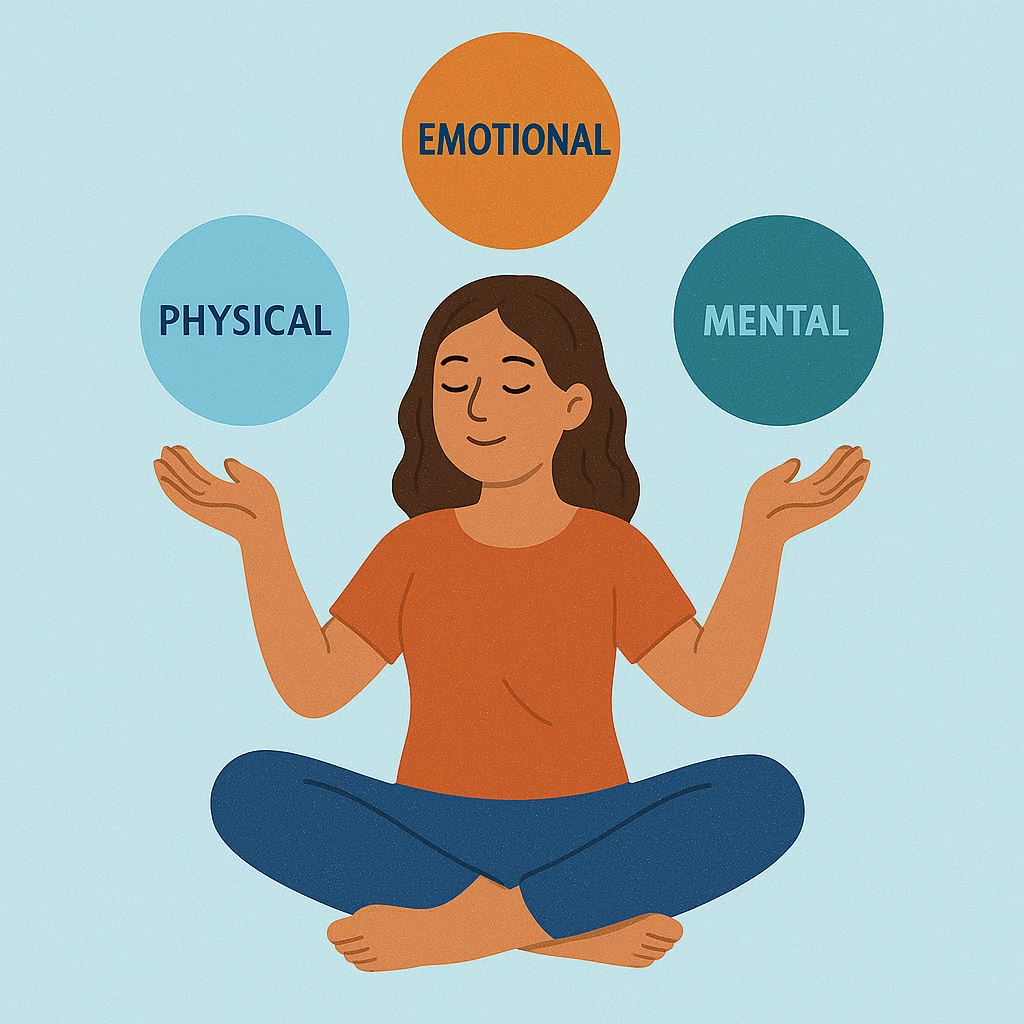
Most people approach health in segments — physical health is what you do at the gym and the doctor’s office, mental health is a separate concern addressed by therapy or medication, and emotional health is something that just happens on its own. But this fragmented approach misses something essential: physical, mental, and emotional health are not separate systems running in parallel. They are deeply interconnected dimensions of a single integrated whole — and real, lasting wellbeing requires attending to all three together.
This guide explains how physical, mental, and emotional health are connected, what happens when any one dimension is neglected, and practical steps for creating genuine balance across all three.
The Three Dimensions of Holistic Health
✓ Stress resilience — physical health supports nervous system regulation
✓ Cognitive function — nutrition and sleep affect thinking
✓ Energy for emotional processing
✓ Immune function — chronic stress suppresses immunity
✓ Immune function — chronic psychological stress suppresses immunity
✓ Chronic pain — trauma is stored in the body
✓ Cardiovascular health — stress affects heart health
✓ Recovery from illness — mental state affects healing
Feel free to share or embed this infographic with credit to darinkingcounselingllc.com
Why Physical, Mental, and Emotional Health Are Inseparable
The separation of physical and mental health is a relatively recent cultural convention — and one that doesn’t reflect biological reality. The body and mind are not separate systems; they are different expressions of the same integrated organism. The World Health Organization defines health as “a state of complete physical, mental and social well-being and not merely the absence of disease or infirmity” — explicitly recognizing that health is inherently multidimensional.
The evidence for this integration is now extensive:
- Chronic psychological stress produces measurable physical health effects — including immune suppression, cardiovascular disease risk, and chronic pain
- Physical health behaviors — sleep, exercise, nutrition — directly affect mood, anxiety, and cognitive function
- Unresolved trauma is stored in the body and produces somatic symptoms. Read about how trauma affects the nervous system
- The gut-brain connection means that digestive health affects mental health and vice versa
- Social connection — a dimension of emotional health — is one of the strongest predictors of physical health and longevity
The CDC’s ACE research powerfully demonstrates this integration — showing that adverse childhood experiences (a psychological and emotional category of experience) produce dramatically elevated rates of physical health conditions including heart disease, diabetes, and cancer across the lifespan.
Key insight: You cannot achieve optimal physical health while neglecting mental and emotional health. You cannot achieve optimal mental health while neglecting physical health. True wellbeing requires attending to all three dimensions — not sequentially, but simultaneously and with an understanding of how they interact.
The Physical Dimension: What Your Body Needs
Sleep
Sleep is perhaps the single most important physical health behavior for mental and emotional wellbeing. During sleep the brain consolidates memories, regulates emotion, clears metabolic waste, and restores regulatory capacity. Chronic sleep deprivation produces effects on mood, anxiety, cognitive function, and emotional regulation that closely resemble those of clinical depression and anxiety. Read more about nervous system reset techniques that support better sleep.
Movement
Regular physical movement is one of the most evidence-based interventions for depression and anxiety available — with effects comparable to antidepressant medication for mild to moderate depression. Movement regulates cortisol, increases BDNF (which supports neuroplasticity), and directly supports nervous system regulation. Read more about cortisol and the stress response.
Nutrition
What you eat affects brain chemistry, inflammation, energy, and mood. The gut-brain connection — mediated by the vagus nerve and gut microbiome — means that gut health directly affects mental health. Diets high in processed foods and low in whole foods are associated with significantly higher rates of depression and anxiety.
Nervous System Regulation
Physical practices that directly support nervous system regulation — breathing techniques, cold exposure, rhythmic movement, adequate rest — are foundational physical health behaviors that have direct mental and emotional health effects. Read our complete guide on how the nervous system affects mental health.
The Mental Dimension: What Your Mind Needs
Accurate Thinking
Our mental health is significantly shaped by the quality of our thinking — not in a positive-thinking sense, but in the sense of whether our thoughts accurately reflect reality. Cognitive distortions — catastrophizing, black-and-white thinking, mind-reading — amplify anxiety and depression significantly. Developing the capacity to notice and challenge these patterns is a core mental health skill.
Meaningful Engagement
The mind thrives on meaningful engagement — work, creativity, learning, purpose. Chronic understimulation or meaningless activity depletes mental health just as surely as chronic stress does. Identifying and investing in what genuinely matters to you is not a luxury — it is a mental health requirement.
Managing Stress Proactively
Chronic stress produces lasting changes in the brain — including hippocampal shrinkage and increased amygdala reactivity — that compound over time. Proactive stress management is not just about feeling better in the moment. It is about protecting brain health over the long term. Read more about how chronic stress affects the nervous system.
Addressing Unresolved Trauma and Mental Health Conditions
Untreated trauma, anxiety, depression, and other mental health conditions don’t resolve on their own — and they actively undermine physical and emotional health while they persist. Professional treatment through trauma counseling, anxiety counseling, or EMDR therapy is not separate from holistic health — it is an essential component of it.
The Emotional Dimension: What Your Heart Needs
Emotional Awareness and Literacy
Emotional health begins with the ability to notice and name what you are feeling — not to perform emotions or to be controlled by them, but to be in genuine relationship with your own emotional experience. Many people — particularly those with trauma histories — have significant disconnection from their emotional lives. Therapy is one of the most powerful tools for rebuilding this connection. Read about what dissociation feels like.
Emotional Expression and Processing
Emotions that are suppressed don’t disappear — they are stored, often in the body, and tend to emerge in other forms — physical symptoms, behavioral patterns, or eventually in flooding when the capacity to suppress is overwhelmed. Creating safe contexts for emotional expression and processing — in therapy, in trusted relationships, in creative practice — is an emotional health essential.
Healthy Relationships and Connection
Human beings are fundamentally social creatures — the nervous system co-regulates through safe connection with others. Isolation, loneliness, and chronically conflictual relationships are significant emotional health risks. Investing in relationships — including addressing the patterns that create difficulty in relationships — is investing in emotional health. Read more about abandonment trauma in relationships.
Self-Compassion
The quality of your relationship with yourself — how you speak to yourself, how you respond to your own failures and struggles — is one of the most significant and most neglected dimensions of emotional health. Chronic self-criticism, shame, and the inner critic are significant mental health burdens that therapy addresses directly. Read more about shame vs guilt.
| Dimension | Core Needs | What Neglecting It Produces |
|---|---|---|
| Physical | Sleep, movement, nutrition, nervous system regulation | Mood disruption, cognitive impairment, immune suppression, chronic disease |
| Mental | Accurate thinking, meaningful engagement, stress management, treating mental health conditions | Anxiety, depression, cognitive distortions compounding, untreated conditions worsening |
| Emotional | Emotional awareness, expression and processing, healthy relationships, self-compassion | Suppression leading to somatic symptoms, relational difficulties, shame and disconnection from self |
How Holistic Health Counseling Helps
Holistic health counseling addresses all three dimensions simultaneously — recognizing that what happens in any one affects all the others, and that lasting wellbeing requires an integrated approach. At Darin King Counseling, this means:
- Addressing the trauma and nervous system dysregulation that underlies physical and mental health difficulties — through EMDR therapy and trauma-focused counseling
- Supporting nervous system regulation through practical tools and skills — read our guide on nervous system reset techniques
- Addressing the emotional patterns — shame, people pleasing, chronic guilt — that undermine emotional and relational health
- Supporting the development of healthier physical health behaviors by addressing the mental and emotional barriers to them
Note: The Substance Abuse and Mental Health Services Administration emphasizes that whole-person care — addressing physical, mental, and emotional health as an integrated system — is the gold standard of effective mental health treatment. This is not alternative medicine. It is evidence-based, integrated care that reflects what the science actually shows about how human health works.
Related reading: Our guides on how trauma affects the nervous system, the nervous system and mental health, cortisol and trauma, and nervous system reset techniques provide the neuroscience foundation for understanding integrated health.
Frequently Asked Questions
How are physical, mental, and emotional health connected?
They are deeply interconnected dimensions of a single integrated system. Chronic stress produces physical health effects. Sleep and exercise affect mood. Unresolved trauma is stored in the body. Social connection affects both mental and physical health. True wellbeing requires attending to all three together. Read more about how trauma affects the nervous system.
What is holistic health counseling?
Holistic health counseling addresses physical, mental, and emotional health as an integrated system — recognizing that what happens in any one dimension affects the others. It includes trauma therapy, nervous system regulation, emotional pattern work, and support for physical health behaviors. Learn more about our trauma counseling and telehealth therapy services.
How does trauma affect physical health?
Trauma produces lasting changes in the nervous system, hormonal system, and immune system. The CDC’s ACE research demonstrates that adverse childhood experiences significantly elevate the risk of cardiovascular disease, diabetes, chronic pain, and immune disorders. Trauma is a whole-body experience. Read more about cortisol and trauma.
What are the most important things I can do for my mental health?
The most evidence-based behaviors include consistent sleep, regular movement, addressing unresolved trauma through therapy, supportive relationships, emotional awareness, and proactive stress management. No single behavior is sufficient — mental health is maintained by multiple consistent practices. See our guide on nervous system reset techniques.
Can therapy help with physical health symptoms?
Yes — particularly when physical symptoms are connected to trauma, chronic stress, or nervous system dysregulation. EMDR therapy and trauma-focused therapy often produce meaningful improvement in physical symptoms including chronic pain, fatigue, and digestive issues alongside mental health benefits.
Whole-person health starts with understanding the whole picture. Let’s build it together.
Darin King, LPC specializes in integrated trauma, anxiety, and holistic health counseling in Pennsylvania. Telehealth available statewide.
See more from Darin King Counseling on Google