

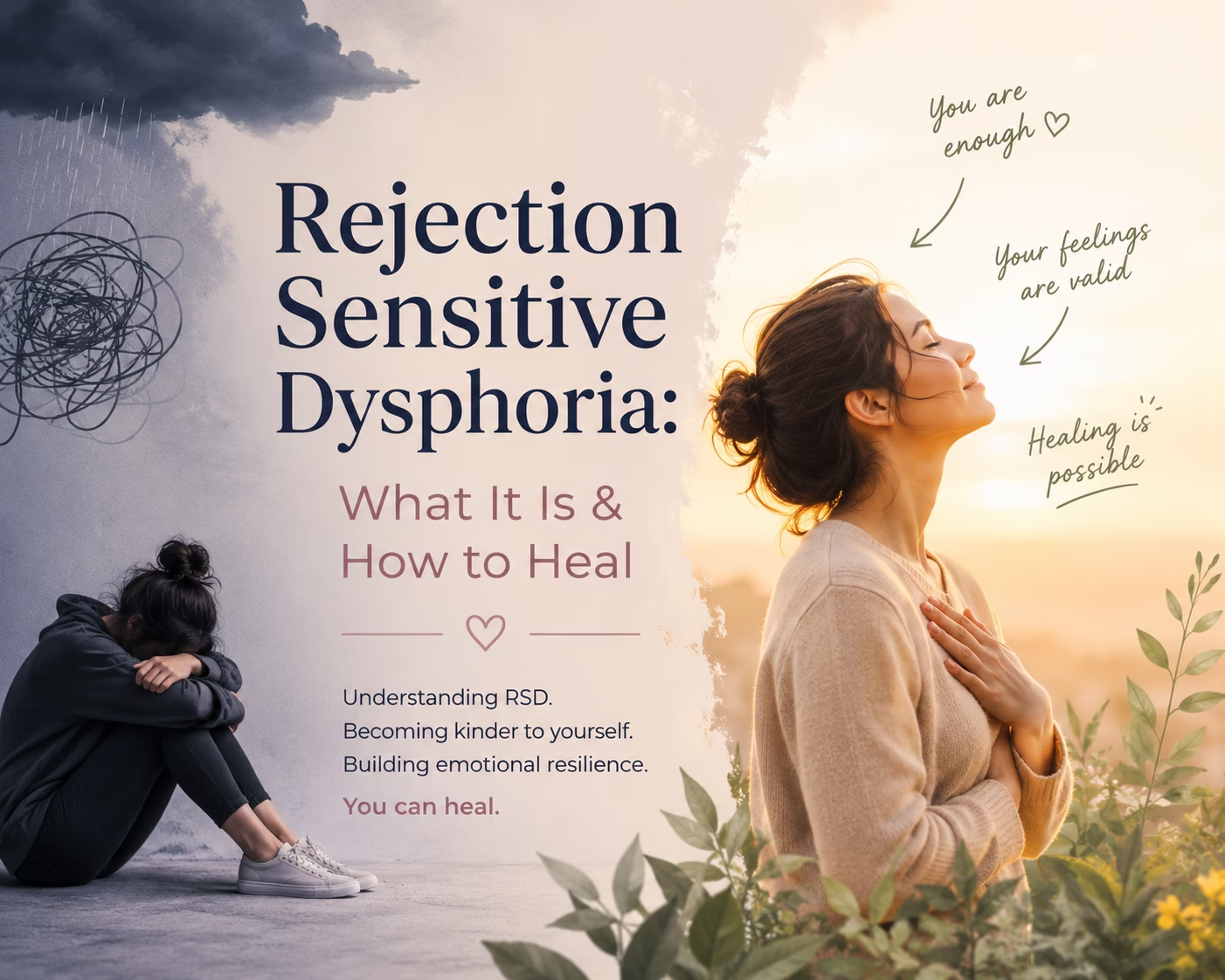
Rejection sensitive dysphoria — usually shortened to RSD — describes an intense, painful emotional reaction to real or perceived rejection, criticism, or failure. The pain is not metaphorical. People living with RSD often describe it as a sudden physical wave that can feel unbearable, disproportionate to the trigger, and impossible to think their way out of in the moment. The term is most strongly associated with ADHD, though many people without an ADHD diagnosis recognize the experience as well. Understanding what RSD is — and what it isn’t — changes how you respond to your own reactions and how you ask for support.
In my work with clients, the moment of naming RSD often produces a kind of relief that goes beyond intellectual understanding. People who have spent years calling themselves “too sensitive,” “dramatic,” or “overreactive” suddenly have a framework that fits. The pattern is not a character flaw. It is a specific kind of nervous-system reactivity that can be worked with — though usually not by trying harder to be less sensitive.
Rejection Sensitive Dysphoria at a Glance
What it is, where it shows up, and what helps
What it feels like
- Sudden, intense emotional pain in response to perceived rejection
- Physical wave that hits within seconds
- Disproportionate to the actual trigger
- Hard to think clearly during the reaction
- Can last minutes, hours, or longer
Common triggers
- Criticism, even constructive or minor
- Perceived withdrawal by someone close
- Not being included or invited
- Making a mistake in front of others
- A delayed text or unanswered message
- Feedback at work or school
How it shows up
- Rage that comes from nowhere
- Sudden collapse into shame or despair
- Withdrawal and shutdown
- Perfectionism to avoid possible rejection
- People-pleasing to prevent disapproval
- Avoidance of situations that risk it
What helps
- Naming the pattern in real time
- Nervous-system regulation in the moment
- Therapy that addresses attachment and trauma roots
- ADHD-informed support if ADHD is present
- Building the pause between trigger and response
- Compassionate self-understanding
Feel free to share or embed this infographic with credit to darinkingcounselingllc.com
What Is Rejection Sensitive Dysphoria?
Rejection sensitive dysphoria is a term coined by Dr. William Dodson, a psychiatrist who has spent decades working with adults with ADHD. The word dysphoria comes from Greek and roughly translates to “hard to bear” — and that is exactly the felt experience. RSD describes a sudden, intense emotional pain triggered by real or perceived rejection, criticism, failure, or disapproval. The pain often arrives within seconds of the trigger and can feel physically overwhelming, even when the rational mind recognizes the response as disproportionate.
It is worth being precise about what RSD is and is not in the formal clinical literature. RSD is not a diagnosis listed in the DSM-5. It is a clinical observation, popularized within the ADHD community by clinicians like Dr. Dodson and resources like CHADD and ADDitude. Some researchers debate whether RSD is best understood as a distinct phenomenon or as a feature of broader emotional dysregulation, which is well-documented in ADHD. What is not in doubt is that the experience itself is real, common, and significantly impairing for many people.
What RSD Actually Feels Like From the Inside
People who experience RSD describe it in remarkably similar ways across very different lives. The descriptions tend to involve speed, intensity, and physicality:
- A sudden, almost physical wave that arrives in seconds — “like being punched in the chest”
- An immediate sense that something has gone very wrong, even before the conscious mind has named the trigger
- Thoughts that spiral fast — “they hate me, I’m a failure, I should not have spoken, I always do this”
- A felt urge to either lash out (anger, defensiveness, attacking) or collapse (withdrawal, shame, hiding)
- Difficulty thinking clearly, hearing the other person, or considering alternative interpretations
- A residue that can linger for hours or days, sometimes affecting sleep, appetite, and concentration
The trigger is often something objectively small — a slightly cool tone in a text, a minor critique at work, a friend who did not laugh at a joke, a sense of being briefly overlooked. The reaction is the dysregulation, not the trigger. This mismatch is part of why RSD is so painful and so confusing, both for the person experiencing it and for the people around them.
The ADHD Connection
RSD is most strongly associated with ADHD, and there are good reasons for this. ADHD involves well-documented differences in emotional regulation. The neurological systems that help most people moderate emotional intensity — the prefrontal regulation of the limbic system, the executive function involved in pausing before reacting — are exactly the systems affected by ADHD. When intense emotions arise, the ADHD brain often has less of a brake.
For people with ADHD, RSD also frequently builds on a lifetime of accumulated experiences. People with ADHD typically grow up receiving more criticism, more negative feedback, and more rejection than their neurotypical peers — sometimes thousands of corrective messages by the time they are ten. The nervous system learns, early and often, that rejection is a likely outcome and prepares accordingly. By adulthood, the system is primed to react fast and hard to anything that registers as the beginning of another rejection.
For more on related ADHD experiences, see our post on ADHD stimming.
How RSD Shows Up in Daily Life
RSD does not just produce intense reactions to obvious rejections. It shapes a great deal of how people organize their lives, often unconsciously, to minimize the possibility of triggering the pattern.
In relationships
- Hypervigilance to a partner’s tone, mood, and responsiveness
- Sudden withdrawal or rage in response to perceived withdrawal by the partner
- Difficulty taking in critical feedback even when it is offered with care
- Either intense pursuit of reassurance or sharp shutdown when the system activates
- Persistent shame after conflicts about the intensity of one’s own reactions
At work or school
- Avoidance of situations that involve evaluation or feedback
- Perfectionism aimed at preventing any possible criticism
- Strong reactions to performance reviews or correction
- Either chronic over-functioning to prove worth or sudden collapse when things go wrong
- Difficulty hearing constructive feedback as anything other than rejection
In friendships and social life
- Tracking whether friends have reached out, who initiated last, and what it might mean
- Reading silence as rejection rather than as the friend being busy
- Avoiding social risks that might result in not being chosen
- Either intense over-investment in friendships or sudden withdrawal at the first sign of trouble
In your inner world
- An inner critic that interprets any disconnection as proof of failure
- A felt split between the self that wants to be seen and the self that fears being seen
- Chronic background anxiety in any situation that could involve evaluation
- Shame about the intensity of reactions, followed by efforts to suppress or hide them
The Two Common Coping Strategies
Most people with RSD develop one of two organizing strategies — or some combination of both — to minimize the chance of triggering the pattern. Dr. Dodson has written about these as the two paths people take, and clinical experience bears them out.
Perfectionism and over-functioning
Some people respond to RSD by trying to be perfect. If they can do everything right, they reason (often unconsciously), they cannot be criticized. The result is chronic over-functioning, intense self-pressure, and a kind of relentless drive that often gets read as ambition. The cost is exhaustion, burnout, and a felt sense that any single failure could be catastrophic. For more on this related pattern, see our post on high-functioning anxiety.
Avoidance and withdrawal
Other people respond by avoiding situations that could trigger the pattern. They stop applying for things they might not get, opt out of social events where rejection is possible, decline opportunities that involve evaluation. The result is a smaller life — fewer risks, less exposure, but also less opportunity for connection, achievement, and growth.
Many people show both patterns at once: perfectionism in domains where they feel competent, avoidance in domains where they do not. Either pattern is exhausting and ultimately insufficient. RSD finds its way through.
The Nervous-System Layer
RSD is not just an emotional pattern. It is a nervous-system reactivity pattern. When the trigger lands, the autonomic nervous system shifts rapidly — usually into sympathetic activation (anxiety, anger, racing thoughts) or rapidly into dorsal vagal shutdown (collapse, withdrawal, numbness). The thinking brain narrows. The capacity for nuanced interpretation reduces. The body responds before the conscious mind has caught up.
This is why advice like “just don’t take it personally” or “they probably didn’t mean it that way” rarely helps in the moment. The system is already activated. The rational reframe arrives too late. For the broader framework, see our posts on window of tolerance and polyvagal theory explained simply.
Understanding RSD at the nervous-system level changes the approach. The work is not just cognitive. It involves building the pause between trigger and response, learning to regulate the nervous system before engaging the situation, and over time, reducing the underlying reactivity itself.
The Overlap With Attachment, Trauma, and Emotional Neglect
RSD rarely shows up in isolation. It commonly co-occurs with anxious attachment patterns, complex trauma history, and a background of emotional neglect — sometimes alongside ADHD, sometimes not.
The mechanisms overlap meaningfully. Anxious attachment shapes a nervous system that monitors connection closely and reads withdrawal as threat. Emotional neglect produces a child who learned to scan for approval and never quite felt enough. Trauma history leaves the nervous system more easily destabilized. Each of these conditions independently predicts the kind of intense reactivity to perceived rejection that RSD describes.
For people with RSD plus these other patterns, working on RSD alone misses the deeper structure. The most effective work usually addresses the underlying attachment, trauma, and emotional regulation patterns together. See our posts on anxious attachment style, emotional neglect, and abandonment issues for related frameworks.
What Doesn’t Work
- Trying to suppress the response. RSD operates faster than conscious decision. Telling yourself to stop reacting does not stop the wave. It just adds shame.
- Reframing in the moment. Cognitive reframing is useful but typically arrives too late once the reaction has already activated. It works better as preparation than as in-the-moment intervention.
- Avoiding all situations that could trigger it. The avoidance strategy shrinks life without addressing the underlying pattern. The system stays just as reactive — it just gets fewer chances to activate.
- Asking others to never criticize you. The trigger is often imagined or perceived rather than actually delivered. The pattern operates regardless of how careful the people around you are.
- Generic talk therapy that does not address nervous-system reactivity or underlying attachment patterns. Insight alone rarely changes RSD. The work has to reach the body and the original templates.
What Actually Helps
Naming the pattern in real time
The most useful skill is the capacity to notice, mid-wave, that what is happening is an RSD response — not a clear perception of reality. This does not stop the wave. It does create a small pause between trigger and behavior. Over time, that pause expands.
Nervous-system regulation in the moment
Practices that shift nervous-system state can interrupt the wave before it consumes the next hour. Slow exhales, cold water, movement, brief contact with a regulated person — see our posts on window of tolerance and somatic therapy for specific approaches.
Therapy that addresses the underlying patterns
For most people, lasting change in RSD comes from therapy that addresses the broader picture — attachment, trauma, emotional regulation, and the specific experiences that primed the nervous system to react this way. Modalities like EMDR, IFS, and somatic work all address these layers. See our pages on EMDR therapy in Pennsylvania and IFS therapy.
ADHD-informed support when ADHD is present
If ADHD is part of the picture, ADHD-informed treatment matters. This may include medication evaluation with a prescriber, ADHD coaching, and therapy with a clinician who understands how ADHD shapes emotional regulation. Treating the underlying ADHD often reduces RSD intensity meaningfully.
Compassionate self-understanding
Years of being called too sensitive, dramatic, or overreactive leave a residue. Part of the work is shifting the inner relationship to the pattern — moving from shame about reactivity to recognition of what the nervous system has been carrying. This is not self-indulgence. It is the precondition for actual change.
Communication strategies in close relationships
When partners or close family members understand RSD, they can help by being aware of how they deliver feedback, by not personalizing the reactions, and by giving the activated person time to settle before discussing what happened. This is not about walking on eggshells. It is about working with the reality of the nervous system in the room.
What Recovery Looks Like
People often imagine that healing RSD means becoming someone who is no longer affected by rejection or criticism. That is not what changes. What changes is the size of the wave, the speed of recovery, and the capacity to act with choice rather than from full activation.
- Triggers still register, but the wave is smaller and shorter
- The pause between activation and action expands
- Recovery moves from hours or days to minutes or hours
- The inner critic softens and quiets
- Perfectionism and avoidance loosen their grip
- Difficult conversations become possible without complete dysregulation
- Feedback can be heard as information rather than as rejection
- Life expands beyond the constraints the pattern imposed
This is achievable. People develop significantly more capacity around RSD with appropriate work, often over a period of one to several years. The change is gradual but real, and it tends to compound — each piece of work makes the next piece easier.
Frequently Asked Questions
What is rejection sensitive dysphoria?
Rejection sensitive dysphoria, or RSD, is a term coined by Dr. William Dodson to describe an intense, often physical wave of emotional pain triggered by real or perceived rejection, criticism, or failure. The reaction is typically disproportionate to the trigger, arrives within seconds, and is very difficult to think through in the moment. RSD is most strongly associated with ADHD but is also commonly experienced by people with anxious attachment, complex trauma history, or significant early emotional neglect.
Is RSD an official diagnosis?
No. RSD is not currently listed as a separate diagnosis in the DSM-5. It is a clinical observation and framework that has been popularized by clinicians working with ADHD, particularly Dr. William Dodson. Some researchers consider RSD a distinct phenomenon; others view it as a particularly painful expression of the broader emotional dysregulation that is well-documented in ADHD. The framework is widely used in clinical practice because the experience it describes is common, recognizable, and significantly impairing for many people.
Do you have to have ADHD to experience RSD?
No. While RSD is most strongly associated with ADHD, the same pattern shows up in people without an ADHD diagnosis. It is particularly common in people with anxious attachment, complex trauma history, severe early emotional neglect, or some combination of these. The underlying mechanism may differ, but the felt experience often overlaps significantly. Many people without ADHD recognize themselves in descriptions of RSD.
What does an RSD episode feel like?
People who experience RSD describe a sudden, almost physical wave — sometimes compared to being punched in the chest — that arrives within seconds of the trigger. The wave is accompanied by intense thoughts spiraling fast (“they hate me, I’m a failure”), a strong urge to either lash out or collapse, and significant difficulty thinking clearly or considering alternative interpretations. The residue can last hours or days, sometimes affecting sleep, concentration, and appetite. The trigger itself is often objectively minor — the reaction is the dysregulation, not the situation.
How is RSD different from social anxiety?
Social anxiety typically involves a sustained anticipatory fear of social situations, evaluation, or judgment, with significant avoidance and worry before, during, and after social events. RSD is more episodic and reactive — the pattern is triggered by a specific perceived rejection or criticism, produces a sudden intense wave, and then settles (though the recovery can be long). The two can co-occur. Many people experience both. They respond to overlapping but distinct kinds of therapeutic work.
What kind of therapy helps with RSD?
Several approaches help, usually in combination. Therapy that addresses the underlying patterns — attachment, trauma, emotional regulation — tends to produce more durable change than RSD-focused work alone. EMDR can process specific early experiences that primed the nervous system to react this way. Internal Family Systems (IFS) helps with the inner parts that drive the reactivity. Somatic and nervous-system-informed approaches address the body-based component. For people with ADHD, ADHD-informed treatment including medication evaluation is often an important part of the picture. The most effective work usually integrates several approaches over time.
Can RSD be cured?
“Cured” is probably the wrong frame. What changes with focused work is the size of the wave, the speed of recovery, and the capacity to act with choice rather than from full activation. Triggers still register, but the response becomes smaller and more workable over time. Many people develop significant capacity around RSD, often over a period of one to several years, to the point where the pattern is no longer dominant in their life. The underlying sensitivity may remain — but sensitivity is not the problem. The dysregulation is.
The pain is real. So is the work that helps it.
Rejection sensitive dysphoria is one of the most quietly painful patterns to live inside — and one of the most workable with the right approach. The work involves more than learning a label. It involves addressing the nervous-system reactivity, the underlying attachment and trauma patterns, and the inner relationship to your own sensitivity.
I work with adults across Pennsylvania — including Pittsburgh, Greensburg, Irwin, and Ruffsdale — using an integrated approach that addresses RSD at the nervous-system, attachment, and trauma levels. EMDR, IFS, and somatic work are central to how I practice.
See more from Darin King Counseling on Google