

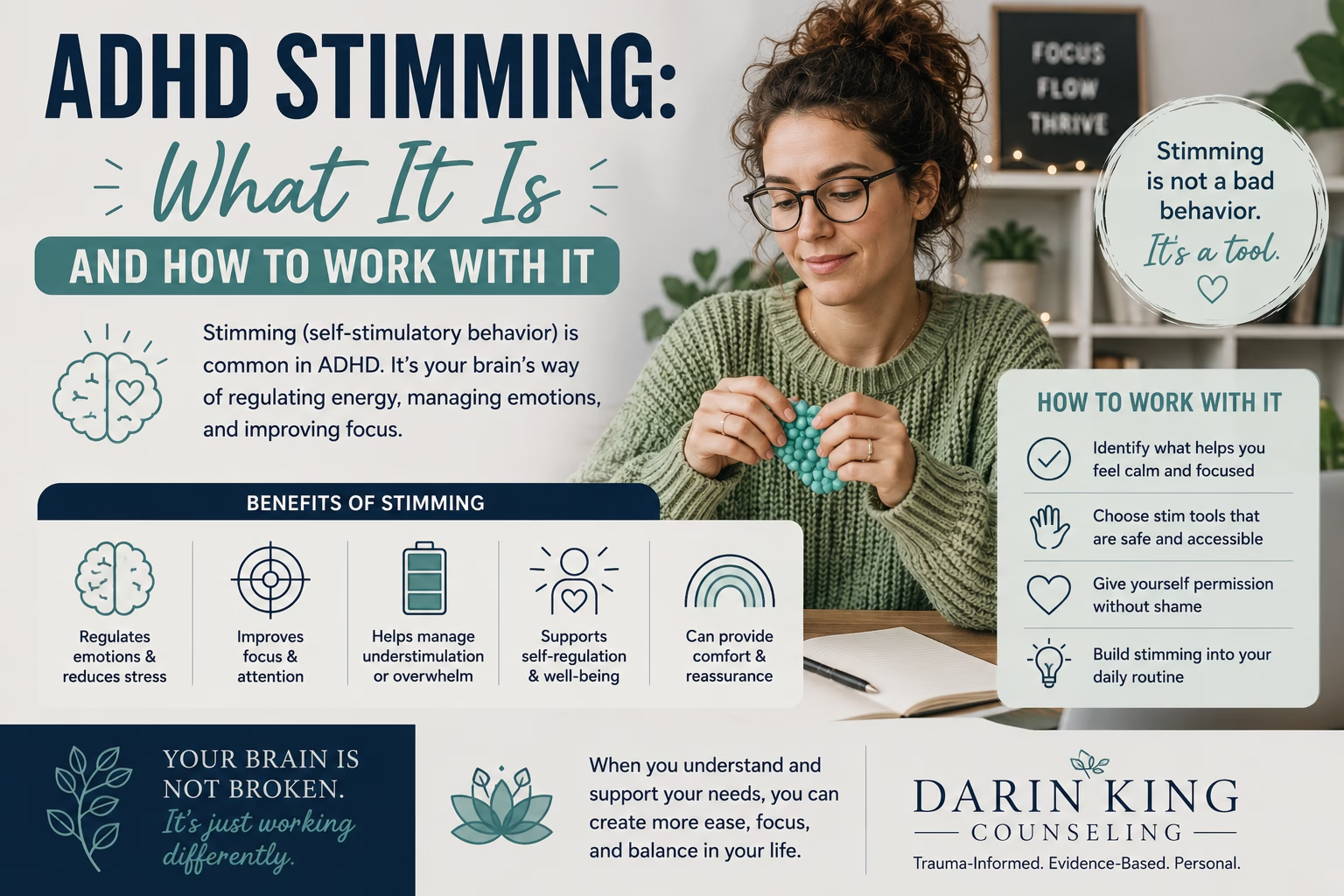
ADHD stimming is the self-stimulating behavior that adults and children with ADHD use to regulate attention, energy, and emotion. The leg bouncing during meetings. The pen clicking. The hair twirling. The humming. The chair rocking. The constant fidgeting with a ring or a piece of jewelry. These are not random behaviors. They serve a real neurological function — and understanding what stimming is for changes the relationship you have with it.
For decades, stimming was associated almost exclusively with autism. The recognition that ADHD also involves significant stimming is newer, and it has been life-changing for many adults who finally understand why they’ve always needed to move, touch, click, or hum. This piece is a clinical look at what ADHD stimming actually is, why it helps, when it doesn’t, and how to work with it rather than against it.
ADHD Stimming: The Four Common Categories
Most adults with ADHD use stims from multiple categories without realizing it
- Leg bouncing, foot tapping
- Rocking, swaying
- Pacing while thinking
- Spinning a chair
- Fidgeting with jewelry
- Pen clicking
- Twirling hair
- Skin picking, nail biting
- Humming, whistling
- Repeating words or phrases
- Making sound effects
- Talking to yourself
- Watching repetitive motion
- Drawing or doodling
- Re-watching favorite content
- Staring at moving lights
Feel free to share or embed this infographic with credit to darinkingcounselingllc.com
What Is ADHD Stimming?
Stimming — short for self-stimulating behavior — is the use of repetitive movements, sounds, or sensations to regulate the nervous system. In ADHD specifically, stimming serves several distinct neurological functions:
- Maintaining focus. ADHD brains often need a baseline of input to stay engaged with what’s in front of them. Without enough stimulation, attention drifts. A small stim provides just enough input to keep the brain anchored.
- Discharging excess energy. ADHD often involves more activation than the situation calls for. Stimming gives the excess somewhere to go.
- Regulating emotion. Strong emotions — excitement, anxiety, frustration — often produce stimming in ADHD as the system tries to discharge or contain the intensity.
- Self-soothing. Familiar repetitive behaviors create a sense of safety and predictability when the environment feels overwhelming.
ADHD stimming differs in some ways from autistic stimming, though there’s significant overlap. Both serve regulatory functions. ADHD stims tend to be more focused on stimulation-seeking and energy management; autistic stims often serve more of a self-soothing or sensory-processing function. Many people are both ADHD and autistic, and stim for reasons that span both categories.
Stimming is not a defect. It is a regulatory tool the ADHD brain reaches for because it works. Suppressing stims often makes ADHD symptoms worse — you remove a coping mechanism without addressing the underlying need it was meeting. The work is rarely to stop stimming. The work is to understand it and choose stims that serve you well.
Why ADHD Brains Stim
The neurological case for ADHD stimming starts with dopamine. ADHD involves differences in dopamine signaling — the neurotransmitter system that governs motivation, reward, and sustained attention. ADHD brains tend to be chronically under-stimulated relative to neurotypical brains in routine situations, and they actively seek inputs that boost dopamine to maintain focus and engagement.
Stimming provides those inputs. Movement boosts dopamine. Touch input boosts dopamine. Rhythmic activity boosts dopamine. The fidget cube, the chewing on a pencil, the bouncing leg — these aren’t distractions from focus. They’re often what makes focus possible. Take them away and the ADHD brain has no way to maintain the baseline arousal it needs to engage.
This is why many adults with ADHD find that they actually concentrate better while moving — pacing during phone calls, working at standing desks, walking during difficult conversations. The body movement isn’t competing with cognition. It’s supporting it.
The Common Forms ADHD Stimming Takes
Movement stims
The most recognizable category. Leg bouncing, foot tapping, drumming fingers on a surface, swaying in a chair, pacing while thinking or talking on the phone, rocking. Movement stims tend to be most active when the person is trying to focus, when energy is high, or when emotional intensity is rising.
Tactile stims
Anything that gives the hands something to do. Fidget toys, pen clicking, jewelry fiddling, hair twirling, picking at cuticles or skin, biting nails, rubbing fabric between fingers. Tactile stims are often the most socially acceptable because they’re small and quiet, which is why fidget toys took off in workplaces and schools.
Vocal stims
Humming, whistling, singing under your breath, repeating phrases that sound or feel right, making sound effects, talking to yourself out loud. Vocal stims are common when working alone but often suppressed in social contexts because they’re more conspicuous.
Visual stims
Watching repetitive motion (water, fire, fans, screens), doodling, re-watching favorite shows or videos, staring at moving lights, organizing visual patterns. Visual stims are often hidden in what looks like ordinary screen use — the repetitive scrolling of social media is often visual stimming.
Cognitive stims
Less discussed but real. Mental loops, replaying conversations, daydreaming with recurring themes, mentally narrating the day, thinking about the same hobby or interest repeatedly. Cognitive stims can be helpful or can shade into rumination — see our piece on the differences in OCD rumination for how repetitive thinking can become problematic.
When Stimming Helps and When It Doesn’t
Stimming exists on a spectrum from clearly helpful to clearly harmful. Most ADHD stims fall in the helpful or neutral range, but some can become problematic. The distinction matters.
Stims that help
- Brief, low-cost, doesn’t interfere with task
- Maintains focus or regulates emotion
- Socially acceptable in the context
- The person feels better, more focused, or more regulated after
- Doesn’t create harm to self or property
Stims that may need redirection
- Body-focused repetitive behaviors that cause damage (skin picking until bleeding, hair pulling, severe nail biting)
- Stims that disturb others significantly (loud humming during a meeting)
- Stims that have become compulsive — must be done a specific number of times or feel impossible to stop
- Stims that consume hours of the day in ways the person doesn’t want
- Stims that signal underlying anxiety or distress that needs its own attention
When a stim crosses from helpful to harmful, the solution isn’t to eliminate stimming entirely — that just leaves the underlying regulatory need unmet. The solution is to redirect the stim toward something that serves the same function without the cost.
Skin picking, hair pulling, and severe nail biting can be ADHD stims, but they can also be body-focused repetitive behaviors (BFRBs) like trichotillomania or excoriation disorder, which are distinct clinical conditions. If a stim is causing physical damage or significant distress, working with a clinician familiar with both ADHD and BFRBs helps clarify what’s actually happening and what treatment fits.
The Shame Problem
Many adults with ADHD have spent decades being told to “stop fidgeting,” “sit still,” “stop tapping your pen,” “pay attention.” For some, this produced layers of shame around stimming that persist long after they understand what stimming actually is.
The shame often shows up as:
- Suppressing stims in social or professional contexts, leading to exhaustion and worse focus
- Hiding stims even from partners or close family
- Feeling embarrassed when caught stimming
- Apologizing for normal regulatory behavior
- Avoiding situations where stimming would be visible
Working through this shame is part of what makes therapy with an ADHD-informed clinician valuable. The internal label of “weird,” “annoying,” or “uncontrollable” often persists long after the external messages stopped. Unlearning that internal narrative is part of late ADHD diagnosis work — see our piece on am I lazy or depressed for related dynamics around shame about ADHD traits.
How to Work With Your Stims
Identify what stims you already use
Most adults with ADHD don’t realize how much they stim until they start paying attention. For a week or two, just notice: when do you fidget? What with? What helps you focus? When does the stimming increase? This is data about your regulatory needs.
Identify what stims serve you well
Look at which stims help you focus, regulate, or feel calmer without causing harm. These are tools. Lean into them. Build them into your work environment — fidget toys, walking meetings, standing desks, doodling allowed during phone calls.
Redirect problematic stims toward functional alternatives
If you pick at your skin during stressful work calls, try keeping a textured fidget toy in reach. If you bite your nails when bored, try a chewable necklace or gum. The goal is to give the regulatory need somewhere productive to go, not to suppress it.
Stim openly in safe contexts
The more you suppress stims, the more energy you spend on suppression rather than the task at hand. In contexts where stimming is acceptable — at home, with understanding friends, in some workplaces — let yourself stim freely. This conserves energy for where masking actually matters.
Address the underlying regulatory needs
If you’re stimming constantly and intensely, your nervous system may be more dysregulated than usual. Look at sleep, caffeine, stress, emotion, and overall load. Sometimes the increase in stimming is a signal that something larger needs attention. For people whose ADHD coexists with anxiety or trauma, addressing the underlying nervous system patterns — see how to reset your nervous system — often reduces the urgency of stimming.
Talk to people in your life
Letting partners, coworkers, and friends know that you stim and why often reduces social friction significantly. Most people are accepting once they understand that the leg bouncing isn’t anxiety or disinterest — it’s how your brain stays present.
Stimming, Trauma, and Co-Occurring Conditions
ADHD often coexists with other conditions that complicate the picture. Trauma history can intensify stimming, especially under stress. Anxiety can produce stimming that looks similar but serves an anxiety-management function. Autism overlaps significantly with ADHD and may shape what stims feel most regulating.
For people with both ADHD and trauma — which is a common combination — stimming may shift between supporting focus (the ADHD function) and managing nervous system activation (the trauma function). Understanding which is operating helps clarify what’s needed. Our work with people who have both addresses the whole picture rather than just the surface behavior.
When to Work With a Therapist
Stimming itself usually doesn’t need treatment — it’s normal ADHD behavior. But it can be useful to work with a therapist when:
- Stims have become compulsive or are causing physical damage
- Suppressing stims at work or school is producing significant exhaustion
- You feel substantial shame about your ADHD traits, including stimming
- You’re not sure whether what you’re doing is ADHD stimming, OCD-related compulsion, anxiety, or something else
- You suspect undiagnosed ADHD and want to understand your patterns
- You have ADHD plus other conditions and want integrated support
An ADHD-informed therapist understands stimming as part of the neurological territory rather than as a problem behavior. The work focuses on understanding, managing, and reducing shame around natural regulatory patterns.
Frequently Asked Questions
What is ADHD stimming?
ADHD stimming is the use of repetitive movements, sounds, or sensations to regulate the nervous system. Common forms include leg bouncing, pen clicking, humming, fidgeting with objects, hair twirling, and pacing while thinking. Stimming serves real neurological functions in ADHD — maintaining focus, discharging excess energy, regulating emotion, and self-soothing. It’s not a defect; it’s the brain using sensory input to stay regulated and engaged.
Is stimming only an autism thing?
No. Stimming was historically associated mostly with autism, but it’s now well-recognized as significant in ADHD as well. ADHD stims tend to focus more on stimulation-seeking and energy management; autistic stims often serve more of a self-soothing or sensory-processing function. Many people are both ADHD and autistic and stim for reasons that span both categories. Stimming is normal regulatory behavior across many neurotypes.
Why do ADHD brains need to stim?
ADHD involves differences in dopamine signaling — the neurotransmitter system that governs motivation, reward, and sustained attention. ADHD brains tend to be chronically under-stimulated in routine situations and actively seek inputs that boost dopamine to maintain focus. Stimming provides those inputs. Movement, touch, and rhythmic activity all boost dopamine and help the ADHD brain maintain the baseline arousal it needs to engage with tasks.
Should I try to stop stimming?
Usually not. Stimming is a regulatory tool that helps the ADHD brain function. Suppressing it often makes ADHD symptoms worse without addressing the underlying need. The exception is when stims become harmful — causing physical damage like skin picking, becoming compulsive, or significantly disturbing others. In those cases, the work is to redirect the stim toward functional alternatives rather than eliminating stimming entirely.
Is skin picking ADHD stimming?
It can be. Skin picking is sometimes ADHD stimming that has become harmful, and sometimes a separate condition called excoriation disorder, which is a body-focused repetitive behavior (BFRB). The distinction matters for treatment. If skin picking is causing physical damage or significant distress, working with a clinician familiar with both ADHD and BFRBs helps clarify what’s happening and what treatment fits. Similar dynamics apply to hair pulling (trichotillomania) and severe nail biting.
How can I stim less obviously at work?
The most useful approach is usually to choose subtle, socially acceptable stims that meet the same regulatory need. Small fidget toys, textured rings, taking notes by hand, doodling, sitting on a yoga ball or kneeling chair, walking meetings when possible, and standing desks all work well. The goal isn’t to stop stimming — it’s to channel it into forms that don’t draw attention while still providing the input your brain needs to focus.
Stimming is information, not malfunction
Understanding ADHD stimming changes the relationship you have with it — from something to suppress and feel ashamed of to a tool your brain is using to function well. The work that follows is about identifying which stims serve you, redirecting the ones that don’t, and reducing the shame that often surrounds them after decades of being told to sit still.
I work with neurodivergent adults across Pennsylvania — including Pittsburgh, Greensburg, Irwin, and Ruffsdale — including support for adults navigating ADHD and the patterns that come with it.
Schedule an ADHD Therapy SessionDarin King is a Licensed Professional Counselor (LPC) in Pennsylvania specializing in trauma, anxiety, and relational healing. Learn more about Darin.
See more from Darin King Counseling on Google