

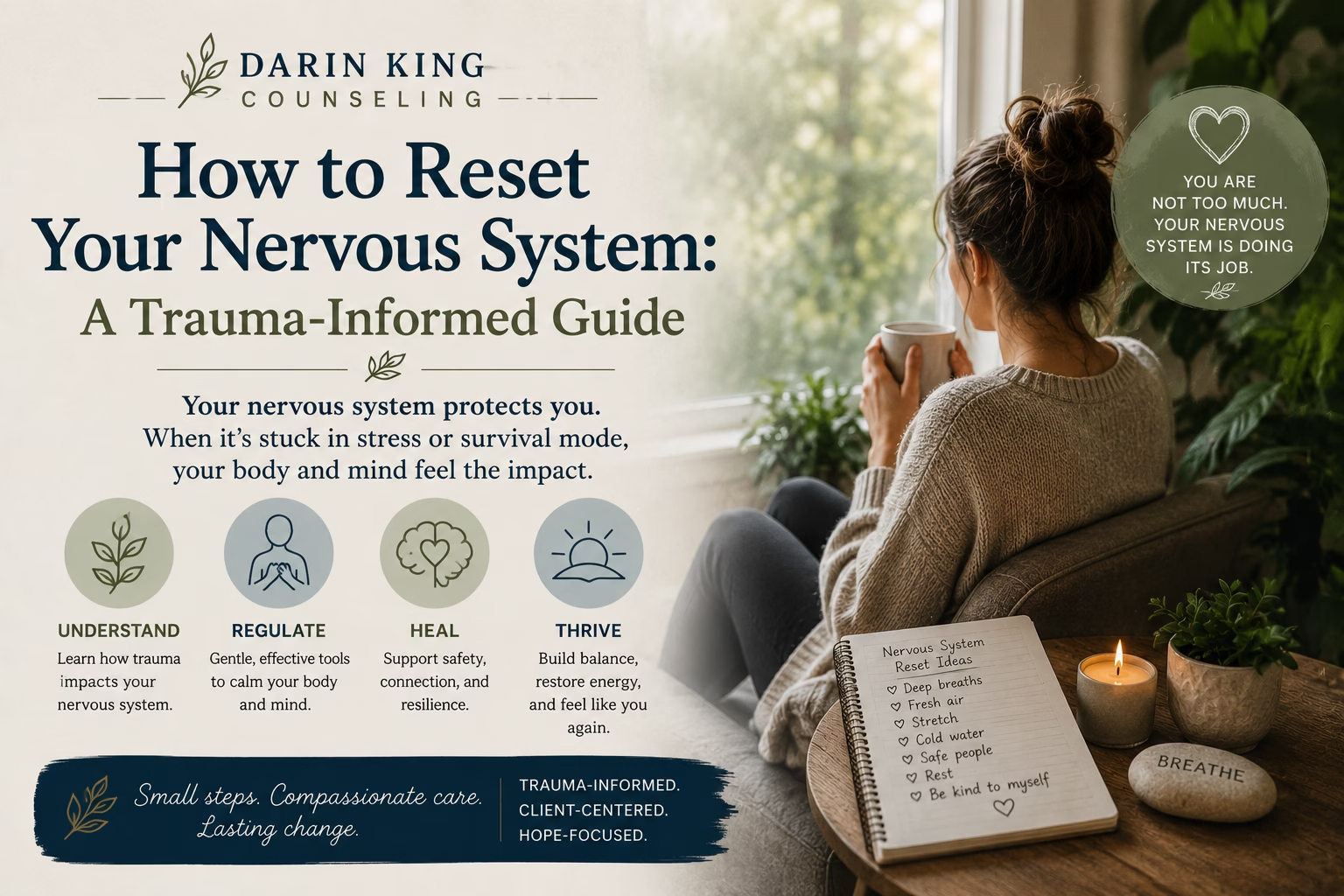
If you have been searching for how to reset your nervous system, your body is probably telling you something important. Maybe you are exhausted in a way sleep does not fix. Maybe you are jumpy and reactive over things that should not bother you. Maybe you feel numb and disconnected even when life is technically fine. These are not random complaints. They are signals from a nervous system stuck in a survival pattern that needs help to shift.
The good news: nervous systems are designed to reset. The bad news: most of what the internet tells you about nervous system reset does not work, because it skips the underlying physiology. Cold plunges and breathwork can help, but only when you understand what they are doing and how to use them. Without context, they can actually make things worse for someone whose nervous system is in a deep freeze state.
This guide walks through what nervous system dysregulation actually is, the polyvagal framework that explains why standard advice often fails, and the specific evidence-based practices that work when matched to where your nervous system actually is.
What “Resetting Your Nervous System” Actually Means
Your autonomic nervous system has three primary states, described by Polyvagal Theory:
- Ventral vagal (safe and social). You feel connected, calm, engaged, present. Your body is regulated. You can think clearly, feel emotions, and engage with people.
- Sympathetic (mobilized). Fight or flight. Heart rate up, attention narrowed, body ready to act. Useful in emergencies, exhausting as a default state.
- Dorsal vagal (shutdown). The oldest survival response. When fight or flight is not viable, the body collapses inward — numbness, dissociation, exhaustion, disconnection. Dorsal vagal shutdown is what shows up when overwhelm has gone on too long.
A regulated nervous system moves fluidly between these states as life requires. A dysregulated one gets stuck — chronically activated, chronically shut down, or oscillating between the two without ever returning to baseline. “Resetting” really means restoring the capacity to move back into ventral vagal connection.
Why Standard Nervous System Advice Often Fails
Most of the popular advice (cold plunges, intense breathwork, vigorous exercise) is sympathetic-activating. For someone in chronic sympathetic activation, that is the opposite of what is needed. For someone in dorsal vagal shutdown, it can be useful as a way to climb out of collapse — but only if the person has enough resource to tolerate the activation.
The bigger problem: people try one technique, it does not work, and they conclude something is wrong with them. The technique was not wrong; it was wrong for the state they were in. A trauma-informed approach starts by helping you identify which state your nervous system is actually in.
How to Tell Which State You Are In
Signs of Sympathetic Activation
- Racing thoughts, difficulty slowing down
- Tense muscles, especially jaw, shoulders, hands
- Heart rate up, breathing shallow and fast
- Irritability, snapping at people, sense of urgency
- Sleep disrupted by mental hyperactivity
- Hypervigilance, scanning for threat
Signs of Dorsal Vagal Shutdown
- Exhaustion that sleep does not fix
- Numbness, emotional flatness
- Difficulty getting started on anything
- Feeling disconnected from your body or surroundings
- Brain fog, memory issues, slowed thinking
- Going through motions without feeling present — sometimes called functional freeze
Signs You Are Oscillating Between Both
- Bursts of high activation followed by deep collapse
- Productive mornings, completely depleted evenings
- Periods of intense feeling alternating with numbness
- Difficulty staying in either state long enough to actually rest or accomplish anything
Practices That Reset From Sympathetic Activation
If you are mobilized — anxious, tense, racing — the goal is to bring sympathetic activation down so you can return to ventral vagal regulation. These work:
Slow Exhalation Breathing
Inhale through the nose for 4 counts. Exhale through pursed lips or the nose for 6 to 8 counts. Repeat for several minutes. Longer exhales activate the parasympathetic branch directly through the vagus nerve. This is one of the few breathing techniques with consistent research support for activation reduction. Box breathing and similar patterns also work; the key is making the exhale longer than the inhale.
Vagal Stimulation Through the Throat
Humming, singing, gargling, and chanting all stimulate the vagus nerve through the muscles of the throat. Two to three minutes of humming a song you like can measurably shift heart rate variability. This is one of the easiest and most underutilized regulation tools.
Bilateral Stimulation
Cross-body movements, alternating tapping (right hand on left thigh, left hand on right thigh), or rhythmic walking. The cross-hemispheric activation calms the sympathetic system. This is one mechanism behind why EMDR works.
Cold Exposure (Carefully)
Cold water on the face, especially around the eyes and forehead, activates the mammalian dive reflex and slows the heart rate. A face plunge in cold water for 30 seconds is enough. Full-body cold plunges work too but can be too activating for sensitive nervous systems — start with the face.
Gentle Movement
Walking, yoga, stretching. Not intense exercise, which can deepen activation. Slow, rhythmic movement signals safety to the nervous system.
Practices That Reset From Dorsal Vagal Shutdown
If you are in shutdown — numb, exhausted, disconnected — the goal is gentle upward activation toward ventral vagal. Pushing too hard backfires. These work:
Orienting
Slowly turn your head and let your eyes land on five things in your environment. Notice each thing without trying to do anything with the noticing. This signals to your nervous system that you are here, in this space, and the present moment is safe. Sounds simple. Works.
Co-Regulation
The fastest way out of shutdown is connection with a regulated nervous system. A trusted friend, a partner, a therapist, even a pet. Eye contact, touch (if welcome), warm voices — these are exactly the signals a shut-down nervous system needs to come back online. This is why isolation deepens depression and why therapy works.
Resourcing
Bring to mind a place, person, memory, or sensation that feels good or neutral. Stay with it. Notice what shifts in your body. Resourcing is gentle activation that brings the nervous system slightly upward without overwhelming it.
Mild Activation
Slow walking, stretching, light music. Not pushing for energy you do not have, just inviting small movements into the body. Drinking warm liquid. Light at the eyes (sunlight, brightness). Engaging the senses.
Containment
Weighted blankets, wrapping yourself in a blanket, sitting in an enclosed space, hugging yourself. The signals of physical containment can help a nervous system in shutdown feel safer, which is the precondition for shifting upward.
Pushing harder, drinking more caffeine, intense exercise, cold plunges, and trying to think your way out — these are common impulses but they tend to push a shut-down nervous system further into shutdown or pop it into anxious activation without ever passing through regulated calm. Slow, gentle, and small is the rule.
The Daily Practices That Build Long-Term Regulation
Acute resets help in the moment. But chronic dysregulation requires daily practices that train the nervous system over time. Research consistently supports:
Consistent Sleep
Sleep is when the nervous system processes the day and rebuilds capacity. Chronic sleep restriction keeps the sympathetic system elevated. Most adults need 7 to 9 hours. Sleep hygiene is foundational, not optional.
Daily Vagal Tone Practice
5 to 10 minutes daily of humming, singing, breathwork, cold face exposure, or gentle yoga measurably improves heart rate variability over weeks. This is the single highest-yield daily practice for nervous system regulation.
Movement Without Intensity
Walking, yoga, swimming, dancing. Daily movement that does not push the system into sympathetic overdrive. Three or four 30-minute sessions per week is the research minimum.
Social Connection
Co-regulation is not optional. Humans regulate through other humans. Isolation increases dysregulation; connection decreases it. Even short daily interactions matter.
Reducing Inputs
Caffeine, alcohol, doomscrolling, news consumption, work email outside of work hours — these all spike sympathetic activation. Reducing any of them produces measurable regulation improvements.
Address Underlying Trauma
If standard practices are not producing change, trauma is often the missing piece. Approaches like EMDR work directly with the nervous system patterns laid down by past experience. Our work in trauma counseling often integrates these methods.
When to Work With a Therapist
Self-led nervous system work is real and helpful, but it has limits. Working with a trauma-informed therapist makes sense when:
- You have tried daily practices for several months without significant change
- Your dysregulation traces back to past trauma you have not addressed
- You move between activation and shutdown but never reach regulated calm
- You are dealing with significant symptoms like flashbacks, panic, or dissociation
- You have family trauma or relational wounds that shape your current patterns
- You want faster, more structured work than self-led practice allows
Therapy is not the only path, but it is often the difference between managing dysregulation and actually resolving it. The work is real, and so are the results.
Frequently Asked Questions
How long does it take to reset your nervous system?
Acute reset techniques (breathwork, humming, cold water) work within minutes. Building lasting regulation takes longer — typically 6 to 12 weeks of consistent daily practice for measurable changes in heart rate variability and stress response. For chronic dysregulation from trauma, full restoration can take 6 to 18 months of consistent work, often supported by therapy. The nervous system is plastic but not fast.
Can you reset your nervous system without therapy?
Mild dysregulation often responds well to consistent self-led practices: breathwork, vagal toning, sleep, movement, social connection, reducing caffeine and alcohol. Chronic dysregulation or dysregulation rooted in trauma typically requires more than self-led work — trauma-informed therapy approaches like EMDR directly address the nervous system patterns laid down by past experience.
What is the fastest way to calm a nervous system?
For acute sympathetic activation: slow exhalation breathing (inhale 4 counts, exhale 6 to 8 counts) for 2 to 3 minutes. Cold water on the face activates the dive reflex within seconds. Humming or singing for 2 minutes activates the vagus nerve through the throat. These three methods produce measurable shifts in nervous system state within minutes.
Does cold plunging reset the nervous system?
Cold exposure activates the sympathetic system briefly and then triggers parasympathetic rebound, which is why it feels regulating afterward. For people in chronic sympathetic activation it can work well. For people in dorsal vagal shutdown it can be too activating and produce overwhelm without the rebound. Start with cold water on the face rather than full-body plunging if you are unsure.
Why is my nervous system so dysregulated?
Common drivers include chronic stress, sleep deprivation, unresolved trauma, ongoing relational stress, autoimmune or inflammatory conditions, high caffeine or alcohol intake, and lack of social connection. Family-of-origin patterns often shape baseline nervous system state — see our work on family trauma in adults for one common contributor. A therapist can help identify what is driving your specific pattern.
Does insurance cover therapy for nervous system regulation?
Yes. Treatment for anxiety, trauma, PTSD, and related conditions that involve nervous system dysregulation is covered under behavioral health benefits with most major insurance plans. We accept Highmark, UPMC, Aetna, United Healthcare/Optum, and Cigna/Evernorth. Self-pay sessions are $150. Sliding scale options are available.
Your nervous system can reset. You don’t have to do it alone.
Darin King, LPC works with trauma, anxiety, and chronic nervous system dysregulation using polyvagal-informed and EMDR approaches. Telehealth statewide across Pennsylvania.
See more from Darin King Counseling on Google