

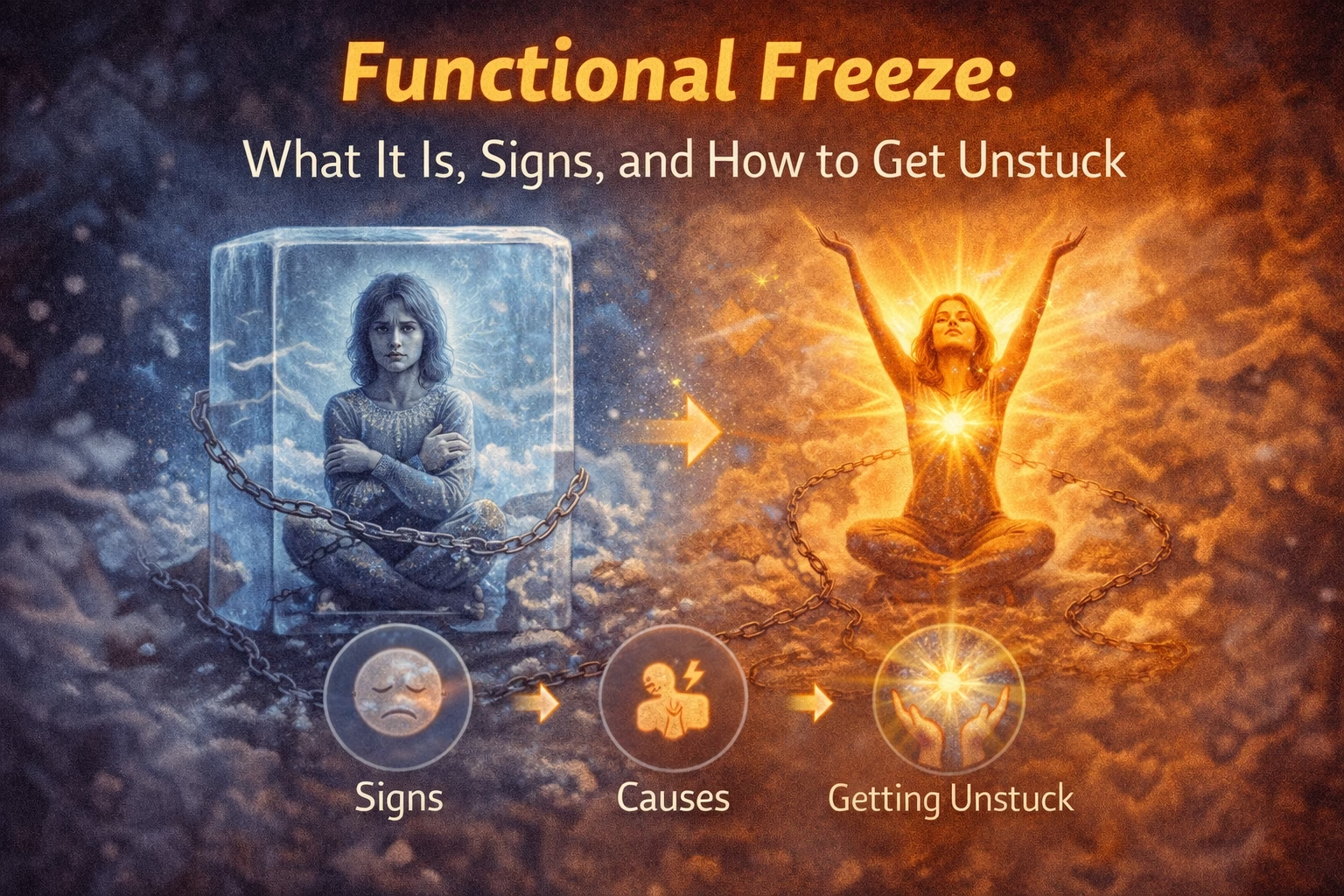
You are getting things done. You are showing up to work, managing your responsibilities, responding to messages. On the outside, everything looks fine. But on the inside, you feel nothing — or almost nothing. Flat. Disconnected. Like you are moving through your life from somewhere behind glass.
This is functional freeze — one of the most misunderstood nervous system states there is. It is not depression in the conventional sense. It is not laziness. It is not burnout in the simple way that word is used. It is your nervous system running a survival program that helped you cope with something overwhelming — and getting stuck there.
Functional Freeze vs. Dorsal Vagal Shutdown: What’s the Difference?
✓ Emotionally numb or disconnected internally
✓ Low motivation, flat affect, going through motions
✓ Chronic, often unrecognized survival state
✓ Can persist for weeks, months, or years
✓ Body feels frozen, heavy, or paralyzed
✓ Difficulty functioning at even a basic level
✓ Often triggered by an overwhelming acute event
✓ Usually shorter duration but more intense
Feel free to share or embed this infographic with credit to darinkingcounselingllc.com
What Is Functional Freeze?
Functional freeze is a persistent state in which a person continues to meet their external responsibilities — going to work, managing tasks, maintaining the appearance of functioning — while internally experiencing the physiological shutdown associated with extreme or chronic stress. The word “functional” is key: unlike more acute freeze states, functional freeze allows people to keep operating. This is also why it so often goes unrecognized.
Functional freeze is rooted in Polyvagal Theory, developed by neuroscientist Dr. Stephen Porges. According to this framework, the autonomic nervous system has three primary states organized hierarchically. The ventral vagal state (safety and social engagement) is the optimal state for connection, creativity, and growth. The sympathetic state (fight-or-flight) mobilizes energy for action in response to threat. The dorsal vagal state (freeze/shutdown) activates when threat is perceived as inescapable — it conserves energy and reduces sensation as a form of protection.
Functional freeze occupies a particular position in this hierarchy: the body is caught between the sympathetic activation (the alarm is still running) and the dorsal vagal suppression (the body has also applied the brakes). The result is a state of simultaneous activation and shutdown — often described as feeling “wired and tired,” emotionally flat but internally anxious, or like a car with the engine running and the emergency brake engaged.
Important context: Functional freeze is not a personal failure, a character trait, or a sign that you are weak. It is a nervous system response — as involuntary as a startle reflex — that developed to help you survive something that felt overwhelming or inescapable. The problem is not that your nervous system responded. The problem is that it got stuck there.
Functional Freeze vs. Dorsal Vagal Shutdown
These two terms are related but describe different intensities of the same underlying nervous system state. Understanding the distinction helps clarify what you may be experiencing.
Functional freeze is chronic and partially hidden. You are still functioning — but numbly, flatly, without genuine engagement. You can go to a meeting and track what is being said. You can answer an email. But you feel nothing about it. There is no sense of meaning, pleasure, or connection. Life happens around you while you watch from a slight distance. This state can persist for weeks, months, or even years, often without the person (or anyone around them) recognizing it as a trauma response.
Dorsal vagal shutdown is more acute and more visible. In this state, the nervous system essentially pulls the plug — the body becomes heavy, movement feels difficult or impossible, speech may slow or stop, and dissociation can be profound. It is often triggered by an overwhelming acute event rather than chronic stress. The person may be unable to perform basic tasks. This state is related to what researchers describe as hypoarousal — a state below the window of tolerance in which the nervous system has collapsed rather than activated.
Both states are part of the same nervous system continuum and both are addressed through the same general approaches: somatic regulation, trauma-informed therapy, and gradual re-engagement with safety signals. You can read more about nervous system regulation in our posts on the parasympathetic and sympathetic nervous systems and nervous system reset techniques.
Signs of Functional Freeze
Because functional freeze allows external functioning to continue, it is frequently mistaken for depression, apathy, or simply “being tired.” The following signs may indicate your nervous system is stuck in functional freeze rather than (or in addition to) a mood disorder.
| Sign | How It Presents | What People Often Mistake It For |
|---|---|---|
| Emotional numbness | Feelings seem distant, muted, or inaccessible | Depression, being “fine” |
| Anhedonia | Activities that once brought pleasure feel hollow or pointless | Burnout, loss of interest, depression |
| Chronic low motivation | Starting tasks feels enormously difficult despite wanting to do them | Laziness, procrastination, ADHD |
| Disconnection from body | Difficulty sensing physical needs like hunger, tiredness, pain | Not being “in tune” with yourself |
| Mild dissociation | Feeling slightly outside yourself, watching life from a distance | Spaciness, daydreaming, stress |
| Difficulty making decisions | Even simple choices feel overwhelming or impossible | Overthinking, anxiety, indecisiveness |
| Social withdrawal | Avoiding people not from social anxiety but from flatness and disconnection | Introversion, busyness |
| Sense of dread without content | A low-level feeling that something is wrong with no identifiable source | Free-floating anxiety |
What Causes Functional Freeze?
Trauma and Chronic Stress
Functional freeze is most commonly a response to trauma — particularly chronic, inescapable stress rather than acute single-event trauma. When the nervous system is repeatedly activated but unable to discharge that activation (through movement, connection, or resolution), it may begin applying the dorsal vagal brake as a protective measure. Understanding how trauma affects the nervous system is foundational to understanding why this happens and what it takes to reverse it.
Childhood Trauma and Developmental Freeze States
For many people, functional freeze began in childhood. Children in abusive, neglectful, or chaotic environments who cannot fight or flee — because they are dependent on the very people creating the threat — often develop freeze as the primary stress response. Over time this becomes the default. Childhood trauma and growing up in a dysfunctional family system are among the most common roots of adult functional freeze.
Complex PTSD
Functional freeze is a hallmark feature of complex PTSD, which develops from prolonged or repeated trauma (as opposed to a single traumatic event). In complex PTSD, the nervous system has been in a state of threat for so long that shutdown becomes the baseline rather than the exception.
Cortisol and Nervous System Dysregulation
Sustained exposure to stress produces cortisol dysregulation — the body’s stress hormones become chronically elevated, then the system begins downregulating as a protective mechanism. This is part of the biological basis for functional freeze. Our post on cortisol and trauma explains this mechanism in detail.
Note: Functional freeze and overstimulation are closely related. When the nervous system is regularly overwhelmed by input it cannot process, freeze can be the result. If you recognize signs of both, our post on overstimulated meaning and symptoms provides important context on how these states connect.
How to Get Out of Functional Freeze
Getting out of functional freeze requires working with the body, not just the mind. Because freeze is a nervous system state — not a thought pattern — purely cognitive approaches (trying to think your way out, positive thinking, willpower) are largely ineffective. The nervous system needs to receive signals of safety from the body itself before the freeze can release.
Gentle Movement
Small, slow, intentional movement is one of the most effective ways to begin mobilizing out of freeze. This does not mean exercise — it means gentle rocking, stretching, walking slowly, or even just wiggling fingers. Movement begins to discharge the trapped activation that underlies the freeze state. It also sends proprioceptive signals to the nervous system that the body is alive and capable of moving — the opposite message from the freeze state.
Orienting
Slowly turning your head and eyes to take in your environment — like an animal scanning for safety — activates the ventral vagal system and begins moving the nervous system toward engagement. Simply noticing what is in the room around you, what colors, textures, and sounds are present, can begin shifting the state.
Temperature and Sensation
Cold water on the face, warmth from a heating pad or bath, or physical contact (with consent and safety) can all provide sensory input that pulls the nervous system out of shutdown. These work because they provide clear present-moment body signals that compete with the freeze state’s numbing.
Co-Regulation
Being physically present with a calm, safe person is one of the most powerful regulators of nervous system states. Right-brain-to-right-brain co-regulation — eye contact, tone of voice, proximity — activates the social engagement system and provides the ventral vagal signal of safety. This is one reason why therapy is so powerful: the therapist’s regulated nervous system provides a co-regulating presence.
Trauma-Informed Therapy
Somatic approaches — including Somatic Experiencing (developed by Dr. Peter Levine) and EMDR therapy — are specifically designed to address trauma held in the nervous system and body, not just the mind. They gently guide the nervous system through the incomplete survival responses that produced the freeze, allowing them to complete and discharge. For people whose functional freeze has deep trauma roots, this is often the most effective path. Our full guide on nervous system reset covers practical daily techniques.
Related reading: How trauma affects the nervous system · Nervous system reset techniques · Complex PTSD vs. PTSD · Cortisol and trauma · Overstimulated meaning and symptoms · What dissociation feels like · Parasympathetic and sympathetic nervous systems
Frequently Asked Questions
What is functional freeze?
Functional freeze is a persistent nervous system state in which a person continues meeting external responsibilities while internally experiencing emotional numbness, disconnection, and shutdown. It is rooted in Polyvagal Theory and represents the dorsal vagal branch of the autonomic nervous system becoming chronically activated as a survival response to overwhelming or inescapable stress.
What does functional freeze feel like?
It typically feels like emotional flatness while continuing to function outwardly. Common experiences include difficulty feeling pleasure or meaning, chronic low motivation, mild dissociation (feeling slightly outside yourself), difficulty making decisions, and a vague sense of dread without a clear source. Many people describe it as going through the motions of life. For related experiences, see our post on what dissociation feels like.
What is the difference between functional freeze and dorsal vagal shutdown?
Functional freeze is chronic and partially hidden — the person continues functioning outwardly but is internally numb. Dorsal vagal shutdown is more acute and complete — the nervous system collapses, producing severe immobility and difficulty with even basic tasks. Both involve the same dorsal vagal branch of the nervous system, but differ in intensity and duration.
What causes functional freeze?
Most commonly chronic, inescapable stress or trauma — particularly complex trauma and childhood trauma where fighting or fleeing was not an option. When the nervous system is repeatedly activated without resolution, freeze becomes the chronic default state.
How do you get out of functional freeze?
Through somatic approaches rather than purely cognitive ones. Gentle movement, orienting exercises, temperature and sensory input, co-regulation with a safe person, and trauma-informed therapy such as EMDR are the most effective pathways. Our full guide on nervous system reset techniques provides practical daily tools.
Going through the motions is not the same as being okay — and you deserve more than surviving.
Darin King, LPC works with adults navigating trauma, nervous system dysregulation, and the freeze states that keep people stuck. Telehealth available statewide across Pennsylvania.
See more from Darin King Counseling on Google