

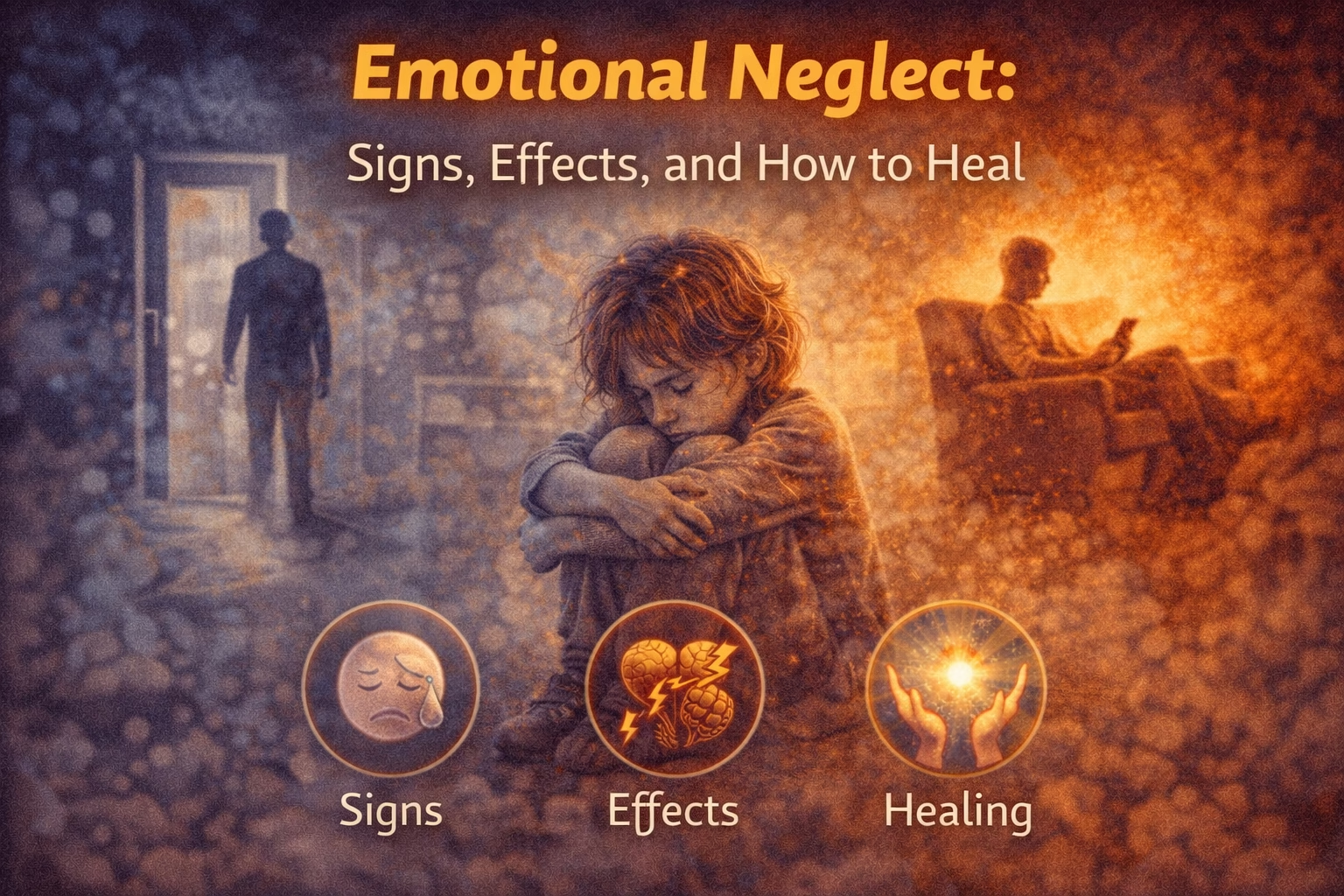
Emotional neglect is one of the most difficult forms of childhood adversity to identify — not because it is rare, but because it is defined by absence rather than presence. There was no incident to point to. There was no single dramatic event. There was simply a consistent emptiness where emotional attunement, validation, and connection should have been.
Many people who grew up with emotional neglect spend years wondering why they feel vaguely empty, why intimacy feels difficult, or why they struggle to identify what they need — all without having any obvious “reason” for it. This post is for them.
Emotional Neglect: What It Is and What It Is Not
✓ Feelings dismissed, minimized, or ignored
✓ Not being seen or understood emotionally
✓ Defined by what was absent, not what happened
✓ Can occur even in loving, well-intentioned families
✓ Always intentional or malicious
✓ Something that requires obvious abuse
✓ Something you should just “get over”
✓ Your fault for being “too sensitive”
Feel free to share or embed this infographic with credit to darinkingcounselingllc.com
What Is Emotional Neglect?
Emotional neglect is a pattern in which a person’s emotional needs are consistently unmet, dismissed, or ignored — either in childhood by caregivers, or in adulthood within relationships. In childhood, it occurs when parents or caregivers fail to respond adequately to a child’s emotional experience: not validating feelings, not providing comfort during distress, not taking an interest in the child’s inner life, or actively discouraging emotional expression.
The Centers for Disease Control and Prevention (CDC) recognizes emotional or psychological neglect as a form of child maltreatment, noting that it includes failure to provide the emotional support, love, and affection necessary for a child’s healthy development. Research consistently shows that emotional neglect in childhood produces lasting effects on mental health, attachment patterns, and neurological development — even in the absence of physical harm.
The challenge is that emotional neglect leaves no visible marks. Parents who emotionally neglect their children are not always cold or uncaring — many love their children genuinely but are emotionally limited themselves, distracted by their own struggles, or operating from families where emotional expression was not modeled. This is one of the key mechanisms through which generational trauma is transmitted.
Important distinction: Emotional neglect is defined by what did not happen — emotional attunement, validation, and responsive care were absent or insufficient. This is different from what did happen. Many people with emotionally neglectful childhoods have no dramatic stories to tell, which can make it harder to name their experience as real or significant. It is both.
Signs of Emotional Neglect in Childhood
Childhood emotional neglect can take many forms. Common patterns include caregivers who dismissed or minimized emotions (“you’re being too sensitive,” “stop crying”), who were emotionally unavailable due to depression, substance use, or their own unresolved trauma, who prioritized achievement or behavior over emotional wellbeing, or who simply did not know how to respond to a child’s emotional needs because no one had ever responded to theirs.
Signs that a child is experiencing emotional neglect include persistent emotional flatness or withdrawal, difficulty expressing emotions, excessive self-reliance, anxiety and difficulty seeking help, and a learned tendency to suppress emotional needs to avoid burdening others. These patterns do not disappear when childhood ends — they follow people into adulthood.
Signs of Emotional Neglect in Adults
| Sign | How It Presents | Root |
|---|---|---|
| Difficulty identifying emotions | Struggling to name what you feel; emotions feel vague or inaccessible | Emotional vocabulary and self-awareness were not developed through attunement |
| Feeling empty or disconnected | A persistent sense of something missing without being able to identify what | The emotional core that develops through responsive caregiving was not fully built |
| Difficulty asking for help | Strong aversion to appearing needy or placing burden on others | Learned early that emotional needs were inconvenient or unwelcome |
| Harsh self-criticism | High standards, difficulty being compassionate toward yourself | Without external validation, self-worth becomes conditional on performance |
| Difficulty with intimacy | Emotional closeness feels uncomfortable, exposing, or unfamiliar | Vulnerability was not modeled or was discouraged |
| Feeling fundamentally different | A sense of not quite fitting in, even when things are going well | Not being fully seen emotionally as a child creates a sense of invisible difference |
| People-pleasing | Prioritizing others’ needs while having difficulty identifying or asserting your own | Your own needs were either invisible or were experienced as problematic |
| Numbness to positive experiences | Difficulty feeling genuine pleasure, joy, or satisfaction | Emotional responsiveness in general was suppressed or underdeveloped |
Emotional Neglect in Childhood
Childhood emotional neglect is particularly significant because of when it occurs. The emotional regulatory systems of the brain — particularly the prefrontal cortex and limbic system — develop in relationship. Children learn how to identify, manage, and communicate emotions through co-regulation with responsive caregivers. When that co-regulation is consistently absent, these systems develop differently.
Research on how childhood adversity changes the brain documents the neurological effects of inadequate emotional caregiving — affecting stress response systems, emotional regulation capacity, and the development of secure attachment. This does not mean the damage is permanent or irreversible. The brain’s neuroplasticity means these systems can be developed and strengthened through therapeutic work and safe relational experiences throughout life. But it does mean the effects of childhood emotional neglect are real and biological, not just psychological.
If you are wondering whether your own upbringing included emotional neglect, our posts on do I have childhood trauma and did I grow up in a dysfunctional family system may help you make sense of your history.
Emotional Neglect in Relationships
Emotional neglect is not only a childhood phenomenon. It can occur in adult relationships — romantic partnerships, friendships, or family relationships — when one person’s emotional needs are consistently dismissed, minimized, or ignored by someone important to them.
In romantic relationships, emotional neglect can look like a partner who is physically present but emotionally unavailable; who responds to emotional expression with dismissal or eye-rolling; who never initiates emotional connection; or who is unable to engage with vulnerability or difficulty in the relationship. Over time, the person receiving this treatment may gradually shut down emotionally — a pattern that can become very difficult to reverse without direct intervention.
Emotional neglect in relationships is often related to patterns of abandonment trauma and disorganized attachment. People who grew up with emotional neglect often unconsciously recreate familiar relational dynamics in adulthood — including choosing partners who replicate the emotional unavailability of early caregivers.
Note: Is emotional neglect abuse? The CDC and most clinical frameworks classify it as a form of maltreatment when it occurs in the context of caregiving. In adult relationships, it may not meet legal definitions of abuse but it can still produce significant psychological harm. The severity and pattern matter more than any single incident.
How Emotional Neglect Affects Mental Health
The effects of emotional neglect are wide-ranging and often show up in ways that do not obviously connect to the original experience. Adults with histories of emotional neglect have elevated rates of depression, anxiety, complex PTSD, shame, and difficulty maintaining healthy relationships. They frequently struggle with people-pleasing, chronic guilt, and the inability to recognize or advocate for their own needs.
The National Institute of Mental Health recognizes that adverse childhood experiences — including emotional neglect — are among the strongest predictors of adult mental health difficulties. The connection runs through both psychological channels (the beliefs formed about self and relationships) and neurobiological ones (cortisol dysregulation, nervous system hyperactivation, and altered emotional processing).
How to Heal from Emotional Neglect
Name it and validate it
One of the most important first steps is simply naming what happened as real. Many people who grew up with emotional neglect minimize their experience because there was no dramatic abuse — “it wasn’t that bad,” “my parents tried their best.” Both things can be true: your parents may have genuinely loved you and done their best, and what you experienced still had real effects. Naming it is not about assigning blame. It is about accuracy.
Learn to identify and express emotions
If emotional awareness was not modeled in your family, developing it is a learnable skill. Therapy provides a structured space for doing exactly this — identifying what you feel, understanding where it comes from, and learning to express it safely. This is often unfamiliar and uncomfortable at first, especially for people whose early environment sent the message that emotions were inconvenient or dangerous.
Work through the underlying patterns in therapy
Trauma-informed therapy — including EMDR therapy and attachment-based approaches — addresses both the relational wounds and the neurobiological effects of emotional neglect. The therapeutic relationship itself provides a consistent, emotionally responsive experience that may be genuinely new. Therapy helps with far more than many people realize, and emotional neglect is one of the areas where it makes a significant difference.
Related reading: Do I have childhood trauma? · Did I grow up in a dysfunctional family system? · Generational trauma · Abandonment trauma in relationships · Shame vs. guilt · People-pleasing · Complex PTSD vs. PTSD
Frequently Asked Questions
What is emotional neglect?
Emotional neglect is a pattern in which emotional needs are consistently unmet, dismissed, or ignored — in childhood by caregivers, or in adulthood within relationships. It is defined by what was absent (emotional attunement, validation, responsive care) rather than by what happened. The CDC recognizes it as a form of child maltreatment with lasting effects on development and mental health.
What are the signs of emotional neglect in childhood?
Caregivers who dismissed emotions, were emotionally unavailable, prioritized achievement over emotional wellbeing, or discouraged emotional expression. In the child: emotional withdrawal, excessive self-reliance, anxiety, difficulty expressing needs. If you’re recognizing your history in this description, our post on did I grow up in a dysfunctional family system may help.
What are the signs of emotional neglect in adults?
Difficulty identifying emotions, chronic emptiness or disconnection, trouble asking for help, harsh self-criticism, discomfort with intimacy, people-pleasing, and difficulty feeling genuine pleasure. Many describe a persistent sense that something is missing without being able to name it.
Is emotional neglect abuse?
The CDC classifies it as a form of child maltreatment. In adult relationships it may not meet legal definitions of abuse, but its effects are real and significant. Whether or not it fits a formal category, it deserves to be taken seriously.
Can you heal from emotional neglect?
Yes. Trauma-informed therapy — including EMDR and attachment-based approaches — addresses both relational wounds and neurobiological patterns. The therapeutic relationship itself provides a responsive emotional connection that may be genuinely new. See our post on what therapy helps with for more.
Not having a “dramatic enough” story doesn’t mean what you experienced didn’t matter.
Darin King, LPC provides trauma-informed therapy for emotional neglect, attachment wounds, and childhood trauma across Pennsylvania. Telehealth available statewide.
See more from Darin King Counseling on Google