

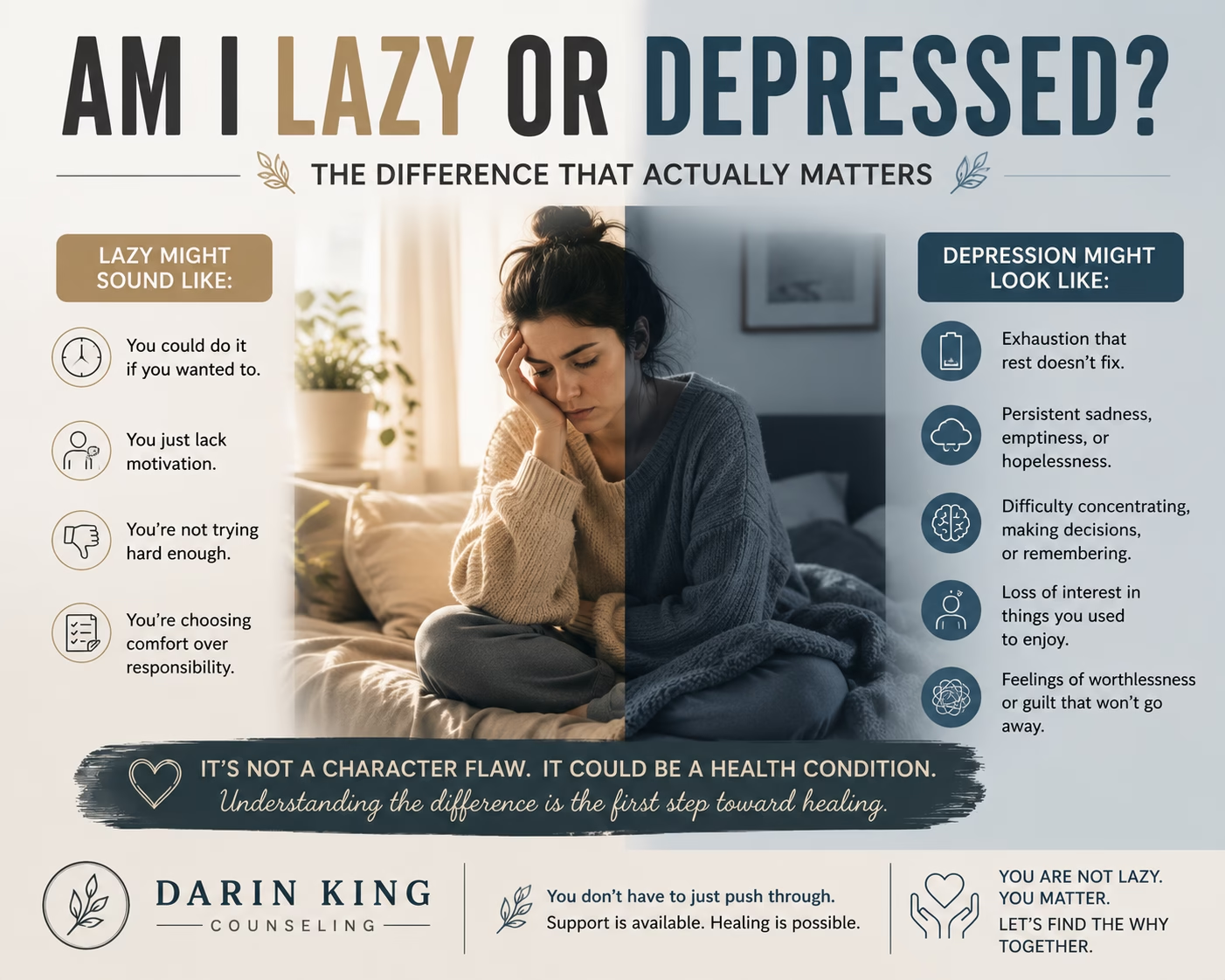
Here is something I have noticed over years of clinical work: the people who ask “am I lazy?” are almost never lazy. The actual lazy person — the genuinely unmotivated person who lacks ambition or work ethic and is content with that — does not feel guilty about it. They do not lie awake at night wondering whether something is wrong with them. They do not Google the question. The very fact that you are asking is meaningful information.
What feels like laziness in adults who care about it is almost always one of four other things: depression, executive dysfunction (often ADHD), burnout, or a nervous system stuck in a survival state. Each of these produces the exact same surface experience — inability to do things you want to do, exhaustion, avoidance, missed obligations — but the underlying cause is different, and so is the treatment.
This article walks through how to tell which is which, what tends to drive the “am I lazy” feeling, and what to do about it.
Why You Probably Are Not Actually Lazy
The word “lazy” implies someone who could be doing more, knows they could, and chooses not to without distress. Almost no one fits this description. What looks like laziness usually involves:
- Wanting to do the thing
- Knowing you should do the thing
- Feeling guilty about not doing the thing
- Genuinely trying and failing to start
- Feeling exhausted, stuck, or paralyzed
- Shaming yourself for the gap
This is not laziness. This is a person who wants to function and cannot. The wanting is the giveaway. Calling it laziness is a moral diagnosis applied to a non-moral problem.
Four Things That Get Mistaken for Laziness
1. Depression
Depression is the most common culprit. It directly impairs the systems that produce motivation and action:
- Anhedonia — reduced ability to anticipate reward, which is what drives action
- Fatigue — genuine physical exhaustion not related to activity
- Cognitive slowness — thinking through tasks feels effortful
- Hopelessness — the sense that effort will not produce results
- Negative self-talk — including labeling yourself as lazy
Signs it is depression rather than laziness: low mood much of the day, loss of interest in things you used to enjoy, sleep changes (too much or too little), appetite changes, persistent self-criticism, sometimes thoughts of worthlessness or death. If you are noticing several of these alongside the “am I lazy” feeling, depression is a likely driver. See our piece on why basic self-care feels impossible in depression for related dynamics.
2. ADHD and Executive Dysfunction
ADHD looks like laziness because it impairs the executive function networks that handle task initiation, planning, and follow-through. Adults with ADHD often:
- Cannot start tasks even when motivated
- Get stuck on the planning step indefinitely
- Hyperfocus on the wrong things while critical tasks go undone
- Look unproductive on paper while feeling exhausted
- Function well in interesting/novel situations and collapse in routine
Signs it is ADHD rather than laziness: pattern goes back to childhood; task paralysis is specific rather than general; you can hyperfocus on some things; tasks that are interesting feel easy while tasks that are boring feel impossible regardless of importance; family history of ADHD or related conditions. ADHD evaluation by a qualified clinician can clarify this.
3. Burnout
Burnout is the accumulated exhaustion that follows prolonged stress, usually work-related but not always. It is recognized as a distinct phenomenon by the WHO and produces:
- Physical and emotional exhaustion not relieved by rest
- Cynicism and detachment from work
- Reduced sense of accomplishment
- Loss of motivation that did not used to be missing
Signs it is burnout rather than laziness: the pattern is recent; you used to be highly motivated; the exhaustion is tied to specific roles or contexts; weekends and vacations help temporarily but the relief does not last. Burnout typically requires real changes in demands, not just more rest. Our work on recovery from collapse addresses the more acute end of this spectrum.
4. Nervous System Dysregulation
A nervous system stuck in dorsal vagal shutdown produces what looks exactly like laziness from outside:
- Exhaustion that sleep does not fix
- Inability to initiate tasks
- Numbness and emotional flatness
- Going through motions without engagement
This is often the form chronic stress takes when sympathetic activation has been sustained too long — the system gives way into shutdown. Trauma history significantly increases vulnerability. Signs it is nervous system dysregulation: long history of stress or trauma; physical symptoms alongside cognitive ones; the state does not lift with rest, motivation, or willpower. See our piece on dorsal vagal shutdown for the underlying mechanism and functional freeze for how this often shows up in high-functioning adults.
The Overlap (And Why Getting It Right Matters)
These four conditions overlap heavily and often coexist. Many people have some combination of depression and burnout, or ADHD and depression, or trauma-driven nervous system dysregulation plus burnout. Disentangling them is part of the assessment process.
Why does the distinction matter? Because the treatments are different:
- Depression often responds to therapy, sometimes combined with medication. Behavioral activation works.
- ADHD typically responds to a combination of medication, executive function coaching, and structural changes.
- Burnout requires reducing demands and rebuilding capacity, not just rest. Therapy alone without environmental change rarely fixes it.
- Nervous system dysregulation often requires somatic and trauma-informed work. Cognitive approaches alone tend not to reach it.
Treating depression as if it were laziness — pushing harder, demanding more discipline — makes depression worse. Treating ADHD as laziness produces decades of shame and underachievement. The misdiagnosis (or self-misdiagnosis) is itself a form of harm.
Why “Lazy” Is Such a Sticky Story
If laziness is rarely the actual problem, why is it the default self-explanation for so many people? A few reasons:
It Locates the Problem in Character
Calling yourself lazy makes the problem about you, not about a condition that needs treatment. This is paradoxically comforting because it implies you could just try harder. The alternative — that something is going on that requires actual intervention — is sometimes scarier.
You Were Told You Were Lazy
Many adults heard themselves called lazy in childhood, often by parents or teachers who did not understand what they were actually dealing with. ADHD in particular is often labeled as laziness in childhood. The label sticks into adulthood.
Culture Rewards Productivity
In a culture that valorizes hustle, any underperformance gets labeled as character weakness. The categories of “depression,” “burnout,” and “executive dysfunction” do not have the same cultural weight as “lazy” — even though they describe real conditions.
It Provides Forward Motion
If the problem is laziness, the solution is willpower. That is a clear, actionable answer, even though it does not actually work. Real diagnoses require more nuanced responses and longer commitments.
What to Do Instead
Some practical steps if you have been telling yourself you are lazy:
Stop Calling Yourself Lazy
The word is not just inaccurate, it is actively harmful. Replace it with neutral observation: “I am having trouble starting.” “I am exhausted.” “Something is wrong but I do not know what yet.” The shift from moral judgment to observation creates room for actual problem-solving.
Notice the Patterns
For a week or two, just observe what is actually happening. When can you function? When can you not? What does the “lazy” feeling actually feel like in your body? What relieves it temporarily? What makes it worse? This is data.
Consider Professional Assessment
A skilled therapist can help you distinguish depression from ADHD from burnout from trauma. This often requires one to three sessions and produces clearer next steps than self-diagnosis can. Many people are surprised by what an honest assessment reveals.
Address the Underlying Condition
Once you know what is actually driving the patterns, treatment becomes much more effective. Depression responds to therapy and sometimes medication. ADHD responds to specific interventions including medication. Burnout requires demand reduction. Trauma requires trauma-informed work. None of these respond to being called lazy.
Step back from the laziness story long enough to consider what else might be going on. If you cared less, you would not be reading this article. The caring is evidence that something other than laziness is operating. That something deserves actual attention, not more shame.
Frequently Asked Questions
Am I lazy or depressed?
If you are asking the question, you probably are not lazy. Genuinely lazy people do not feel guilty about being unproductive — they are content with it. What feels like laziness in adults who care about it is almost always depression, ADHD, burnout, or nervous system dysregulation. The ‘lazy’ label is usually a self-criticism applied to a non-character problem. A clinical assessment can clarify what is actually going on.
How do I know if it is laziness or executive dysfunction?
Executive dysfunction (often part of ADHD) prevents task initiation even when you genuinely want to do the task. You can hyperfocus on some things while being unable to start others regardless of importance. The pattern usually goes back to childhood and shows up consistently across life. If you are exhausted from trying, you are not lazy — you are dealing with an executive function difference that responds to specific treatment.
Can burnout look like laziness?
Yes, very much. Burnout produces the exact surface experience of laziness: exhaustion, inability to start, loss of motivation, withdrawal. The difference is the history — burnout follows a period of high engagement that you cannot sustain anymore. Lazy is a stable trait; burnout is a state caused by prolonged demands. Burnout requires reducing demands, not increasing willpower.
Why does depression feel like laziness?
Depression directly impairs the brain systems that produce motivation: anticipated reward (anhedonia), energy, cognitive processing, and the capacity to imagine positive outcomes. Tasks that would normally feel doable become genuinely impossible. The internal experience is wanting to do things and being unable to — which feels like laziness from inside but is actually clinical depression.
What should I do if I think I might be lazy?
First, stop calling yourself lazy — it is almost certainly inaccurate and definitely unhelpful. Observe the patterns without judgment for a week or two. Notice when you can and cannot function, what relieves the feeling, what makes it worse. Consider professional assessment to distinguish depression, ADHD, burnout, and other contributors. Treatment for the underlying condition produces real change. Pushing harder usually does not.
Does insurance cover counseling for depression or burnout?
Yes. Treatment for depression, anxiety, ADHD, burnout, and the underlying conditions that get misread as laziness is covered under behavioral health benefits with most major insurance plans. We accept Highmark, UPMC, Aetna, United Healthcare/Optum, and Cigna/Evernorth. Self-pay sessions are $150. Sliding scale options are available.
It is not laziness. It is something that can be treated.
Darin King, LPC works with depression, burnout, ADHD, and the underlying patterns that get misread as laziness. Telehealth statewide across Pennsylvania.
See more from Darin King Counseling on Google