

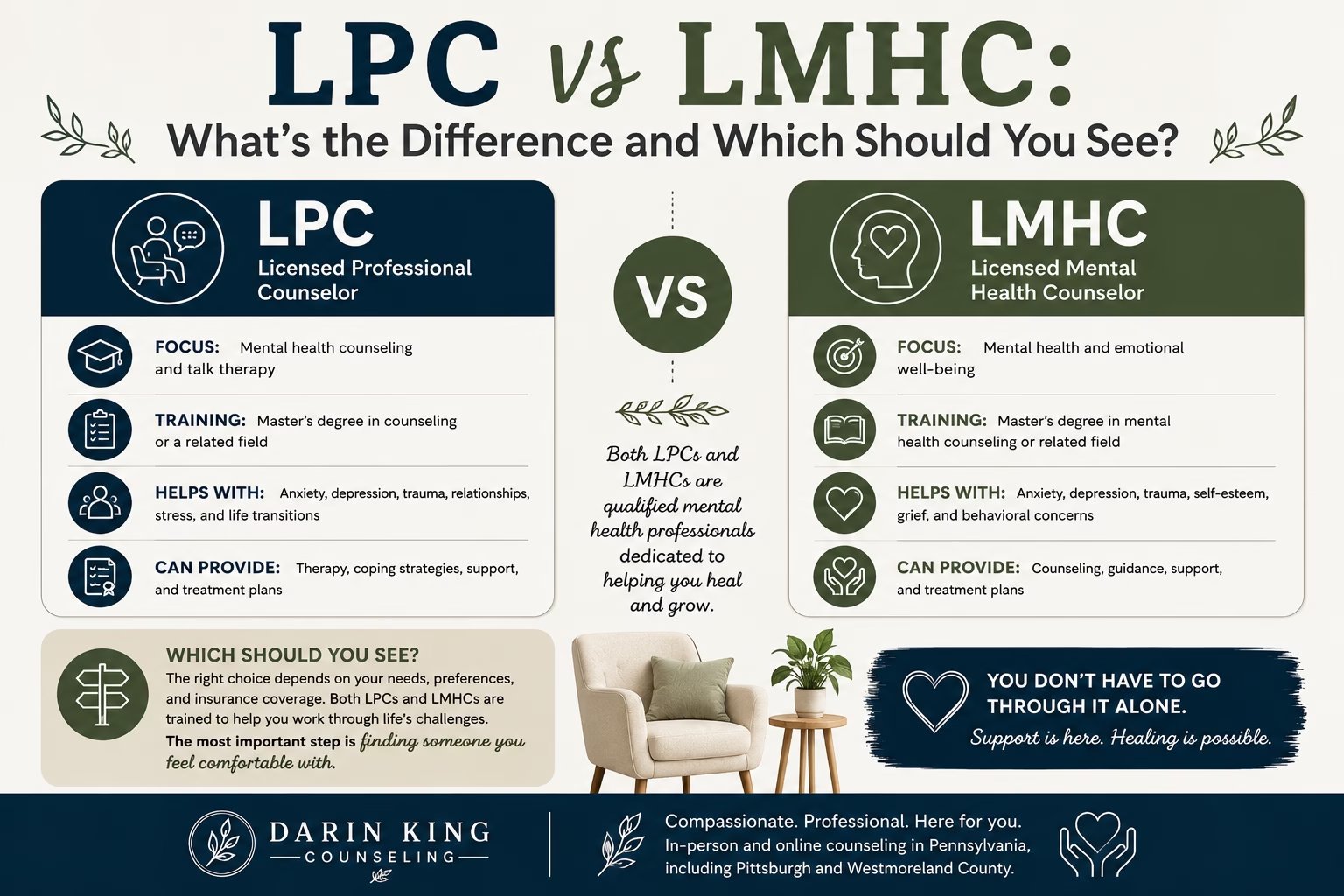
If you are trying to find a therapist and the licensing letters are confusing, you are not alone. The mental health field has a startling number of credentials that all describe people who do similar work: LPC, LMHC, LCSW, LMFT, PsyD, PhD, MD, MFT, LCMHC, LPCC, and several others depending on state. The two most commonly confused are LPC and LMHC, because they describe essentially the same profession with different state names.
The short answer: LPC and LMHC are functionally the same credential. The difference is what your state calls it. The longer answer is worth understanding because it helps you make a more informed choice about your therapist — and because the credential itself matters less than several other factors that most articles do not mention.
What LPC and LMHC Both Mean
Both LPC (Licensed Professional Counselor) and LMHC (Licensed Mental Health Counselor) describe master’s-level mental health professionals trained to provide psychotherapy and counseling services. The training, scope of practice, and clinical role are essentially the same. What differs is which state issued the license.
LPC is the credential used in states including Pennsylvania, Texas, Virginia, Georgia, and many others.
LMHC is the credential used in New York, Florida, Massachusetts, Washington, and several other states.
A few states use other variants: LCMHC (North Carolina), LPCC (California, Minnesota, Ohio), LCPC (Illinois, Maryland, Maine), and so on. They all describe the same underlying profession.
What These Therapists Have In Common
Regardless of which state-specific letters they hold, LPCs and LMHCs typically have:
Education
Master’s degree (usually 60+ credit hours) in counseling, clinical mental health counseling, or a closely related field. Programs are typically accredited by CACREP (Council for Accreditation of Counseling and Related Educational Programs) or equivalent standards.
Clinical Training
Supervised practicum and internship during graduate school, typically 700 to 1,000+ hours of clinical work before graduation.
Post-Graduate Supervision
2,000 to 4,000 hours (varies by state) of supervised clinical practice after graduation, before full licensure. During this period they hold an associate credential (LAPC, LAMHC, LPC-Intern, etc.).
Examinations
The National Counselor Examination (NCE) or National Clinical Mental Health Counseling Examination (NCMHCE) — national exams that test core counseling competencies.
Ongoing Education
Continuing education requirements to maintain licensure, typically 30 to 40 hours every two years.
Scope of Practice
Both LPCs and LMHCs can diagnose mental health conditions, provide individual, couples, family, and group therapy, develop treatment plans, and bill insurance for these services. Neither can prescribe medication (which is the domain of psychiatrists, psychiatric nurse practitioners, and in some states, prescribing psychologists).
How LPC/LMHC Differs From Other Credentials
LCSW (Licensed Clinical Social Worker)
Master’s-level professional with a degree in social work (MSW) rather than counseling. LCSWs are trained with a similar clinical foundation but with additional emphasis on systems perspective, advocacy, and case management. Many LCSWs do psychotherapy that is functionally indistinguishable from what LPCs and LMHCs do. Some specialize in community mental health, child welfare, or case management roles.
LMFT (Licensed Marriage and Family Therapist)
Master’s-level professional with training specifically in systemic and relational therapy. LMFTs see individuals as well as couples and families, but the lens is typically relational. If your primary concern involves family dynamics or relationships, an LMFT may have particular relevant training.
Psychologist (PsyD or PhD)
Doctoral-level professional. Training is typically 5 to 7 years post-bachelor’s, including extensive research training (especially PhD) and supervised clinical work. Psychologists are uniquely trained to administer and interpret psychological testing (cognitive testing, ADHD evaluation, personality assessment) — this is one significant capability they have that master’s-level clinicians do not. They also provide therapy. Generally, the therapy work overlaps with what master’s-level clinicians do.
Psychiatrist (MD or DO)
Medical doctor specializing in mental health. Can prescribe medication. Some provide therapy in addition to medication management; many now focus primarily on medication management. If medication is needed, a psychiatrist or psychiatric nurse practitioner is who manages it.
Psychiatric Nurse Practitioner (PMHNP)
Advanced practice nurse with prescriptive authority. In most settings, prescribes medication similarly to psychiatrists. Some provide therapy; many focus on medication management.
What Actually Matters When Choosing a Therapist
Here is the honest part. The credentials matter for licensing, billing, and minimum competency. They do not predict who will be the best therapist for you. What matters more:
Specialization and Training Beyond the Base Degree
What has the therapist trained in beyond their master’s? Trauma-informed care, EMDR, IFS, CBT, DBT, somatic experiencing, attachment-based therapy — these specializations matter much more for outcomes than which state-specific license they hold. A trauma-trained LPC will help with trauma far more than a generalist LCSW or vice versa.
Therapeutic Fit
The quality of the therapeutic relationship is the single best predictor of therapy outcomes — better than the specific modality, better than the credential. You want to feel comfortable enough to be honest, challenged enough to grow, and respected as a person. Most therapists offer brief consultations; use them.
Experience With Your Specific Concern
A therapist who has worked with hundreds of people with your specific concern is usually more helpful than one who is technically credentialed but unfamiliar with your situation. Ask directly: “How much experience do you have with [specific issue]?”
Demographic Match Where It Matters
For some concerns, a therapist who shares your identity (gender, race, religion, sexuality, neurotype) can be helpful. Not always required, but worth considering if it matters to you.
Practical Logistics
Insurance coverage, location or telehealth availability, scheduling flexibility, fees. These matter for sustainability — the best therapist in the world cannot help you if you cannot get to or afford sessions.
Therapists with LAPC, LAMHC, LPC-Intern, or similar credentials are licensed associate or pre-licensed clinicians. They have completed their graduate degree and are working toward full licensure under supervision. They are typically very competent — research suggests outcomes are often comparable to fully licensed therapists. They are also typically less expensive. The supervision they receive sometimes means more attention to their cases, not less.
When the Credential Does Matter
A few situations where the specific credential matters:
Psychological Testing
Only psychologists (PsyD, PhD) and certain other doctoral-level providers can administer and interpret comprehensive psychological testing. If you need ADHD evaluation, autism assessment, learning disability evaluation, or comprehensive personality assessment, you typically need a psychologist.
Medication Management
Only psychiatrists, psychiatric nurse practitioners, and (in limited states) prescribing psychologists can prescribe psychiatric medication. LPCs, LMHCs, LCSWs, and LMFTs do not prescribe.
Insurance Network Membership
Some insurance plans have different reimbursement rates or network policies for different credential types. Worth checking with your specific plan if cost is a primary concern.
Forensic or Legal Contexts
Court-ordered evaluations, custody assessments, and similar legal work often have specific credential requirements that vary by jurisdiction.
Finding the Right Therapist
A practical sequence:
- Decide what you need. Therapy alone? Therapy plus medication? Testing first?
- Verify insurance. Call your insurance company or check the provider directory for in-network therapists.
- Filter for specialization. Look for therapists with specific training in your area of concern.
- Read profiles carefully. Most therapists describe their approach; this tells you more than their credentials.
- Use consultations. Many therapists offer free 15-minute consultations. These help you assess fit.
- Give it a few sessions. First sessions are often awkward. Three to four sessions usually clarifies whether the fit is right.
- Switch if needed. If the therapy is not working after a fair trial, switching therapists is reasonable. Most therapists will understand.
The credential matters at the bottom of the funnel. The therapist matters at the top.
Frequently Asked Questions
What is the difference between LPC and LMHC?
LPC (Licensed Professional Counselor) and LMHC (Licensed Mental Health Counselor) are functionally the same credential — both describe master’s-level mental health professionals trained to provide psychotherapy. The difference is which state issued the license. Pennsylvania, Texas, Virginia, Georgia, and many other states use LPC. New York, Florida, Massachusetts, and others use LMHC. The training, scope of practice, and clinical role are essentially identical.
Is an LPC the same as a therapist?
Yes. LPC is one of several credentials that allow someone to work as a therapist or counselor. Other equivalent credentials include LMHC, LCMHC, LPCC, and LCPC depending on the state. LPCs provide psychotherapy, diagnose mental health conditions, and develop treatment plans. They cannot prescribe medication — that requires a psychiatrist or psychiatric nurse practitioner.
Which is better: LPC or LCSW?
Neither is inherently better. LPCs train in counseling-focused master’s programs; LCSWs train in social work master’s programs. The educational paths differ in emphasis (LCSWs get more systems and case management training; LPCs get more clinical mental health focus), but both provide essentially the same psychotherapy services. The individual therapist’s specialization, training beyond the master’s degree, and fit with you matter much more than the specific credential.
Can an LPC diagnose mental health conditions?
Yes. LPCs are trained and licensed to diagnose mental health conditions using the DSM (Diagnostic and Statistical Manual). They can provide formal diagnoses for purposes of treatment and insurance billing. They cannot, however, administer formal psychological testing or assessment — that typically requires a psychologist (PsyD or PhD).
What credentials do your therapists have at Darin King Counseling?
Our team includes Licensed Professional Counselors (LPC), Licensed Social Workers (LSW), and Licensed Associate Professional Counselors (LAPC) working toward full licensure under supervision. All clinicians have master’s degrees in their respective fields, specialized training in trauma-informed care, and meet Pennsylvania’s licensing requirements. Specific specializations vary by clinician — visit our team page for individual backgrounds.
Does insurance cover therapy with an LPC?
Yes. LPCs are recognized providers under most major insurance plans. We accept Highmark, UPMC, Aetna, United Healthcare/Optum, and Cigna/Evernorth. Self-pay sessions are $150. Sliding scale options are available for those who qualify. Coverage details vary by individual plan — we verify your specific coverage before your first session.
Credentials matter less than fit. The right therapist changes everything.
Our team of licensed Pittsburgh therapists includes LPCs, LSWs, and associate counselors. Telehealth statewide across Pennsylvania.
See more from Darin King Counseling on Google