

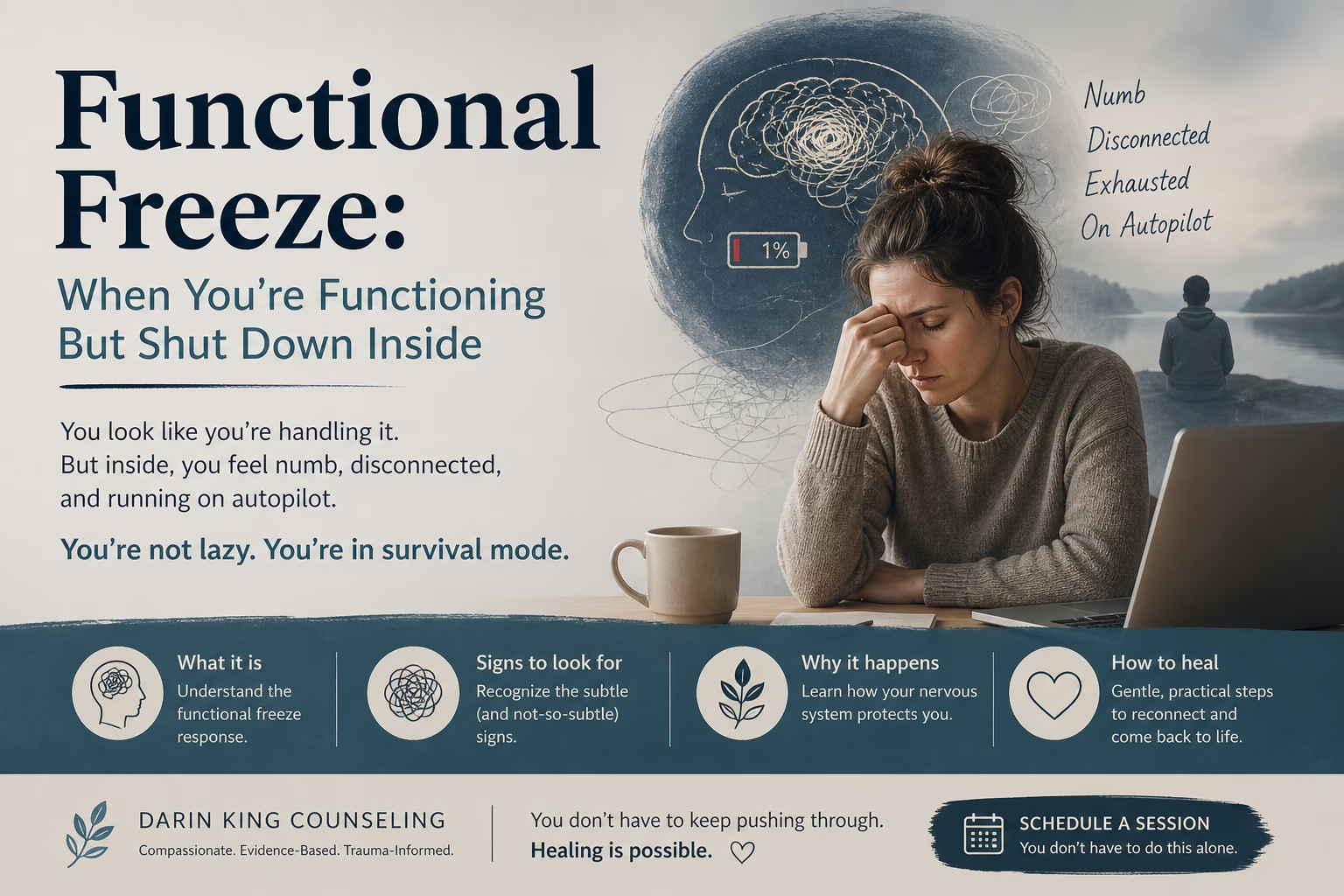
Functional freeze is the experience of moving through your life — going to work, answering messages, feeding yourself, showing up where you’re supposed to be — while feeling numb, flat, disconnected, and largely absent from yourself. From the outside it can look like coping. From the inside, it feels like watching your own life through glass.
It is one of the most common nervous system patterns I see in my work as a trauma therapist, and one of the most under-recognized. Most of the people who come to me describing it have been calling it depression, burnout, or “just being tired.” Sometimes those frames apply too. But functional freeze has a specific underlying mechanism — one that comes from polyvagal theory and the dorsal vagal nervous system response — and naming it correctly is often the beginning of being able to move through it.
Functional Freeze: How It Shows Up
Signs you may be living in shutdown while still showing up
- Numbness, flatness
- Watching your life from outside
- Disconnect from feelings
- Going through the motions
- Heaviness, low energy
- Sleep that doesn’t restore
- Slowed digestion
- Feeling cold or small
- Mental fog or blankness
- Hard to make decisions
- Forgetfulness
- Difficulty caring
- Isolating even when wanted
- Hard to be present with others
- Avoiding eye contact
- Feeling unreachable
Feel free to share or embed this infographic with credit to darinkingcounselingllc.com
What Is Functional Freeze?
Functional freeze is a chronic state of dorsal vagal activation in which a person continues meeting daily obligations while feeling emotionally numb, disconnected, and detached from themselves. Unlike acute shutdown — where someone goes completely offline and can’t function — functional freeze keeps the person moving. They go to work. They answer messages. They show up. But they do so on autopilot, with diminished access to feeling, motivation, or full presence.
The technical name comes from Polyvagal Theory, developed by neuroscientist Dr. Stephen Porges. Polyvagal Theory describes three hierarchical states the autonomic nervous system can occupy: ventral vagal (safe and connected), sympathetic (fight or flight), and dorsal vagal (shutdown). Functional freeze is what happens when the dorsal vagal shutdown becomes a chronic baseline rather than an acute response — when the system has settled into ongoing low-grade collapse while the person continues to meet external demands.
Functional freeze is not laziness, weakness, or emotional unavailability. It is a nervous system state — the body’s ancient response to perceived overwhelm or inescapability, applied chronically. Recognizing it as biology rather than character is often the first step toward moving out of it.
Functional Freeze vs. Depression: The Overlap and the Difference
Functional freeze and depression overlap significantly and frequently co-occur. Both involve flatness, low motivation, and difficulty accessing pleasure. But they aren’t identical, and the distinction matters for treatment.
Depression is a mood disorder defined by specific diagnostic criteria — persistent low mood, anhedonia, sleep and appetite changes, cognitive symptoms — sustained over a defined period. Functional freeze is a nervous system state described by polyvagal theory. Depression is named by what it produces (mood, behavior, cognition); freeze is named by what the autonomic system is doing (collapse, immobilization, conservation).
In practice, the two often reinforce each other. A chronically frozen nervous system tends to produce depressive symptoms. Prolonged depression often deepens nervous system shutdown. Treating only the mood without addressing the underlying nervous system pattern often produces partial improvement that doesn’t hold. Read more about depression counseling for how the two interact.
What Functional Freeze Feels Like
The defining quality of functional freeze is that things keep happening but you’re not really there. People describe it in different ways:
- “I’m going through the motions of my life.”
- “I show up but I’m not really present.”
- “I feel like I’m watching myself from outside my body.”
- “I haven’t cried in months but I haven’t laughed either.”
- “I do everything I’m supposed to do and feel nothing about any of it.”
- “I’m exhausted but sleep doesn’t fix it.”
Acute symptoms tend to cluster across four domains. Emotionally: numbness, flatness, watching life from a distance, difficulty caring about things you used to care about. Physically: heaviness, low energy, unrefreshing sleep, slowed digestion, feeling cold or collapsed. Cognitively: mental fog, blankness, indecision, difficulty taking in information. Relationally: withdrawal even when you want connection, difficulty being present with others, feeling unreachable behind a wall.
What Causes Functional Freeze
Chronic stress with no resolution
The most common pathway into functional freeze is sustained stress without meaningful relief. The sympathetic nervous system can hold fight-or-flight activation for a long time, but it has limits. When stress continues past those limits — high-demand work, caregiving without support, an ongoing difficult life situation, a chronic health issue — the system eventually exhausts its capacity for activation and tips into dorsal vagal collapse. Read more about how the parasympathetic and sympathetic systems interact.
Childhood patterns of overwhelm or neglect
For many people, functional freeze isn’t a new development — it’s the nervous system baseline they’ve been operating from since childhood. Children who grew up in environments where their needs were chronically unmet, where reaching out didn’t produce attunement, or where overwhelm was inescapable often shifted into a low-energy, low-feeling baseline as protection. Adult life simply continues a pattern that started decades ago. Read more about emotional neglect and its long-term effects.
Trauma and inescapable threat
When a nervous system perceives a threat as unfightable and unfleeable, the most ancient survival response activates: collapse. People with trauma histories — particularly chronic relational trauma, childhood adverse experiences, or trauma in contexts where escape wasn’t possible — often have nervous systems primed to drop into freeze under pressure. See signs of childhood trauma in adults for more on how this presents.
Burnout that has gone on too long
Burnout in its early stages looks more like sympathetic activation: anxiety, irritability, sleep problems, frantic productivity. Late-stage burnout often shifts into freeze: numbness, detachment, going through the motions. Many people who think they’re still in burnout are actually in functional freeze that grew out of unresolved burnout.
How Functional Freeze Differs from Acute Freeze
Acute freeze is what happens when the nervous system shuts down in response to a specific overwhelming threat — sudden, total immobilization. Functional freeze is the chronic version: the same dorsal vagal pattern, but maintained at a low enough intensity that the person continues meeting external demands. Acute freeze tends to be obvious. Functional freeze tends to be invisible, both to others and to the person experiencing it. People often don’t realize they’re in it until something cracks the autopilot — a vacation, a major life event, a moment of unexpected presence — and they suddenly notice how absent they’ve been.
How to Move Out of Functional Freeze
The instinct most people have when they recognize functional freeze is to push harder — set goals, force productivity, cultivate motivation. This usually deepens the freeze. The dorsal vagal system shuts down precisely because the system perceives demands as unmeetable; adding demands intensifies that perception.
Recovery from functional freeze typically moves in the opposite direction: gentle, consistent nervous system regulation, with attention to the underlying patterns that produced the freeze in the first place.
Functional freeze responds to safety, not pressure. The nervous system needs cues that the threat — whatever the system has perceived as overwhelming — is no longer present, and that connection and movement are now possible. Cultivating those cues is the work.
Vagal-tone practices
Practices that activate the ventral branch of the vagus nerve — humming, singing, slow exhalation, gentle social engagement, cold water on the face, yoga or restorative movement — directly support the shift out of dorsal shutdown. These aren’t magic, but consistent practice over weeks tends to make movement out of freeze easier.
Trauma-informed therapy
When functional freeze is rooted in trauma, talk therapy alone often isn’t enough — the freeze lives in the body, not just in thoughts. Modalities that work somatically and with the nervous system tend to produce better results. EMDR therapy and somatic-informed approaches address the underlying material that the system is collapsing under.
Reducing demand load
If you’re in functional freeze because the demands on you have exceeded what your system can sustain, no amount of regulation work will resolve the freeze without also reducing the load. This often requires hard conversations, boundary-setting, and sometimes significant life changes.
Co-regulation
Nervous systems regulate each other. Spending time with people whose presence feels safe and warm — without performance, without demand — is one of the most underrated freeze interventions. Isolation deepens freeze; safe co-regulation interrupts it.
| Nervous system state | How it feels | What helps |
|---|---|---|
| Ventral vagal (safe & connected) | Calm, present, engaged, able to feel and think | Maintain and expand the conditions producing it |
| Sympathetic (fight or flight) | Anxious, activated, on edge, mobilized | Down-regulation: slow exhalation, grounding, movement |
| Dorsal vagal — acute | Total shutdown, immobilization, dissociation | Safety, gentle re-engagement, professional support |
| Dorsal vagal — functional freeze | Numb, flat, disconnected while still functioning | Vagal-tone work, trauma therapy, demand reduction, co-regulation |
Frequently Asked Questions
What is functional freeze?
Functional freeze is a chronic state of dorsal vagal nervous system activation in which a person continues meeting daily obligations while feeling emotionally numb, disconnected, and detached from themselves. Unlike acute shutdown, the person keeps moving — going to work, answering messages, performing tasks — but does so on autopilot, with diminished access to feeling, motivation, or full presence.
Is functional freeze the same as depression?
Functional freeze and depression overlap significantly and frequently co-occur, but they aren’t identical. Depression is a mood disorder with diagnostic criteria; functional freeze is a nervous system state described in Polyvagal Theory. The two often reinforce each other: a chronically frozen nervous system often produces depressive symptoms, and prolonged depression can deepen freeze. Treatment that addresses both layers tends to work better than treatment that addresses only one.
How do I know if I’m in functional freeze?
Common signs include feeling numb or flat for weeks or months, going through the motions of your life without real presence, watching yourself from outside, persistent fatigue that sleep doesn’t fix, mental fog, and difficulty caring about things you used to care about. The defining quality is that you keep functioning while feeling absent from your own life.
How do you get out of functional freeze?
Recovery from functional freeze typically requires gentle, consistent nervous system regulation rather than pushing harder. Approaches that help include vagal-tone practices (slow exhalation, humming, gentle movement), trauma-informed therapy including EMDR or somatic work, reducing demand load, and co-regulating with safe people. Pushing harder usually deepens the freeze.
Can therapy help with functional freeze?
Yes — particularly trauma-informed therapy that works with the nervous system rather than only with thoughts. EMDR, somatic experiencing, polyvagal-informed therapy, and Internal Family Systems are all well-suited for chronic freeze. The goal is to gradually rebuild the sense of safety that allows the nervous system to come back online and stay online.
Coming back online: support for functional freeze
If functional freeze is what’s been happening — the autopilot, the flatness, the absence from your own life — that recognition is the beginning of moving through it. The work involves the nervous system, not willpower, and it benefits enormously from having someone walk through it with you.
I work with adults across Pennsylvania — including Pittsburgh, Greensburg, Irwin, and Ruffsdale — using trauma-informed and somatic approaches well-suited to nervous system shutdown patterns.
Schedule a Trauma Therapy SessionDarin King is a Licensed Professional Counselor (LPC) in Pennsylvania specializing in trauma, anxiety, and relational healing. Learn more about Darin.
See more from Darin King Counseling on Google