

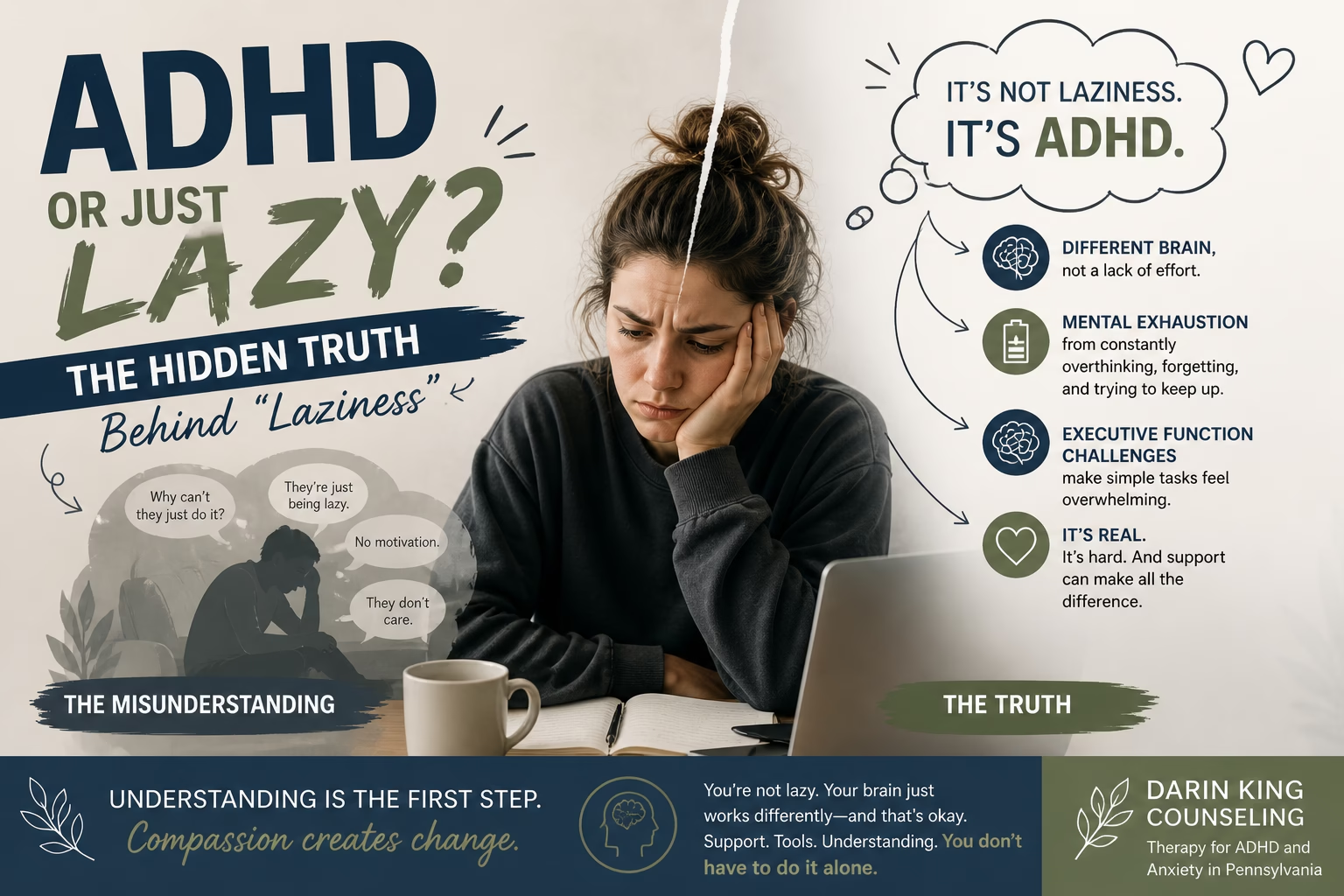
“Am I ADHD or just lazy?” is one of the most-asked questions in adult mental health, and one of the most consistently misframed. The framing implies the two are alternatives — that you’re either neurologically different or you’re a person of questionable character. They’re not alternatives. Laziness, as a clinical concept, doesn’t exist. ADHD does. And what people most often call laziness in themselves is, in many cases, undiagnosed ADHD.
In my work with adults — many of whom were diagnosed late, in their 30s, 40s, or 50s — the moment of recognition is often the same: “I’ve spent my whole life thinking I was lazy and now I find out it was ADHD this whole time.” The relief is enormous, and so is the grief. Both are appropriate.
Lazy vs. ADHD: A Side-by-Side
If you’ve been asking the question, the answer is rarely lazy
- Could do tasks but chooses not to
- No distress about not doing them
- Has the bandwidth, lacks the will
- Doesn’t apply to enjoyed activities
- Wants to do tasks, can’t start
- Significant distress and shame
- Bandwidth varies wildly by interest
- Hyperfocus on engaging things
- Lifelong pattern
- Inconsistent performance
- Time blindness
- Better with stimulants/structure
- Depression (different pattern)
- Burnout (recent onset)
- Trauma (freeze response)
- Medical (thyroid, sleep)
Feel free to share or embed this infographic with credit to darinkingcounselingllc.com
Why “Lazy” Doesn’t Actually Describe Anything
There’s no diagnostic category called “laziness.” It’s not in the DSM. It’s not in any clinical literature. It’s a moral verdict — a way of saying that someone who isn’t doing what they “should” be doing is choosing not to. As a label, it doesn’t describe what’s actually happening; it just assigns blame to it.
For more on this, see the deeper exploration in am I lazy? The short version: when someone is consistently unable to do tasks they want to do, what’s actually happening is depression, burnout, trauma, executive dysfunction, or some combination — not laziness. ADHD is one of the most common explanations, and one of the most often missed.
The diagnostic question isn’t “ADHD or lazy?” The diagnostic question is “what’s actually happening, given that I clearly want to do these things and yet I can’t?” That question opens up real possibilities — ADHD, depression, burnout, trauma. “Lazy” closes them down with a verdict that doesn’t lead anywhere.
How ADHD Looks From the Inside
The internal experience of ADHD is rarely captured by the diagnostic criteria. From the inside, it tends to look like:
- Knowing what to do, and being unable to start. The task is clear. The plan is in your head. The starting itself feels physically blocked.
- Inconsistency that no one believes. You can write a brilliant proposal in two hours when interested, then take six weeks to send a routine email.
- Time blindness. “I’ll just do this quickly” reliably becomes three hours. Estimating how long things will take is broken.
- Working memory gaps. You walk into a room and forget why. You read a paragraph and have no idea what you just read. You think of a brilliant idea and lose it before you can write it down.
- Emotional dysregulation. Small frustrations feel disproportionately large. Rejection feels devastating. Excitement is electric. The dimmer switch is broken.
- Hyperfocus on engaging things. When something genuinely engages the system, you can do it for hours without breaks. The challenge is getting things into that state.
- Shame as a baseline. Decades of being told you’re lazy, careless, or not trying hard enough leave a residue.
Why So Many Adults Are Diagnosed Late
A significant portion of adults with ADHD weren’t diagnosed in childhood. Several reasons:
- The childhood criteria were narrow. ADHD was historically diagnosed primarily in hyperactive young boys. Quiet, daydreamy kids — and most girls — were missed.
- Many people compensated through high effort. Smart, motivated kids can mask ADHD by working much harder than peers, until the demands eventually exceed what compensation can handle (often in college, early career, or after major life changes).
- The presentation changes. Childhood hyperactivity often shifts into adult mental restlessness. Childhood inattention often shifts into adult executive dysfunction. The behaviors look different.
- Adult life increases demand. The structure of school covers many ADHD weaknesses. Adult life — managing your own time, executive function, follow-through — exposes them.
According to the CDC, ADHD prevalence in adults is significant and likely undercounted. Many adults receiving diagnoses now are people who would have been identified earlier under current criteria.
How to Tell If It’s ADHD
A formal evaluation by a clinician trained in adult ADHD is the right path for definitive diagnosis. That said, a few patterns are highly suggestive:
Lifelong pattern, not recent onset
ADHD is neurodevelopmental — present from childhood, even if undiagnosed. If the difficulties are lifelong (you can identify them in childhood, even subtly), ADHD is more likely. If they started recently, depression, burnout, or trauma are more likely.
Inconsistency
ADHD performance is inconsistent in characteristic ways. Brilliant on engaging tasks, paralyzed on tedious ones. Excellent in crisis, poor with routine. Reliable when interested, unreliable when bored. Pure laziness wouldn’t have the engaged moments. Depression wouldn’t have the hyperfocus.
Body restlessness or mental restlessness
Even adults whose hyperactivity isn’t visible often have significant mental restlessness — a buzzing mind that won’t settle, difficulty being still, racing thoughts during quiet moments.
Better functioning with structure or stimulants
If externally imposed structure, deadlines, accountability, or stimulants (including caffeine in some cases) significantly improve your functioning, that’s consistent with ADHD. Lazy people don’t get more functional with structure — they just resent it. ADHD people often function dramatically better when external scaffolding is in place.
What ADHD Is Not
A few things that get confused with ADHD:
- Smartphone-induced attention problems. Many adults have shorter attention spans now than 20 years ago. This isn’t ADHD if it’s recent and tracks with technology use.
- Burnout. Burnout produces ADHD-like symptoms but typically has identifiable onset and follows sustained stress.
- Depression. Depression can produce concentration problems, indecision, and low motivation. The pattern is different — depression dampens everything; ADHD is inconsistent.
- Anxiety. Anxiety can produce focus problems through worry. The mind is restless from anxiety rather than from ADHD-style stimulation-seeking.
- Trauma. Trauma can produce attention difficulties through hypervigilance or freeze response. The underlying nervous system pattern is different.
A skilled clinician can usually distinguish these. Many adults have multiple things going on at once — ADHD plus anxiety, ADHD plus trauma, ADHD plus depression. Treating each appropriately matters.
Many adults who are diagnosed with ADHD in midlife experience significant grief alongside the relief. There’s mourning for the years spent thinking you were lazy or broken. There’s anger at the systems that missed it. There’s reckoning with what your life might have looked like with earlier support. This is normal and important — it’s not pathology, it’s appropriate processing of a meaningful reframe.
What Helps If It Is ADHD
- Get evaluated. A formal assessment with a clinician trained in adult ADHD provides clarity and opens treatment options.
- Consider medication. ADHD medications have substantial evidence behind them and often produce significant functional improvement. They’re not the only path, but they’re a powerful one for many people.
- Build external scaffolding. Calendars, lists, reminders, accountability partners, body doubling, structured routines. ADHD brains often function dramatically better with external support that compensates for executive dysfunction.
- Work with an ADHD-informed therapist. Therapy that understands the actual experience of ADHD addresses the shame, helps build self-compassion, and teaches strategies that fit the brain you have rather than the one you wish you had.
- Address co-occurring issues. Anxiety, depression, and trauma frequently co-occur with ADHD and need their own attention.
| Pattern | Likely “lazy” (very rare) | Likely ADHD |
|---|---|---|
| Distress about not doing tasks | None | Significant — often shame |
| Performance variability | Consistent low effort | Wildly inconsistent — high on engaging tasks |
| Effect of structure | Resented but doesn’t change output | Often dramatically improves output |
| Time pattern | Recent or situational | Lifelong, with childhood signs |
| Engaged activities | Also avoided | Often hyperfocused |
| Internal experience | “I don’t feel like it” | “I want to but I can’t start” |
Frequently Asked Questions
Am I ADHD or just lazy?
If you’re asking the question, you’re almost certainly not lazy — lazy people don’t worry about being lazy. Adults who experience the gap between wanting to do things and being able to start them, with significant distress about that gap, are usually dealing with ADHD, depression, burnout, or trauma rather than laziness. A formal evaluation can clarify which.
Why do I feel lazy if I have ADHD?
Decades of being told you’re lazy, careless, or not trying hard enough — by yourself or others — leave a residue. The internal label of “lazy” often persists long after a diagnosis because it was so deeply learned. Therapy with an ADHD-informed clinician helps unlearn this internal narrative and replace it with more accurate self-understanding.
Can lazy people have ADHD?
This question is built on a false premise. Laziness isn’t a clinical concept; it’s a moral verdict that gets applied to people who can’t meet expectations. People with ADHD are often called lazy by themselves and others, but the underlying experience is fundamentally different from what laziness would actually look like — there’s significant distress, inconsistent capacity, and wanting to do things they can’t start.
What’s the difference between ADHD and being unmotivated?
ADHD involves an intact desire to do things paired with executive dysfunction that prevents starting them. Unmotivated, in the everyday sense, would mean genuinely not caring whether the thing happens. Most adults with ADHD care intensely about their tasks and goals — that’s why the inability to act on them is so painful.
How do I get tested for ADHD as an adult?
A formal ADHD evaluation can be done by a psychiatrist, psychologist, or trained clinician familiar with adult ADHD. The evaluation typically includes a clinical interview, rating scales, and review of childhood history. A licensed therapist can help connect you with appropriate evaluation resources and can provide therapy alongside or instead of medication.
Late ADHD diagnosis: relief, grief, and what’s next
If reading this has felt like recognition, you’re not alone. A significant portion of adults with ADHD weren’t identified in childhood and only put it together later. The work that follows diagnosis — unlearning the internal narrative of laziness, building scaffolding, processing grief — benefits enormously from working with a therapist who understands ADHD.
I work with neurodivergent adults across Pennsylvania — including Pittsburgh, Greensburg, Irwin, and Ruffsdale — including support for late ADHD diagnosis and the work that follows it.
Schedule an ADHD Therapy SessionDarin King is a Licensed Professional Counselor (LPC) in Pennsylvania specializing in trauma, anxiety, and relational healing. Learn more about Darin.
See more from Darin King Counseling on Google