

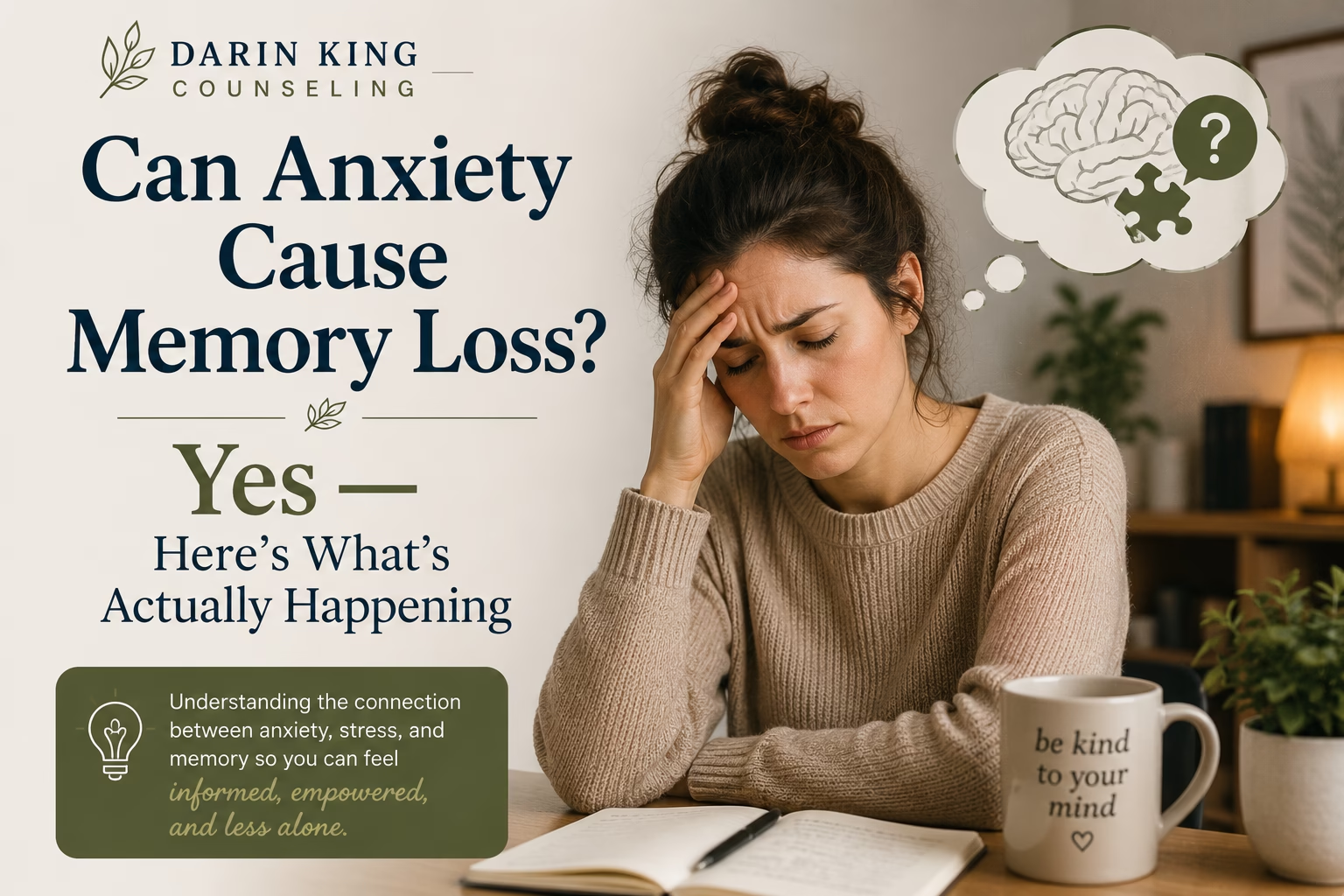
Yes, anxiety can cause memory loss. Not the kind of memory loss that signals dementia or brain damage, but a real, measurable disruption in how your brain encodes, stores, and retrieves information. If you’ve been Googling “can anxiety cause memory loss” because something feels off, you’re asking the right question, and the answer is more reassuring than it might feel right now.
Anxiety and memory loss are connected through a specific physiological mechanism — one that’s been studied extensively and that explains exactly why your brain feels foggy, slow, or scattered when anxiety is high. Understanding what’s happening can take some of the fear out of it, which on its own often helps the symptoms ease.
This article walks through what anxiety-related memory loss actually is, why it happens, the specific patterns to watch for, what makes it worse, and what genuinely helps.
What Anxiety Memory Loss Actually Looks Like
Anxiety-related memory problems show up in patterns. Most people who experience them recognize themselves in some combination of the following:
- Forgetting words mid-sentence — a word you know perfectly well just isn’t there when you reach for it. You might say “the thing,” or pause awkwardly, or substitute a less-precise word
- Losing the thread of conversations — someone is talking to you and partway through you realize you don’t actually know what they just said, even though you were trying to listen
- Walking into rooms and forgetting why — sometimes called doorway amnesia, this happens to everyone, but anxiety makes it relentless
- Re-reading the same paragraph multiple times without retaining what it said
- Forgetting recent decisions or commitments — you agreed to something a few hours ago, and now have no memory of the conversation
- Brain fog — a persistent sense of cognitive slowness, like your thoughts are moving through molasses
- Difficulty learning new information — you read or hear something, try to absorb it, and it just doesn’t seem to stick
- Forgetting whether you did routine things — did I lock the door, did I take my medication, did I send that email
What you’re not likely to experience: forgetting your own identity, getting lost in familiar places, losing memories from years ago, or progressive worsening over months that affects basic functioning. Those are warning signs of something else and warrant medical evaluation. Anxiety-related memory issues fluctuate with your anxiety levels and don’t typically progress in that way.
Why Anxiety Causes Memory Loss: The Cortisol Connection
The mechanism behind anxiety memory loss is well-understood. When you’re anxious, your body releases cortisol — the primary stress hormone — and other stress chemicals into your system. In short bursts, these chemicals are useful. Chronically elevated, they cause problems in the brain regions responsible for memory.
How Chronic Cortisol Affects Memory
Two brain regions take the biggest hit:
The hippocampus is the brain region that converts short-term experiences into long-term memories and helps with retrieval. It’s also unusually sensitive to cortisol. Chronic elevation impairs the hippocampus’s ability to encode new information and to access stored memories on demand. This is why anxiety makes it hard to remember what someone said five minutes ago and hard to access words you know.
The prefrontal cortex handles working memory, attention, and executive function. It’s the part of your brain you use to hold information in mind while you work with it (a phone number while you dial, a list of errands while you run them). Stress chemistry degrades prefrontal cortex function, which is why anxiety produces the experience of “I had a thought and then I lost it.”
The Vigilance Trade-Off
There’s another piece worth understanding. When your nervous system is in a state of activation — what physiology calls sympathetic activation — it’s allocating resources toward threat detection and rapid response. The trade-off is that it pulls resources away from the slower, more deliberate cognitive functions like reflection, memory consolidation, and language retrieval. This is adaptive in genuinely dangerous situations. In chronic anxiety, it means you spend your days running cognitively impaired.
The body doesn’t distinguish well between a literal threat and the threat-feeling that anxiety produces. Your nervous system reacts the same way, with the same trade-offs.
Unlike memory loss from injury or neurodegenerative conditions, anxiety-related memory problems are reversible. When the nervous system calms and cortisol levels drop, hippocampal and prefrontal function recover. Most people notice meaningful improvement within weeks of addressing the underlying anxiety.
What Makes Anxiety Memory Loss Worse
Certain factors significantly amplify the cognitive effects of anxiety. If you’re dealing with anxiety memory loss, examining these is often where relief begins:
Poor or Insufficient Sleep
Sleep is when the brain consolidates memories and clears metabolic waste, including the breakdown products of stress chemistry. Anxiety often disrupts sleep, which compounds the memory problems on its own. Most adults need 7 to 9 hours; persistent sleep deprivation alone can produce significant memory and cognitive symptoms that look identical to anxiety memory loss.
Hypervigilance and Threat Scanning
If you grew up in an environment where you had to monitor others for safety reasons, your nervous system may scan for threats constantly. This chronic activation drains the cognitive bandwidth you need for memory and learning. The pattern often connects to broader nervous system dysregulation — see our work on dorsal vagal shutdown and functional freeze for related dynamics.
Caffeine and Stimulants
Caffeine produces a physiological state that’s nearly indistinguishable from anxiety. If you’re already anxious and adding three cups of coffee, your cortisol levels and sympathetic activation are amplified, which deepens the memory effects. People with anxiety often dramatically underestimate caffeine’s contribution to their symptoms.
Rumination and Worry Loops
When your brain is running the same anxious thoughts on repeat, it has less capacity for anything else. Active rumination measurably degrades working memory and learning. Breaking rumination loops, where possible, gives the brain back the bandwidth memory requires.
Trauma History
People with significant trauma history often have persistently elevated baseline cortisol and altered hippocampal function. The result is anxiety symptoms — including memory effects — that don’t fully respond to standard anxiety interventions because the underlying issue is trauma-related nervous system dysregulation. Trauma-informed approaches like EMDR work directly with the underlying mechanism.
The Anxiety and Forgetfulness Cycle
Here’s where anxiety memory loss becomes its own problem: the memory problems often produce more anxiety, which produces more memory problems, which produces more anxiety. It’s a self-reinforcing loop that many people get stuck in.
The cycle usually goes like this:
- You experience anxiety. Cortisol elevates. Memory function degrades.
- You start forgetting things. Words won’t come. You miss appointments.
- You become anxious about your memory. Maybe something is wrong. Maybe it’s dementia. Maybe you’re losing your mind.
- That anxiety adds to your overall anxiety load. Cortisol elevates further. Memory function degrades further.
- Repeat.
Recognizing this cycle is part of breaking it. The memory problems are real, but they aren’t evidence of damage or decline. They’re a symptom, not a diagnosis.
What Actually Helps Anxiety Memory Loss
Effective interventions work at the level of the nervous system, the underlying anxiety, and the cognitive habits that maintain both. Most people benefit from a combination.
Address the Anxiety Itself
This is the foundational piece. Specific approaches that consistently help anxiety include trauma-informed psychotherapy, cognitive-behavioral therapy, mindfulness-based stress reduction, and where appropriate, medication evaluated with a prescriber. When anxiety eases, memory symptoms typically ease with it. Our work with anxiety counseling in Pittsburgh and across Pennsylvania focuses on this directly.
Regulate the Nervous System
Nervous system regulation skills are not optional for chronic anxiety — they’re foundational. Practices that help include slow exhalation (longer exhales than inhales for several minutes), humming or singing (activates the vagus nerve), cold water on the face, gentle rhythmic movement, and orienting exercises (slowly noticing your surroundings without trying to do anything else). These shift the body out of sympathetic activation, which is what’s burning cognitive resources.
Sleep, Genuinely
If sleep is a problem, it needs direct attention. Cognitive symptoms of insufficient sleep look identical to anxiety memory loss. Most people significantly underestimate their actual sleep debt. Sleep specialists, sleep hygiene work, and addressing anxiety-driven insomnia are all part of this.
Reduce Caffeine
If you drink more than one or two coffees a day and have anxiety symptoms, try reducing caffeine for two to three weeks and see what happens. The change is often substantial and surprises people. Taper gradually if you’re a heavy consumer — abrupt cessation produces its own symptoms.
Build Cognitive Off-Loading Habits
While you address the underlying anxiety, take pressure off your impaired memory system. Write things down. Use phone reminders aggressively. Externalize as much as possible. This isn’t a long-term solution, but it reduces the daily stress of forgetting and breaks the worry cycle while the actual healing happens.
Address Trauma if Relevant
If anxiety hasn’t responded to standard interventions, or if you have a significant trauma history, trauma-informed treatment may be necessary. Approaches like EMDR work directly with the nervous system patterns laid down by trauma, often producing changes that anxiety-only treatment can’t.
When to See a Doctor
Anxiety is the most common cause of cognitive symptoms in adults under 60, and it should usually be the working hypothesis when memory problems show up. That said, certain signs warrant ruling out other causes:
- Memory loss that’s progressive over months and doesn’t fluctuate with stress or sleep
- Difficulty with familiar routes, faces, or daily activities you’ve done for years
- Personality changes alongside the memory symptoms
- Loss of older memories (years back), not just recent ones
- Confusion about time, place, or who people are
- New onset memory issues after age 60, especially if family history of dementia
- Cognitive symptoms accompanied by physical symptoms like tremors, balance problems, or weakness
A primary care evaluation can rule out medical causes — thyroid issues, B12 deficiency, sleep apnea, medication side effects, and other reversible contributors all cause memory symptoms and are worth checking. If everything is medically clear and your memory issues track with your anxiety, you’re dealing with anxiety memory loss, and the path forward is treating the anxiety.
Frequently Asked Questions
Can anxiety really cause memory loss, or is it something more serious?
Yes, anxiety genuinely causes memory loss through elevated cortisol and sympathetic nervous system activation, both of which impair the hippocampus and prefrontal cortex — the brain regions responsible for memory and working memory. Anxiety-related memory loss fluctuates with your anxiety levels and is reversible when the underlying anxiety is treated. It’s distinct from progressive memory loss like dementia. If your symptoms are stable but bad when anxiety is high and better when you’re calm and rested, anxiety is almost certainly the cause.
How long does it take for memory to come back after anxiety improves?
Most people notice meaningful cognitive improvement within two to six weeks of consistent anxiety management, with continued recovery over months. The brain regions affected by chronic stress (especially the hippocampus) are remarkably plastic — they recover function as cortisol levels normalize. Sleep recovery accelerates this significantly. Full restoration of pre-anxiety cognitive function is the typical outcome, not the exception.
Is anxiety and memory loss different from brain fog?
They overlap heavily. Brain fog is a broader term that refers to general cognitive slowness, difficulty concentrating, and mental fatigue. Anxiety memory loss is more specifically about encoding and retrieval problems. Both share similar mechanisms — cortisol, inflammation, sympathetic activation — and often appear together. Brain fog can also come from other causes like long COVID, chronic illness, or hormonal changes, so the distinction matters when treating it.
Can anxiety medications help with memory loss?
When medications successfully reduce anxiety, the cognitive symptoms typically improve along with it. Some medications can have their own cognitive side effects in the short term (sedation, slight processing slowing) that improve as the body adjusts. Discussion with a prescriber matters here — the goal is reducing anxiety enough that cognitive function recovers. Therapy alone, medication alone, and combinations all work for different people.
Does anxiety memory loss mean I’m getting dementia early?
No. Anxiety-related memory loss and dementia have completely different underlying mechanisms and trajectories. Dementia involves progressive neurodegeneration that gets worse over time and doesn’t fluctuate with mood or stress. Anxiety memory loss fluctuates significantly with anxiety levels, sleep, and overall regulation. The fear that anxiety memory issues are early dementia is extremely common and is itself part of what amplifies the anxiety and the symptoms. A medical evaluation can rule out other causes for peace of mind.
Does insurance cover anxiety counseling?
Yes. Treatment for anxiety, generalized anxiety disorder, panic, and related conditions is covered under behavioral health benefits with most major insurance plans. We accept Highmark, UPMC, Aetna, United Healthcare/Optum, and Cigna/Evernorth. Self-pay sessions are $150. Sliding scale options are available for those who qualify. We verify your specific coverage before your first session.
Your memory issues aren’t a sign you’re losing your mind. They’re a sign your nervous system needs help.
Darin King, LPC works with anxiety, nervous system dysregulation, and the cognitive effects that follow. Telehealth statewide across Pennsylvania.
See more from Darin King Counseling on Google