

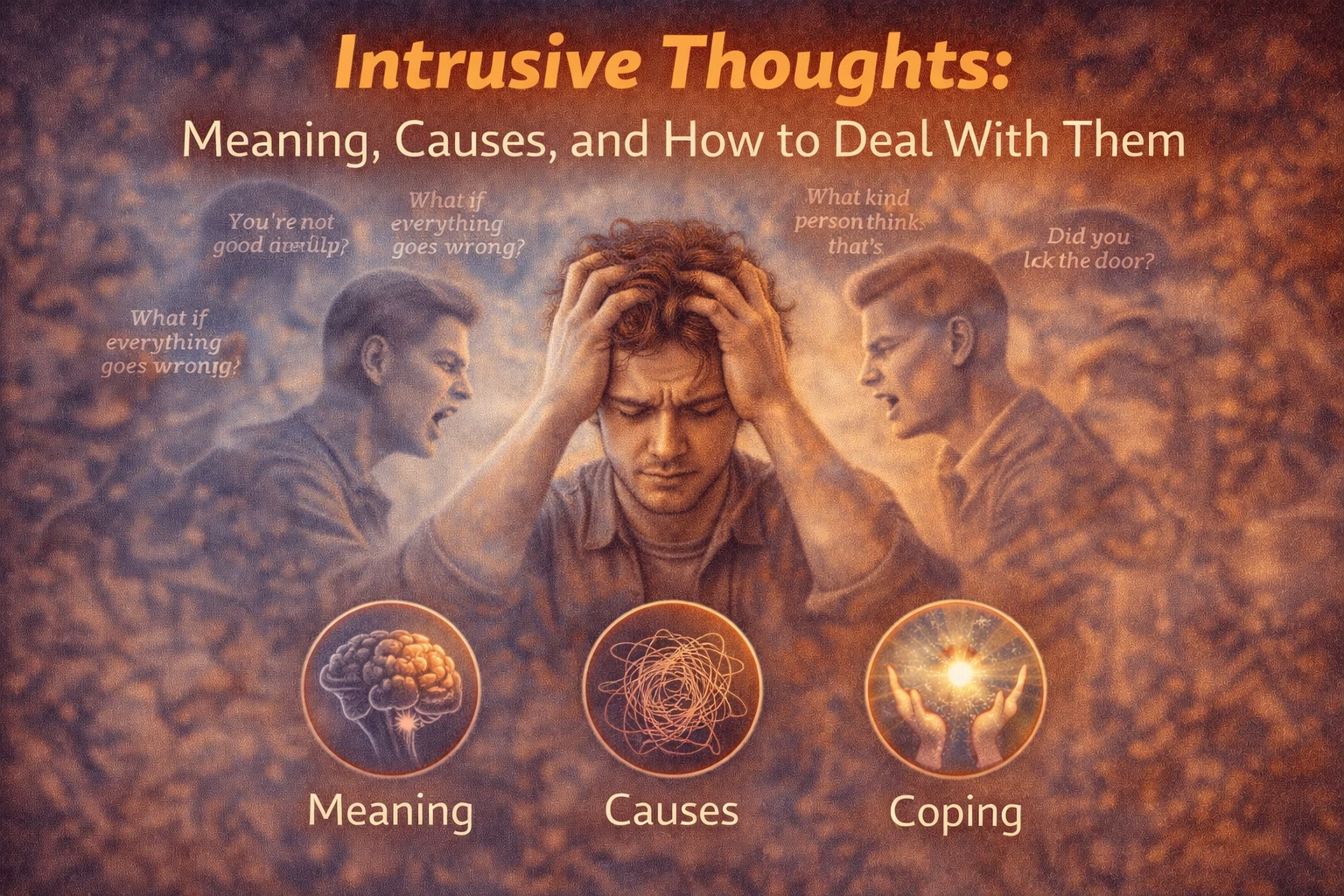
A random, disturbing thought crosses your mind. Maybe it is a violent image. Maybe it involves something that horrifies you about yourself. Maybe you are holding your baby and a terrifying “what if” appears from nowhere. Your first instinct is that the thought itself means something terrible about you.
It almost certainly does not. Intrusive thoughts — unwanted, involuntary mental content that feels out of character or deeply uncomfortable — are one of the most universal human experiences. Research suggests that the vast majority of people experience them regularly. What differs is not whether you have them, but how you respond to them.
Intrusive Thoughts: Normal vs. When to Get Support
✓ You recognize them as unwanted
✓ They pass without significant distress
✓ No compulsive behaviors follow
✓ Nearly everyone experiences these
✓ They produce significant anxiety or distress
✓ You engage in compulsions to manage them
✓ They interfere with daily functioning
✓ You avoid people, places, or situations because of them
Feel free to share or embed this infographic with credit to darinkingcounselingllc.com
What Do Intrusive Thoughts Mean?
Intrusive thoughts are unwanted, involuntary thoughts, images, or impulses that appear in the mind and feel out of character, disturbing, or contrary to the person’s values. They can involve violence, harm, sexuality, blasphemy, or other content that feels deeply incongruent with who the person believes themselves to be.
The meaning of intrusive thoughts is not what most people fear. Research published in the Journal of Obsessive-Compulsive and Related Disorders found that the content of intrusive thoughts does not predict behavior or reflect the person’s true desires. Intrusive thoughts are not wishes, intentions, or revelations of hidden character. They are mental noise — the brain’s output, not its truth.
The distress around intrusive thoughts comes not from the thoughts themselves but from what people make the thoughts mean, and from the efforts they make to suppress or control them. Paradoxically, trying harder to not think a thought typically makes it occur more frequently — a phenomenon researchers call the ironic process theory or “thought rebound.” The harder you push a thought away, the more insistently it returns.
The critical point: Having a violent, sexual, or disturbing intrusive thought does not mean you want to do it, that you secretly are the kind of person who would, or that you are dangerous. The very fact that the thought is distressing to you is evidence that it runs counter to your values. People who actually intend harmful things do not typically experience their intentions as unwanted and horrifying.
Common Types of Intrusive Thoughts
Intrusive thoughts can take many forms. Common categories include:
Harm-related thoughts — unwanted images or impulses involving hurting yourself or others (pushing someone off a ledge, harming a child or pet, self-harm). These are extremely common and do not reflect genuine intent.
Sexual intrusive thoughts — unwanted sexual images or impulses involving people, situations, or acts that feel deeply repugnant to the person having them.
Religious or blasphemous thoughts — unwanted thoughts that violate religious beliefs or values; thoughts about doubting one’s faith or committing sacrilegious acts. This is sometimes called religious OCD when it becomes severe.
Relationship intrusive thoughts — unwanted doubts about a partner, relationship, or one’s own orientation or feelings.
Contamination or symmetry thoughts — recurrent thoughts about germs, illness, or things being “wrong” or out of order.
It is worth noting that the content of intrusive thoughts often targets what matters most to the person — a new parent may have intrusive thoughts about harming their infant precisely because they love the child so intensely. The mind seems to specialize in generating the thoughts most calculated to disturb.
What Causes Intrusive Thoughts?
How the Normal Mind Works
The human brain generates an enormous volume of mental content constantly — including random, bizarre, or disturbing images and thoughts. Most people notice these and let them pass without significant reaction. The content itself is not the problem; the relationship to the content is what determines distress.
Anxiety
Anxiety increases the frequency and intensity of intrusive thoughts by keeping the threat detection system highly active. An anxious brain is constantly scanning for danger and is more likely to generate and attend to threatening content. Anxiety also increases the emotional charge around intrusive thoughts, making them harder to dismiss. Our post on high functioning anxiety explores how anxiety operates beneath the surface of outward functionality.
OCD (Obsessive-Compulsive Disorder)
OCD is the clinical context in which intrusive thoughts become most severe and impairing. In OCD, intrusive thoughts (obsessions) trigger intense anxiety that the person attempts to neutralize through compulsive behaviors or mental rituals. The cycle — intrusive thought → anxiety → compulsion → temporary relief → return of thought — is the defining pattern of OCD. The National Institute of Mental Health estimates OCD affects approximately 1.2% of U.S. adults.
Importantly, compulsions in OCD are not limited to visible behaviors like hand-washing — they frequently include mental rituals (reviewing, reassuring, checking, neutralizing) that are invisible to others but maintain the OCD cycle just as effectively. If intrusive thoughts are driving compulsive behaviors that significantly affect your life, our OCD counseling service page provides more information on treatment options.
Trauma
Trauma can produce intrusive thoughts in the form of flashbacks, unwanted memories, and trauma-related images that appear involuntarily. This is distinct from OCD-type intrusive thoughts but can feel similarly overwhelming. Complex PTSD and PTSD both include intrusive re-experiencing as a core feature. Understanding how trauma affects the nervous system explains why the brain keeps generating these experiences even when the person desperately wants them to stop.
Depression
Depression produces a particular kind of intrusive thought — repetitive, negative, self-critical content that cycles persistently. Rumination (replaying past events, self-blame, catastrophizing about the future) is a form of intrusive thought pattern closely associated with depression.
How to Deal With Intrusive Thoughts
Stop fighting them
The single most counterproductive thing you can do with intrusive thoughts is try to suppress them. Suppression increases their frequency and intensity. Instead, the evidence-based approach is defusion — creating psychological distance from the thought without treating it as true or meaningful. “I am having the thought that…” is a simple but powerful shift in relationship to the content.
Don’t interpret them as significant
Intrusive thoughts have no special significance. They are mental noise, not messages, character revelations, or accurate predictions. Engaging with the thought (trying to figure out what it means, arguing with it, seeking reassurance about it) signals to the brain that the thought is important and deserves attention — which increases its frequency.
Allow them to pass
The goal is not to eliminate intrusive thoughts — it is to change your relationship to them. Thoughts, including deeply disturbing ones, are time-limited. When you do not engage with them (either to suppress or to analyze), they naturally diminish. Mindfulness-based approaches train exactly this skill: observing mental content without identifying with it or reacting to it.
Seek therapy when they are impairing your life
When intrusive thoughts are frequent, highly distressing, producing compulsive behaviors, or significantly affecting your daily functioning, professional support is important. Exposure and Response Prevention (ERP) therapy is the gold-standard treatment for OCD-related intrusive thoughts. Cognitive behavioral therapy (CBT) and EMDR therapy address trauma-related intrusive content. Our post on what therapy helps with provides more context on when and how to seek support.
Related reading: OCD counseling in Pennsylvania · High functioning anxiety · Anxiety vs. panic attacks · Complex PTSD vs. PTSD · How trauma affects the nervous system · Nervous system reset · EMDR therapy
Frequently Asked Questions
What are intrusive thoughts?
Unwanted, involuntary thoughts, images, or impulses that feel out of character or contrary to your values. They can involve violence, harm, sexuality, or blasphemy. Research confirms they are extremely common — nearly universal. The content does not reflect genuine desires or predict behavior.
What do intrusive thoughts mean?
They do not mean what most people fear. Research published in the Journal of Obsessive-Compulsive and Related Disorders confirms intrusive thought content does not predict behavior. The distress comes from what you make the thoughts mean — not from the thoughts themselves.
Are intrusive thoughts a sign of OCD?
Not necessarily — they are nearly universal. They become a feature of OCD when they produce intense anxiety and trigger compulsive behaviors or mental rituals. When intrusive thoughts impair daily functioning and drive compulsive responses, our OCD counseling service may be relevant.
How do you deal with intrusive thoughts?
Through defusion — creating psychological distance without suppressing or engaging. “I am having the thought that…” is a useful reframe. Suppression increases frequency. Allow the thought to pass without analysis or reassurance-seeking. When significantly impairing, ERP therapy for OCD-related thoughts and EMDR for trauma-related content are most effective.
Are intrusive thoughts dangerous?
No. Research consistently shows intrusive thought content does not predict behavior. The distress they cause is typically evidence that they contradict your values. The exception is when thoughts are accompanied by genuine intent or are part of a psychotic process — which requires immediate professional evaluation.
Having disturbing thoughts doesn’t make you a disturbing person. But you don’t have to manage them alone.
Darin King, LPC provides therapy for OCD, anxiety, intrusive thoughts, and trauma across Pennsylvania. Telehealth available statewide.
See more from Darin King Counseling on Google